
Jim Blake - Böcker
Visar alla böcker från författaren Jim Blake. Handla med fri frakt och snabb leverans.
6 produkter
6 produkter
328 kr
Skickas
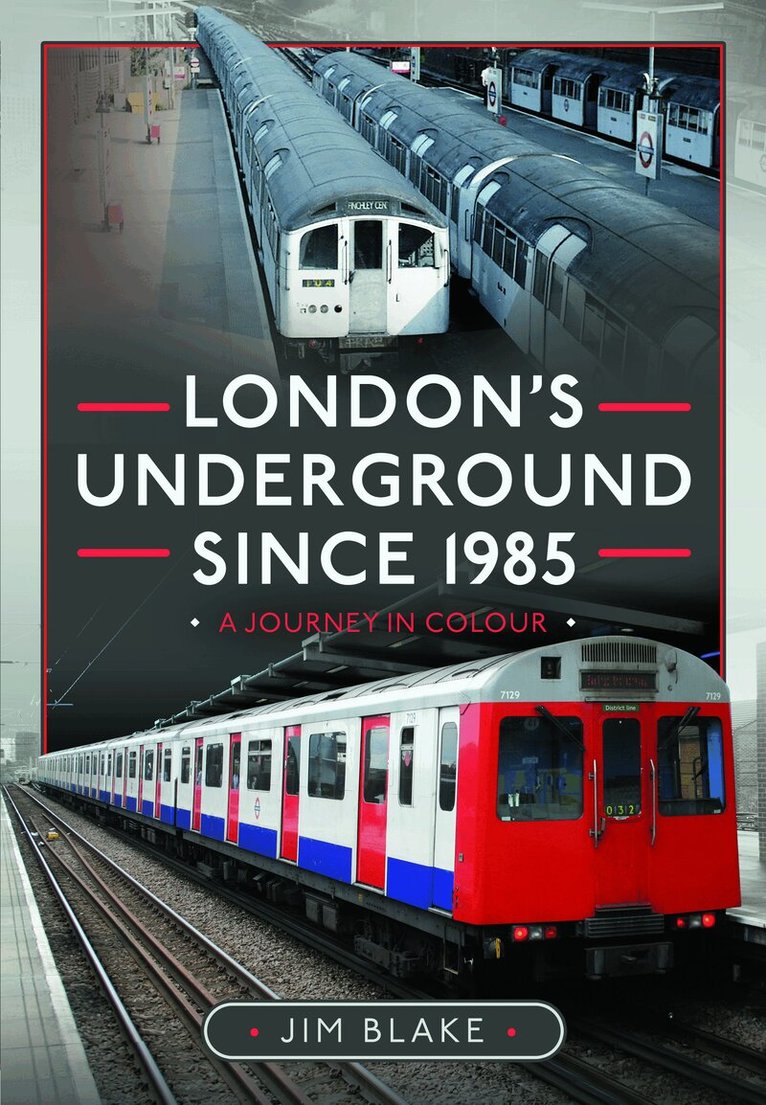
JIM BLAKE's second volume of his photographs featuring the London Underground cover the period from 1985, shortly after the Thatcher regime's destruction of London Transport and its re-birth as London Underground Ltd., to 2021 when the Northern Line gained its new branch from Kennington to Battersea Power Station.This was a turbulent time in the system's history, encompassing the withdrawal of the last pre-war passenger rolling stock (in 1988) and then the abolition of two-person operated trains at the beginning of 2000.With the exception of the Waterloo & City Line, which was transferred from British Rail to London Underground in the 1990s, all Underground lines are covered together with the rolling stock operating them.Jim's photographs concentrate on the older types. What is very striking in them is how the system seemed to be going downhill rapidly during the Thatcher years when this survey begins - plagued by the curse of graffiti and liberally littered thanks to cuts in staff who once dealt with such problems. Fortunately, since Transport for London's takeover of the Underground from 2000 onwards, things in that respect have markedly improved, trains and stations are much cleaner and therefore welcoming to passengers.The contrast between the late 1980s/early 1990s and today's Underground is very clear in Jim's photographs featured here, most previously unpublished. It is unfortunate that further improvements, not to mention long-planned extensions to the system, continue to be frustrated by government spending restrictions at the time of writing.
274 kr
Skickas
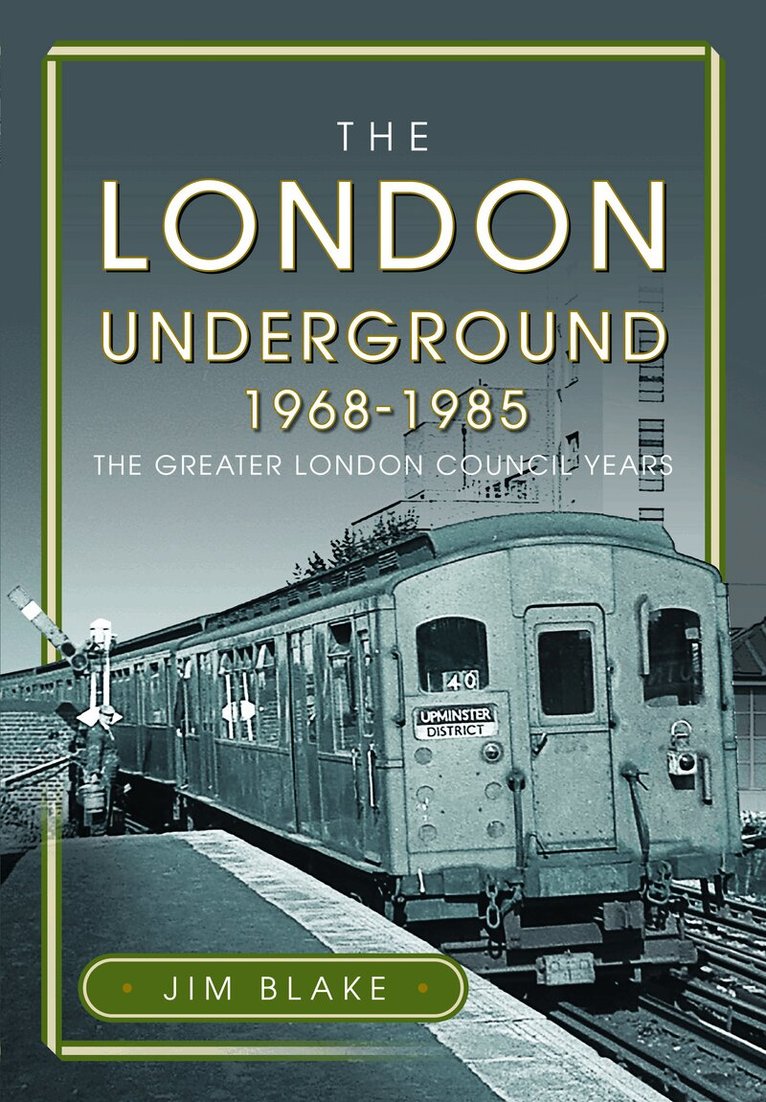
LONDON’S HISTORIC, iconic Underground railway system in the period from 1968 to 1985 was a very different place to what it is in the 2020s. Much of its rolling stock dated from before World War Two, and with the exception of the new Victoria Line and the isolated Woodford to Hainault shuttle, trains were all two-person operated as the 1970s dawned.Transport photographer Jim Blake recorded most of the system on film before it would change forever, concentrating on the older rolling stock as well as other items of interest due for replacement or modernisation, during this period when, regrettably, London Transport was often starved of much-needed funds by central government. The eminently sensible transfer of overall control of London’s buses and Underground system to the city-wide Greater London Council at the beginning of 1970 was snatched away by the Thatcher regime in 1984, after which things rapidly went downhill. This book covers the years of GLC control, including the months prior to their taking charge in order to set the scene.Many rare and unusual scenes are included in this volume, especially of the then still basically intact portion of the uncompleted Northern Line extension between Drayton Park and Highgate, which had been so close to completion when work was halted during the war, but then abandoned in the early 1950s, incurring much wasted work and expenditure.For anyone with a serious interest in London’s Underground, this book is essential reading, including as it does many pervious unpublished photographs.
274 kr
Skickas
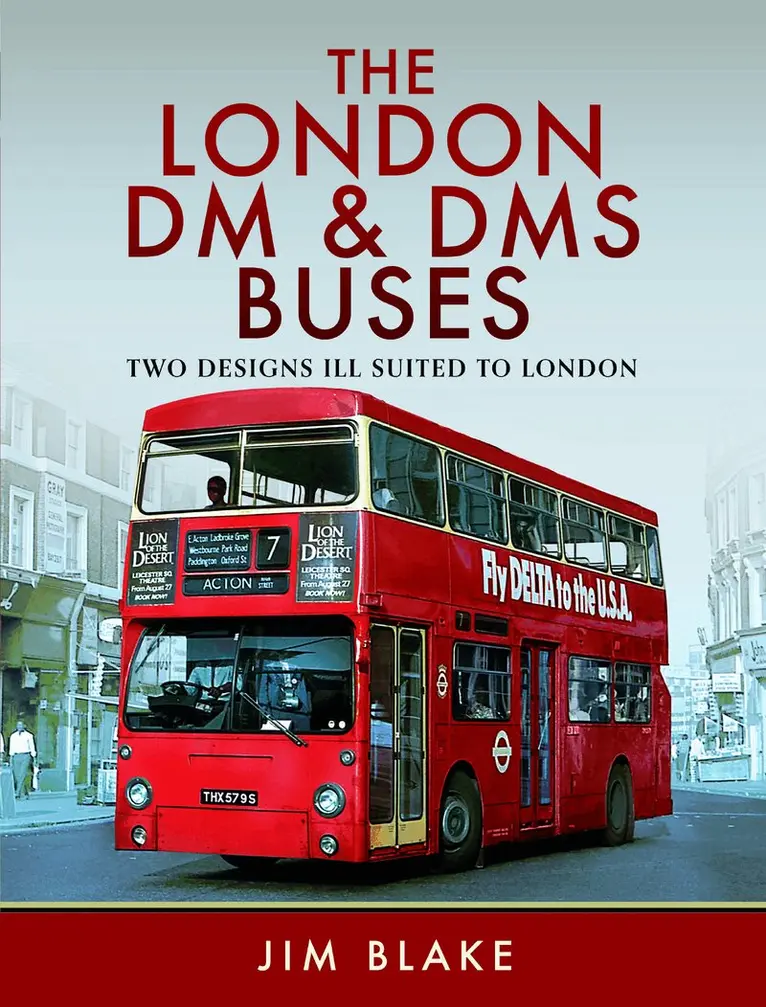
JIM BLAKE'S latest book on London's buses may come as a surprise, since he usually concentrated on older vehicles in the fleet. However, the unpopular, unsuccessful DMs and DMSs were still part of London Transport's history, so he recorded them too, particularly towards the end of the short working lives.Forced by central government to buy "off-the-peg" standard manufacturers' products, rather than their own tried and trusted designs, LT opted for Daimler Fleetlines for their first fleet of one-man-operated double-deckers. Optimistically christened "Londoners" when they first entered service in January 1971, they instantly became unpopular with passengers, staff and bus enthusiasts alike. Their square, box-like appearance and bland all-over red livery did not endear them to the latter. Passengers used to boarding buses immediately with fares collected or tickets checked by a conductor objected to waiting at termini until the driver appeared and opened their doors, and having to queue at stops waiting to pay as they entered. Automatic ticket machines meant to mitigate this broke down making matters worse; all this increased journey times.The vehicles had flimsy bodywork, easily damaged by the slightest collision, and were also mechanically unreliable: their rear engines often caught fire. This made them unpopular with drivers and maintenance staff. Although the type worked satisfactorily in the provinces, it was just not suited for the rigours of London service.This book presents a selection of pictures of them, many previously unpublished and also graphically illustrating the buses' many defects.
274 kr
Skickas
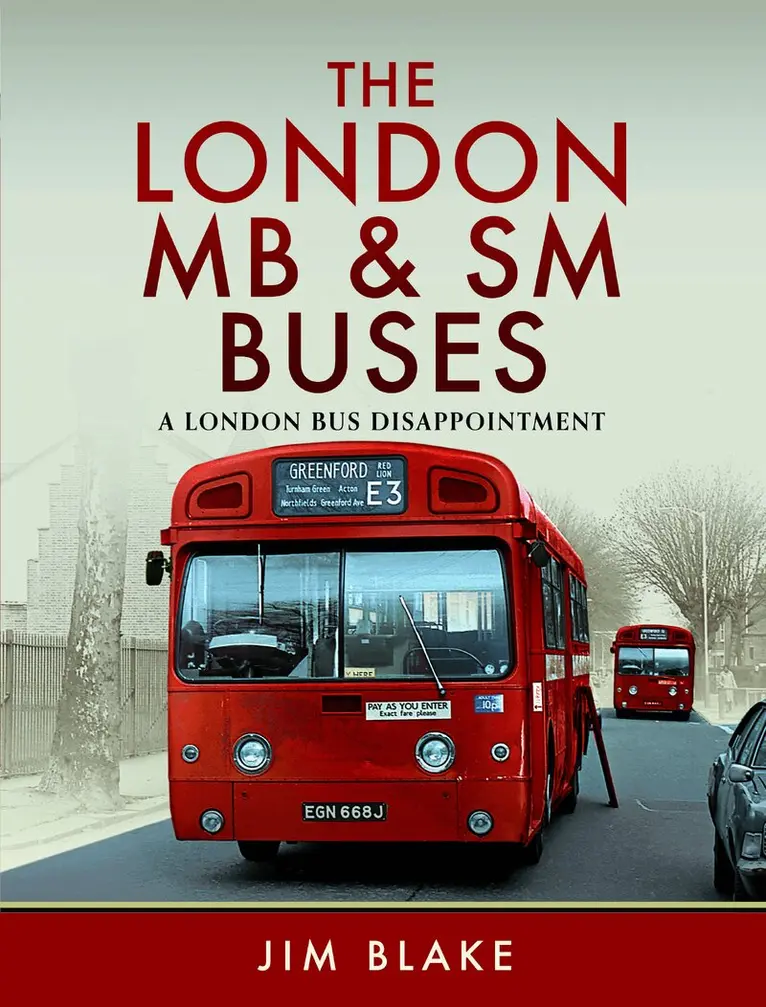
PURCHASED to replace London Transport's ageing RT-type fleet, and also to ease staff shortages by extending one-man operation, the MB-types were not only a disappointment, but an unmitigated disaster! Their successors, the SM-types, were if anything worse, being underpowered as well as equally unsuitable for London operation.In this new volume of his photos, Jim Blake takes a critical look at what were therefore some of the most unsuccessful buses ever operated by London Transport, operating only between 1966 and 1981, most of them however achieving only six or seven years' service - if that.Most of the pictures featured have never been published before and many show rare and unusual scenes, several inside LT's garages and Aldenham Works, now themselves no longer in existence. In addition to the buses themselves, Jim also catches glimpses of London life spanning the period from the "swinging 'sixties" to the harsh first years of the Thatcher regime.The MB and SM family of vehicles also saw service with London Country, the latter being delivered new to them - but they fared just as badly in the outlying countryside around London as in Central London. They brought to a sad end London Transport's long association with A.E.C. buses, and could not have been more different from the legendary, long-lived RT, RF and Routemaster classes produced by that manufacturer!
274 kr
Skickas
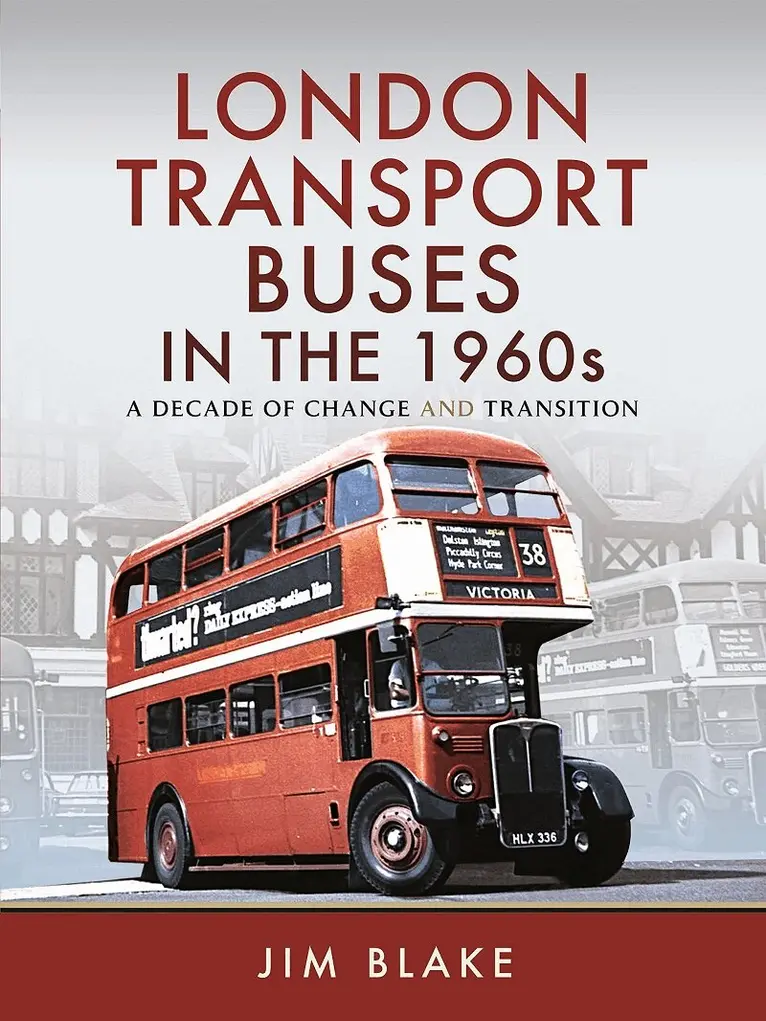
Just as life in Britain generally changed dramatically during the 1960s, so did London Transport's buses and their operations. Most striking was the abandonment of London's trolleybuses, once the world's biggest system, and their replacement by motorbuses. Begun in 1959 using surplus RT-types, it was completed by May 1962 using new Routemasters, designed specifically to replace them. They then continued to replace RT types, too.Traffic congestion and staff shortages played havoc with London Transport's buses and Green Line coaches during the 1960s, one-man operation was seen as a remedy for the latter, shortening routes in the Central Area for the former. Thus the ill-fated "Reshaping Plan" was born, introducing new O.M.O. bus types. These entered trial service in 1965, and after much delay the plan was implemented from September 1968 onwards. Sadly, new MB-types, also introduced in the Country Area, soon proved a disaster! Unfortunately, owing to a government diktat, Routemaster production ended at the start of 1968, forcing LT to buy "off-the-peg" vehicles unsuited to London operation and their in-house overhaul procedures. The decade ended with the loss of LT's Country Area buses and Green Line coaches to the National Bus Company.Photographer Jim Blake began photographing London's buses towards the end of the trolleybus conversion programme in 1961 and continued dealing with the changing scene throughout the decade. He dealt very thoroughly with the "Reshaping" changes, and many of the photographs featured herein show rare and unusual scenes which have never been published before.
274 kr
Tillfälligt slut
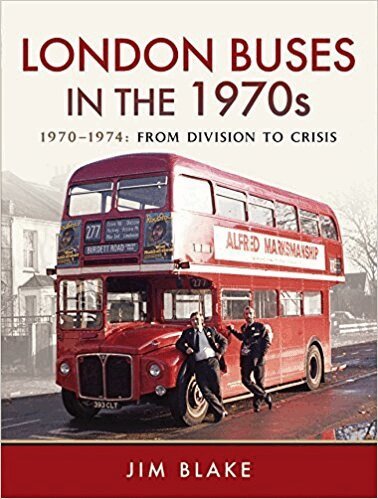
Using photographs from Jim Blake's extensive archives, this book examines the turbulent period in the history of London's buses immediately after London Transport lost its Country Buses and Green Line Coaches to the recently-formed National Bus Company, under their new subsidiary company, London Country Bus Services Ltd.The new entity inherited a largely elderly fleet of buses from London Transport, notably almost 500 RT-class AEC Regent double-deckers, of which replacement was already under way in the shape of new AEC MB and SM class Swift single-deckers.London Transport itself was in the throes of replacing a much larger fleet of these. At the time of the split, it was already apparent that the 36ft-long MB class single-deckers were not suitable for London conditions, particularly in negotiating suburban streets cluttered with cars, and were also mechanically unreliable. The shorter SM class superseded them, but they were equally unreliable. January 1971 saw the appearance of London Transport's first purpose-built one-man operated double-decker the DMS class. All manner of problems plagued these, too.Both operators were also plagued with a shortage of spare parts for their vehicles, made worse by the three-day week imposed by the Heath regime in 1973-4. London Transport and London Country were still closely related, with the latter's buses continuing to be overhauled at LT's Aldenham Works. Such were the problems with the MB, SM and DMS types that LT not only had to resurrect elderly RTs to keep services going, but even repurchased some from London Country! In turn, the latter operator hired a number of MB-types from LT, now abandoned as useless, from 1974 onwards in an effort to cover their own vehicle shortages. Things looked bleak for both operators in the mid-1970s.This book contains a variety of interesting and often unusual photographs illustrating all of this, most of which have never been published before.