
John P. Zomchick - Böcker
Visar alla böcker från författaren John P. Zomchick. Handla med fri frakt och snabb leverans.
2 produkter
2 produkter
Del 15 - Cambridge Studies in Eighteenth-Century English Literature and Thought
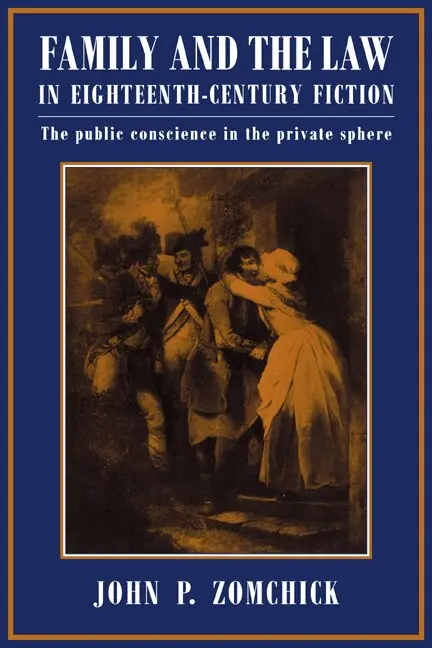
Family and the Law in Eighteenth-Century Fiction
The Public Conscience in the Private Sphere
Häftad, Engelska, 2007
493 kr
Skickas inom 7-10 vardagar
Family and the Law in Eighteenth-Century Fiction offers challenging interpretations of the public and private faces of individualism in the eighteenth-century English novel. John P. Zomchick begins by surveying the social, historical and ideological functions of law and the family in England's developing market economy. He goes on to examine in detail their part in the fortunes and misfortunes of the protagonists in Defoe's Roxana, Richardson's Clarissa, Smollett's Roderick Random, Goldsmith's The Vicar of Wakefield and Godwin's Caleb Williams. Zomchick reveals in these novels an attempt to produce a 'juridical subject': a representation of the individual identified with the principles and aims of the law, and motivated by an inherent need for affection and community fulfilled by the family. Their ambivalence towards that formulation indicates a nostalgia for less competitive social relations, and an emergent liberal critique of the law's operation in the service of society's elites.
2 277 kr
Skickas inom 3-6 vardagar
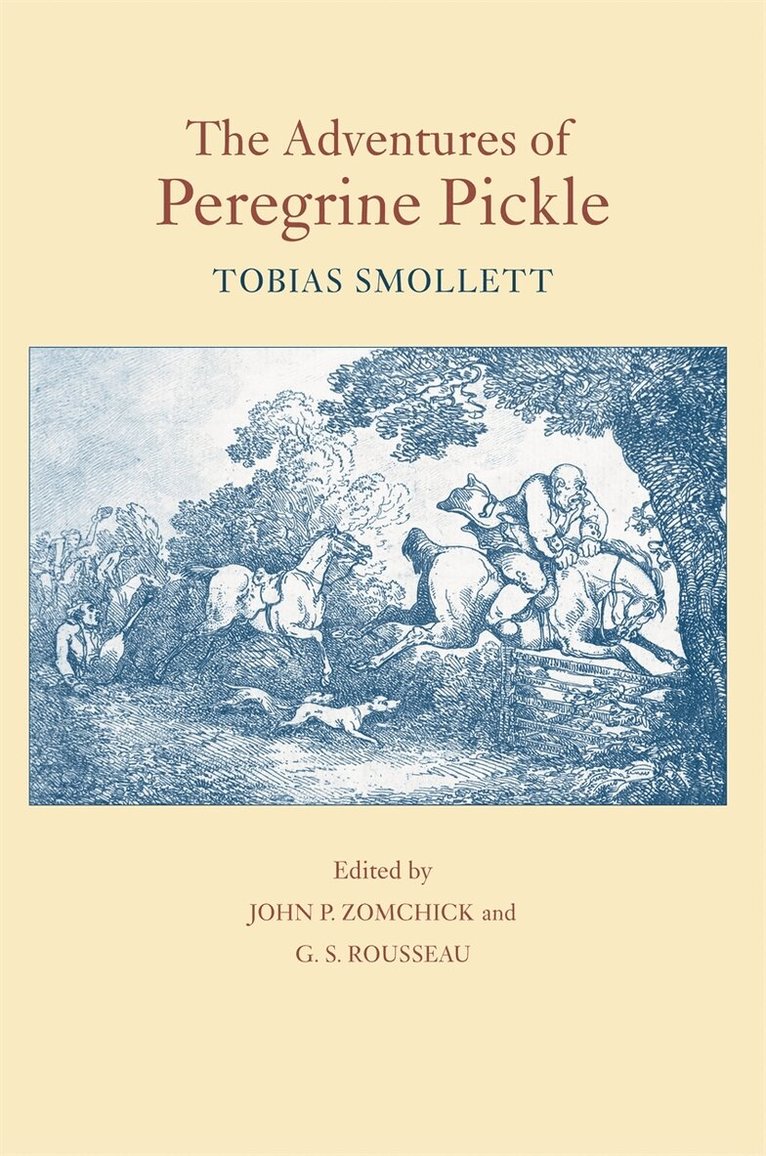
This picaresque tale, first published in 1751, was Tobias Smollett’s second novel. Following the fortunes and misfortunes of the egotistical dandy Peregrine Pickle, the novel is written as a series of brief adventures with every chapter typically describing a new escapade. The novel begins with Peregrine as a young country gentleman. His mother rejects him, as do his aloof father and his dissolute, spiteful brother. Commodore Hawser Trunnion takes Peregrine under his care and raises him. Peregrine’s upbringing, education at Oxford, and journey to France, his debauchery, bankruptcy, jailing, and succession to his father’s fortune, and his final repentance and marriage to his beloved Emilia all provide scope for Smollett’s comic and caustic perspectiveon the Europe of his times. As John P. Zomchick and George S. Rousseau note in the introduction, “by contrasting the genteel and the common, the sophisticated and the primal, Smollett conveys forcefully the way it felt to be alive in the middle of the eighteenth century.”The introduction provides an overview of the composition and publication history of Peregrine Pickle and discusses the novel’s critical reception over time by such figures as Lady Luxborough, Sir Walter Scott, Joseph Conrad, and George Orwell. The text of the novel uses the first edition of 1751 as copy-text while recording the second edition’s substantive variants. Included are illustrations by Thomas Rowlandson, Richard Corbould, and George Cruikshank, as well as frontispieces designed by, and engraved in the style of, Henry Fuseli. A complete textual apparatus concludes the volume.