
Jyotsna Kapur - Böcker
Visar alla böcker från författaren Jyotsna Kapur. Handla med fri frakt och snabb leverans.
5 produkter
5 produkter
712 kr
Skickas inom 10-15 vardagar
In cinema studies today, rarely do we find a direct investigation into the culture of capitalism and how it has been refracted and fabricated in global cinema production under neoliberalism. However, the current economic crisis and the subsequent Wall Street bailout in 2008 have brought about a worldwide skepticism regarding the last four decades of economic restructuring and the culture that has accompanied it. In this edited volume, an international ensemble of scholars looks at neoliberalism, both as culture and political economy, in the various cinemas of the world. In essays encompassing the cinemas of Asia, Africa, Latin America, Europe, and the United States the authors outline how the culture and subjectivities engendered by neoliberalism have been variously performed, contested, and reinforced in these cinemas. The premise of this book is that the cultural and economic logic of neoliberalism, i.e., the radical financialization and market-driven calculations, of all facets of society are symptoms best understood by Marxist theory and its analysis of the central antagonisms and contradictions of capital. Taking a variety of approaches, ranging from political economy, ideological critique, the intersection of aesthetics and politics, social history and critical-cultural theory, this volume offers a fresh, broad-based Marxist analysis of contemporary film/media. Topics include: the global albeit antagonistic nature of neoliberal culture; the search for a new aesthetic and documentary language; the contestation between labor and capital in cultural producion; the political economy of hollywood, and questions of gender, sexuality, and the nation state in relation to neoliberalism.
2 155 kr
Skickas inom 10-15 vardagar
In cinema studies today, rarely do we find a direct investigation into the culture of capitalism and how it has been refracted and fabricated in global cinema production under neoliberalism. However, the current economic crisis and the subsequent Wall Street bailout in 2008 have brought about a worldwide skepticism regarding the last four decades of economic restructuring and the culture that has accompanied it. In this edited volume, an international ensemble of scholars looks at neoliberalism, both as culture and political economy, in the various cinemas of the world. In essays encompassing the cinemas of Asia, Africa, Latin America, Europe, and the United States the authors outline how the culture and subjectivities engendered by neoliberalism have been variously performed, contested, and reinforced in these cinemas. The premise of this book is that the cultural and economic logic of neoliberalism, i.e., the radical financialization and market-driven calculations, of all facets of society are symptoms best understood by Marxist theory and its analysis of the central antagonisms and contradictions of capital. Taking a variety of approaches, ranging from political economy, ideological critique, the intersection of aesthetics and politics, social history and critical-cultural theory, this volume offers a fresh, broad-based Marxist analysis of contemporary film/media. Topics include: the global albeit antagonistic nature of neoliberal culture; the search for a new aesthetic and documentary language; the contestation between labor and capital in cultural producion; the political economy of hollywood, and questions of gender, sexuality, and the nation state in relation to neoliberalism.
401 kr
Skickas inom 7-10 vardagar
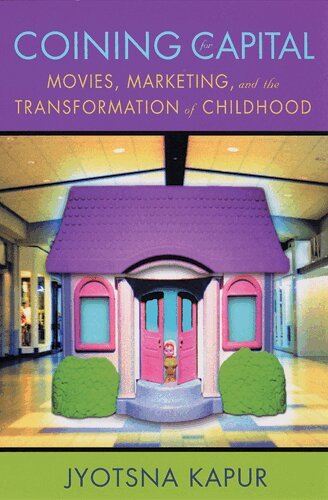
"This book is a welcome addition to the literature on children and the media, and a most stimulating application of social theory to questions of the child in contemporary film and consumer culture."-Ellen Seiter, author of The Internet Playground: Children's Access, Entertainment and Mis-EducationSince the 1980s, a peculiar paradox has evolved in American film. Hollywood’s children have grown up, and the adults are looking and behaving more and more like children. In popular films such as Harry Potter, Toy Story, Pocahantas, Home Alone, and Jumanji, it is the children who are clever, savvy, and self-sufficient while the adults are often portrayed as bumbling and ineffective. Is this transformation of children into "little adults" an invention of Hollywood or a product of changing cultural definitions more broadly? In Coining for Capital, Jyostna Kapur explores the evolution of the concept of childhood from its portrayal in the eighteenth century as a pure, innocent, and idyllic state-the opposite of adulthood-to its expression today as a mere variation of adulthood, complete with characteristics of sophistication, temptation, and corruption. Kapur argues that this change in definition is not a media effect, but rather a structural feature of a deeply consumer-driven society. Providing a new and timely perspective on the current widespread alarm over the loss of childhood, Coining for Capital concludes that our present moment is in fact one of hope and despair. As children are fortunately shedding false definitions of proscribed innocence both in film and in life, they must now also learn to navigate a deeply inequitable, antagonistic, and consumer-driven society of which they are both a part and a target.
1 099 kr
Skickas inom 5-8 vardagar
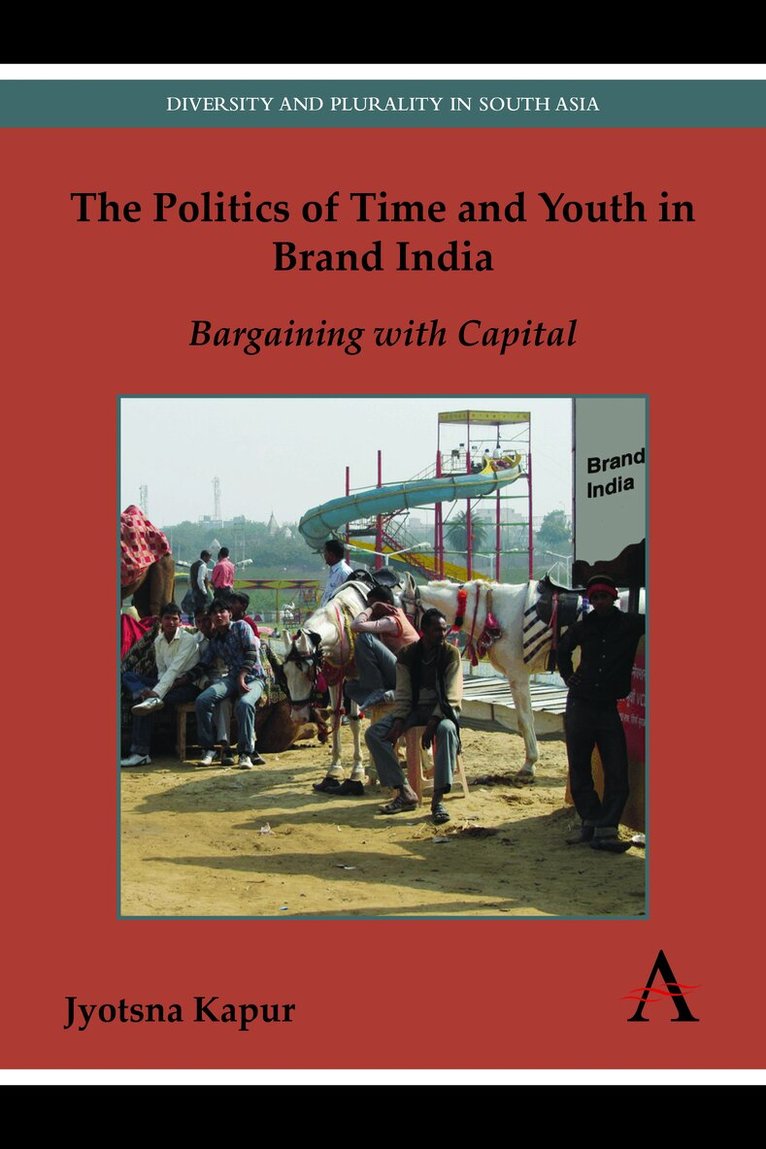
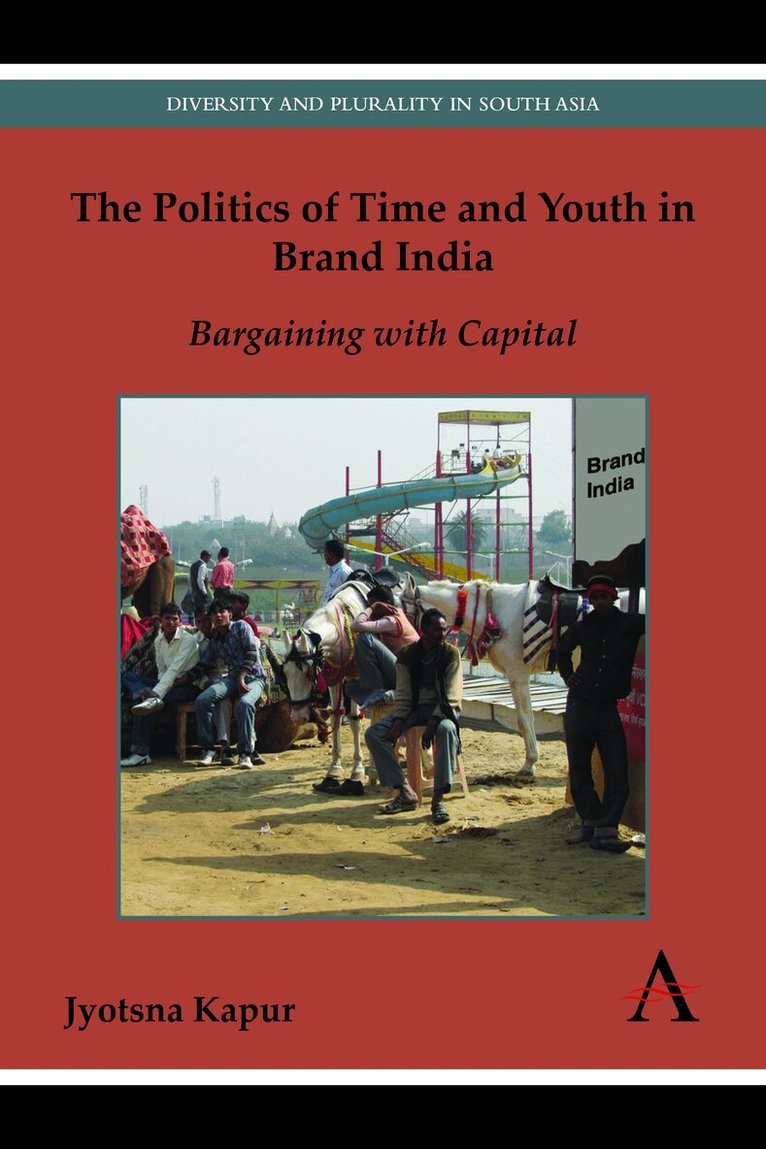
This book traces the heightened time-consciousness that has emerged since the 1990s in popular Indian discourses – across cinema, television, print and consumer culture – and argues that these anxieties concerning time are symptomatic of the struggle between labor and capital. Drawing on critical theory, cinema and media studies and Marxist-feminist concepts, Kapur shows how the recent political-economic shift in India toward neoliberalism has been accompanied by a new emphasis on youth and a preoccupation with change, novelty and the acceleration of time, with profound consequences for conceptions of time, youth and the relations between generations.
402 kr
Skickas inom 5-8 vardagar
This book traces the heightened time-consciousness that has emerged since the 1990s in popular Indian discourses – across cinema, television, print and consumer culture – and argues that these anxieties concerning time are symptomatic of the struggle between labor and capital. Drawing on critical theory, cinema and media studies and Marxist-feminist concepts, Kapur shows how the recent political-economic shift in India toward neoliberalism has been accompanied by a new emphasis on youth and a preoccupation with change, novelty and the acceleration of time, with profound consequences for conceptions of time, youth and the relations between generations.