
Kal Renganathan Sharma - Böcker
Visar alla böcker från författaren Kal Renganathan Sharma. Handla med fri frakt och snabb leverans.
8 produkter
8 produkter
2 629 kr
Skickas inom 5-8 vardagar
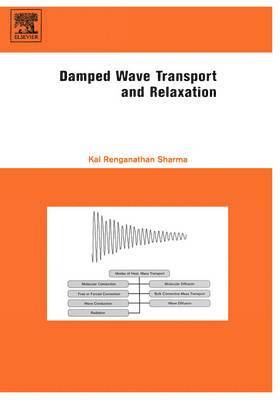
Transient problems in transport phenomena have a variety of applications, ranging from drug delivery systems in chemotherapy in bioengineering to heat transfer to surfaces in fluidized bed combustion (FBC) boilers in mechanical engineering. However, the attention given to transient problems is disproportionate with its occurrence in the industry. Damped Wave Transport and Relaxation looks at transient problems in heat, mass and momentum transfer: including non-Fourier effects of conduction and relaxation; non-Fick effects of mass diffusion and relaxation; and non-Newtonian effects of viscous momentum transfer and relaxation. The author also reviews applications to current problems of interest and uses worked examples and illustrations to describe the manifestations of using generalized transport equations. This book is intended for graduate students in transport phenomena and is an ideal reference source for industrial engineers.* Provides a connection with molecular phenomena * Separate sections are devoted to heat, mass and momentum transfer * Includes exercises and examples of applications
1 141 kr
Skickas inom 10-15 vardagar
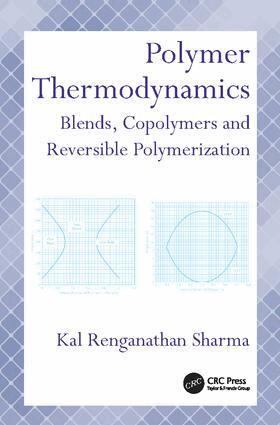
Polymer Thermodynamics: Blends, Copolymers and Reversible Polymerization describes the thermodynamic basis for miscibility as well as the mathematical models used to predict the compositional window of miscibility and construct temperature versus volume-fraction phase diagrams. The book covers the binary interaction model, the solubility parameter approach, and the entropic difference model. Using equation of state (EOS) theories, thermodynamic models, and information from physical properties, it illustrates the construction of phase envelopes.The book presents nine EOS theories, including some that take into account molecular weight effects. Characteristic values are given in tables. It uses the binary interaction model to predict the compositional window of miscibility for copolymer/homopolymer blends and blends of copolymers and terpolymers with common monomers. It discusses Hansen fractional solubility parameter values, six phase diagram types, the role of polymer architecture in phase behavior, and the mathematical framework for multiple glass transition temperatures found in partially miscible polymer blends. The author also illustrates biomedical and commercial applications of nanocomposites, the properties of various polymer alloys, Fick’s laws of diffusion and their implications during transient events, and the use of the dynamic programming method in the sequence alignment of DNA and proteins. The final chapter reviews the thermodynamics of reversible polymerization and copolymerization.Polymer blends offer improved performance/cost ratios and the flexibility to tailor products to suit customers’ needs. Exploring physical phenomena, such as phase separation, this book provides readers with methods to design polymer blends and predict the phase behavior of binary polymer blends using desktop computers.
2 963 kr
Skickas inom 7-10 vardagar
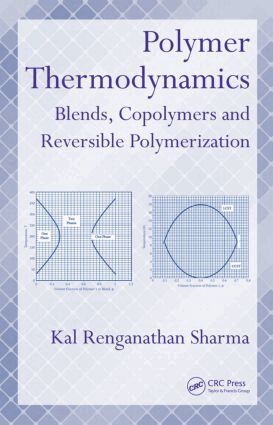
Polymer Thermodynamics: Blends, Copolymers and Reversible Polymerization describes the thermodynamic basis for miscibility as well as the mathematical models used to predict the compositional window of miscibility and construct temperature versus volume-fraction phase diagrams. The book covers the binary interaction model, the solubility parameter approach, and the entropic difference model. Using equation of state (EOS) theories, thermodynamic models, and information from physical properties, it illustrates the construction of phase envelopes.The book presents nine EOS theories, including some that take into account molecular weight effects. Characteristic values are given in tables. It uses the binary interaction model to predict the compositional window of miscibility for copolymer/homopolymer blends and blends of copolymers and terpolymers with common monomers. It discusses Hansen fractional solubility parameter values, six phase diagram types, the role of polymer architecture in phase behavior, and the mathematical framework for multiple glass transition temperatures found in partially miscible polymer blends. The author also illustrates biomedical and commercial applications of nanocomposites, the properties of various polymer alloys, Fick’s laws of diffusion and their implications during transient events, and the use of the dynamic programming method in the sequence alignment of DNA and proteins. The final chapter reviews the thermodynamics of reversible polymerization and copolymerization.Polymer blends offer improved performance/cost ratios and the flexibility to tailor products to suit customers’ needs. Exploring physical phenomena, such as phase separation, this book provides readers with methods to design polymer blends and predict the phase behavior of binary polymer blends using desktop computers.

504 kr
Skickas inom 3-6 vardagar
Global market sizes for nanocoatings and coatings are expected to be $14.3 billion and $123 billion, respectively, by the year 2019. Coatings can be classified according to their applications or method of preparation or type of property imparted to the product. They can be either solvent based or water based and may be comprised of polymers or inorganic materials. Nanocoatings with thicknesses less than 100 nm can offer superior performance properties compared with conventional coatings. Nanotuff was one of the first commercial nanocoatings, it contained nanosized particles suspended in an epoxy matrix. Coatings can have specific purposes such as corrosion resistance, antiabrasive resistance, scratch resistance, chemical resistance, and stain resistance to the objects they are applied on. This book contains some new theory in the areas of solubility parameter estimates using isentropic volume expansivity, compressibility, and surface tension effects during coating flows. This volume contains chapters on methods, solvents, drying and inks, and properties. Patents from leading companies such as Xerox, IBM, Intel, BASF, PPG, Boeing, Valspar, Toyota, Goodyear, Gaze Nanotech, Bell Helicopter, Procter & Gamble, and General Electric on nanocoatings are discussed in the book.

758 kr
Skickas inom 3-6 vardagar
In this day and age, the chemical process engineer strives to make products at a lower cost, with less pollution, while using a variety of raw materials. When a new product or process is found to be successful, more plants are built either by retrofit or existing similar plants, or by construction of large plants.Engineers involved in the scaling of new plants will need a solid understanding of the issues involved in multiple reactions, which can happen in a series, in parallel, and can be reversible. Computer software can be used provide detailed treatments of these reactions and readers of Multiple Reactions Galore will learn how to treat intermediate products during a complex reaction scheme.This two-volume set discusses the engineering design issues involved when multiple reactions occur in the considered process. Design issues such as product distribution, economic analysis and profitability as well as the sensitivity of important quantities such as yield, selectivity to rate constant ratios, will be presented in detail.The author explains how to use Excel spreadsheets to seek numerical solutions when closed form analytical solutions are not possible. The author also explores the importance of by-product and by-product yield, which is often overlooked in traditional reaction engineering textbooks.

504 kr
Skickas inom 3-6 vardagar
Global market sizes for nanocoatings and coatings are expected to be $14.3 billion and $123 billion, respectively, by the year 2019. Coatings can be classified according to their applications or method of preparation or type of property imparted to the product. They can be either solvent based or water based and may be comprised of polymers or inorganic materials. Nanocoatings with thicknesses less than 100 nm can offer superior performance properties compared with conventional coatings. Nanotuff was one of the first commercial nanocoatings it contained nanosized particles suspended in an epoxy matrix. Coatings can have specific purposes such as corrosion resistance, antiabrasive resistance, scratch resistance, chemical resistance, and stain resistance to the objects they are applied on. This book contains some new theory in the areas of solubility parameter estimates using isentropic volume expansivity, compressibility, and surface tension effects during coating flows. This volume contains separate chapters on introduction, applications, and stability.
Multiple Reactions Galore, Volume II
Free Radical Copolymerization and Biocatalysis
Häftad, Engelska, 2016
758 kr
Skickas inom 3-6 vardagar
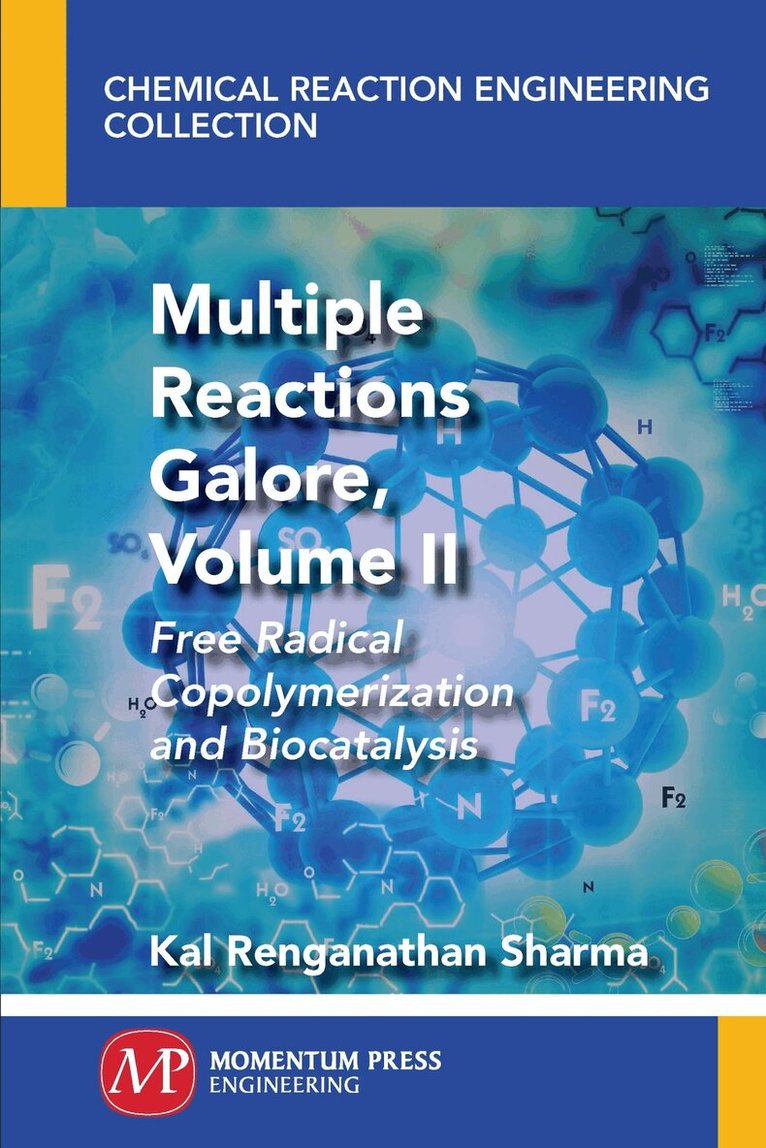
In this day and age, the chemical process engineer strives to make products at a lower cost, with less pollution, while using a variety of raw materials. When a new product or process is found to be successful, more plants are built either by retrofit or existing similar plants, or by construction of large plants.Engineers involved in the scaling of new plants will need a solid understanding of the issues involved in multiple reactions, which can happen in a series, in parallel, and can be reversible. Computer software can be used provide detailed treatments of these reactions and readers of Multiple Reactions Galore will learn how to treat intermediate products during a complex reaction scheme.This two-volume set discusses the engineering design issues involved when multiple reactions occur in the considered process. Design issues such as product distribution, economic analysis and profitability as well as the sensitivity of important quantities such as yield, selectivity to rate constant ratios, will be presented in detail.The author explains how to use Excel spreadsheets to seek numerical solutions when closed form analytical solutions are not possible. The author also explores the importance of by-product and by-product yield, which is often overlooked in traditional reaction engineering textbooks.
937 kr
Skickas inom 10-15 vardagar
In today's rapidly changing global economy, business managers must have the tools and know-how to quickly evaluate the economic viability of potential solutions to engineering problems. An entire field of study has evolved to meet this need, yet there are few straightforward texts that outline the basics of engineering economics.Fundamentals of Engineering Economics is an accessible, comprehensive guide to the fundamental principles, concepts, and methods of engineering economics. Utilizing detailed case studies and exercises reflecting current trends and issues in economics, this book introduces students to a variety of key concepts, including estimation of the time value of money, evaluation of a single project, decision analysis, depreciation and taxes. This is an ideal textbook for Economic Analysis and Technical Applications students, or anyone seeking to gain an understanding of the core concepts of engineering economics.Fundamentals of Engineering Economics is organized into the following topical chapters: Overview of Engineering Economy Fixed and Variable Costs Time Worth of Money Five Methods for Evaluation of Capital Project Comparison of Alternates and Decision Analysis Depreciation and Replacement Analysis Taxes, Tariffs, and Duties Public Sector Initiatives and Benefit-to-Cost Ratio Break-Even Analysis and Spider Plots