
Katarzyna de Lazari-Radek - Böcker
Visar alla böcker från författaren Katarzyna de Lazari-Radek. Handla med fri frakt och snabb leverans.
6 produkter
6 produkter
129 kr
Skickas inom 5-8 vardagar
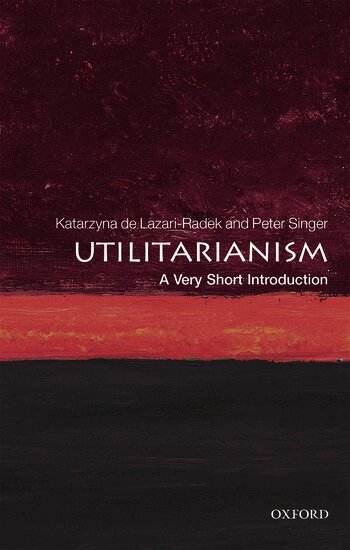
Utilitarianism may well be the most influential secular ethical theory in the world today. It is also one of the most controversial. It clashes, or is widely thought to clash, with many conventional moral views, and with human rights when they are seen as inviolable. Would it, for example, be right to torture a suspected terrorist in order to prevent an attack that could kill and injure a large number of innocent people? In this Very Short Introduction Peter Singer and Katarzyna de Lazari-Radek provide an authoritative account of the nature of utilitarianism, from its nineteenth-century origins, to its justification and its varieties. Considering how utilitarians can respond to objections that are often regarded as devastating, they explore the utilitarian answer to the question of whether torture can ever be justified. They also discuss what it is that utilitarians should seek to maximize, paying special attention to the classical utilitarian view that only pleasure or happiness is of intrinsic value. Singer and de Lazari-Radek conclude by analysing the continuing importance of utilitarianism in the world, indicating how it is a force for new thinking on contemporary moral challenges like global poverty, the treatment of animals, climate change, reducing the risk of human extinction, end-of-life decisions for terminally-ill patients, and the shift towards assessing the success of government policies in terms of their impact on happiness. ABOUT THE SERIES: The Very Short Introductions series from Oxford University Press contains hundreds of titles in almost every subject area. These pocket-sized books are the perfect way to get ahead in a new subject quickly. Our expert authors combine facts, analysis, perspective, new ideas, and enthusiasm to make interesting and challenging topics highly readable.
529 kr
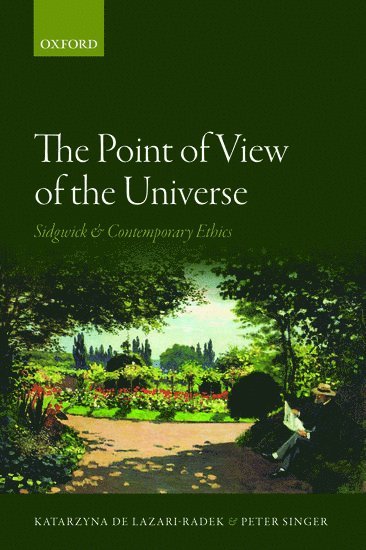
What does the idea of taking 'the point of view of the universe' tell us about ethics? The great nineteenth-century utilitarian Henry Sidgwick used this metaphor to present what he took to be a self-evident moral truth: the good of one individual is of no more importance than the good of any other. Ethical judgments, he held, are objective truths that we can know by reason. The ethical axioms he took to be self-evident provide a foundation for utilitarianism. He supplements this foundation with an argument that nothing except states of consciousness have ultimate value, which led him to hold that pleasure is the only thing that is intrinsically good. Are these claims defensible? Katarzyna de Lazari-Radek and Peter Singer test them against a variety of views held by contemporary writers in ethics, and conclude that they are. This book is therefore a defence of objectivism in ethics, and of hedonistic utilitarianism. The authors also explore, and in most cases support, Sidgwick's views on many other key questions in ethics: how to justify an ethical theory, the significance of an evolutionary explanation of our moral judgments, the choice between preference-utilitarianism and hedonistic utilitarianism, the conflict between self-interest and universal benevolence, whether something that it would be wrong to do openly can be right if kept secret, how demanding utilitarianism is, whether we should discount the future, or favor those who are worse off, the moral status of animals, and what is an optimum population.
851 kr
Skickas inom 5-8 vardagar
What does the idea of taking 'the point of view of the universe' tell us about ethics? The great nineteenth-century utilitarian Henry Sidgwick used this metaphor to present what he took to be a self-evident moral truth: the good of one individual is of no more importance than the good of any other. Ethical judgments, he held, are objective truths that we can know by reason. The ethical axioms he took to be self-evident provide a foundation for utilitarianism. He supplements this foundation with an argument that nothing except states of consciousness have ultimate value, which led him to hold that pleasure is the only thing that is intrinsically good. Are these claims defensible? Katarzyna de Lazari-Radek and Peter Singer test them against a variety of views held by contemporary writers in ethics, and conclude that they are. This book is therefore a defence of objectivism in ethics, and of hedonistic utilitarianism. The authors also explore, and in most cases support, Sidgwick's views on many other key questions in ethics: how to justify an ethical theory, the significance of an evolutionary explanation of our moral judgments, the choice between preference-utilitarianism and hedonistic utilitarianism, the conflict between self-interest and universal benevolence, whether something that it would be wrong to do openly can be right if kept secret, how demanding utilitarianism is, whether we should discount the future, or favor those who are worse off, the moral status of animals, and what is an optimum population.

99 kr
Skickas inom 7-10 vardagar
Edited by Katarzyna de Lazari-Radek and Peter Singer, “the acknowledged heirs of the founders of utilitarianism” (Jeff McMahan), the Norton Library edition of Utilitarianism features the complete text of the seventh (1879) edition, preceded by a thorough introduction to the work’s historical and intellectual contexts. Extensive endnotes clarify obscure terms and provide detailed analysis of the most philosophically significant passages, helping students to understand and critically engage with “the most famous defense of the utilitarian view ever written” (Geoffrey Scarre).
1 953 kr
Skickas inom 10-15 vardagar
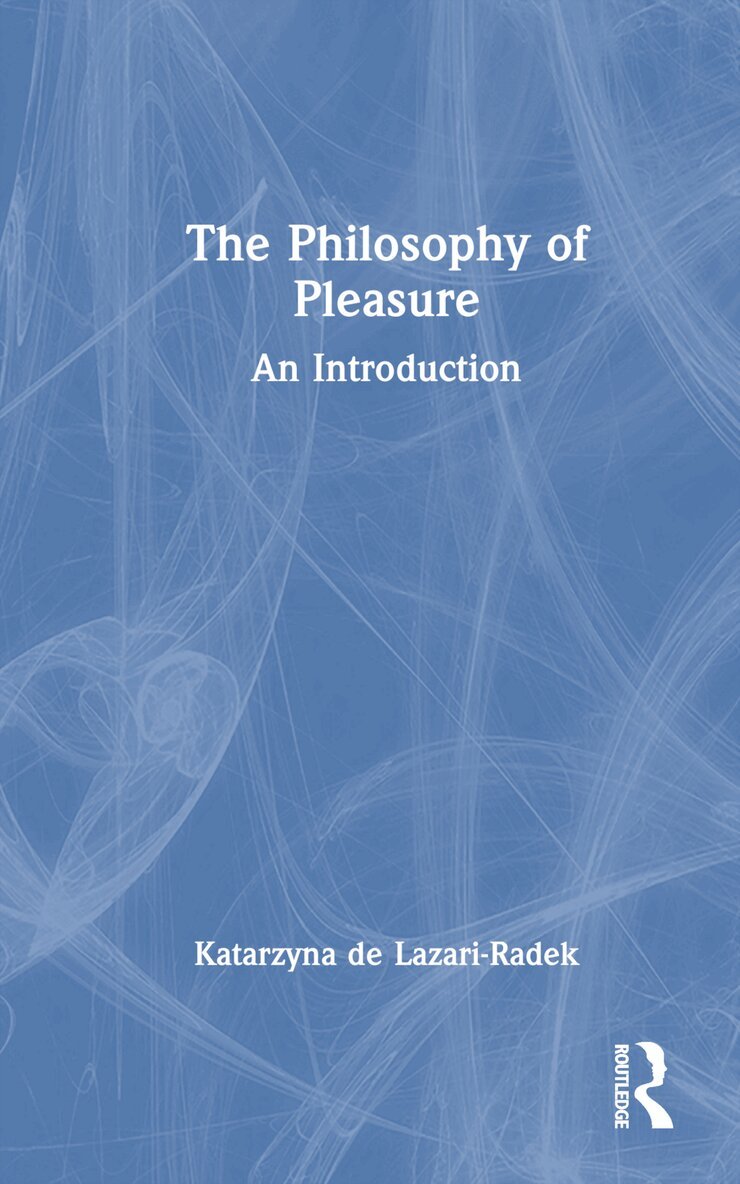
The experience of pleasure, alongside pain, is a primary element of human life. It rules our instincts and desires for food, sex and avoiding various forms of harm. Crucial to psychological and social well-being, it has preoccupied philosophers from Aristotle to John Stuart Mill and plays a fundamental role in moral and ethical theory, especially utilitarianism. More recently, it has become a central subject for psychologists, biologists and neuroscientists.Yet it remains an elusive and deceptively difficult concept. What is pleasure? How does it differ from happiness? Should we value pleasure? Should we value only pleasure? Which theories of pleasure are most plausible? In this rigorous and comprehensive introduction to the topic, Katarzyna de Lazari-Radek unpacks and assesses these questions and many more, including:The history of pleasure from ancient China, India and Greece to modern timesPleasure, sensation, feeling and consciousnessWhat scientific research reveals about the nature of pleasure – can pleasure be measured scientifically?"Higher" and "lower" pleasuresThe relation between happiness and pleasurePleasure and painPleasure and animalsPleasure as an ultimate good and the relation between pleasure and rationality.The Philosophy of Pleasure: An Introduction is essential reading for students of ethics and political philosophy, and also suitable for those studying related disciplines such as psychology, politics and sociology.

522 kr
Skickas inom 10-15 vardagar
The experience of pleasure, alongside pain, is a primary element of human life. It rules our instincts and desires for food, sex and avoiding various forms of harm. Crucial to psychological and social well-being, it has preoccupied philosophers from Aristotle to John Stuart Mill and plays a fundamental role in moral and ethical theory, especially utilitarianism. More recently, it has become a central subject for psychologists, biologists and neuroscientists.Yet it remains an elusive and deceptively difficult concept. What is pleasure? How does it differ from happiness? Should we value pleasure? Should we value only pleasure? Which theories of pleasure are most plausible? In this rigorous and comprehensive introduction to the topic, Katarzyna de Lazari-Radek unpacks and assesses these questions and many more, including:The history of pleasure from ancient China, India and Greece to modern timesPleasure, sensation, feeling and consciousnessWhat scientific research reveals about the nature of pleasure – can pleasure be measured scientifically?"Higher" and "lower" pleasuresThe relation between happiness and pleasurePleasure and painPleasure and animalsPleasure as an ultimate good and the relation between pleasure and rationality.The Philosophy of Pleasure: An Introduction is essential reading for students of ethics and political philosophy, and also suitable for those studying related disciplines such as psychology, politics and sociology.