
Leigh Claire La Berge – författare
Visar alla böcker från författaren Leigh Claire La Berge. Handla med fri frakt och snabb leverans.
8 produkter
8 produkter

538 kr
Skickas inom 5-8 vardagar
The Long 1980s could be summed up handily in the annals of U.S. cultural history with the enduring markers of Ronald Reagan's presidency, Oliver Stone's film Wall Street, and Dire Straits's hit single "Money for Nothing." Despite their vast differences, each serves to underscore the confidence, jingoism, and optimism that powered the U.S. economy throughout the decade. Mining a wide range of literature, film, and financial print journalism, Scandals and Abstraction chronicles how American society's increasing concern with finance found expression in a large array of cultural materials that ultimately became synonymous with postmodernism. The ever-present credit cards, monetary transactions, and ATMs in Don De Lillo's White Noise open this study as they serve as touchstones for its protagonist's sense of white masculinity and ground the novel's narrative form. Tom Wolfe's The Bonfire of the Vanities and Oliver Stone's Wall Street animate a subsequent chapter, as each is considered in light of the 1987 stock market crash and held up as a harbinger of a radical new realism that claimed a narrative monopoly on representing an emergent financial era. These works give way to the pornographic excess and violence of Bret Easton Ellis's epochal American Psycho, which is read alongside the popular 1980s genre of the financial autobiography. With a series of trenchant readings, La Berge argues that Ellis's novel can be best understood when examined alongside Ivan Boesky's Merger Mania, Donald Trump's The Art of the Deal, and T. Boone Pickens's Boone. A look at Jane Smiley's Good Faith and its plot surrounding the savings and loan crisis of the 1980s and 1990s, concludes the study, and considers how financial reportage became a template for much of our current writing about of finance.Drawing on a diverse archive of novels, films, autobiographies, and journalism, Scandals and Abstraction provides a timely study of the economy's influence on fiction, and outlines a feedback loop whereby postmodernism became more canonical, realism became more postmodern, and finance became a distinct cultural object.

1 460 kr
Skickas inom 5-8 vardagar
The greed, excess, and decadence of the long 1980s has been famously chronicled, critiqued, and satirized in epochal works like White Noise by Don DeLillo, American Psycho by Bret Easton Ellis, and Tom Wolfe's The Bonfire of the Vanities. Leigh Claire La Berge offers an in-depth study of these fictions alongside the key moments of financial history that inform them, contending that throughout the 1980s, novelists, journalists, and filmmakers began to reimagine the capitalist economy as one that was newly personal, masculine, and anxiety producing. The study's first half links the linguistic to the technological by exploring the arrival of ATMs and their ubiquity in postmodern American literature. In transformative readings of novels such as White Noise and American Psycho, La Berge traces how the ATM serves as a symbol of anxious isolation and the erosion of interpersonal communication. A subsequent chapter on Ellis' novel and Jane Smiley's Good Faith explores how male protagonists in each develop unique associations between money and masculinity. The second half of the monograph features chapters that attend to works-most notably Oliver Stone's Wall Street and Wolfe's The Bonfire of the Vanities-that capture aspects of the arrogance and recklessness that led to the savings-and-loan crisis and the 1987 stock market crash. Concluding with a coda on the recent Occupy Wall Street Movement and four short stories written in its wake, Scandals and Abstraction demonstrates how economic forces continue to remain a powerful presence in today's fiction.
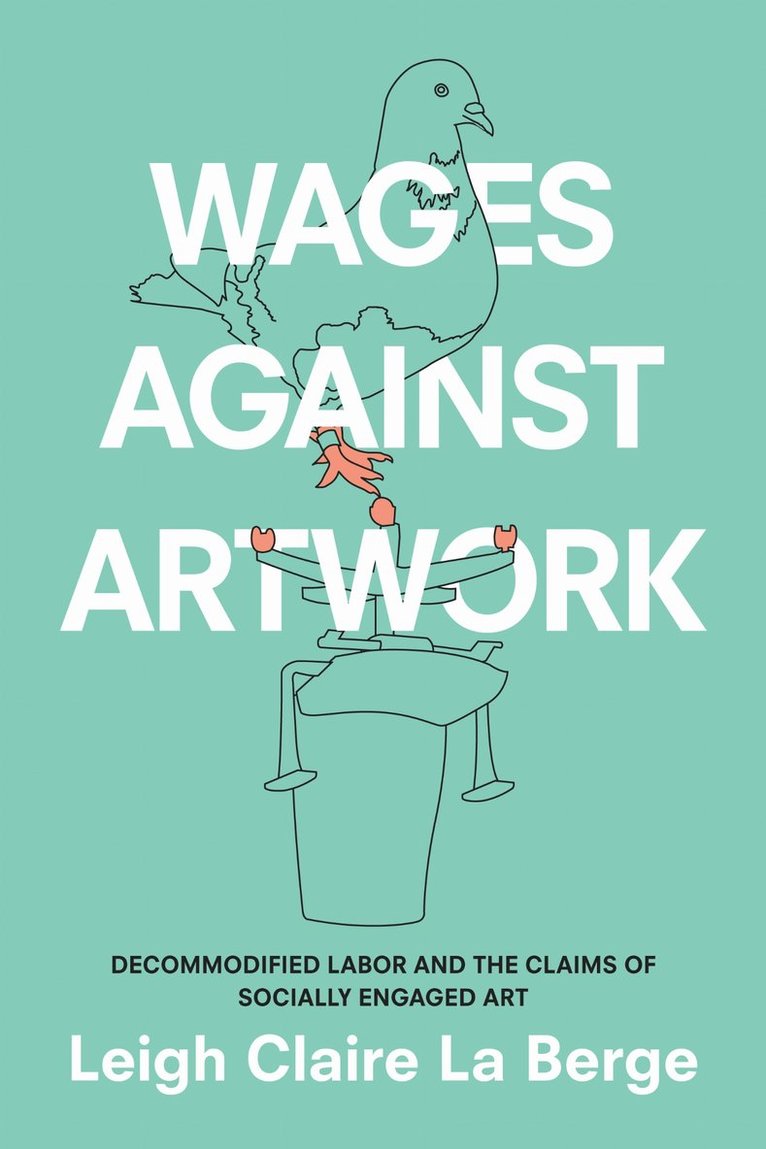
Wages Against Artwork
Decommodified Labor and the Claims of Socially Engaged Art
Inbunden, Engelska, 2019
1 120 kr
Skickas inom 7-10 vardagar
The last twenty years have seen a rise in the production, circulation, and criticism of new forms of socially engaged art aimed at achieving social justice and economic equality. In Wages Against Artwork Leigh Claire La Berge shows how socially engaged art responds to and critiques what she calls decommodified labor-the slow diminishment of wages alongside an increase in the demands of work. Outlining the ways in which socially engaged artists relate to work, labor, and wages, La Berge examines how artists and organizers create institutions to address their own and others' financial precarity; why the increasing role of animals and children in contemporary art points to the turn away from paid labor; and how the expansion of MFA programs and student debt helps create the conditions for decommodified labor. In showing how socially engaged art operates within and against the need to be paid for work, La Berge offers a new theorization of the relationship between art and contemporary capitalism.
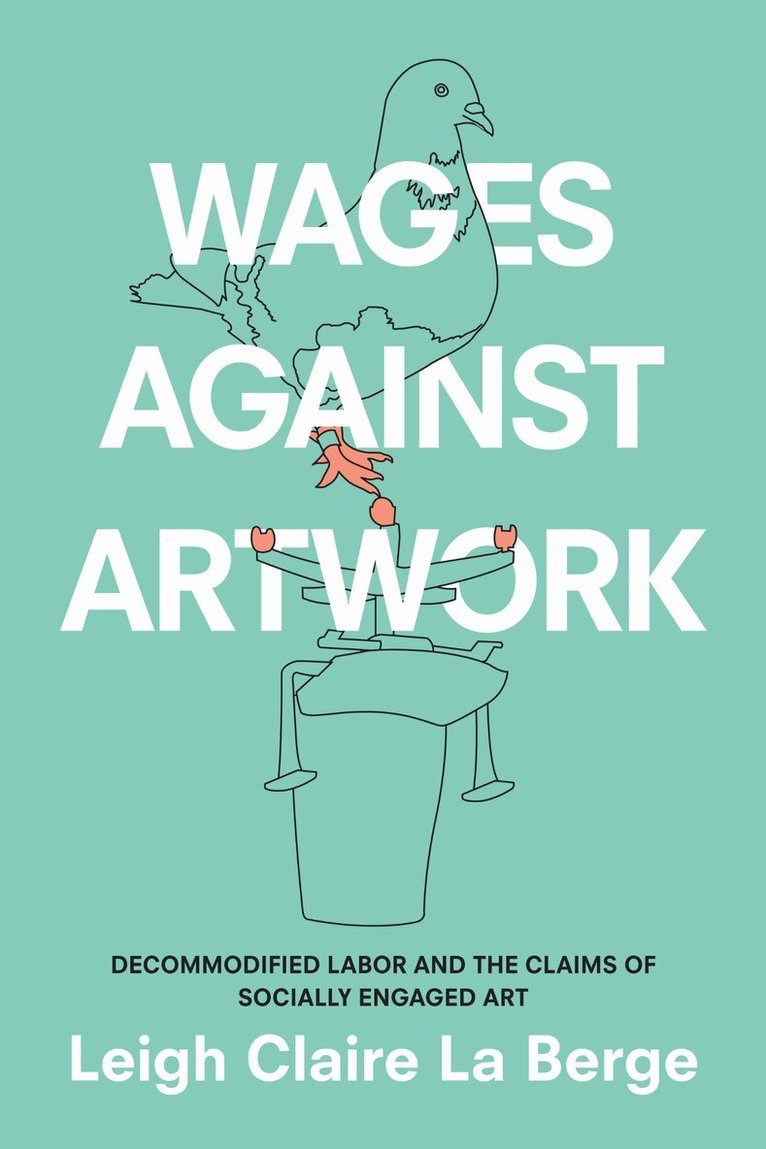
Wages Against Artwork
Decommodified Labor and the Claims of Socially Engaged Art
Häftad, Engelska, 2019
292 kr
Skickas inom 7-10 vardagar
The last twenty years have seen a rise in the production, circulation, and criticism of new forms of socially engaged art aimed at achieving social justice and economic equality. In Wages Against Artwork Leigh Claire La Berge shows how socially engaged art responds to and critiques what she calls decommodified labor-the slow diminishment of wages alongside an increase in the demands of work. Outlining the ways in which socially engaged artists relate to work, labor, and wages, La Berge examines how artists and organizers create institutions to address their own and others' financial precarity; why the increasing role of animals and children in contemporary art points to the turn away from paid labor; and how the expansion of MFA programs and student debt helps create the conditions for decommodified labor. In showing how socially engaged art operates within and against the need to be paid for work, La Berge offers a new theorization of the relationship between art and contemporary capitalism.

1 114 kr
Skickas inom 7-10 vardagar
At the outset of Marx for Cats, Leigh Claire La Berge declares that “all history is the history of cat struggle.” Revising the medieval bestiary form to meet Marxist critique, La Berge follows feline footprints through Western economic history to reveal an animality at the heart of Marxism. She draws on a twelve-hundred-year arc spanning capitalism’s feudal prehistory, its colonialist and imperialist ages, the bourgeois revolutions that supported capitalism, and the communist revolutions that opposed it to outline how cats have long been understood as creatures of economic critique and liberatory possibility. By attending to the repeated archival appearance of lions, tigers, wildcats, and “sabo-tabbies,” La Berge argues that felines are central to how Marxists have imagined the economy, and by asking what humans and animals owe each other in a moment of ecological crisis, La Berge joins current debates about the need for and possibility of eco-socialism. In this playful and generously illustrated radical bestiary, La Berge demonstrates that class struggle is ultimately an interspecies collaboration.

284 kr
Skickas inom 7-10 vardagar
At the outset of Marx for Cats, Leigh Claire La Berge declares that “all history is the history of cat struggle.” Revising the medieval bestiary form to meet Marxist critique, La Berge follows feline footprints through Western economic history to reveal an animality at the heart of Marxism. She draws on a twelve-hundred-year arc spanning capitalism’s feudal prehistory, its colonialist and imperialist ages, the bourgeois revolutions that supported capitalism, and the communist revolutions that opposed it to outline how cats have long been understood as creatures of economic critique and liberatory possibility. By attending to the repeated archival appearance of lions, tigers, wildcats, and “sabo-tabbies,” La Berge argues that felines are central to how Marxists have imagined the economy, and by asking what humans and animals owe each other in a moment of ecological crisis, La Berge joins current debates about the need for and possibility of eco-socialism. In this playful and generously illustrated radical bestiary, La Berge demonstrates that class struggle is ultimately an interspecies collaboration.
440 kr
Skickas inom 7-10 vardagar
242 kr
Skickas inom 5-8 vardagar
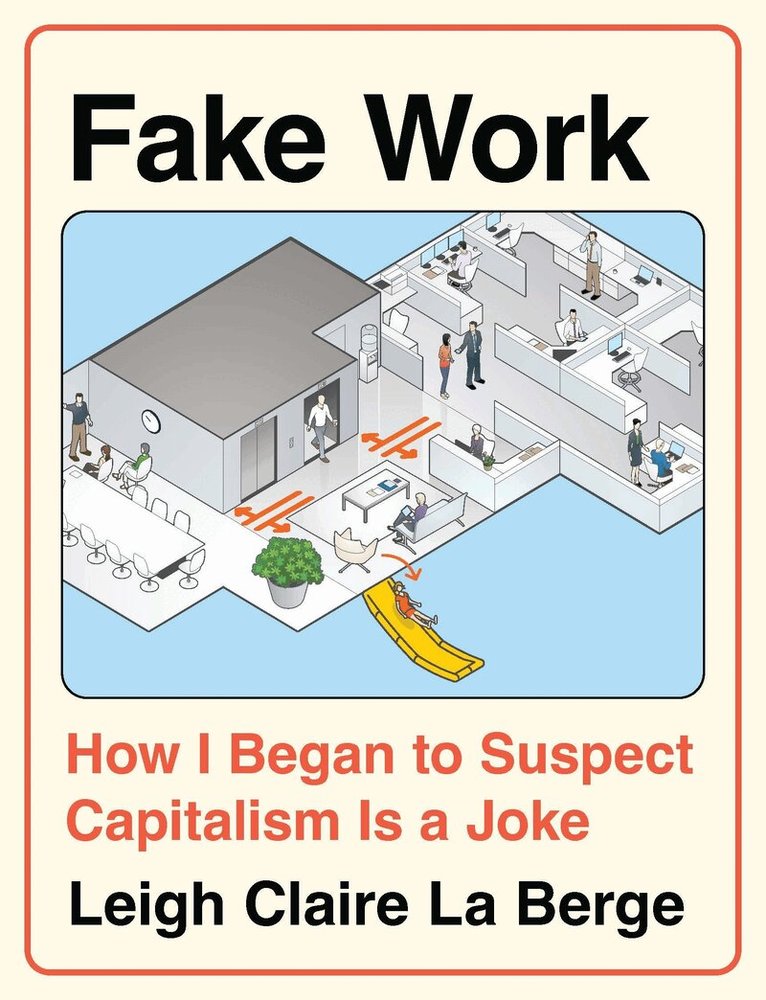
"[A] memorable portrait of the mad hunger of corporate toil...superbly committed to its own beliefs — truthful, dryly funny and often subtly moving." – Charles Finch, The New York TimesIn this genre-bending memoir, Leigh Claire La Berge reflects on her stint at one of the most prestigious management consulting firms in the country and what it teaches us about the absurdity of work—for readers of Bullshit Jobs and fans of Office Space and Sorry to Bother YouWhile headlines blazed with doomsaying prophecies about the looming Y2K apocalypse, Leigh Claire was quickly introduced to the mysterious workings of The Process—a mythical and ever-changing corporate ethos The Andersen People (her fellow consultants) believed held world-saving powers. Her heroic task: printing physical copies of spreadsheets and sending them to a secure storage facility somewhere in the bowels of New Jersey. After performing a series of equally mundane tasks, one well-timed deployment of an anecdote about a legendary quarterback catapulted her into the ranks of middle management. It wasn’t long before she found herself jet-setting on the firm’s dime to thirty-minute lunch meetings in Johannesburg, and giving impromptu lectures to Japanese executives about limiting liability at the end of the world.By the end of her brief time as a businessman at a fake firm, in a fake industry, dedicated to solving a fake crisis, Leigh Claire had accumulated a lifetime’s worth of lessons about the absurdity of work and the nature of financialized capitalism. Fake Work blends memoir with post-facto theoretical interjections on the philosophical problems posed by contemporary corporate culture—from the inadequacy of poststructuralist inquiry to the alienation of office jobs—to tell the story of the techno-armageddon that wasn’t.