
Maryann Hardy - Böcker
Visar alla böcker från författaren Maryann Hardy. Handla med fri frakt och snabb leverans.
2 produkter
2 produkter

1 009 kr
Skickas inom 7-10 vardagar
Radiography is an integral part of paediatric health care. It is frequently requested to assist in the diagnosis, management and treatment of childhood disease and illness. Accurate interpretation of paediatric radiographs can depend entirely on the quality of images produced by the radiographer, yet there are few books available on this crucial aspect of radiographic practice. Paediatric Radiography fills a gap. It explores radiographic practice within the context of the modern health service and focuses on how our knowledge and understanding of paediatric growth, development and illness can inform and influence radiographic procedures. It includes detailed coverage of specific paediatric techniques and good practice models, including the role of multi-modality imaging, and looks specifically at radiation protection, the chest and upper airways, the abdomen, neonatal radiography, trauma, orthopaedics, and non-accidental injury.
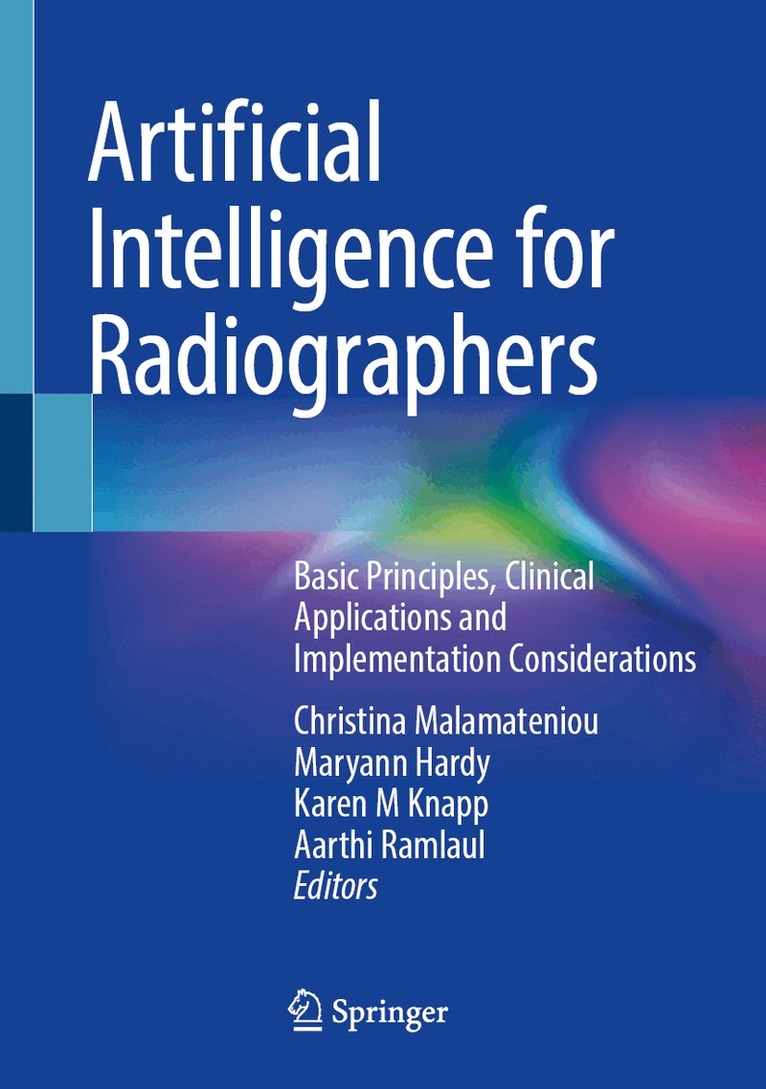
Artificial Intelligence for Radiographers
Basic Principles, Clinical Applications and Implementation Considerations
Inbunden, Engelska, 2026
769 kr
Skickas inom 10-15 vardagar
This textbook aims to introduce radiographers to the basic principles, ethics, governance and clinical applications of Artificial Intelligence (AI) across different medical imaging modalities including advantages, challenges and future work needed for AI implementation. It is an essential resource for all clinical practitioners, educators, academics, researchers and students, working in medical imaging and radiotherapy, providing a coherent, evidence-based, comprehensive guide to current and future practice.Understanding both technical and practical aspects of AI through case studies enables safe and effective patient care, state-of-the-art academic radiography education, enhanced interdisciplinary team communication and collaboration, and appreciation of the accountability involved when employing AI models. This textbook also offers insights into the impact on careers, future roles and staff and patient acceptability. It also stresses person-centredness as paramount for AI integration into clinical radiography in a chapter co-produced with patients. Furthermore, it offers the perspectives, supportive statements and AI resources of different national and international organisations, professional bodies and learned societies. Moreover, a chapter led by industry experts brings a unique view on requirements for AI innovation and commercialisation, aiming to inspire hopeful innovators and entrepreneurs.Finally, the textbook discusses the changing role, responsibilities and competencies of radiographers in a future with AI. It highlights the need to update academic curricula, research priorities and policy to reflect the change of clinical practice and prepare the workforce for a digital future. The editors would like to sincerely thank Dr Charlotte Beardmore, Professor Patrick Brennan, Edward Chan, Samar ElFarra, Dr Kori Stewart, all renowned world leaders in radiography research, education, policy and practice for their kind forewords. This work is written by the global radiography community as an offering for all radiographers.