
Maurice Cranston - Böcker
Visar alla böcker från författaren Maurice Cranston. Handla med fri frakt och snabb leverans.
4 produkter
4 produkter
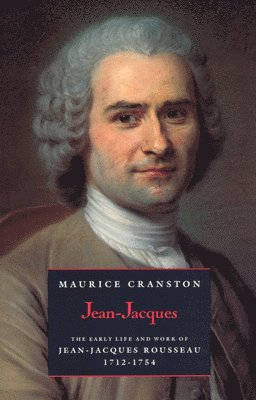
294 kr
Skickas inom 7-10 vardagar
In the first volume of his trilogy, noted political philosopher Maurice Cranston draws from original manuscript sources to trace Rousseau's life from his birth in provincial obscurity in Geneva, through his youthful wanderings, to his return to Geneva in 1754 as a celebrated writer and composer."[An] admirable biography which is as meticulous, calm, reasonable, and judicious as its subject is passionate and tumultuous."—Keith Michael Baker, Washington Post Book World"The definitive biography, as scholarly as it is entertaining."—The Economist"Exceptionally fresh . . . . [Cranston] seems to know exactly what his readers need to know, and thoughtfully enriches the background—both physical and intellectual—of Rousseau's youthful peregrinations . . . . He makes the first part of Rousseau's life as absorbing as a picaresque novel. His fidelity to Rousseau's ideas and to his life as it was lived is a triumph of poise."—Naomi Bliven, The New Yorker"The most outstanding achievement of Professor Cranston's own distinguished career."—Robert Wokler, Times Literary SupplementMaurice Cranston (1920-1993), a distinguished scholar and recipient of the James Tait Black Memorial Prize for his biography of John Locke, was professor of political science at the London School of Economics. His numerous books include The Romantic Movement and Philosophers and Pamphleteers, and translations of Rousseau's The Social Contract and Discourse on the Origins of Inequality.
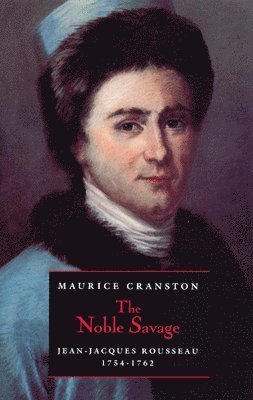
846 kr
Skickas inom 3-6 vardagar
In this second volume of the unparalleled exposition of Rousseau's life and works, Cranston completes and corrects the story told in Rousseau's Confessions, and offers a vivid, entirely new history of his most eventful and productive years. "Luckily for us, Maurice Cranston's The Noble Savage: Jean-Jacques Rousseau, 1754-1762 has managed to craft a highly detailed account of eight key years of Rousseau's life in such a way that we can both understand and even, on occasion, sympathize."—Olivier Bernier, Wall Street JournalMaurice Cranston (1920-1993), a distinguished scholar and recipient of the James Tait Black Memorial Prize for his biography of John Locke, was professor of political science at the London School of Economics. His numerous books include The Romantic Movement and Philosophers and Pamphleteers, and translations of Rousseau's The Social Contract and Discourse on the Origins of Inequality.
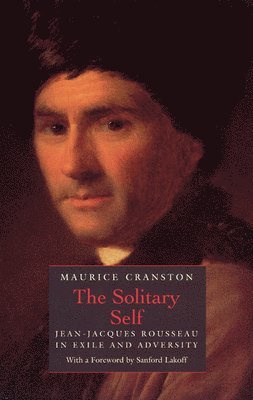
582 kr
Skickas inom 3-6 vardagar
In this final volume of his biographical trilogy, Maurice Cranston traces the last tempestuous years of Rousseau's life. Unerringly faithful to the evidence, Cranston's narrative allows Rousseau and his contemporaries to speak with renewed vigor and undistorted voice. From his brilliant authorship of the "Confessions," the "Dialogues," and the "Reveries" to his ill-fated sojourn in Britain, from his infamous public quarrel with David Hume to his clandestine return to France, from his unsettled wanderings to his eventual death in 1778 - these and other critical events in Rousseau's fading career are detailed in this balanced portrait. In 1762, with the condemnation of "Emile" and "The Social Contract," harried by both church and state, Jean-Jacques Rousseau fled Paris, seeking refuge in Switzerland, Prussia, and England. Deemed a social outcast and beset with feelings of persecution and abuse, not wholly unwarranted, the philosopher turned in despair to the production of autobiographical works intended to reveal his essential innocence and integrity. Through this bitter introspection, Rousseau transformed his misery and solitude into some of the most enduring literature of his time.
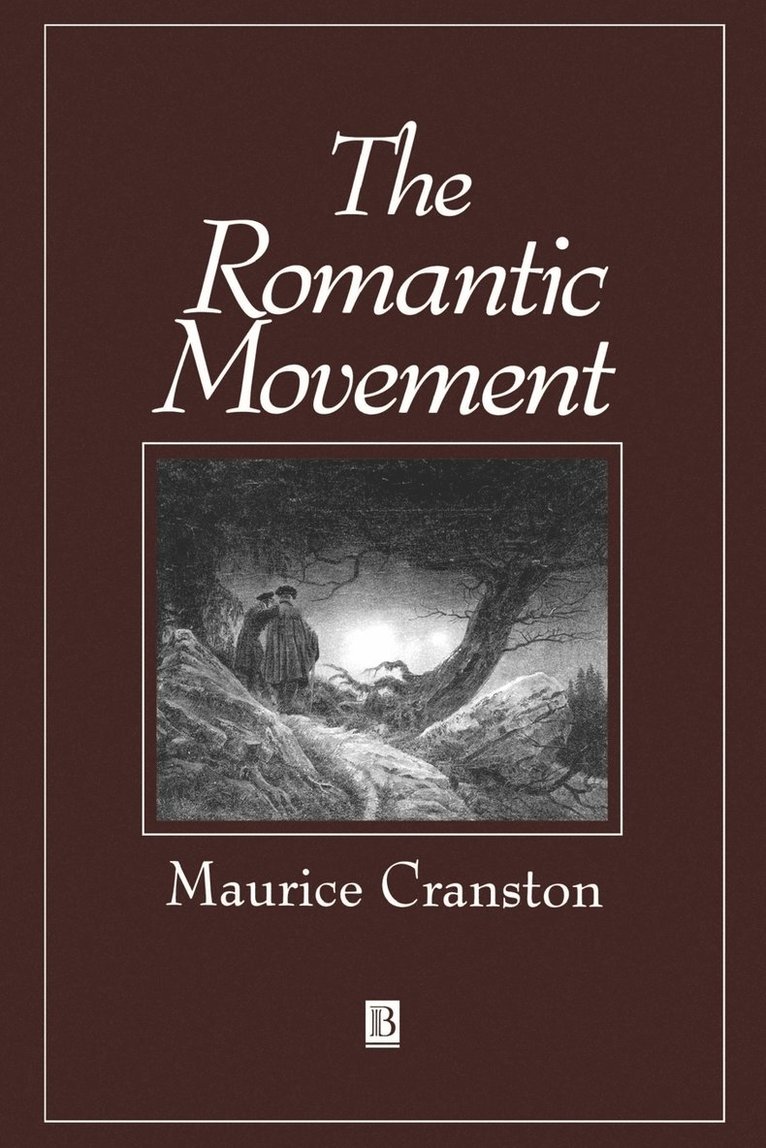
523 kr
Skickas inom 7-10 vardagar
The Romantic Movement in Europe was both a revolt and a revival, a philosophy of life as well as of art. In the earliest expressions of romantic theory by Rousseau and Diderot, it is seen as a revolt against rationalism. In Great Britain and Italy it appears as a revolt against classicism, in Spain as a revival of the tradition of the Moorish courts, and in Germany, where it excited the greatest enthusiasm, as both a revolt against rationalism and a revival of the Gothic and Germanic.Despite the differences of aim and emphasis across Europe, Professor Cranston argues that romaticism was a European phenomenon, as universal as the Renaissance. He isolates its common features - liberty, introspection, and the importance of love; truth in the expression of feeling as much as of thought; nature seen as an object of devotion rather than scientific study; a tolerance of the grotesque coupled with an interest in the exotic, the primitive and the medieval; a concern for the value of intuition over ratiocination; and a preference for audacity over prudence. The Romantic Movement is part of the common European heritage, and its influence is by no means at an end. The book is the first to describe its philosophy, history, and cultural and artistic manifestations, and the ways these varied across the countries of Europe.