
Michelle Lane - Böcker
Visar alla böcker från författaren Michelle Lane. Handla med fri frakt och snabb leverans.
4 produkter
4 produkter
644 kr
Skickas inom 7-10 vardagar
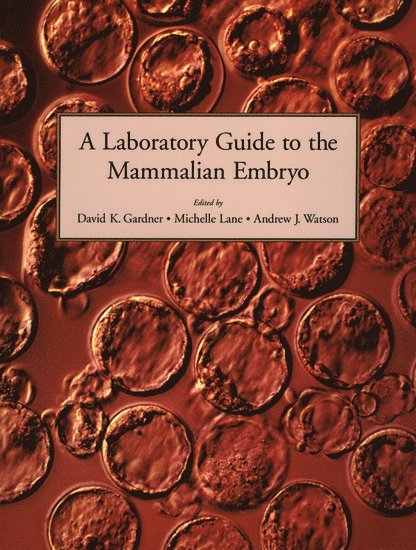
This book pulls together the full range of cell culture, biochemical, microscopic, and genetic techniques to study the early mammalian embryo. Until now, there has never been such a comprehensive compendium, though there have been more focused books of protocol, such as Manipulating the Mouse Embryo, from Cold Spring Harbor. This book is intended to appeal to all constituencies, from basic experimental science to clinical and animal science applications.
877 kr
Skickas inom 10-15 vardagar
The continued debate regarding the stage at which the human embryo conceived in the laboratory should be placed in the mother, combined with recent developments in culture media formulations, have brought the role of the human blastocyst in ART back into the spotlight.ART and the Human Blastocyst presents the proceedings of the International Symposium on ART and the Human Blastocyst held from March 30- April 2, 2000 in Dana Point, California. This book brings to the forefront the main issues raised with the transfer of embryos at the blastocyst stage, including the reduction of high order multiple gestations and the role of the blastocyst culture and transfer in facilitating successful single embryo transfer. Sections include gamete quality and pregnancy outcome, physiology of the embryo, blastocyst development in culture, blastocyst transfer and fate, and implantation. More than 40 illustrations and 25 tables complement the text.

230 kr
Skickas inom 3-6 vardagar
551 kr
Skickas inom 10-15 vardagar
The field of human artificial reproductive technology (ART) is continually advancing and has witnessed significant changes since the inception of Louise Brown in 1978. Though Louise Brown herself was conceived after the trans fer of a blastocyst, there remain significant confusion and debate regarding the stage at which the human embryo conceived in the laboratory should be replaced in the mother. Developments in culture media formulations, leading to the introduction of sequential media, have brought the role of the blasto cyst in human ART back into the spotlight. It was due to this resurgence of interest in the niche of extended culture in human infertility treatment that the symposium on "ART and the Human Blastocyst" was held. of this meeting within this volume bring to the forefront The proceedings the main issues raised with the transfer of embryos at the blastocyst stage. It is evident from the chapters that follow that ART needs to be perceived as a continuum of procedures, each one dependent on the preceding one, and all equally as important as each other. That is to say, the development of a com petent embryo is ultimately dependent on the quality of the gametes from which it was derived. With regard to the oocyte, this then places the emphasis on the physician to use a stimulation protocol that both produces quality oocytes and does not impair endometrial function. Maintenance of gamete and embryo quality is the laboratory's role.