
Nick Higham - Böcker
Visar alla böcker från författaren Nick Higham. Handla med fri frakt och snabb leverans.
5 produkter
5 produkter
88 kr
Skickas
Why is King Arthur a giant? Because his story has had such strong influences on our understanding of the history of Europe and the English-speaking world. Because the debate about Arthur as a historical figure has been central to understanding the fall of Roman Britain and the formation of England for much of the last 1,300 years. Because Arthur is one of the best-known kings in world history, whose reign was viewed as a golden age, an epoch in which to centre tales of right and wrong, of faith and faithlessness, and of courage and falseness, the moral and spiritual values of which continue to resonate today not least among those who dismiss Arthur as a late literary construct. Because an understanding of Arthur and all the different things he has meant to scores of generations up to the present is fundamental to our understanding of our own past, our understanding of ourselves and the ways in which we can benefit from history.
142 kr
Skickas inom 7-10 vardagar
Anyone interested in the real London needs to read this. - Andrew MarrNo city can survive without water, and lots of it. Today we take the stuff for granted: turn a tap and it gushes out. But it wasn't always so. For centuries London, one of the largest and richest cities in the world, struggled to supply its citizens with reliable, clean water. The Mercenary River tells the story of that struggle from the middle ages to the present day. Based on new research, it tells a tale of remarkable technological, scientific and organisational breakthroughs; but also a story of greed and complacency, high finance and low politics. Among the breakthroughs was the picturesque New River, neither new nor a river but a state of the art aqueduct completed in 1613 and still part of London's water supply: the company that built it was one of the very first modern business corporations, and also one of the most profitable. London water companies were early adopters of steam power for their pumps. And Chelsea Waterworks was the first in the world to filter the water it supplied its customers: the same technique is still used to purify two-thirds of London's drinking water. But for much of London's history water had to be rationed, and the book also chronicles our changing relationship with water and the way we use it.Amongst many stories, Nick Higham's page-turning narrative uncovers the murky tale of how the most powerful steam engine in the world was first brought to London; the extraordinary story of how one Victorian London water company deliberately cut off 2,000 households, even though it knew they had no alternative source of supply; the details of a financial scandal which brought two of the water companies close to collapse in the 1870s; and finally asks whether today's 21st century water companies are an improvement on their Victorian predecessors.
- Nyhet
152 kr
Kommande
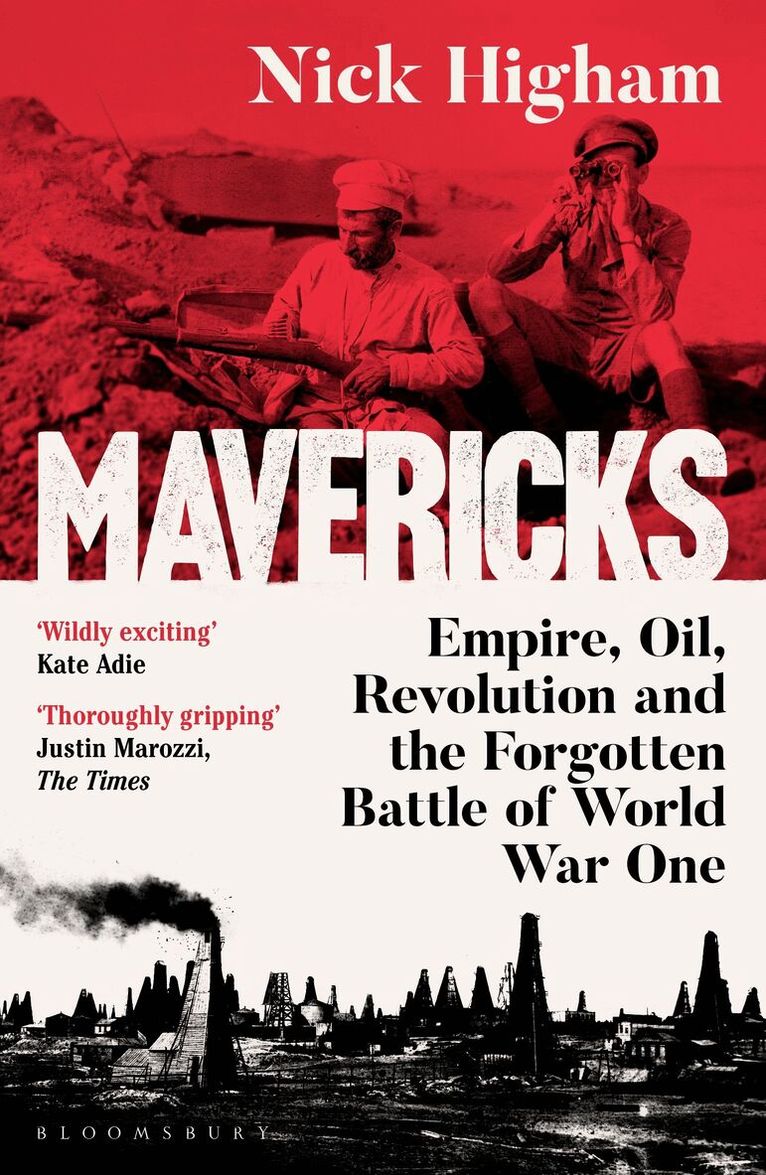
'Wildly exciting' KATE ADIE'Thoroughly gripping ... An action-packed tale' JUSTIN MAROZZI, THE TIMES'Beautifully written' LOUIS DE BERNIÈRES‘Stimulating... entertaining and instructive’ JULIAN EVANS, DAILY TELEGRAPHThe forgotten story of a group of British mavericks who took on an impossible mission with a daring and fearless approach.1918. The First World War is drawing to a close and regimes are collapsing across Europe. Amid the chaos, British officials plot a daring campaign to send an unlikely band of soldiers, diplomats and spies to the volatile shores of the Caspian Sea. Their mission: stop the advancing Turks, hold back the Bolsheviks and secure the vital supply of oil from Baku.Drawing on personal diaries, memoirs and once-secret government archives, Mavericks is a page-turning story of boldness and intrigue, set in a forgotten corner of the Great War where rules were made to be broken.
286 kr
Skickas inom 7-10 vardagar
'Wildly exciting' KATE ADIE'Thoroughly gripping ... An action-packed tale' JUSTIN MAROZZI, THE TIMES'Beautifully written' LOUIS DE BERNIÈRES‘Stimulating... entertaining and instructive’ JULIAN EVANS, DAILY TELEGRAPHThe forgotten story of a group of British mavericks who took on an impossible mission with a daring and fearless approach.As the First World War drew to a close and regimes began to collapse across Europe, British officials plotted a daring campaign to send an unlikely band of maverick soldiers, diplomats and spies to the chaotic region around the Caspian Sea. Their mission: to block the advance of the Turks, to hold back the rising Bolsheviks and prevent a Turkish-inspired jihad overwhelming India, and to secure the vital supply of oil from Baku. It was an almost impossible task, but Mavericks tells the gripping stories of the remarkable and enterprising characters at the centre of it all, who would be tested to the limit. There was Lionel Dunsterville, the inspiration for Kipling’s Stalky and commander of the expedition; Ranald MacDonell, a Scottish aristocrat and diplomat who smuggled millions of roubles for the war effort; Edward Noel, a seemingly indestructible soldier who was held hostage for sixty-five days in horrific conditions; Toby Rawlinson, the younger brother of one of Britain’s most senior generals and a brilliant inventor; and Reginald Teague-Jones, a spy who printed his own currency and would eventually emerge as an author at the age of ninety-nine. Drawing on personal diaries, memoirs and once-secret government archives, Mavericks brings to life a cast of eccentric heroes who survived against all odds to tell their extraordinary tales. This is a propulsive story of boldness and intrigue, set in a forgotten corner of the Great War where the rules were made to be broken.
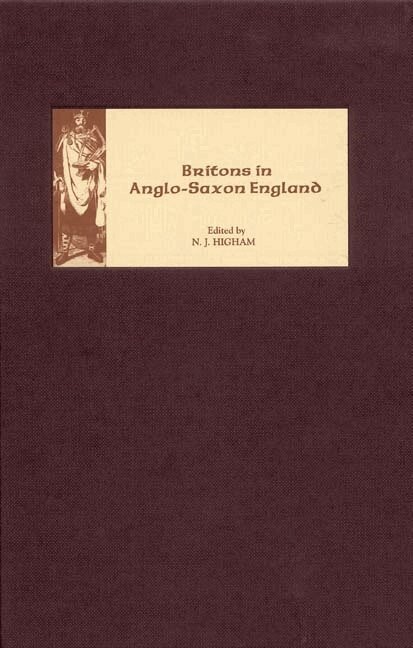
Del 7 - Pubns Manchester Centre for Anglo-Saxon Studies
Britons in Anglo-Saxon England
Inbunden, Engelska, 2007
1 195 kr
Skickas inom 7-10 vardagar
The question of the British presence in Anglo-Saxon England readdressed by archaeologists, historians, linguists, and place-name specialists.The number of native Britons, and their role, in Anglo-Saxon England has been hotly debated for generations; the English were seen as Germanic in the nineteenth century, but the twentieth saw a reinvention of the German "past". Today, the scholarly community is as deeply divided as ever on the issue: place-name specialists have consistently preferred minimalist interpretations, privileging migration from Germany, while other disciplinary groups have been less united in their views, with many archaeologists and historians viewing the British presence, potentially at least, as numerically significant or even dominant.The papers collected here seek to shed new light on this complex issue, by bringing together contributions from different disciplinary specialists and exploring the interfaces between various categories of knowledge about the past. They assemble both a substantial body of evidence concerning the presence of Britons and offer a variety of approaches to the central issues of the scale of that presence and its significance across the seven centuries of Anglo-Saxon England.NICK HIGHAM is Professor of Early Medieval and Landscape History at the University of Manchester. Contributors: RICHARD COATES, MARTIN GRIMMER, HEINRICH HARKE, NICK HIGHAM, CATHERINE HILLS, LLOYD LAING, C.P. LEWIS, GALE R. OWEN-CROCKER, O.J. PADEL, DUNCANPROBERT, PETER SCHRIJVER, DAVID THORNTON, HILDEGARD L.C. TRISTRAM, DAMIAN TYLER, HOWARD WILLIAMS, ALEX WOOLF