
Nicolai Petro – författare
Visar alla böcker från författaren Nicolai Petro. Handla med fri frakt och snabb leverans.
3 produkter
3 produkter
679 kr
Skickas inom 10-15 vardagar
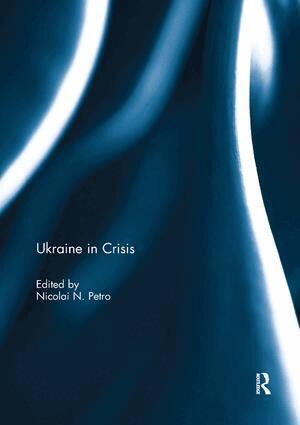
In this comprehensive volume, Canadian, Ukrainian, and American scholars examine various aspects of the Ukrainian crisis, and consider its impact on Europe. The chapters include topics such as: Russian narratives about Ukraine; the conflicting assumptions underlying their divergent nation-building agendas; new findings about the far right's involvement in the Maidan protests; the Ukrainian crisis from the perspective of Western grand strategy; the security implications of Russia's geopolitical agenda in Ukraine; the factors that contributed to the rise of separatism in Donbass; and the economic costs for Ukraine of choosing economic integration with Europe rather than Eurasia. This book demonstrates that the current crisis in Ukraine is much more complex than comes across in the media. It also explores the fact that, since Russia and Ukraine will always be neighbours, some sort of modus vivendi between them will have to be found.This book was originally published as a special issue of European Politics and Society.
628 kr
Skickas inom 10-15 vardagar
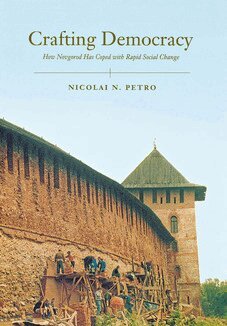
The Novgorod region of Russia is a sparsely populated area about the size of Ireland better known for its medieval archaeology and folklore than for anything else. Although Novgorod began the post-Soviet period with no unusual endowment of natural or human resources, it has attracted a large amount of foreign investment. Its dramatic economic success and political innovation have impressed observers. Local governments deliver benefits and services reliably, and the regional government responds quickly to citizens' needs and demands. Something noteworthy is happening in Novgorod that does not square with familiar headlines about contemporary Russia: oligarchs and oil, ethnic tensions and corruption.Nicolai N. Petro attempts to explain the Novgorod phenomenon by seeking answers at the regional level. Novgorod is, he finds, a model of effective democratic consolidation. Petro suggests that the region owes its unexpected recent success to its political elites, who have identified key cultural symbols and used those symbols to promote democratic development. Drawing on comparisons with other regions and countries, Petro finds that these cultural tactics often yield better results than do Western-style institutions and educational training programs. "Current efforts to promote democracy focus too much on structural changes and not enough on the conditions needed to sustain them," Petro writes. "For the rule of law, free markets, and free and fair elections to gain broad public support, they must first make sense within the local cultural tradition." The unexpected success of regional democratic development in a country not known for its democratic traditions suggests that local governments can transform the burden of the past into an ally of change, a finding with implications for democratic development initiatives in other areas of the world.
1 860 kr
Skickas inom 10-15 vardagar
In this comprehensive volume, Canadian, Ukrainian, and American scholars examine various aspects of the Ukrainian crisis, and consider its impact on Europe. The chapters include topics such as: Russian narratives about Ukraine; the conflicting assumptions underlying their divergent nation-building agendas; new findings about the far right's involvement in the Maidan protests; the Ukrainian crisis from the perspective of Western grand strategy; the security implications of Russia's geopolitical agenda in Ukraine; the factors that contributed to the rise of separatism in Donbass; and the economic costs for Ukraine of choosing economic integration with Europe rather than Eurasia. This book demonstrates that the current crisis in Ukraine is much more complex than comes across in the media. It also explores the fact that, since Russia and Ukraine will always be neighbours, some sort of modus vivendi between them will have to be found.This book was originally published as a special issue of European Politics and Society.