
Pauli Murray - Böcker
Visar alla böcker från författaren Pauli Murray. Handla med fri frakt och snabb leverans.
6 produkter
6 produkter
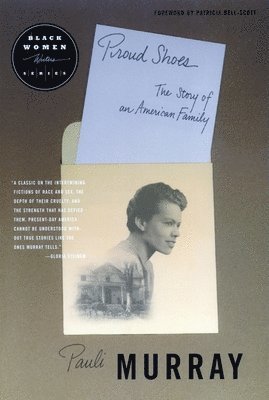
414 kr
Skickas inom 3-6 vardagar
668 kr
Skickas inom 5-8 vardagar
This remarkable, hard-to-find resource is an exhaustive compilation of state laws and local ordinances in effect in 1950 that mandated racial segregation and of pre-Brown-era civil rights legislation.The volume cites legislation from forty-eight states and the District of Columbia, and ordinances of twenty-four major cities across the country. The complete text of each law or ordinance is included, along with occasional notes about its history and the extent to which it was enforced.Other relevant information found in the volume ranges widely: the texts of various Supreme Court rulings; international documents; federal government executive orders, departmental rules, regulations, and directives; legislation related to aliens and Native Americans; and more.In his introduction Davison M. Douglas comments on the legislation compiled in the book and its relevance to scholars today and also provides biographical background on Pauli Murray, the attorney who was the volume's original editor.
391 kr
Skickas inom 5-8 vardagar
266 kr
Skickas inom 5-8 vardagar
292 kr
Skickas inom 3-6 vardagar
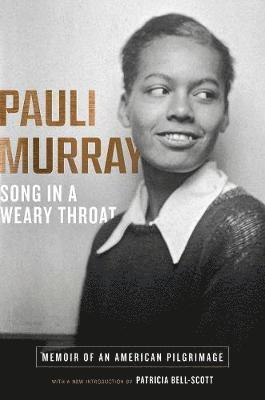
First published posthumously in 1987, Pauli Murray’s Song in a Weary Throat was critically lauded, winning the Robert F. Kennedy Book Award and the Lillian Smith Book Award among other distinctions. Yet Murray’s name and extraordinary influence receded from view in the intervening years; now they are once again entering the public discourse. At last, with the republication of this “beautifully crafted” memoir, Song in a Weary Throat takes its rightful place among the great civil rights autobiographies of the twentieth century.In a voice that is energetic, wry, and direct, Murray tells of a childhood dramatically altered by the sudden loss of her spirited, hard-working parents. Orphaned at age four, she was sent from Baltimore to segregated Durham, North Carolina, to live with her unflappable Aunt Pauline, who, while strict, was liberal-minded in accepting the tomboy Pauli as “my little boy-girl.” In fact, throughout her life, Murray would struggle with feelings of sexual “in-betweenness”—she tried unsuccessfully to get her doctors to give her testosterone—that today we would recognize as a transgendered identity.We then follow Murray north at the age of seventeen to New York City’s Hunter College, to her embrace of Gandhi’s Satyagraha—nonviolent resistance—and south again, where she experienced Jim Crow firsthand. An early Freedom Rider, she was arrested in 1940, fifteen years before Rosa Parks’ disobedience, for sitting in the whites-only section of a Virginia bus. Murray’s activism led to relationships with Thurgood Marshall and Eleanor Roosevelt—who respectfully referred to Murray as a “firebrand”—and propelled her to a Howard University law degree and a lifelong fight against "Jane Crow" sexism. We also read Betty Friedan’s enthusiastic response to Murray’s call for an NAACP for Women—the origins of NOW. Murray sets these thrilling high-water marks against the backdrop of uncertain finances, chronic fatigue, and tragic losses both private and public, as Patricia Bell-Scott’s engaging introduction brings to life.Now, more than thirty years after her death in 1985, Murray—poet, memoirist, lawyer, activist, and Episcopal priest—gains long-deserved recognition through a rediscovered memoir that serves as a “powerful witness” (Brittney Cooper) to a pivotal era in the American twentieth century.
156 kr
Tillfälligt slut
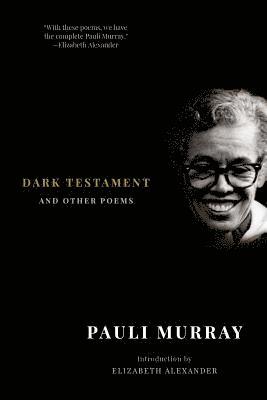
There has been explosive interest in the life of Pauli Murray, as reflected in a recent profile in The New Yorker, the publication of a definitive biography, and a new Yale University college in her name. Murray has been suddenly cited by leading historians as a woman who contributed far more to the civil rights movement than anyone knew, being arrested in 1940—fifteen years before Rosa Parks—for refusing to give up her seat on a Virginia bus. Celebrated by twenty-first-century readers as a civil rights activist on the level of King, Parks, and John Lewis, she is also being rediscovered as a gifted writer of memoir, sermons, and poems. Originally published in 1970 and long unavailable, Dark Testament and Other Poems attests to her fierce lyrical powers. At turns song, prayer, and lamentation, Murray’s poems speak to the brutal history of slavery and Jim Crow and the dream of racial justice and equality.