
Ralph Hawkins - Böcker
Visar alla böcker från författaren Ralph Hawkins. Handla med fri frakt och snabb leverans.
7 produkter
7 produkter
181 kr
Skickas inom 5-8 vardagar
"Do you think there's too much archaeology? Too many people need to dig things up and find them out. It's not necessary to some people and more than necessary for others. There's an industry around it ...It's the doing that's important, not the knowing about the doing. Because that's second. So, obviously some poets are more articulate than others, but articulacy can hide things ...There's a lot about, sounds impressive but misses the point, floundering around. Maybe that's not what you should be looking at. So I'm not really interested in an archaeology of understanding..." Ralph Hawkins, from an interview with Ian Davidson

1 632 kr
Skickas inom 5-8 vardagar

1 677 kr
Skickas inom 3-6 vardagar
219 kr
Skickas inom 5-8 vardagar
'Ralph Hawkins' poems always give the impression of turning up late and being drunk when they do arrive. They minimize the gap of 'constructive effort' between the basic seeking of pleasure and pleasurable sensations, and the 'mediated' pleasure of the poem' - Andrew Duncan.
196 kr
Skickas
"Ralph Hawkins' poems minimise the gap of 'constructive effort' between the basic seeking of pleasure and pleasurable sensations, and the "mediated" pleasure of the poem. [...] He does not bother with stage-setting. Each poem launches us into a series of "direct experiences" from whose course we could work out the shape of the self experiencing them. Hawkins is not asking how experience happens, but by describing the course of a self he answers the question anyway. The course is one of attention, constantly switching on and off, jumping between planes; Hawkins' method is to eliminate whatever is not interesting, and his poetic line is as rapid, sporadic, shifting, polyvalent, slight and self-reversing as consciousness itself. [...] The removal of conventional connections leaves a vast space for originality: his style is located in the edits, the jumps." -Andrew Duncan
188 kr
Skickas inom 5-8 vardagar
Tell Me No More and Tell Me, first published in 1981 focuses upon the poet's immediate surroundings, the Essex marshes and the small black timber framed cottage he lived in at the time. Looking back, after such passing of time, and the changes that naturally ensue, these poems capture the exactitude of the poet's daily life and contemplations. They remain indelible of that formative period.Ralph Hawkins' poetry is yeasty and written where the meanings are made rather than assigned. Its impulse is towards the immediate, apparently unsynthesised event where thinking occurs moment by moment. The aesthetic bears some resemblance to close mic techniques, we are drawn near to the experience and all distractions are removed for the intricacies of pure resonance. It produces a poetry as tricky as consciousness itself and its rewards are some considerable distance from the prefabricated commonplace expression of lyrical epiphany. Here is a poetry that is expansive, often humorous and always anarchic. In Tell me no more and tell me Ralph Hawkins' refusal to whistle along with the sanctioned doggerel of English poetry and its returns is startlingly evident, as it has been throughout four decades of creativity.Tell Me No More and Tell Me was published by Grossteste Press, and was the author's first full-length collection. Here it is again on its 40th anniversary.
219 kr
Skickas inom 5-8 vardagar
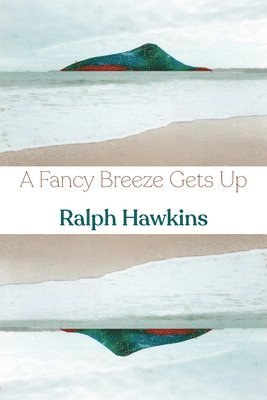
A Fancy Breeze Gets Up collects together the poetry written by Ralph Hawkins since 2015 and the publication of It Looks Like An Island But Sails Away. In 1978 in his first book, English Literature, and before the concept of trigger warnings arose, Ralph Hawkins announced that he quite liked The Waste Land, it's 'like holding a gun at an ordinary/everyday person.' His own poetry has maintained a variously combative Modernist verve since then, and whilst no one has been threatened or shot because of it, it is a risky, occasionally disquieting and humorous poetry which challenges and rattles the possibilities of poetry itself. A Fancy Breeze Gets Up exhibits these qualities abundantly in three different ways in the three parts of the book. Part 1 is a set of dispersed, incidental staccato lyrics which pivot lightly on engagement and displacement by disorientating turns. If the reader requires grounding it comes with part 2. 'Deceit Disguise Deception' is a stark factual account condensed from research into the psychopathology of the leading figures of the Soviet revolution, the significance of which is not merely historical. Part 3 shifts into new territory and is an exemplary work of ekphrasis. It draws upon the almost cartoon-like informal immediacy of Rose Wiley's painting in which the worked artifice of such composition is emulated and the poetry itself comes to exemplify the zest and joy of such art. In all three modes it is not a poetry written for those seeking a comforting, unambiguous worldview. One clue for us in the variety and engagement of the work might be in the poet's praise of Max Jacob and Ted Berrigan - their similar regions of dissimilarity, and their startling way of moving through them, is Ralph Hawkins' domain. It is a ground which refuses to be readily located or make for easy passage, and where the concept of the poet as your guide is remote if not absent. Throughout it is a poetry as quick-witted and unnerving as thought itself and unblinking in its vision of both sanctioned brutality and the unrestrained delight of human creativity. A Fancy Breeze Gets Up rises from where meaning is made rather than assigned, or merely accepted, and it acknowledges that we quite often operate at something of a tilt towards what is assumed to be the familiar world.-Kelvin Corcoran