
Ronald Suny - Böcker
Visar alla böcker från författaren Ronald Suny. Handla med fri frakt och snabb leverans.
4 produkter
4 produkter
903 kr
Skickas
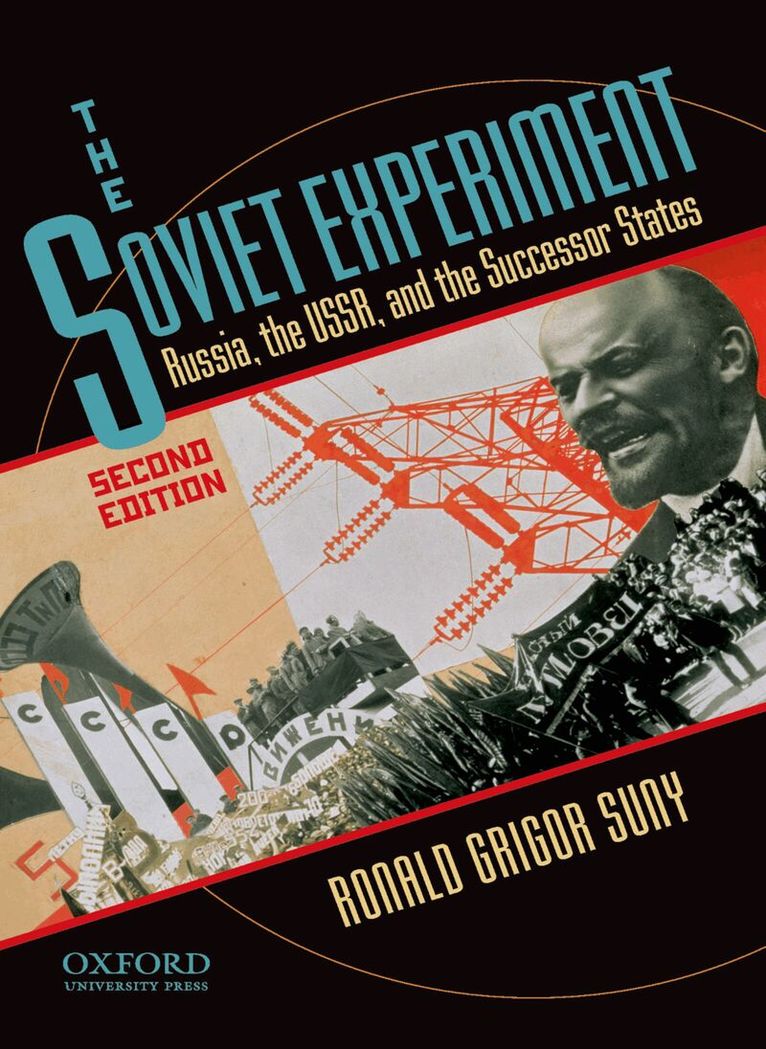
Now thoroughly revised in its second edition, The Soviet Experiment examines the complex themes of Soviet history, ranging from the last tsar of the Russian empire to the first president of the Russian republic. Author Ronald Grigor Suny, one of the most eminent Soviet historians of our time, examines the legacies left by former Soviet leaders and explores successor states and the challenges they now face. He captures familiar as well as little-known events--the crowds on the streets during the February Revolution, Stalin's collapse into a near-catatonic state after Hitler's invasion, and Yeltsin's political maneuvering and public grandstanding--combining gripping detail with insightful analysis.
668 kr
Skickas
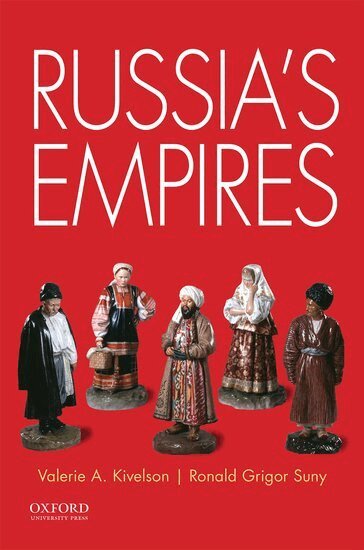
Combining the talents and expert knowledge of an early modern historian of Russia and of a Soviet specialist, Russia's Empires is the first major study of the entire sweep of Russian history from its earliest formations to the rule of Vladimir Putin. Looking through the lens of empire, which the authors conceptualize as a state based on institutionalized differentiation, inequitable hierarchy, and bonds of reciprocity between ruler and ruled, Kivelson and Suny displace the centrality of nation and nationalism in the Russian and Soviet story. Yet their work demonstrates how imperial polities were key to the creation of national identifications and processes that both hindered and fostered what would become nations and nation-states. Using the concept of empire, they look at the ways that ordinary people imagined their position within a non-democratic polity - whether the Muscovite tsardom or the Soviet Union - and what concessions the rulers had to make, or appear to make, in order to establish their authority and preserve their rule. While other works in the existing historical literature have applied the concept of empire to the study of Russian history, the story told here is in several ways unique. First, the book tackles the long stretch of the history of the region, from the murkiest beginnings to its most recent yesterday, and follows the vicissitudes of empire, the absence, the coalescence, the setbacks of imperial aspirations, across the centuries. The authors do not impose the category, but find it a productive lens for tracking developments over time. Second, the framework of empire allows them to address pressing questions of how various forms of non-democratic governance managed to succeed and survive, or, alternatively, what caused them to collapse and disappear. Studying Russia's long history in an imperial guise encourages the reader to attend to forms of inclusion, displays of reciprocity, and manifestations of ideology that might otherwise go unnoted, overlooked under the bleak record of coercion and oppression that so often characterizes ideas about Russia.Russia's Empires follows imperial patterns of rule through distinction, inclusion through reciprocity, and structures for legitimacy in order to trace the experiences of empire by both rulers and ruled. The book traces the coalescence and development of imperial relationships across more than a thousand years. This book brings histories of the peripheries and of the growth and rule of empire into central narratives based in Moscow and Leningrad or Petersburg, in order to understand all the pieces as part of an interrelated whole. The book brings together stories of despots and dictators at the center with those of people of all classes, conditions, and nationalities who jointly made the Russian Empire.
368 kr
Tillfälligt slut
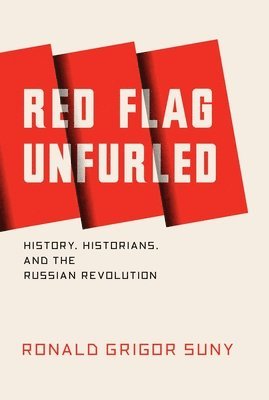
Reflecting on the fate of the Russian Revolution one hundred years after October, Ronald Grigor Suny-one of the world's leading historians of the period-explores the historiographical controversies over 1917, Stalinism, and the end of "Communism" and provides an assessment of the achievements, costs, losses and legacies of the choices made by Soviet leaders. While a quarter century after the disintegration of the USSR, the story usually told is one of failure and inevitable collapse, Suny reevaluates the promises, missed opportunities, achievements, and colossal costs of trying to build a kind of "socialism" in the inhospitable environment of peasant Russia. He ponders what lessons 1917 provides for Marxism and the alternatives to capitalism and bourgeois democracy.
297 kr
Skickas inom 7-10 vardagar
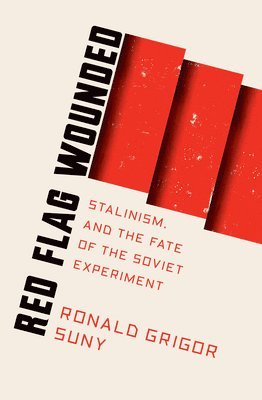
Red Flag Wounded brings together essays covering the controversies and debates over the fraught history of the Soviet Union from the revolution to its disintegration. Those monumental years were marked not only by violence, mass killing, and the brutal overturning of a peasant society but also by the modernisation and industrialisation of the largest country in the world, the victory over fascism, and the slow recovery of society after the nightmare of Stalinism.Ronald Grigor Suny is one of the most prominent experts on the revolution, the fate of the non-Russian peoples of the Soviet empire, and the twists and turns of Western historiography of the Soviet experience. As a biographer of Stalin and a long-time commentator on Russian and Soviet affairs, he brings novel insights to a history that has been misunderstood and deliberately distorted in the public sphere. For a fresh look at a story that affects our world today, this is the place to begin.