
Simone M. Müller - Böcker
Visar alla böcker från författaren Simone M. Müller. Handla med fri frakt och snabb leverans.
6 produkter
6 produkter
1 739 kr
Skickas inom 3-6 vardagar
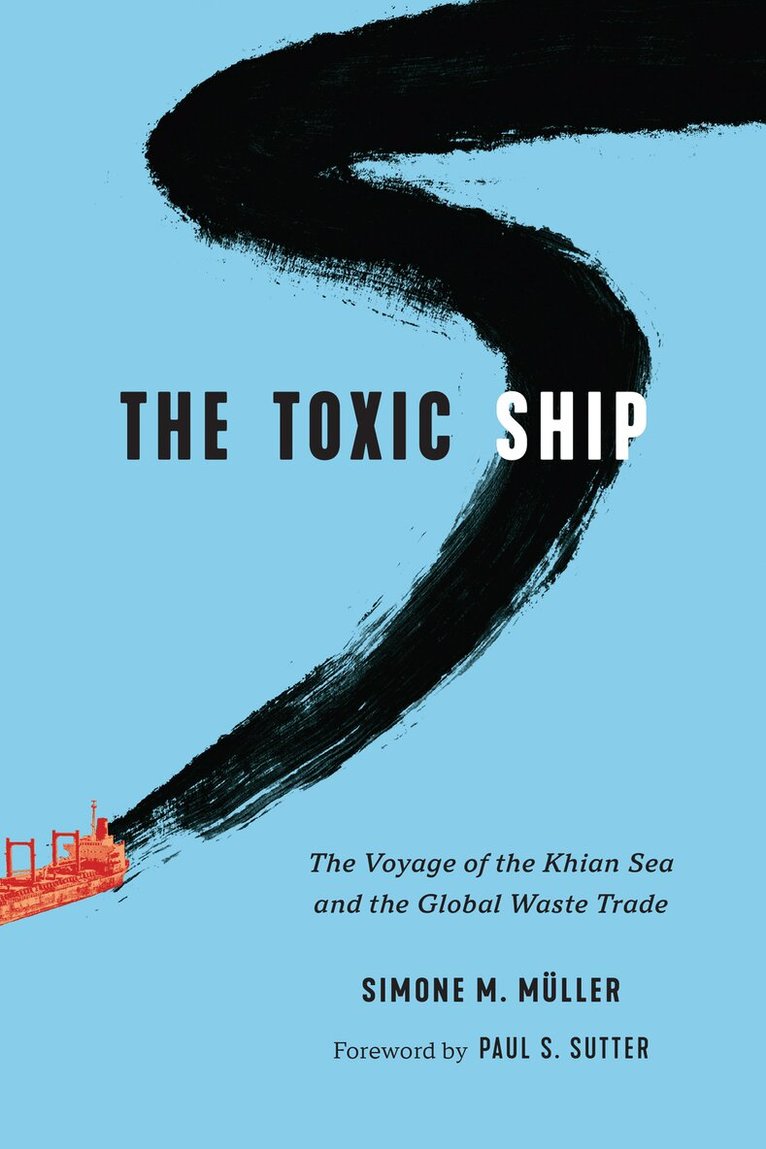
Winner of the 2025 Hagley Prize for the Best Book in Business History from the Business History Conference and the Hagley LibraryWinner of the 2025 Harold and Margaret Sprout Award from the International Studies AssociationAn infamous voyage explores the hazardous waste trade and environmental justiceIn 1986 the Khian Sea, carrying thousands of tons of incinerator ash from Philadelphia, began a two-year journey, roaming the world's oceans in search of a dumping ground. Its initial destination and then country after country refused to accept the waste. The ship ended up dumping part of its load in Haiti under false pretenses, and the remaining waste was illegally dumped in the ocean. Two shipping company officials eventually received criminal convictions.Simone M. Müller uses the Khian Sea's voyage as a lens to elucidate the global trade in hazardous waste—the movement of material ranging from outdated consumer products and pesticides to barges filled with all sorts of toxic discards—from the 1970s to the present day, exploring the story's international nodes and detailing the downside of environmental conscientiousness among industrial nations as waste is pushed outward. Müller also highlights the significance of the trip's start in Philadelphia, a city with a significant African American population. The geographical origins shed light on environmental racism within the United States in the context of the global story of environmental justice. Activism in response to the ship's journey set an important precedent, and this book brings together the many voices that shaped the international trade in hazardous waste.
444 kr
Skickas inom 7-10 vardagar
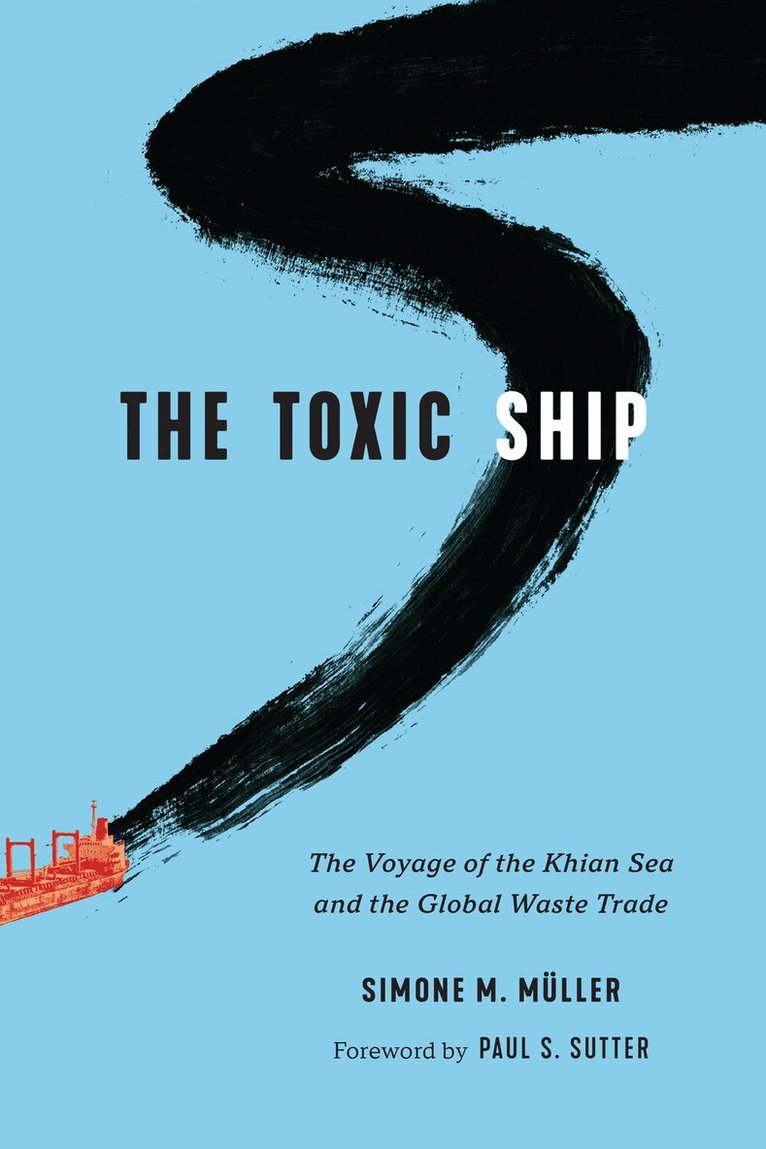
Winner of the 2025 Hagley Prize for the Best Book in Business History from the Business History Conference and the Hagley LibraryWinner of the 2025 Harold and Margaret Sprout Award from the International Studies AssociationAn infamous voyage explores the hazardous waste trade and environmental justiceIn 1986 the Khian Sea, carrying thousands of tons of incinerator ash from Philadelphia, began a two-year journey, roaming the world's oceans in search of a dumping ground. Its initial destination and then country after country refused to accept the waste. The ship ended up dumping part of its load in Haiti under false pretenses, and the remaining waste was illegally dumped in the ocean. Two shipping company officials eventually received criminal convictions.Simone M. Müller uses the Khian Sea's voyage as a lens to elucidate the global trade in hazardous waste—the movement of material ranging from outdated consumer products and pesticides to barges filled with all sorts of toxic discards—from the 1970s to the present day, exploring the story's international nodes and detailing the downside of environmental conscientiousness among industrial nations as waste is pushed outward. Müller also highlights the significance of the trip's start in Philadelphia, a city with a significant African American population. The geographical origins shed light on environmental racism within the United States in the context of the global story of environmental justice. Activism in response to the ship's journey set an important precedent, and this book brings together the many voices that shaped the international trade in hazardous waste.
880 kr
Skickas inom 7-10 vardagar
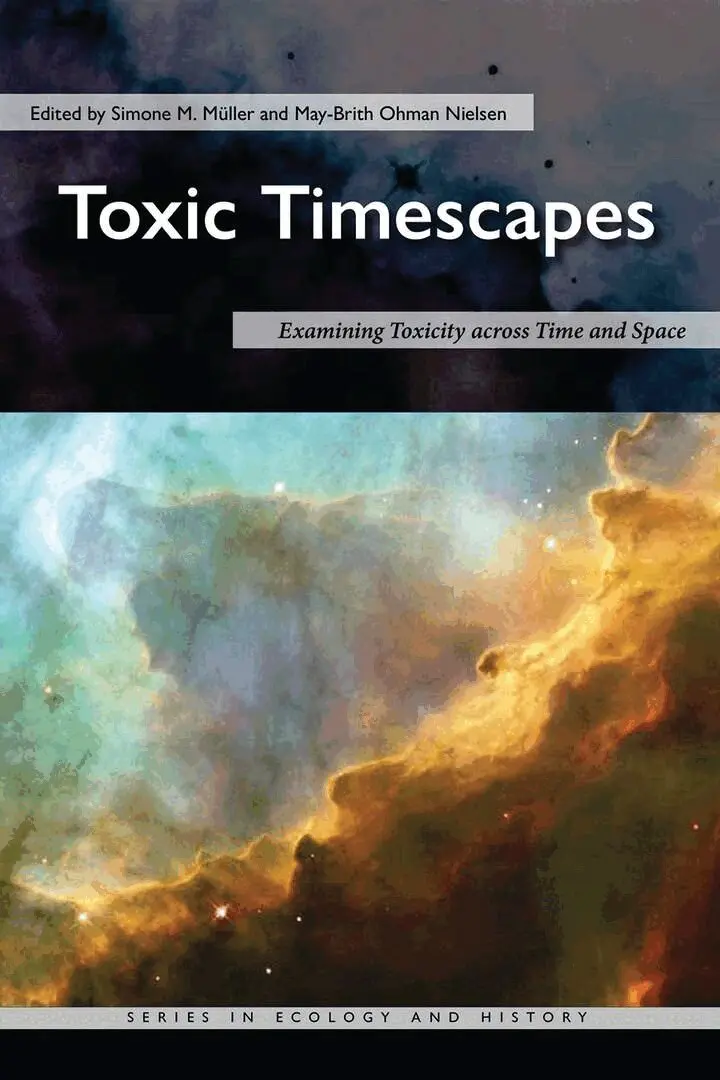
An interdisciplinary environmental humanities volume that explores human-environment relationships on our permanently polluted planet.While toxicity and pollution are ever present in modern daily life, politicians, juridical systems, media outlets, scholars, and the public alike show great difficulty in detecting, defining, monitoring, or generally coming to terms with them. This volume's contributors argue that the source of this difficulty lies in the struggle to make sense of the intersecting temporal and spatial scales working on the human and more-than-human body, while continuing to acknowledge race, class, and gender in terms of global environmental justice and social inequality.The term toxic timescapes refers to this intricate intersectionality of time, space, and bodies in relation to toxic exposure. As a tool of analysis, it unpacks linear understandings of time and explores how harmful substances permeate temporal and physical space as both event and process. It equips scholars with new ways of creating data and conceptualizing the past, present, and future presence and possible effects of harmful substances and provides a theoretical framework for new environmental narratives. To think in terms of toxic timescapes is to radically shift our understanding of toxicants in the complex web of life.Toxicity, pollution, and modes of exposure are never static; therefore, dose, timing, velocity, mixture, frequency, and chronology matter as much as the geographic location and societal position of those exposed. Together, these factors create a specific toxic timescape that lies at the heart of each contributor's narrative. Contributors from the disciplines of history, human geography, science and technology studies, philosophy, and political ecology come together to demonstrate the complex reality of a toxic existence. Their case studies span the globe as they observe the intersection of multiple times and spaces at such diverse locations as former battlefields in Vietnam, aging nuclear-weapon storage facilities in Greenland, waste deposits in southern Italy, chemical facilities along the Gulf of Mexico, and coral-breeding laboratories across the world.
389 kr
Skickas inom 7-10 vardagar
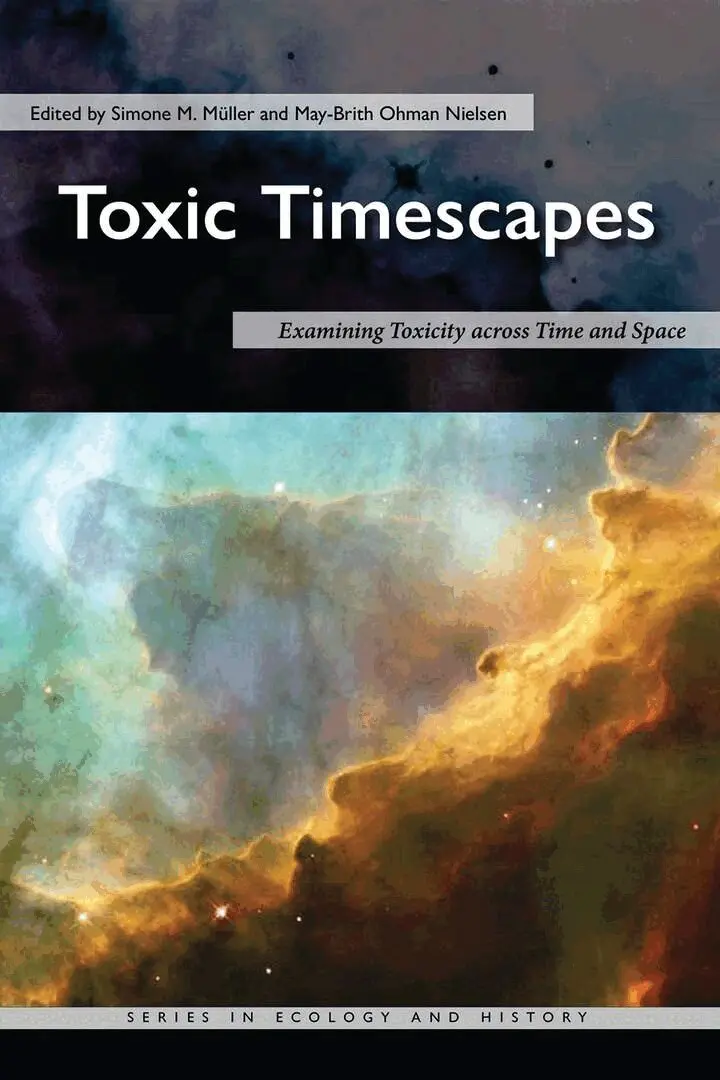
An interdisciplinary environmental humanities volume that explores human-environment relationships on our permanently polluted planet.While toxicity and pollution are ever present in modern daily life, politicians, juridical systems, media outlets, scholars, and the public alike show great difficulty in detecting, defining, monitoring, or generally coming to terms with them. This volume's contributors argue that the source of this difficulty lies in the struggle to make sense of the intersecting temporal and spatial scales working on the human and more-than-human body, while continuing to acknowledge race, class, and gender in terms of global environmental justice and social inequality.The term toxic timescapes refers to this intricate intersectionality of time, space, and bodies in relation to toxic exposure. As a tool of analysis, it unpacks linear understandings of time and explores how harmful substances permeate temporal and physical space as both event and process. It equips scholars with new ways of creating data and conceptualizing the past, present, and future presence and possible effects of harmful substances and provides a theoretical framework for new environmental narratives. To think in terms of toxic timescapes is to radically shift our understanding of toxicants in the complex web of life.Toxicity, pollution, and modes of exposure are never static; therefore, dose, timing, velocity, mixture, frequency, and chronology matter as much as the geographic location and societal position of those exposed. Together, these factors create a specific toxic timescape that lies at the heart of each contributor's narrative. Contributors from the disciplines of history, human geography, science and technology studies, philosophy, and political ecology come together to demonstrate the complex reality of a toxic existence. Their case studies span the globe as they observe the intersection of multiple times and spaces at such diverse locations as former battlefields in Vietnam, aging nuclear-weapon storage facilities in Greenland, waste deposits in southern Italy, chemical facilities along the Gulf of Mexico, and coral-breeding laboratories across the world.
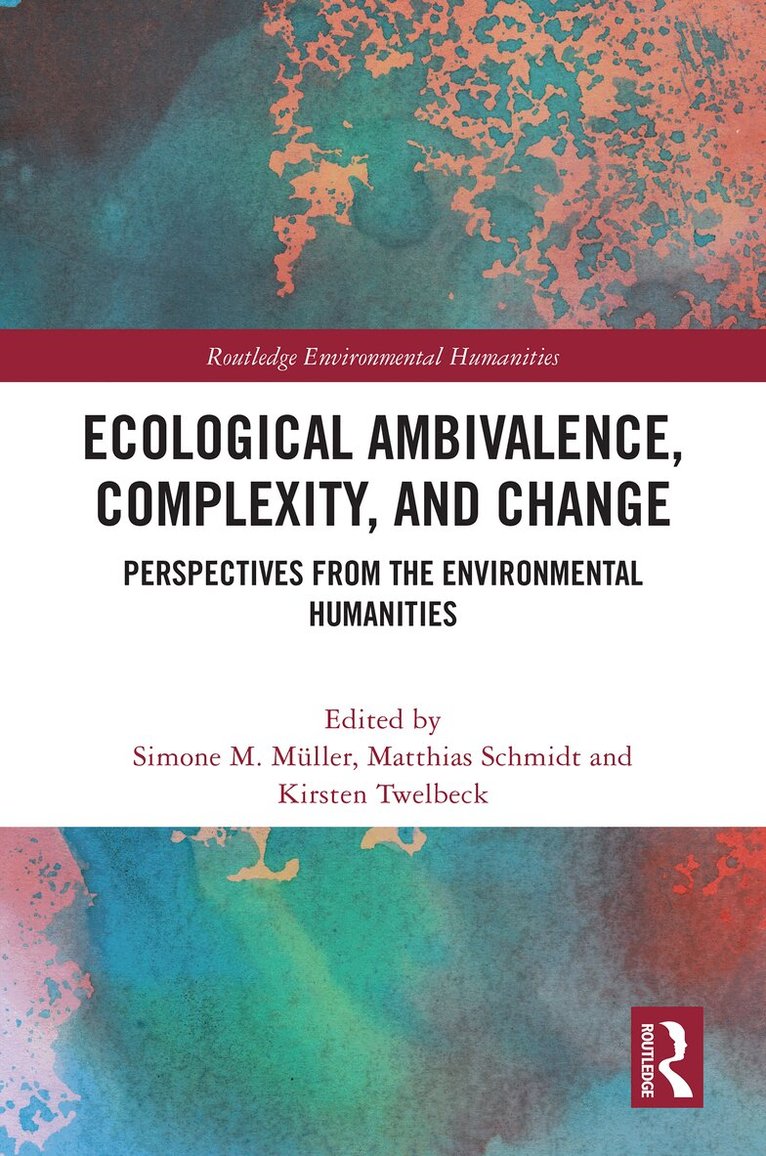
Ecological Ambivalence, Complexity, and Change
Perspectives from the Environmental Humanities
Inbunden, Engelska, 2024
1 954 kr
Skickas inom 10-15 vardagar
This book provides a systematic, interdisciplinary analysis of the conflicts, issues, and tensions associated with today’s ecological transformation processes from an Environmental Humanities perspective. It explores the notion of ecological ambivalence, where conflicting reactions, beliefs, or feelings toward public policies or private practices for "saving planet Earth" threaten to produce a stalemate.Under the umbrella of the Environmental Humanities, the book brings together scholars from fields such as environmental history, ecological economics, human geography, and ecocriticism. Contributions investigate the dissonances, or ambivalences, wound up with processes of environmental transformation both conceptually and empirically. Case studies range from wind farms in India to green mineral mines in Mexico, and from chemical contamination in Denmark to Rocky Mountain Arsenal in Denver, USA. Additionally, with a focus on creative environmental communication—as in Philippe Squarzoni’s graphic novel Climate Changed or G’Ebinyo Ogbowei’s poetry—contributions also present possible pathways for overcoming ambivalences, managing them creatively, or critiquing the concept as whole. The volume highlights how the humanities, the arts, and the social sciences can work together to help humankind develop and cultivate the skills to overcome paralysis and engage in practical action, and in doing so, puts forth ambivalence as an approach for being in today’s world.This book will be of interest to researchers, academics, and students from the Environmental Humanities, the social sciences, the humanities, and the environmental sciences. It will also be useful for decisionmakers, think tanks, NGOs, and activists.
- Nyhet
Ecological Ambivalence, Complexity, and Change
Perspectives from the Environmental Humanities
Häftad, Engelska, 2026
675 kr
Kommande
This book provides a systematic, interdisciplinary analysis of the conflicts, issues, and tensions associated with today’s ecological transformation processes from an Environmental Humanities perspective. It explores the notion of ecological ambivalence, where conflicting reactions, beliefs, or feelings toward public policies or private practices for "saving planet Earth" threaten to produce a stalemate.Under the umbrella of the Environmental Humanities, the book brings together scholars from fields such as environmental history, ecological economics, human geography, and ecocriticism. Contributions investigate the dissonances, or ambivalences, wound up with processes of environmental transformation both conceptually and empirically. Case studies range from wind farms in India to green mineral mines in Mexico, and from chemical contamination in Denmark to Rocky Mountain Arsenal in Denver, USA. Additionally, with a focus on creative environmental communication—as in Philippe Squarzoni’s graphic novel Climate Changed or G’Ebinyo Ogbowei’s poetry—contributions also present possible pathways for overcoming ambivalences, managing them creatively, or critiquing the concept as whole. The volume highlights how the humanities, the arts, and the social sciences can work together to help humankind develop and cultivate the skills to overcome paralysis and engage in practical action, and in doing so, puts forth ambivalence as an approach for being in today’s world.This book will be of interest to researchers, academics, and students from the Environmental Humanities, the social sciences, the humanities, and the environmental sciences. It will also be useful for decisionmakers, think tanks, NGOs, and activists.