
Stephen A. Crist - Böcker
Visar alla böcker från författaren Stephen A. Crist. Handla med fri frakt och snabb leverans.
4 produkter
4 produkter
1 289 kr
Skickas inom 5-8 vardagar
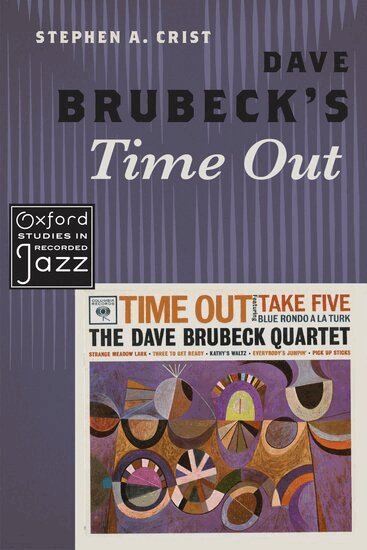
Dave Brubeck's Time Out ranks among the most popular, successful, and influential jazz albums of all time. Released by Columbia in 1959 alongside such other landmark albums as Miles Davis's Kind of Blue and Charles Mingus's Mingus Ah Um, Time Out became the first jazz album to be certified platinum, while its featured track, "Take Five" became the first jazz single to surpass one million copies sold. In addition to its commercial successes, the album is widely recognized as a pioneering endeavor into the use of odd meters in jazz. With its opening track, "Blue Rondo a la Turk" written in 9/8, its hit single "Take Five" in 5/4, and equally innovative plays on the more common 3/4 and 4/4 meters on other tracks, Take Five has played an important role in the development of modern jazz. In this book, author Stephen A. Crist draws on nearly ten years of archival research to offer the most thorough examination to date of this seminal jazz album. Supplementing his research with interviews with key individuals, including Brubeck's widow Iola and daughter Catherine, as well as interviews conducted with Brubeck himself prior to his passing in 2012, Crist paints a complete picture of the album's origins, creation, and legacy. Couching careful analysis of each of the album's seven tracks within historical and cultural context, he offers fascinating insights into the composition and development of some of the albums best known songs. From Brubeck's 1958 State Department-sponsored tour of Turkey during which he first encountered the aksak rhythms that would from the basis of "Blue Rondo a la Turk" to the backstage jam session that laid the seeds for "Take Five", Crist sheds an exciting new light on one of the most significant albums in jazz history.
284 kr
Skickas inom 5-8 vardagar
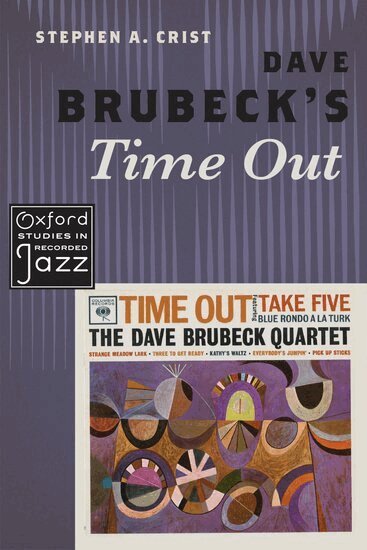
Dave Brubeck's Time Out ranks among the most popular, successful, and influential jazz albums of all time. Released by Columbia in 1959 alongside such other landmark albums as Miles Davis's Kind of Blue and Charles Mingus's Mingus Ah Um, Time Out became the one of the first jazz albums to be certified platinum, while its featured track, "Take Five," became the best-selling jazz single of the twentieth century, surpassing one million copies. In addition to its commercial successes, the album is widely recognized as a pioneering endeavor into the use of odd meters in jazz. With its opening track, "Blue Rondo a la Turk" written in 9/8, its hit single "Take Five" in 5/4, and equally innovative uses of the more common 3/4 and 4/4 meters on other tracks, Time Out has played an important role in the development of modern jazz. In this book, author Stephen A. Crist draws on nearly fifteen years of archival research to offer the most thorough examination to date of this seminal jazz album. Supplementing his research with interviews with key individuals, including Brubeck's widow Iola and daughter Catherine, as well as interviews conducted with Brubeck himself prior to his passing in 2012, Crist paints a complete picture of the album's origins, creation, and legacy. Couching careful analysis of each of the album's seven tracks within historical and cultural contexts, he offers fascinating insights into the composition and development of some of the albums best known tunes. From Brubeck's 1958 State Department-sponsored tour, during which he first encountered the Turkish aksak rhythms that would form the basis of "Blue Rondo a la Turk," to the backstage jam session that planted the seeds for "Take Five," Crist sheds an exciting new light on one of the most significant albums in jazz history.
683 kr
Skickas inom 7-10 vardagar
More than a century passed after Johann Sebastian Bach's death in 1750 before his music found an audience in the United States. Volume Five in the Bach Perspectives series tracks the composer's reputation in America from obscure artist to a cultural mainstay whose music has spread to all parts of the country. Barbara Owen surveys Bach's early reception in America. Matthew Dirst focuses on John Sullivan Dwight's role in advocating Bach's work. Michael Broyles considers Bach's early impact in Boston while Mary J. Greer offers a counterpoint in her study of Bach's reception in New York. Hans-Joachim Schulze's essay links the American descendants of August Reinhold Bach to the composer. Christoph Wolff also focuses on Bach's descendants in America, particularly Friederica Sophia Bach, the daughter of Bach's eldest son. Peter Wollny evaluates manuscripts not included in Gerhard Herz's study of Bach Sources in America. The volume concludes with Carol K. Baron's comparison of Bach with Charles Ives while Stephen A. Crist measures Bach's influence on the jazz icon Dave Brubeck.
Del 28 - Eastman Studies in Music
Historical Musicology
Sources, Methods, Interpretations
Häftad, Engelska, 2008
444 kr
Skickas inom 7-10 vardagar
Seventeen studies by noted experts that demonstrate recent approaches toward the creative interpretation of primary sources regarding Renaissance and Baroque music, Mozart, Beethoven, Mendelssohn, Verdi, Debussy, and beyond.How do we know what notes a composer intended in a given piece? -- how those notes should be played and sung? -- the nature of musical life in Bach's Leipzig, Schubert's Vienna? -- how music related to literature and other arts and social currents in different times and places? -- what attitudes musicians and music lovers had toward the music that they heard and made?We know all this from musical manuscripts and prints, opera libretti, composers'letters, reviews in newspapers and magazines, archival data, contemporary pedagogical writings, essays on aesthetics, and much else. Some of these categories of sources are the bedrock of music history and musicology. Others havebegun to be examined only in recent years.Furthermore, musicologists -- including biographers of famous composers -- now explore these various kinds of sources in a variety of ways, some of them richly traditional and others exciting and novel.These seventeen essays, all newly written, use a wide array of source materials to probe issues pertaining to a cross section of musical works and musical life from the sixteenth through the twentieth centuries.The resulting, pluralistic profile of current musicology will prove welcome to anyone fascinated by the problems of reconstructing -- reimagining, sometimes -- the evanescent musical art of the past and pondering its implications for musical life today and in the future.Roberta Montemorra Marvin is a Research Fellow at the Obermann Center for Advanced Studies at the University of Iowa where she is also Director of the Institute for Italian Opera Studies; Stephen A. Crist is associate professor and chair of the Music Department at Emory University.