
Stephen P. Ellner - Böcker
Visar alla böcker från författaren Stephen P. Ellner. Handla med fri frakt och snabb leverans.
2 produkter
2 produkter
871 kr
Skickas inom 7-10 vardagar
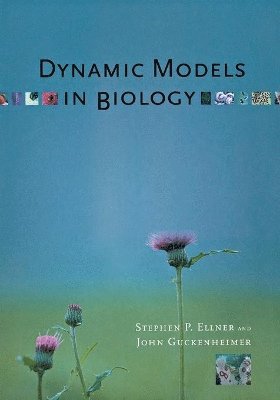
From controlling disease outbreaks to predicting heart attacks, dynamic models are increasingly crucial for understanding biological processes. Many universities are starting undergraduate programs in computational biology to introduce students to this rapidly growing field. In Dynamic Models in Biology, the first text on dynamic models specifically written for undergraduate students in the biological sciences, ecologist Stephen Ellner and mathematician John Guckenheimer teach students how to understand, build, and use dynamic models in biology. Developed from a course taught by Ellner and Guckenheimer at Cornell University, the book is organized around biological applications, with mathematics and computing developed through case studies at the molecular, cellular, and population levels. The authors cover both simple analytic models--the sort usually found in mathematical biology texts--and the complex computational models now used by both biologists and mathematicians. Linked to a Web site with computer-lab materials and exercises, Dynamic Models in Biology is a major new introduction to dynamic models for students in the biological sciences, mathematics, and engineering.
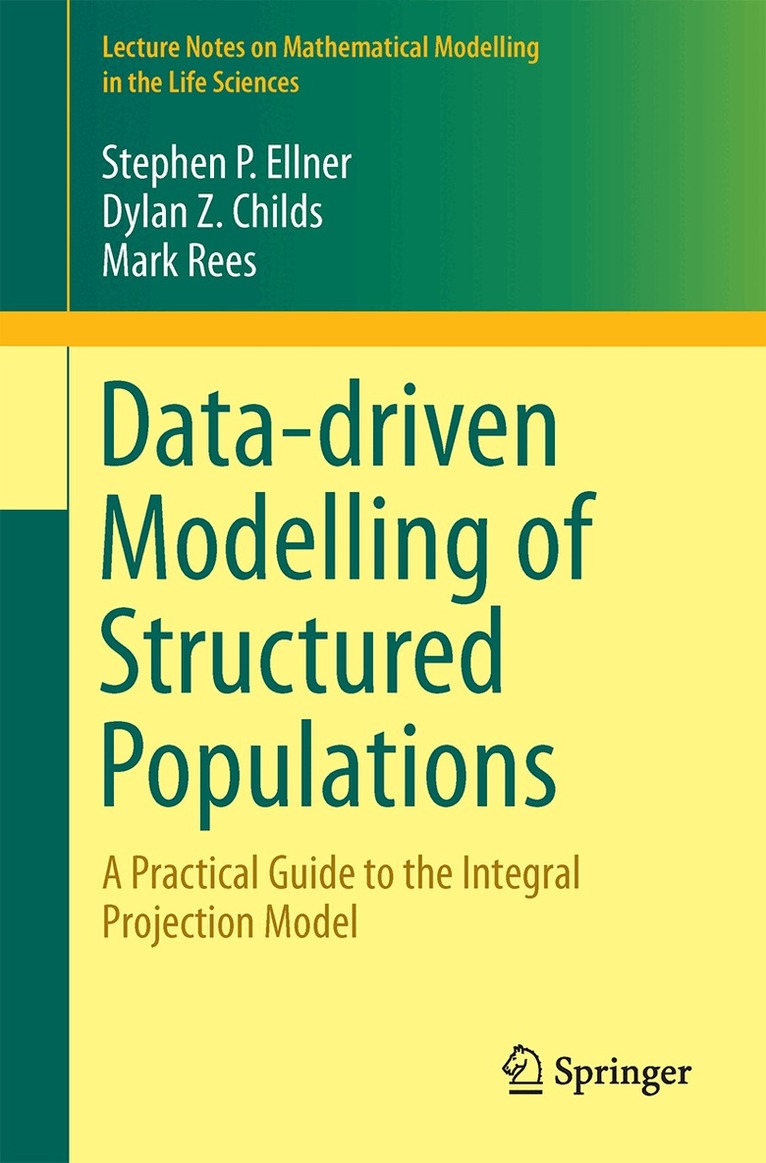
Data-driven Modelling of Structured Populations
A Practical Guide to the Integral Projection Model
Häftad, Engelska, 2016
464 kr
Skickas inom 5-8 vardagar
This book is a “How To” guide for modeling population dynamics using Integral Projection Models (IPM) starting from observational data. It is written by a leading research team in this area and includes code in the R language (in the text and online) to carry out all computations. The intended audience are ecologists, evolutionary biologists, and mathematical biologists interested in developing data-driven models for animal and plant populations. IPMs may seem hard as they involve integrals. The aim of this book is to demystify IPMs, so they become the model of choice for populations structured by size or other continuously varying traits. The book uses real examples of increasing complexity to show how the life-cycle of the study organism naturally leads to the appropriate statistical analysis, which leads directly to the IPM itself. A wide range of model types and analyses are presented, including model construction, computational methods, and the underlying theory, with the more technical material in Boxes and Appendices. Self-contained R code which replicates all of the figures and calculations within the text is available to readers on GitHub.Stephen P. Ellner is Horace White Professor of Ecology and Evolutionary Biology at Cornell University, USA; Dylan Z. Childs is Lecturer and NERC Postdoctoral Fellow in the Department of Animal and Plant Sciences at The University of Sheffield, UK; Mark Rees is Professor in the Department of Animal and Plant Sciences at The University of Sheffield, UK.