
Stephen W. Silliman - Böcker
Visar alla böcker från författaren Stephen W. Silliman. Handla med fri frakt och snabb leverans.
6 produkter
6 produkter
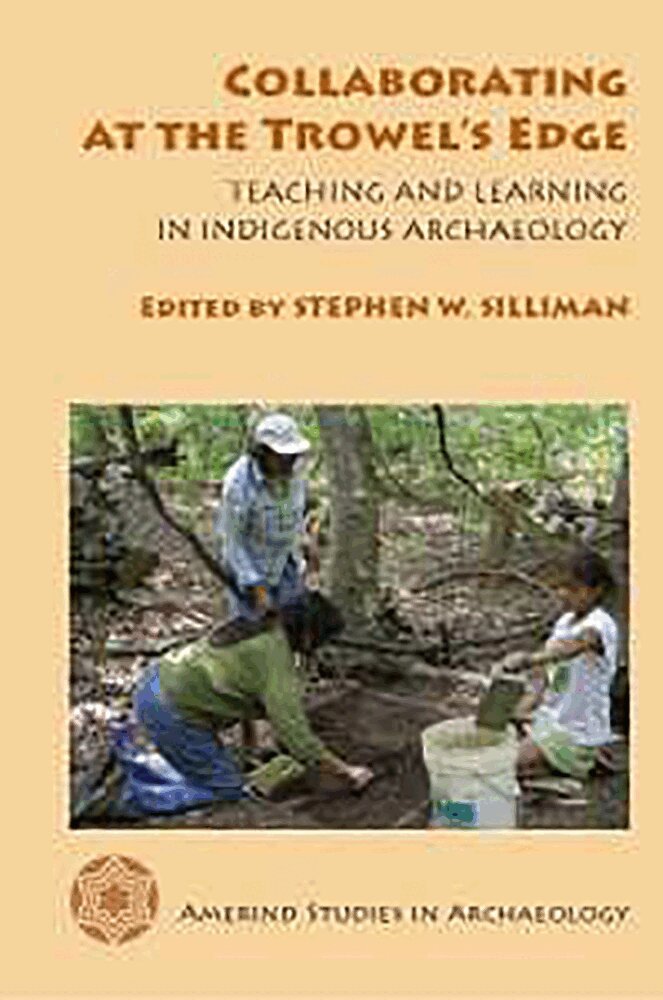
Collaborating at the Trowel's Edge
Teaching and Learning in Indigenous Archaeology
Häftad, Engelska, 2008
385 kr
Skickas inom 7-10 vardagar
A fundamental issue for twenty-first century archaeologists is the need to better direct their efforts toward supporting rather than harming indigenous peoples. Collaborative indigenous archaeology has already begun to stress the importance of cooperative, community-based research; this book now offers an up-to-date assessment of how Native American and non-native archaeologists have jointly undertaken research that is not only politically aware and historically minded but fundamentally better as well. Eighteen contributors many with tribal ties?cover the current state of collaborative indigenous archaeology in North America to show where the discipline is headed. Continent-wide cases, from the Northeast to the Southwest, demonstrate the situated nature of local practice alongside the global significance of further decolonizing archaeology. And by probing issues of indigenous participation with an eye toward method, theory, and pedagogy, many show how the archaeological field school can be retailored to address politics, ethics, and critical practice alongside traditional teaching and research methods.These chapters reflect the strong link between politics and research, showing what can be achieved when indigenous values, perspectives, and knowledge are placed at the center of the research process. They not only draw on experiences at specific field schools but also examine advances in indigenous cultural resource management and in training Native American and non-native students. Theoretically informed and practically grounded, Collaborating at the Trowel's Edge is a virtual guide for rethinking field schools and is an essential volume for anyone involved in North American archaeologyprofessionals, students, tribal scholars, or avocationalists, s well as those working with indigenous peoples in other parts of the world. It both reflects the rapidly changing landscape of archaeology and charts new directions to ensure the ongoing vitality of the discipline.
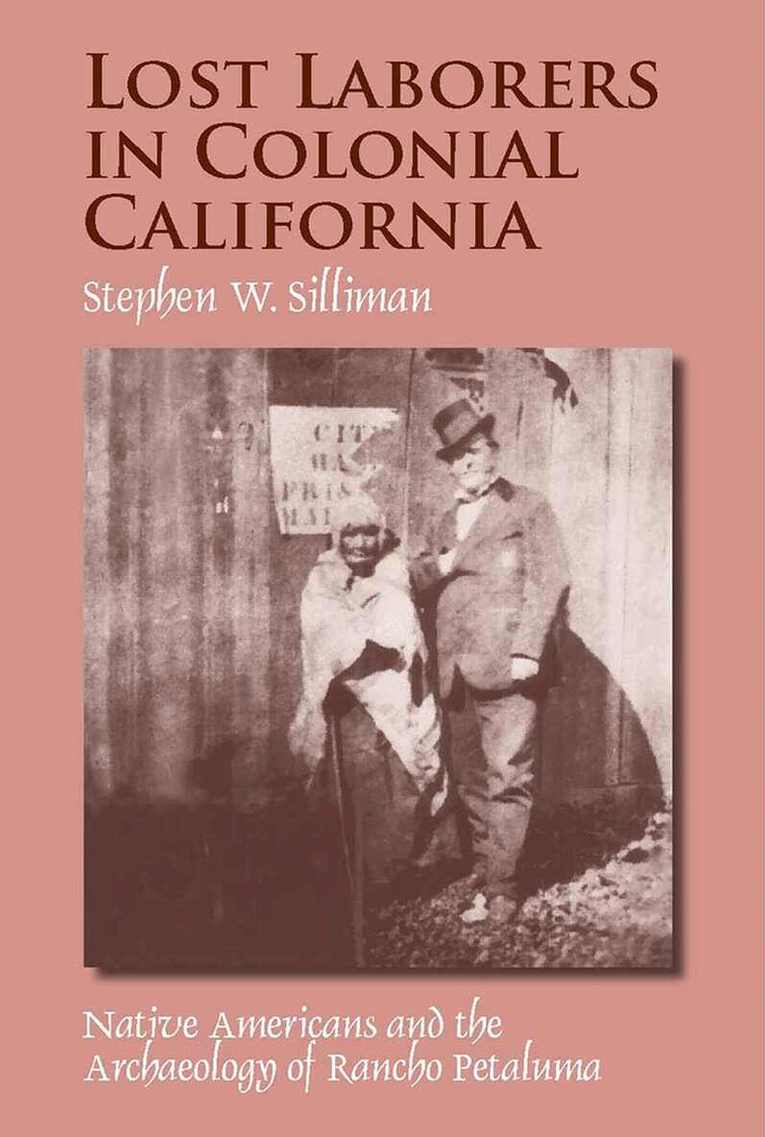
Lost Laborers in Colonial California
Native Americans and the Archaeology of Rancho Petaluma
Häftad, Engelska, 2008
565 kr
Skickas inom 3-6 vardagar
Native Americans who populated the various ranchos of Mexican California as laborers are people frequently lost to history. The "rancho period" was a critical time for California Indians, as many were drawn into labor pools for the flourishing ranchos following the 1834 dismantlement of the mission system, but they are practically absent from the documentary record and from popular histories. This study focuses on Rancho Petaluma north of San Francisco Bay, a large livestock, agricultural, and manufacturing operation on which several hundred perhaps as many as two thousand Native Americans worked as field hands, cowboys, artisans, cooks, and servants. One of the largest ranchos in the region, it was owned from 1834 to 1857 by Mariano Guadalupe Vallejo, one of the most prominent political figures of Mexican California. While historians have studied Vallejo, few have considered the Native Americans he controlled, so we know little of what their lives were like or how they adjusted to the colonial labor regime.Because Vallejo's Petaluma Adobe is now a state historic park and one of the most well-protected rancho sites in California, this site offers unparalleled opportunities to investigate nineteenth-century rancho life via archaeology. Using the Vallejo rancho as a case study, Stephen Silliman examines this California rancho with a particular eye toward Native American participation. Through the archaeological record tools and implements, containers, beads, bone and shell artifacts, food remains he reconstructs the daily practices of Native peoples at Rancho Petaluma and the labor relations that structured indigenous participation in and experience of rancho life. This research enables him to expose the multi-ethnic nature of colonialism, counterbalancing popular misconceptions of Native Americans as either non-participants in the ranchos or passive workers with little to contribute to history.Lost Laborers in Colonial California draws on archaeological data, material studies, and archival research, and meshes them with theoretical issues of labor, gender, and social practice to examine not only how colonial worlds controlled indigenous peoples and practices but also how Native Americans lived through and often resisted those impositions. The book fills a gap in the regional archaeological and historical literature as it makes a unique contribution to colonial and contact-period studies in the Spanish/Mexican borderlands and beyond.
1 129 kr
Skickas inom 7-10 vardagar
Bringing together 25 case studies from archaeological projects worldwide, Engaging Archaeology candidly explores personal experiences, successes, challenges, and even frustrations from established and senior archaeologists who share invaluable practical advice for students and early-career professionals engaged in planning and carrying out their own archaeological research.With engaging chapters, such as ‘How Not to Write a PhD Thesis on Neolithic Italy’ and ‘Accidentally Digging Central America's Earliest Village’, readers are transported to the desks, digs, and data-labs of the authors, learning the skills, tricks of the trade, and potential pit-falls of archaeological fieldwork and collections research. Case studies collectively span many regions, time periods, issues, methods, and materials. From the pre-Columbian Andes to Viking Age Iceland, North America to the Middle East, Medieval Ireland to remote north Australia, and Europe to Africa and India, Engaging Archaeology is packed with rich, first-hand source material.Unique and thoughtful, Stephen W. Silliman’s guide is an essential course book for early-stage researchers, advanced undergraduates, and new graduate students, as well as those teaching and mentoring. It will also be insightful and enjoyable reading for veteran archaeologists.
397 kr
Skickas inom 7-10 vardagar
Bringing together 25 case studies from archaeological projects worldwide, Engaging Archaeology candidly explores personal experiences, successes, challenges, and even frustrations from established and senior archaeologists who share invaluable practical advice for students and early-career professionals engaged in planning and carrying out their own archaeological research.With engaging chapters, such as ‘How Not to Write a PhD Thesis on Neolithic Italy’ and ‘Accidentally Digging Central America's Earliest Village’, readers are transported to the desks, digs, and data-labs of the authors, learning the skills, tricks of the trade, and potential pit-falls of archaeological fieldwork and collections research. Case studies collectively span many regions, time periods, issues, methods, and materials. From the pre-Columbian Andes to Viking Age Iceland, North America to the Middle East, Medieval Ireland to remote north Australia, and Europe to Africa and India, Engaging Archaeology is packed with rich, first-hand source material.Unique and thoughtful, Stephen W. Silliman’s guide is an essential course book for early-stage researchers, advanced undergraduates, and new graduate students, as well as those teaching and mentoring. It will also be insightful and enjoyable reading for veteran archaeologists.
1 449 kr
Skickas inom 7-10 vardagar
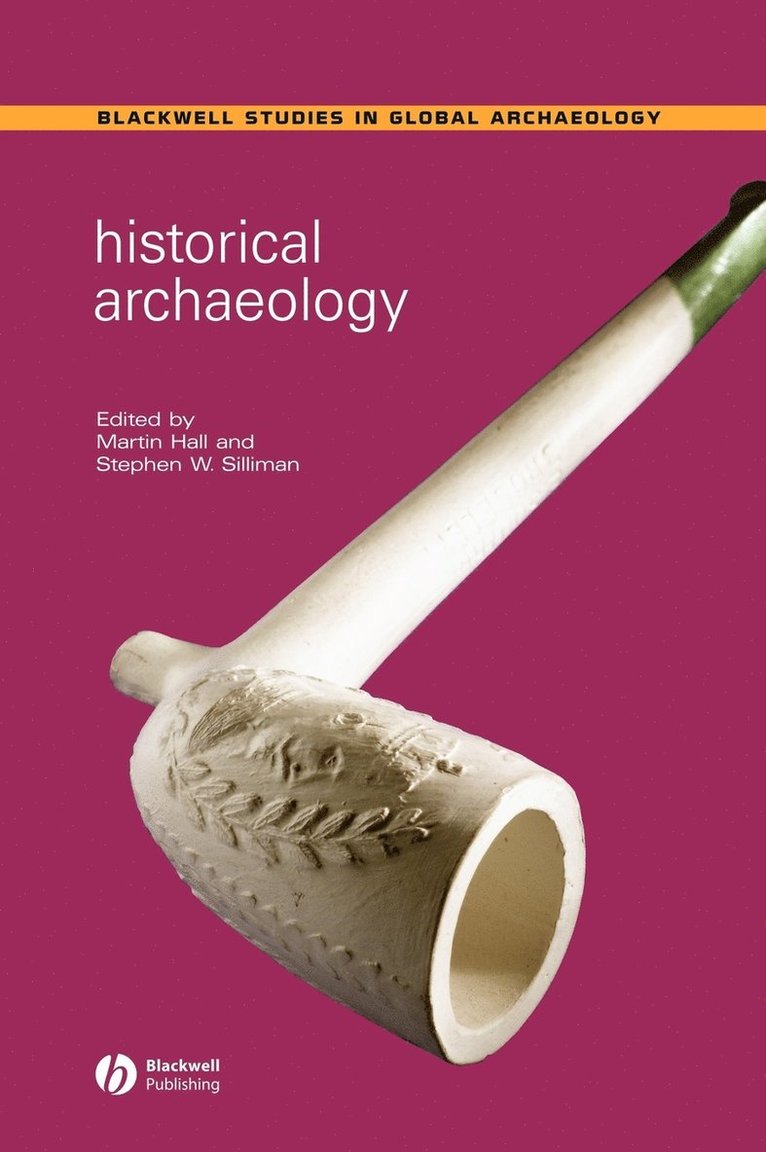
This volume offers lively current debates and case studies in historical archaeology selected from around the world, including North America, Latin America, Africa, the Pacific, and Europe. Authored by 19 experts in the field.Explores how historical archaeologists think about their work, piecing together information from both material culture and documents in an attempt to understand the lives of the people and societies they study.Engages with current theory in an accessible manner.Truly global in its approach but avoids subsuming local experiences of people into global patterns.Summarizes not only the current state of historical archaeology, but also sets the course for the field in decades to come.
458 kr
Skickas inom 7-10 vardagar
This volume offers lively current debates and case studies in historical archaeology selected from around the world, including North America, Latin America, Africa, the Pacific, and Europe. Authored by 19 experts in the field.Explores how historical archaeologists think about their work, piecing together information from both material culture and documents in an attempt to understand the lives of the people and societies they study.Engages with current theory in an accessible manner.Truly global in its approach but avoids subsuming local experiences of people into global patterns.Summarizes not only the current state of historical archaeology, but also sets the course for the field in decades to come.