
Tom Licence - Böcker
Visar alla böcker från författaren Tom Licence. Handla med fri frakt och snabb leverans.
5 produkter
5 produkter
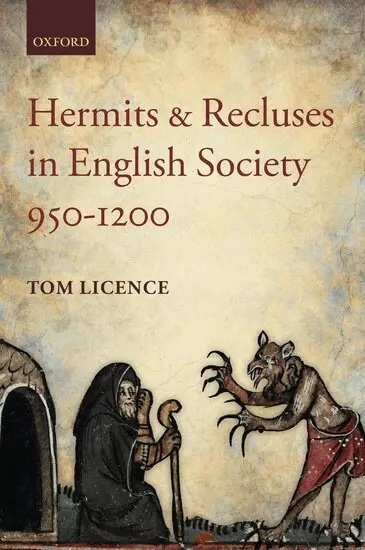
1 444 kr
Skickas inom 5-8 vardagar
In the central Middle Ages, English society lavished unprecedented attention on a category of would-be outcasts who repudiated its ambitions and spurned its aspirations. Hermits and recluses (collectively 'anchorites') had their own, very different vision of how life should be lived, and yet nobles retained them on their estates, parishioners did their bit to support their local recluses, and every tier of society from the peasantry up to royalty journeyed to rural hermitages for prayer, advice, and spiritual instruction. Anchorites were everywhere, dotted across the landscape, striving to restore humanity's broken image, in their own lives and in their clients. The respect that came of their endeavour grew from a heightened sense of the conflict between society's worldly concerns and its spiritual ideals, in the minds of their admirers. Tom Licence sets out to discover why anchorites rose to prominence, in the context of European monasticism and trends in spirituality. In the past, historians linked their rise to many different things: the impact of the Norman Conquest; a crisis of identity in the monasteries; the discovery of the individual; a reaction to the profit economy; and to a new need for 'holy men' (or holy women) to minister to a changing society. Investigating the avenues by which anchorites gained their reputation, and pinpointing their function in relation to society, this new inquiry puts these hypotheses to the test in a study of English society in the central Middle Ages.
713 kr
Skickas inom 7-10 vardagar
In the central Middle Ages, English society lavished unprecedented attention on a category of would-be outcasts who repudiated its ambitions and spurned its aspirations. Hermits and recluses (collectively 'anchorites') had their own, very different vision of how life should be lived, and yet nobles retained them on their estates, parishioners did their bit to support their local recluses, and every tier of society from the peasantry up to royalty journeyed to rural hermitages for prayer, advice, and spiritual instruction. Anchorites were everywhere, dotted across the landscape, striving to restore humanity's broken image, in their own lives and in their clients. The respect that came of their endeavour grew from a heightened sense of the conflict between society's worldly concerns and its spiritual ideals, in the minds of their admirers. Tom Licence sets out to discover why anchorites rose to prominence, in the context of European monasticism and trends in spirituality. In the past, historians linked their rise to many different things: the impact of the Norman Conquest; a crisis of identity in the monasteries; the discovery of the individual; a reaction to the profit economy; and to a new need for 'holy men' (or holy women) to minister to a changing society. Investigating the avenues by which anchorites gained their reputation, and pinpointing their function in relation to society, this new inquiry puts these hypotheses to the test in a study of English society in the central Middle Ages.
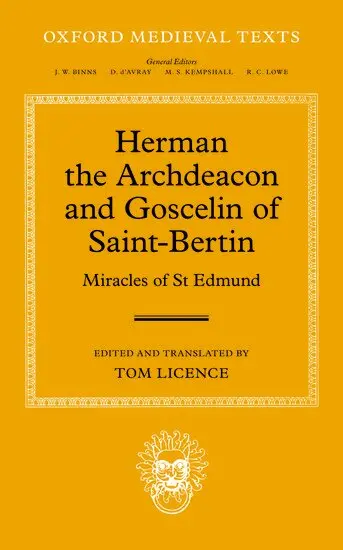
4 175 kr
Skickas inom 5-8 vardagar
St Edmund was medieval England's patron saint, and at his abbey, two major Latin miracle collections were compiled: one in the 1090s by Herman the Archdeacon, an historian trained in the schools of Lorraine; the other c. 1100 by an anonymous hagiographer who rewrote and expanded Herman's work. Herman's Miracles, an important text for the history of the realm and East Anglia in particular, is edited and translated here in its full fifty chapters for the first time, along with a shorter version intended for wider circulation. The second miracle collection, never before in print, is also presented for the first time and attributed to the Flemish hagiographer Goscelin of Saint-Bertin. Together the collections illustrate a rapid turnover of hagiography, connected to a change of leadership at the abbey of Bury St Edmunds. These works illustrate the evolution of historical writing, applied to the affairs of an exceptional international cult. The introduction revises the history of Bury St Edmunds from its foundations to c. 1100, rejecting old assumptions, adding to our knowledge of Herman's background, and proposing a context and attribution for the second collection which will alter the debate on Goscelin's career. A poem attacking Bishop Herbert Losinga (1091-1119) for simony is also included, edited from previously undiscovered textual witnesses, and linked to Herman and the factional divisions behind the two miracle collections.This volume makes the subject accessible to the full range of scholars interested in Edmund and Anglo-Norman England by providing editions and translations for the first time. Its arguments clear up much of the confusion surrounding the history of the cult and the abbey. It will remain invaluable to literary scholars and historians alike.
- Nyhet
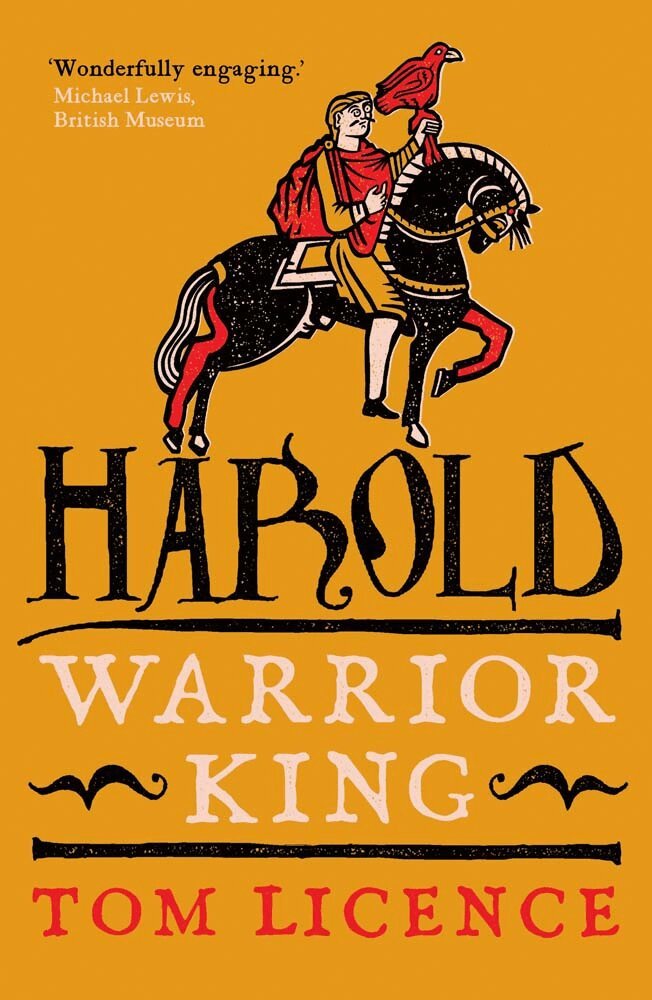
393 kr
Kommande
An authoritative life of Harold II, the king who died at the Battle of Hastings in 1066Harold Godwinson is renowned as the king who lost England to the invading William the Conqueror in 1066. Infamous legends, invented by the Victorians, surround his life, corrupting our idea of him. But who was the real Harold II?In this major new biography, Tom Licence reveals the truth behind the nineteenth-century myths. Moving from Harold’s childhood and his adventures as an earl in Edward the Confessor’s court, to his nine-month reign and the bloody battles at its end, Licence rewrites the story of his life at every turn. We see Harold’s rupture with his family, his cultivation of alliances, and his political interventions at home and overseas. He seized the throne as a skilled political leader who was the prime candidate to unite a realm divided by rebellion. And, when war came to English shores, Harold managed the conflict as well as any commander could.
1 195 kr
Skickas inom 7-10 vardagar
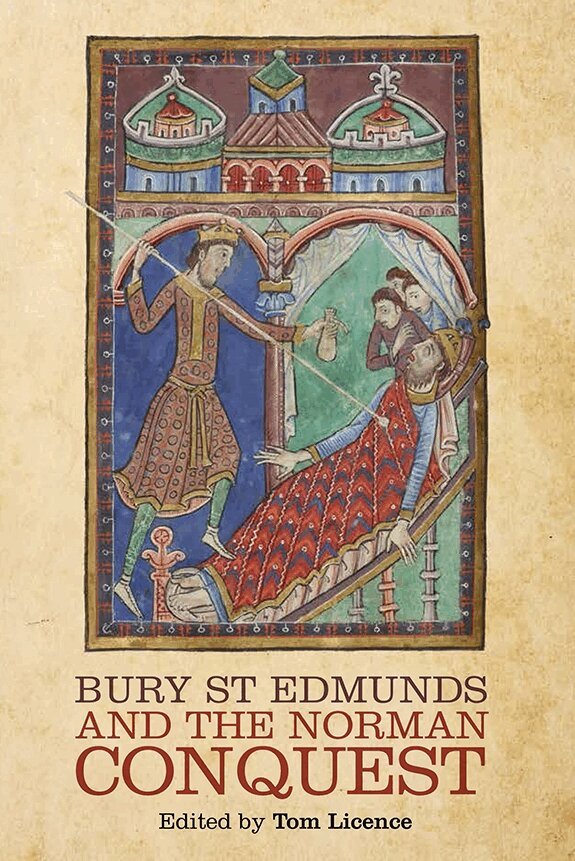
Responses to the impact of the Norman Conquest examined through the wealth of evidence provided by the important abbey of Bury St Edmunds.Bury St Edmunds is noteworthy in so many ways: in preserving the cult and memory of the last East Anglian king, in the richness of its archives, and not least in its role as a mediator of medical texts and studies. All these aspects, and more, are amply illustrated in this collection, by specialists in their fields. The balance of the whole work, and the care taken to place the individual topics in context, has resulted in a satisfying whole, which placesAbbot Baldwin and his abbey squarely in the forefront of eleventh-century politics and society. Professor Ann Williams.The abbey of Bury St Edmunds, by 1100, was an international centre of learning, outstanding for its culting of St Edmund, England's patron saint, who was known through France and Italy as a miracle worker principally, but also as a survivor, who had resisted the Vikings and the invading king Swein and gained strength after 1066. Here we journey into the concerns of his community as it negotiated survival in the Anglo-Norman empire, examining, on the one hand, the roles of leading monks, such as the French physician-abbot Baldwin, and, on the other, the part played by ordinary women of the vill. The abbey of Bury provides an exceptionally rich archive, including annals, historical texts, wills, charters, and medical recipes. The chapters in this volume, written by leading experts, present differing perspectives on Bury's responses to conquest; reflecting the interests of the monks, they cover literature, music, medicine, palaeography, and the history of the region in its European context.DrTom Licence is Senior Lecturer in Medieval History and Director of the Centre of East Anglian Studies at the University of East Anglia.Contributors: Debbie Banham, David Bates, Eric Fernie, Sarah Foot, Michael Gullick,Tom Licence, Henry Parkes, Véronique Thouroude, Elizabeth van Houts, Thomas Waldman, Teresa Webber