
Tullo Vigevani - Böcker
Visar alla böcker från författaren Tullo Vigevani. Handla med fri frakt och snabb leverans.
4 produkter
4 produkter
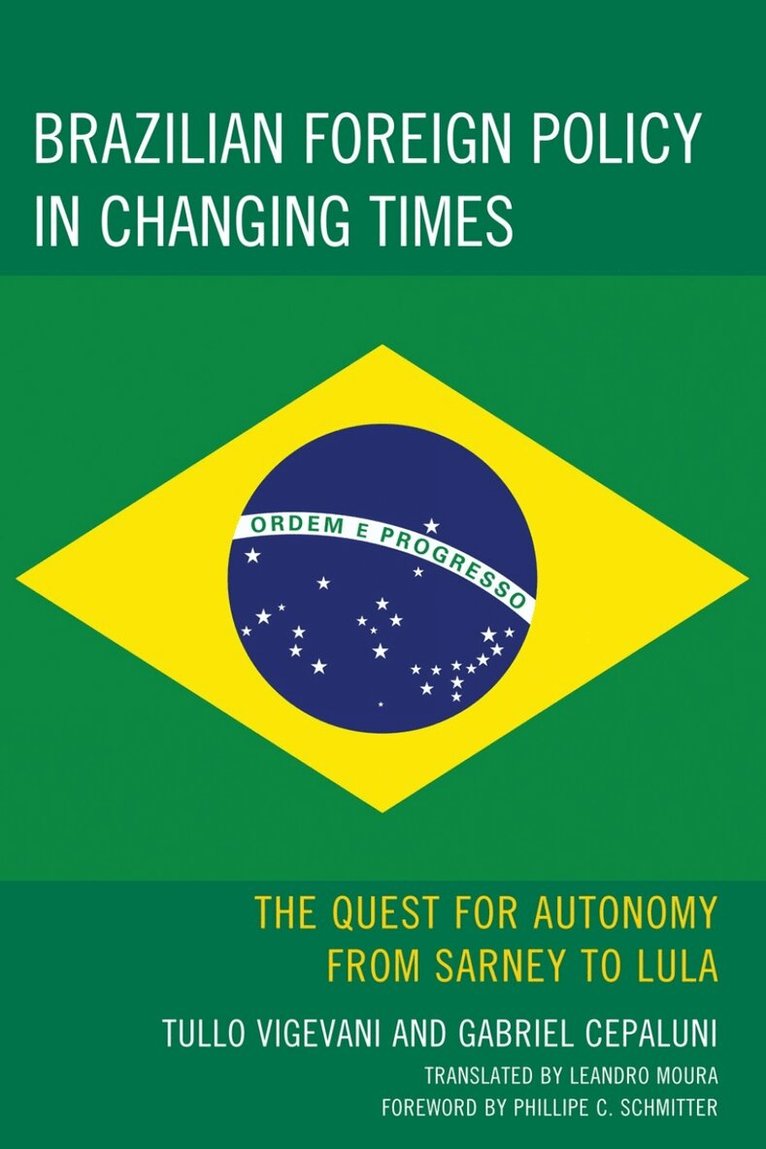
Brazilian Foreign Policy in Changing Times
The Quest for Autonomy from Sarney to Lula
Inbunden, Engelska, 2009
1 276 kr
Skickas inom 10-15 vardagar
This book analyzes Brazilian foreign policy after the democratic opening of the country in the mid-1980s. To illuminate this topic, authors Tullo Vigevani and Gabriel Cepaluni built an analytical framework which uses three concepts to examine Brazilian Foreign Policy changes over the years: (1) autonomy through distance, (2) autonomy through participation, and (3) autonomy through diversification.The authors demonstrate that the Brazilian military regime sought to distance itself from powerful countries in order to keep its domestic sovereignty, while the Brazilian democratic regimes—especially the Cardoso administration—tried to increase international connections despite practicing a foreign policy defending the nation's autonomy in relation to the great powers. With the Lula administration, the country still seeks greater international relationships but through a diversification strategy concerning its partners abroad, therefore counterbalancing the influence of the great powers, especially the United States.
Brazilian Foreign Policy in Changing Times
The Quest for Autonomy from Sarney to Lula
Häftad, Engelska, 2012
626 kr
Skickas inom 10-15 vardagar
This book analyzes Brazilian foreign policy after the democratic opening of the country in the mid-1980s. To illuminate this topic, authors Tullo Vigevani and Gabriel Cepaluni built an analytical framework which uses three concepts to examine Brazilian Foreign Policy changes over the years: (1) autonomy through distance, (2) autonomy through participation, and (3) autonomy through diversification.The authors demonstrate that the Brazilian military regime sought to distance itself from powerful countries in order to keep its domestic sovereignty, while the Brazilian democratic regimes—especially the Cardoso administration—tried to increase international connections despite practicing a foreign policy defending the nation's autonomy in relation to the great powers. With the Lula administration, the country still seeks greater international relationships but through a diversification strategy concerning its partners abroad, therefore counterbalancing the influence of the great powers, especially the United States.
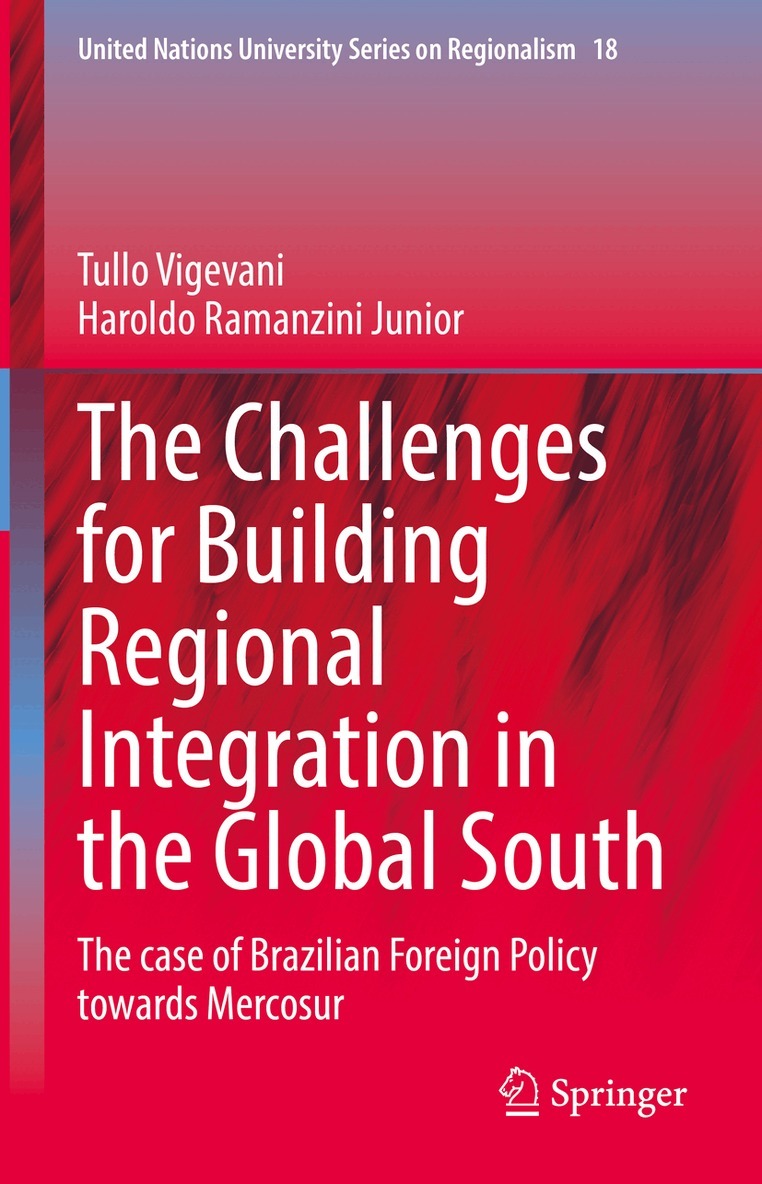
Challenges for Building Regional Integration in the Global South
The case of Brazilian Foreign Policy towards Mercosur
Inbunden, Engelska, 2022
1 381 kr
Skickas inom 10-15 vardagar
This book analyzes regional integration in South America with a focus on the Mercosur and Brazilian foreign policy from the 1990s. Thisvery topical book is of interest for researchers and students of Brazilian foreign policy and those of Latin American and/or Mercosur countries.
Challenges for Building Regional Integration in the Global South
The case of Brazilian Foreign Policy towards Mercosur
Häftad, Engelska, 2023
1 381 kr
Skickas inom 10-15 vardagar
This book analyzes regional integration in South America with a focus on the Mercosur and Brazilian foreign policy from the 1990s. It reviews the history of the Mercosur and identifies the results achieved by the bloc, as well as the causes of difficulties and the reasons for stalemates over nearly 30 years of its existence. The authors identify the complex interrelation between domestic and foreign factors that have shaped Brazilian foreign policy. From 1991 onwards, relations between Latin American countries have changed while the Mercosur developed from a free trade area to a customs union. While intrabloc trade grew, there were huge difficulties in the form of regional institutional affirmation and cooperation. This history is of the utmost importance to understanding regionalism and politics in Latin America. The book therefore has two interrelated analytical dimensions: namely, focus on ideas and identity; and behavior, actions, and economic and political interests. Thisvery topical book is of interest for researchers and students of Brazilian foreign policy and those of Latin American and/or Mercosur countries. Particularly, readers interested in regionalism will find important theoretical and empirical elements in this book, as well as discussions necessary for comprehending the role of big, emerging countries, and the potential and limits to their international role.