
Wolfgang W. E. Samuel - Böcker
Visar alla böcker från författaren Wolfgang W. E. Samuel. Handla med fri frakt och snabb leverans.
5 produkter
5 produkter
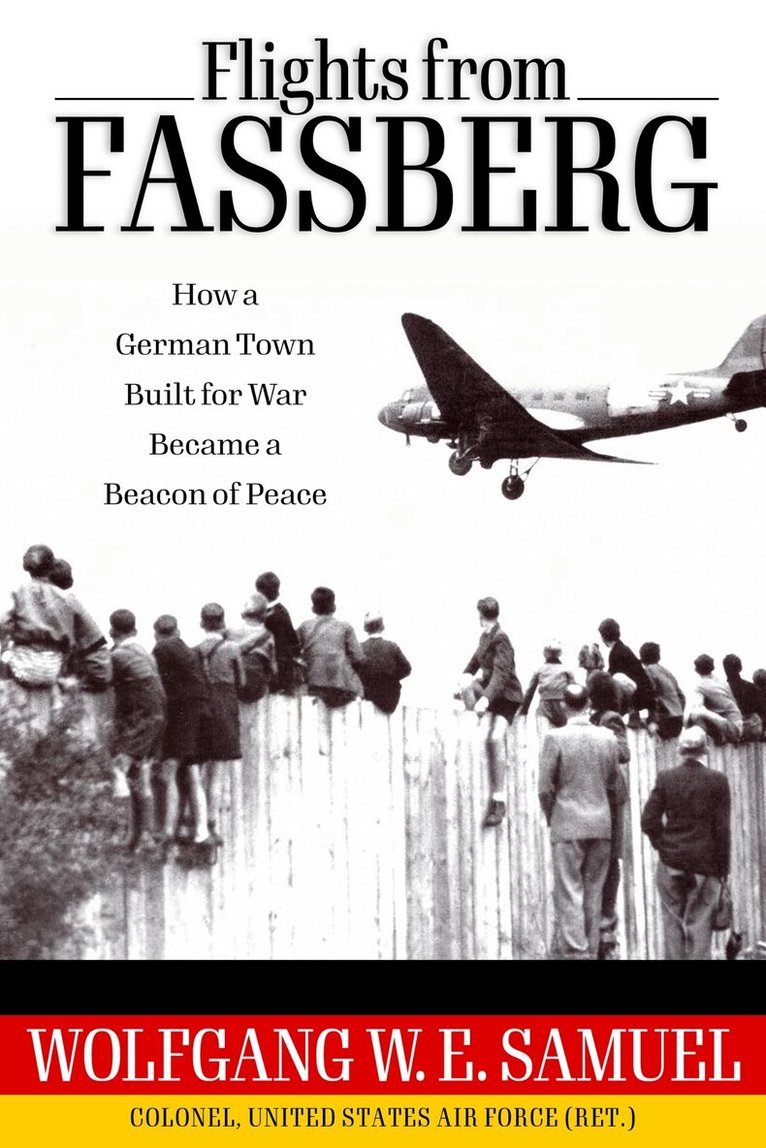
Flights from Fassberg
How a German Town Built for War Became a Beacon of Peace
Inbunden, Engelska, 2021
333 kr
Skickas inom 7-10 vardagar
Wolfgang W. E. Samuel, Colonel, US Air Force (Ret.), interweaves his story and that of his family with the larger history of World War II and the postwar world through a moving recollection and exploration of Fassberg, a small town in Germany few have heard of and fewer remember. Created in 1933 by the Hitler regime to train German aircrews, Fassberg hosted Samuel's father in 1944-45 as an officer in the German air force. As fate and Germany's collapse chased young Wolfgang, Fassberg later became his home as a postwar refugee, frightened, traumatized, hungry, and cold.Built for war, Fassberg made its next mark as a harbinger of the new Cold War, serving as one of the operating bases for Allied aircraft during the Berlin Airlift in 1948. With the end of the Berlin Crisis, the airbase and town faced a dire future. When the Royal Air Force declared the airbase surplus to its needs, it also signed the place's death warrant, yet increasing Cold War tensions salvaged both base and town. Fassberg transformed again, this time into a forward operating base for NATO aircraft, including a fighter flown by Samuel's son.Both personal revelation and world history, replete with tales from pilots, mechanics, and all those whose lives intersected there, Flights from Fassberg provides context to the Berlin Airlift and its strategic impact, the development of NATO, and the establishment of the West German nation. The little town built for war survived to serve as a refuge for a lasting peace.
343 kr
Skickas inom 7-10 vardagar
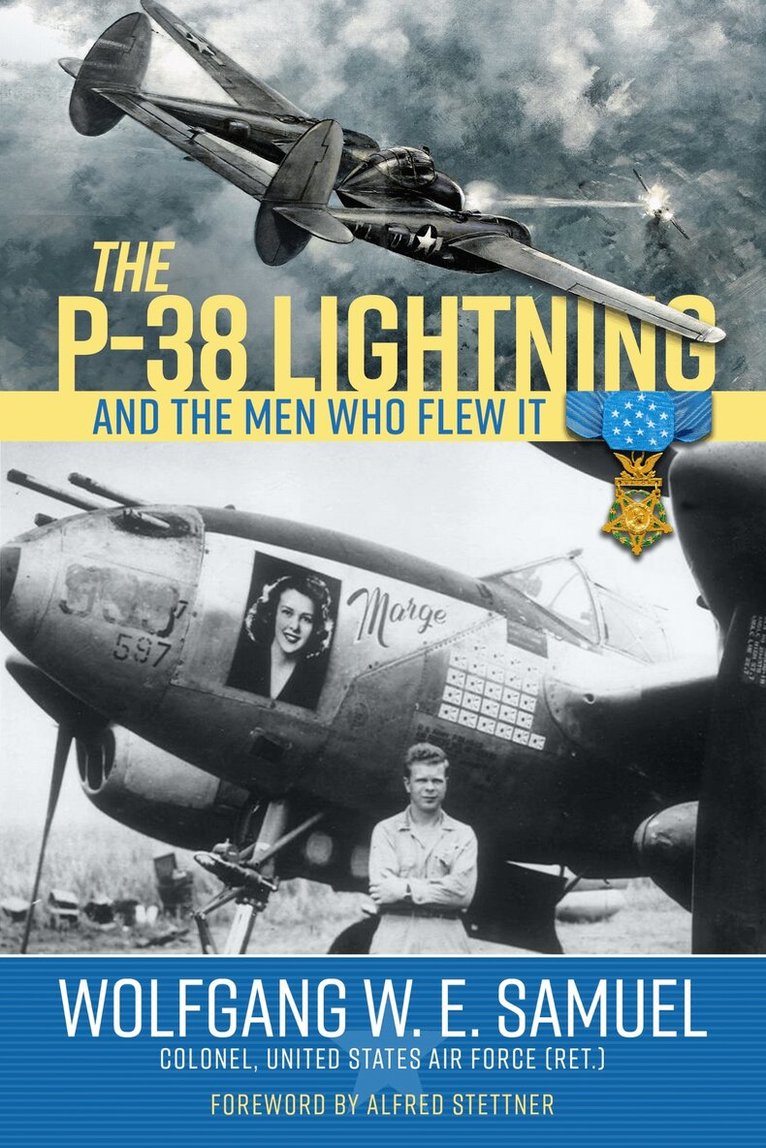
The P-38 Lightning was one of the fastest operational fighters of World War II, famous for its successes in North Africa and the Pacific. In The P-38 Lightning and the Men Who Flew It, Wolfgang W. E. Samuel shares the stories of the young men who climbed into the cockpits of the P-38 to fight for freedom, and of those who created, tested, and deployed these fearsome machines.The P-38 was the product of the Lockheed Corporation, the first fighter they ever built, principally conceptualized by Kelly Johnson, whose design was to meet Air Corps specifications. To do that he came up with a twin-engine aircraft with a tricycle landing gear unlike any other military aircraft of the time. But it was no easy plane to fly. Many pilots died in training and routine flying before ever meeting an opponent in combat.P-38 units were formed quickly once the United States entered World War II in December 1941. Training was rushed to get pilots and planes to Europe as quickly as possible to serve as bomber escorts. Although the P-38 could fly at the high altitudes the bombers flew, it was not the right aircraft for the mission. At high altitudes without an engine in front of the cockpit to keep the pilot warm, the plane was frigid. Pilots suffered and were sometimes so weakened by the brutal cold that they had to be lifted out of the cockpit upon landing, and the bombers suffered severe losses. In North Africa’s warmer air, however, the P-38 came into its own. With four 50-caliber machine guns and a 20mm cannon in its nose, the P-38 was a formidable adversary. With proven success in the Mediterranean, P-38 squadrons were transferred to the Pacific Theater, where they flourished.This book focuses on the men who flew this challenging aircraft and the men who designed and decided how to deploy it. Samuel shares stories of bravery and ingenuity alongside an aviation history long neglected. The P-38’s Pacific deployment is covered in some detail, including the actions of Richard Bong, who became the US forces’ ace of aces while flying a P-38. In the Pacific skies, the P-38, its pilots, and designers made the heroic history captured here.
409 kr
Skickas inom 3-6 vardagar
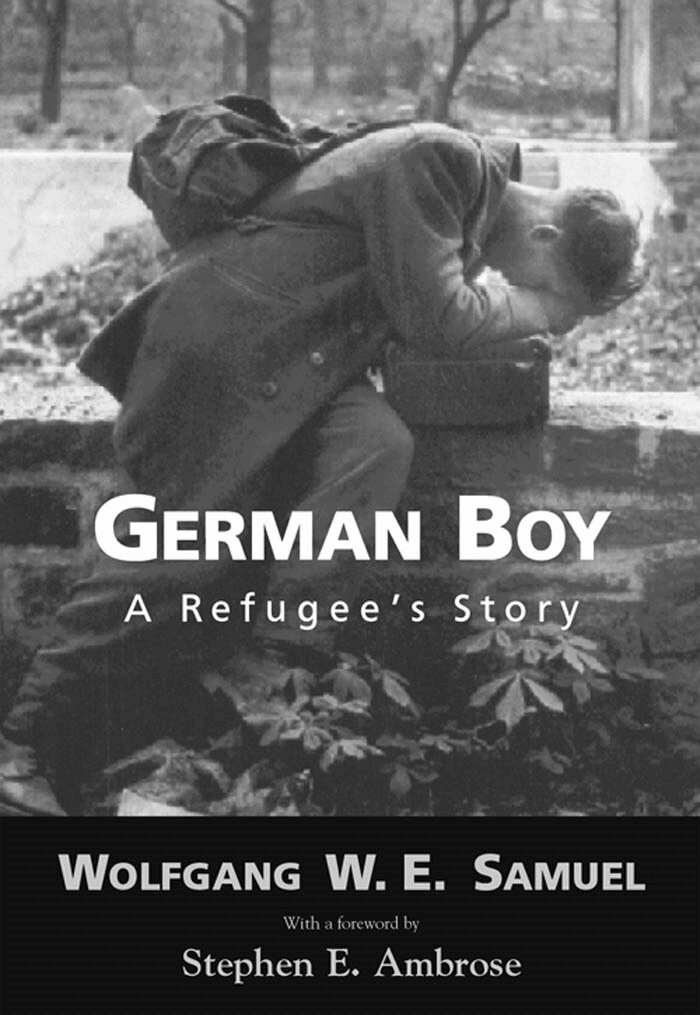
What was the experience of war for a child in bombed and ravaged Germany? In this memoir, the voice of innocence is heard.""This is great stuff,"" exclaims Stephen E. Ambrose.""I love this book.""In this gripping account, a boy and his mother are wrenched from their tranquil lives to forge a path through the storm of war and the rubble of its aftermath. In the past there has been a spectrum of books and films that share other German World War II experiences. However, told from the perspective of a ten-year-old, this book is rare. The boy and his mother must prevail over hunger and despair, or die.In the Third Reich, young Wolfgang Samuel and his family are content but alone. The father, a Luftwaffe officer, is away fighting the Allies in the West. In 1945 as Berlin and nearby communities crumble, young Wolfgang, his mother Hedy, and little sister Ingrid flee the advancing Russian army. They have no inkling of the chaos ahead. In Strasburg, a small town north of Berlin where they find refuge, Wolfgang begins to comprehend the evils the Nazi regime brought to Germany. As the Reich collapses, mother, son, and daughter flee again just ahead of the Russian charge.In the chaos of defeat they struggle to find food and shelter. Death stalks the primitive camps that are their temporary havens, and the child becomes the family provider. Under the crushing responsibility, Wolfgang becomes his mother's and sister's mainstay. When they return to Strasburg, the Communists in control are as brutal as the Nazis. In the violent atmosphere of arbitrary arrest, rape, hunger, and fear, the boy and his mother persist. Pursued by Communist police through a fierce blizzard, they escape to the West, but even in the English zone, the constant search for food, warmth, and shelter dominates their lives, and the mother's sacrifices become the boy's nightmares.Although this is a time of deepest despair, Wolfgang hangs on to the thinnest thread of hope. In June 1948 with the arrival of the Americans flying the Berlin Airlift, Wolfgang begins a new journey.
409 kr
Skickas inom 3-6 vardagar
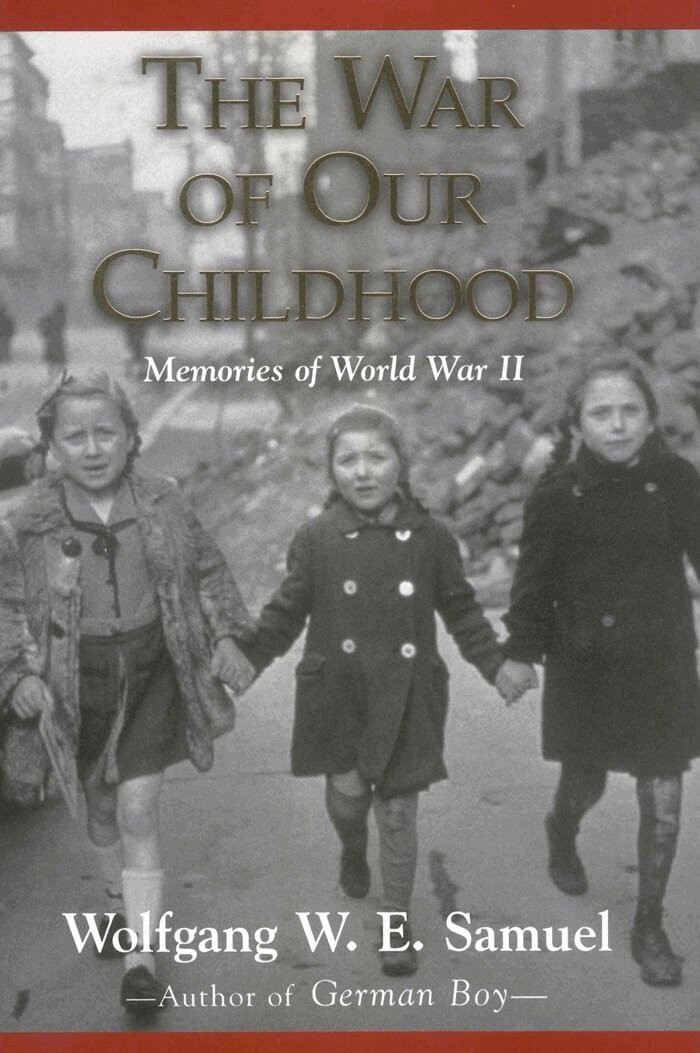
One survivor tells of the fire-bombing of Dresden. Another recounts the pervasive fear of marauding Russian and Czech bandits raping and killing. Children recall fathers who were only photographs and mothers who were saviors and heroes.These are typical in the stories collected in The War of Our Childhood: Memories of World War II. For this book Wolfgang W. E. Samuel, a childhood refugee himself after the fall of Nazi Germany, interviewed twenty-seven men and women who as children--by chance and sheer resilience--survived Allied bombs, invading armies, hunger, and chaos.""Our eyes carried no hate, only recognition of what was,"" Samuel writes of his childhood. ""Peace was an abstraction. The world we Kinder knew nearly always had the word 'war' appended to it.""Samuel's heartfelt narratives from these innocent survivors are invariably riveting and often terrifying. Each engrossing story has perilous and tragic moments--school children in Leuna who are sent home during an air raid but are strafed as moving targets; fathers who exist only as distant figures, returning to their families long after the war--or not at all; mothers who are raped and tortured; families who are forced into a seemingly endless relocation that replicates the terrors of war itself. In capturing such experiences from nearly every region of Germany and involving people of every socio-economic class, this is a collection of unique memories, but each account contributes to a cumulative understanding of the war that is more personal than strategic surveys and histories.For Samuel and the survivors he interviewed, agony and fright were part of everyday life, just as were play, wondrous experience, and above all perseverance.""My focus,"" Samuel writes, ""is on the astounding ability of a generation of German children to emerge from debilitating circumstances as sane and productive human beings.""
332 kr
Skickas inom 11-20 vardagar
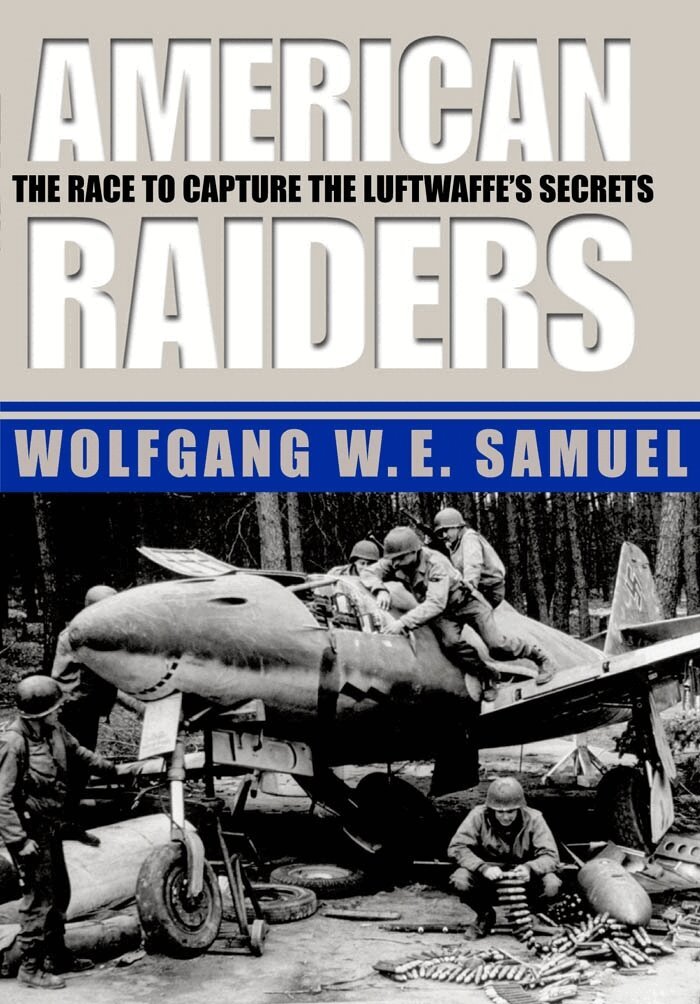
At the close of World War II, Allied forces faced frightening new German secret weapons--buzz bombs, V-2's, and the first jet fighters. When Hitler's war machine began to collapse, the race was on to snatch these secrets before the Soviet Red Army found them.The last battle of World War II, then, was not for military victory but for the technology of the Third Reich. In American Raiders: The Race to Capture the Luftwaffe's Secrets, Wolfgang W. E. Samuel assembles from official Air Force records and survivors' interviews the largely untold stories of the disarmament of the once mighty Luftwaffe and of Operation Lusty--the hunt for Nazi technologies.In April 1945 American armies were on the brink of winning their greatest military victory, yet America's technological backwardness was shocking when measured against that of the retreating enemy. Senior officers, including the Commanding General of the Army Air Forces Henry Harley ""Hap"" Arnold, knew all too well the seemingly overwhelming victory was less than it appeared. There was just too much luck involved in its outcome.Two intrepid American Army Air Forces colonels set out to regain America's technological edge. One, Harold E. Watson, went after the German jets; the other, Donald L. Putt, went after the Nazis' intellectual capital--their world-class scientists.With the help of German and American pilots, Watson brought the jets to America; Putt persevered as well and succeeded in bringing the German scientists to the Army Air Forces' aircraft test and evaluation center at Wright Field. A young P-38 fighter pilot, Lloyd Wenzel, a Texan of German descent, then turned these enemy aliens into productive American citizens--men who built the rockets that took America to the moon, conquered the sound barrier, and laid the foundation for America's civil and military aviation of the future.American Raiders: The Race to Capture the Luftwaffe's Secrets details the contest won, a triumph that shaped America's victories in the Cold War.