
Youngju Ryu - Böcker
Visar alla böcker från författaren Youngju Ryu. Handla med fri frakt och snabb leverans.
3 produkter
3 produkter
429 kr
Skickas inom 7-10 vardagar
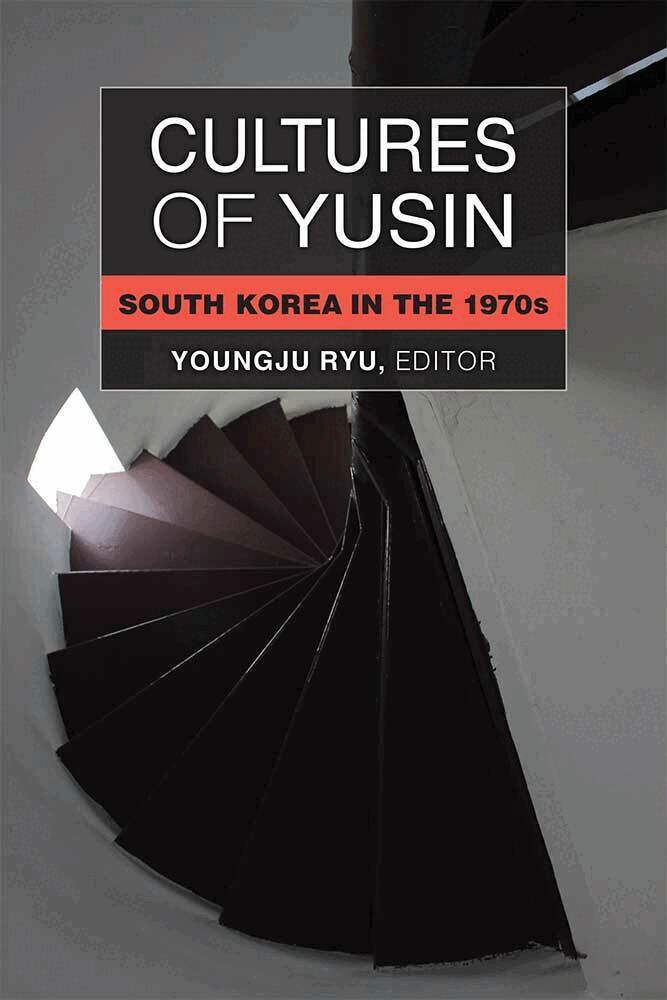
Cultures of Yusin examines the turbulent and yet deeply formative years of Park Chung Hee’s rule in South Korea, focusing on the so-called Yusin era (1972–79). Beginning with the constitutional change that granted dictatorial powers to the president and ending with his assassination, Yusin was a period of extreme political repression coupled with widespread mobilization of the citizenry towards the statist gospel of modernization and development. While much has been written about the political and economic contours of this period, the rich complexity of its cultural production remains obscure. This edited volume brings together a wide range of scholars to explore literature, film, television, performance, music, and architecture, as well as practices of urban and financial planning, consumption, and homeownership. Examining the plural forms of culture’s relationship to state power, the authors illuminate the decade of the 1970s in South Korea and offer an essential framework for understanding contemporary Korean society.
Imperatives of Culture
Selected Essays on Korean History, Literature, and Society from the Japanese Colonial Era
Inbunden, Engelska, 2013
493 kr
Skickas inom 7-10 vardagar
This volume contains translations—many appearing for the first time in the English language—of major literary, critical, and historical essays from the colonial period (1910–1945) in Korea. Considered representative of the debates among and between Korean and Japanese thinkers of the colonial period, these texts shed light on relatively unexplored aspects of intellectual life and take part in current conversations around the nature of the colonial experience and its effects on post-liberation Korean society and culture. The essays, each preceded by a scholarly introduction giving necessary historical and biographical context, represent a diverse spectrum of ideological positions and showcase the complexity of intellectual life and scholarship in colonial Korea. They allow new perspectives on an important period in Korean history, a period that continues to inform political, social, and cultural life in crucial ways across East Asia. The translations also provide an important counterpoint to the imperial archive from the perspective of the colonized and take part in the ongoing reevaluation of the colonial period and “colonial modernity” in both Western and East Asian scholarship. Imperatives of Culture is intended in part for the increasing number of undergraduate and graduate students in Korean studies as well as for those engaged in the study of East Asia as a whole and a general, educated audience with interests in modern Korea and East Asia. The essays have been carefully selected and introduced in ways that open up avenues for comparison with analyses of colonial literature and history in other national contexts.
Writers of the Winter Republic
Literature and Resistance in Park Chung Hee's Korea
Häftad, Engelska, 2018
324 kr
Skickas inom 7-10 vardagar
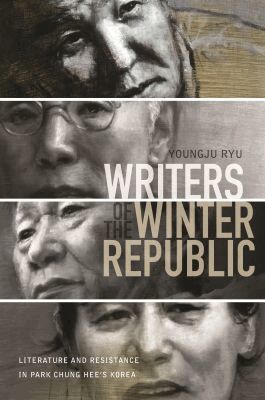
In 1975, a young high school teacher took the stage at a prayer meeting in a southwestern Korean city to recite a poem called ""The Winter Republic."" The poem became an anthem against the military dictatorship of Park Chung Hee and his successors; the poet, however, soon found himself in court and then in prison for saddling the authoritarian state with such a memorable moniker. This unique book weaves together literary works, biographical accounts, institutional histories, trial transcripts, and personal interviews to tell the powerful story of how literature became a fierce battleground against authoritarian rule during one of the darkest periods in South Korea's history.Park Chung Hee's military dictatorship was a time of unparalleled political oppression. It was also a time of rapid and unprecedented economic development. Against this backdrop, Youngju Ryu charts the growing activism of Korean writers who interpreted literature's traditional autonomy as a clarion call to action, an imperative to intervene politically in the name of art. Each of the book's four chapters is devoted to a single writer and organized around a trope central to his work. Kim Chi-ha's ""bandits,"" satirizing Park's dictatorship; Yi Mun-gu's ""neighbor,"" evoking old nostalgia and new anxieties; Cho Se-hui's dwarf, representing the plight of the urban poor; and Hwang Sok-yong's labor fiction, the supposed herald of the proletarian revolution. Ending nearly two decades of an implicit ban on socially engaged writing, literature of the period became politicized not merely in content and form, but also as an institution.Writers of the Winter Republic emerged as the conscience of their troubled yet formative times. A question of politics lies at the heart of this book, which seeks to understand how and why a time of political oppression and censorship simultaneously expanded the practice and everyday relevance of literature. By animating the lives and works of the men who shaped this period, the book offers readers an illuminating literary, cultural, and political history of the era.