
Visar resultat för..."Gesta Danorum"
20 produkter
20 produkter
573 kr
Skickas inom 5-8 vardagar
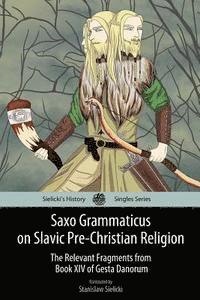
Saxo Grammaticus on Slavic Pre-Christian Religion: The Relevant Fragments from Book XIV of Gesta Danorum
Häftad, Engelska
193 kr
Skickas inom 3-6 vardagar
3 527 kr
Skickas inom 5-8 vardagar

"Gesta Danorum" des Saxo Grammaticus als Beispiel mittelalterlicher Geschichtsschreibung in Dänemark
Häftad, Tyska, 2008
193 kr
Skickas inom 3-6 vardagar

Quellenvergleich der Gesta Danorum und der Snorri Edda - Aufgezeigt am Beispiel der Saga des Balders
Häftad, Tyska, 2011
346 kr
Skickas inom 3-6 vardagar
Gesta Et Vestiga Danorum Extra Daniam: Praecipue in Oriente, Italia, Hispania, Gallia, Anglia, Scotia, Hibernia, Belgio, Germania Et Sclavonia: Maxima
Häftad, Latin, 2022
336 kr
Skickas inom 5-8 vardagar
4 949 kr
Skickas inom 5-8 vardagar
Saxo was probably a canon of Lund Cathedral, at that period a Danish cathedral, and lived at the end of the twelfth century. He was in the service of Archbishop Absalon, who encouraged him to write a history of his own country from the beginnings up to his own time, with a strong Christian bias. Starting with the myths and heroic tales of primitive Scandinavia, he devoted the first nine of his sixteen books to legendary material before dealing with the first kings of the Viking age and finished in 1285, after relating the earlier exploits of King Cnut Valdemarsson. The activities of the Danish kings were intimately bound up with the monarchies of Norway and Sweden; Cnut the Great, one of Saxo's heroes, whose empire stretched as far as Britain and Iceland, was ruler of both these countries. In the last books Saxo took particular concern to describe the campaigns of Valdemar the Great and his warrior archbishop, Absalon, against the Wends of North Germany.The work is a prosimetrum, that is, in six of the first nine books he inserts poems, which are intended to parallel specimens of old Danish heroic poetry in Latin metres. Saxo's Latin prose style is often complex, based as it is on models like Valerius Maximus and Martianus Capella, but he is a lively and compelling story-teller, often displaying a rather sly sense of humour, and an interest in the supernatural. He is the first author to give a full account of Hamlet, whose adventures he relates at some length, the elements of which in a great many respects correspond surprisingly closely with the characters and incidents of Shakespeare's play.Volume I of Saxo Grammaticus contains an introduction from the editor, and the first ten books of Saxo's work.
4 650 kr
Skickas inom 5-8 vardagar
Saxo was probably a canon of Lund Cathedral, at that period a Danish cathedral, and lived at the end of the twelfth century. He was in the service of Archbishop Absalon, who encouraged him to write a history of his own country from the beginnings up to his own time, with a strong Christian bias. Starting with the myths and heroic tales of primitive Scandinavia, he devoted the first nine of his sixteen books to legendary material before dealing with the first kings of the Viking age and finished in 1285, after relating the earlier exploits of King Cnut Valdemarsson. The activities of the Danish kings were intimately bound up with the monarchies of Norway and Sweden; Cnut the Great, one of Saxo's heroes, whose empire stretched as far as Britain and Iceland, was ruler of both these countries. In the last books Saxo took particular concern to describe the campaigns of Valdemar the Great and his warrior archbishop, Absalon, against the Wends of North Germany.The work is a prosimetrum, that is, in six of the first nine books he inserts poems, which are intended to parallel specimens of old Danish heroic poetry in Latin metres. Saxo's Latin prose style is often complex, based as it is on models like Valerius Maximus and Martianus Capella, but he is a lively and compelling story-teller, often displaying a rather sly sense of humour, and an interest in the supernatural. He is the first author to give a full account of Hamlet, whose adventures he relates at some length, the elements of which in a great many respects correspond surprisingly closely with the characters and incidents of Shakespeare's play.Volume II of Saxo Grammaticus contains books 11-16 of Saxo's work, mainly dealing with the history of the first Danish kings.
444 kr
Skickas inom 5-8 vardagar
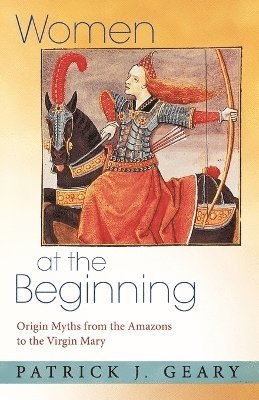
In these four artfully crafted essays, Patrick Geary explores the way ancient and medieval authors wrote about women. Geary describes the often marginal role women played in origin legends from antiquity until the twelfth century. Not confining himself to one religious tradition or region, he probes the tensions between women in biblical, classical, and medieval myths (such as Eve, Mary, Amazons, princesses, and countesses), and actual women in ancient and medieval societies. Using these legends as a lens through which to study patriarchal societies, Geary chooses moments and texts that illustrate how ancient authors (all of whom were male) confronted the place of women in their society. Unlike other books on the subject, Women at the Beginning attempts to understand not only the place of women in these legends, but also the ideologies of the men who wrote about them. The book concludes that the authors of these stories were themselves struggling with ambivalence about women in their own worlds and that this struggle manifested itself in their writings.
262 kr
Skickas inom 5-8 vardagar
In these four artfully crafted essays, Patrick Geary explores the way ancient and medieval authors wrote about women. Geary describes the often marginal role women played in origin legends from antiquity until the twelfth century. Not confining himself to one religious tradition or region, he probes the tensions between women in biblical, classical, and medieval myths (such as Eve, Mary, Amazons, princesses, and countesses), and actual women in ancient and medieval societies. Using these legends as a lens through which to study patriarchal societies, Geary chooses moments and texts that illustrate how ancient authors (all of whom were male) confronted the place of women in their society. Unlike other books on the subject, Women at the Beginning attempts to understand not only the place of women in these legends, but also the ideologies of the men who wrote about them. The book concludes that the authors of these stories were themselves struggling with ambivalence about women in their own worlds and that this struggle manifested itself in their writings.
2 456 kr
Skickas inom 10-15 vardagar
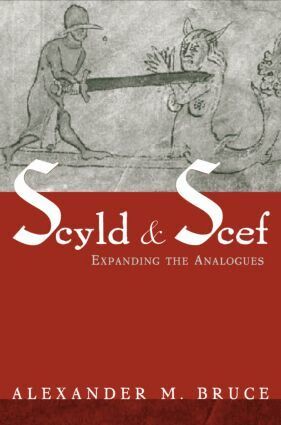
Scyld and Scef is the first comprehensive study of these heroic figures of Germanic legend, featured in much of the literature of the Middle Ages, including Beowulf, TheAnglo-Saxon Chronicle and the Edda. The authors argue that this duo represent a way that medieval Germanic peoples defined themselves in their literature. Divided into two sections, this volume explores the specific cultures from which Scyld and Scef rose and the forty-one manuscripts in which they appear.
247 kr
Skickas inom 5-8 vardagar

497 kr
Skickas inom 5-8 vardagar

373 kr
Skickas inom 5-8 vardagar

390 kr
Skickas inom 5-8 vardagar
3 472 kr
Skickas inom 10-15 vardagar
First published in 1993, Medieval Scandinavia: An Encyclopedia covers every aspect of the region during the Middle Ages, including rulers and saints, overviews of the countries, religion, education, politics and law, culture and material life, history, literature, and art. Written by a team of expert contributors, the encyclopedia offers those who lack command of the various Scandinavian languages a basic tool for the study of Medieval Scandinavia from roughly the Migration Period to the Reformation. With full-page maps, useful supplementary photos, cross-references and a comprehensive index, this work will be a valuable and absorbing volume for students of the Norse sagas, the Viking age, and Old English history and literature, and for anyone interested in the cultural and historical heritage of Scandinavia.
884 kr
Skickas inom 10-15 vardagar
First published in 1993, Medieval Scandinavia: An Encyclopedia covers every aspect of the region during the Middle Ages, including rulers and saints, overviews of the countries, religion, education, politics and law, culture and material life, history, literature, and art. Written by a team of expert contributors, the encyclopedia offers those who lack command of the various Scandinavian languages a basic tool for the study of Medieval Scandinavia from roughly the Migration Period to the Reformation. With full-page maps, useful supplementary photos, cross-references and a comprehensive index, this work will be a valuable and absorbing volume for students of the Norse sagas, the Viking age, and Old English history and literature, and for anyone interested in the cultural and historical heritage of Scandinavia.
845 kr
Skickas inom 10-15 vardagar
Scyld and Scef is the first comprehensive study of these heroic figures of Germanic legend, featured in much of the literature of the Middle Ages, including Beowulf , The Anglo-Saxon Chronicle and the Edda . The authors argue that this duo represent a way that medieval Germanic peoples defined themselves in their literature. Divided into two sections, this volume explores the specific cultures from which Scyld and Scef rose and the forty-one manuscripts in which they appear.
1 210 kr
Skickas inom 5-8 vardagar
A comprehensive study of the mortality of Norse gods, with close readings of the Prose Edda, Poetic Edda and Saxo Grammaticus' Gesta Danorum.Divinity usually implies immortality. The very phrase "gods and mortals" highlights an ontological gap between two distinct categories of existence: immortal deities and transient humans. This divide, however, does not hold true in the Scandinavian mythological tradition, where the gods themselves are mortal. This mortality is central to myths such as those of Baldr and of Ragnarøk, and affords the Norse gods narrative potential, that is unparalleled in other traditions, such as those inherited from antiquity. The first half of this study explores some salient consequences of this attribute, highlighting the striking anthropomorphism of the gods. The second half takes a more diachronic approach, examining the prehistory of the group of gods who became known as the Æsir and arguing that they developed from non-anthropomorphic divine forces shaped by and mobilized in ideologies of leadership and warfare in pre-Christian Northern Europe. By examining how divine mortality not only drives Norse mythic narratives but also reflects wider patterns of thought and belief, including early medieval theories of rulership and the sacralization of human excellence, this book reconsiders the boundaries between godhood and humanity in pre-Christian Scandinavia and, in doing so, questions what it means to be a god.
Letar du efter digitala böcker?
E-böcker och ljudböcker handlar du än så länge på vår tidigare sajt.