A. Chakrabarti - Böcker
Visar alla böcker från författaren A. Chakrabarti. Handla med fri frakt och snabb leverans.
6 produkter
6 produkter
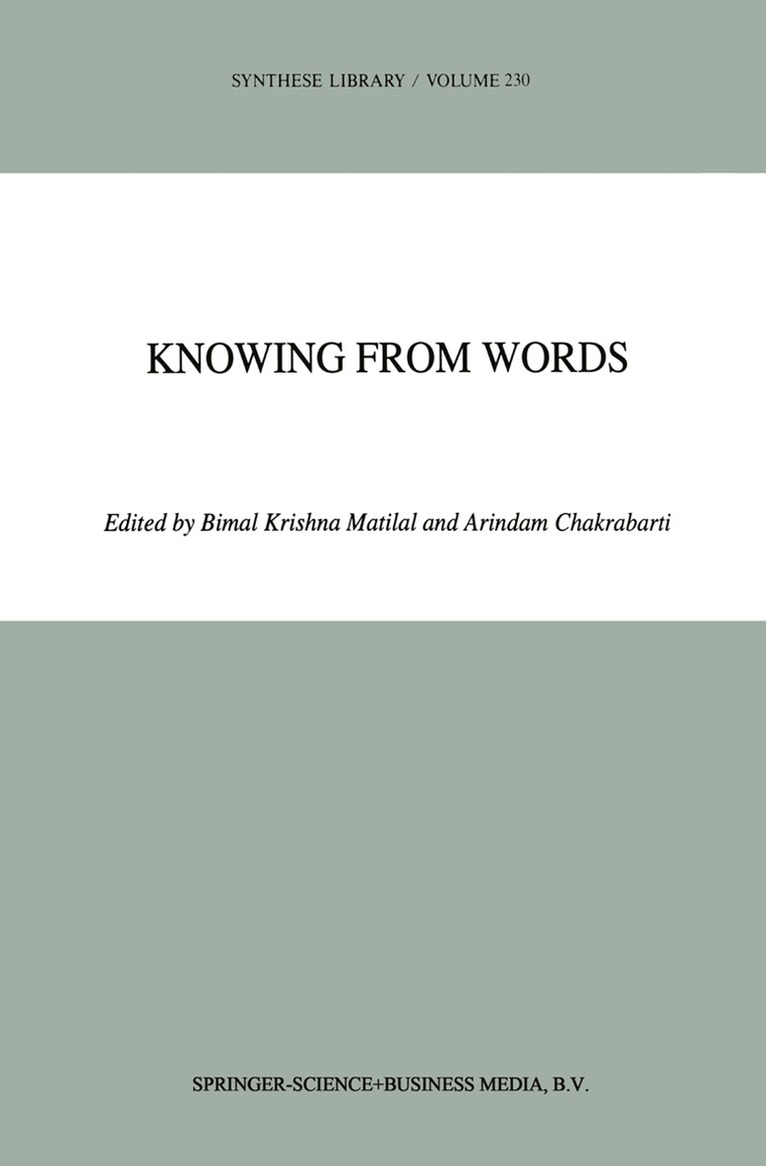
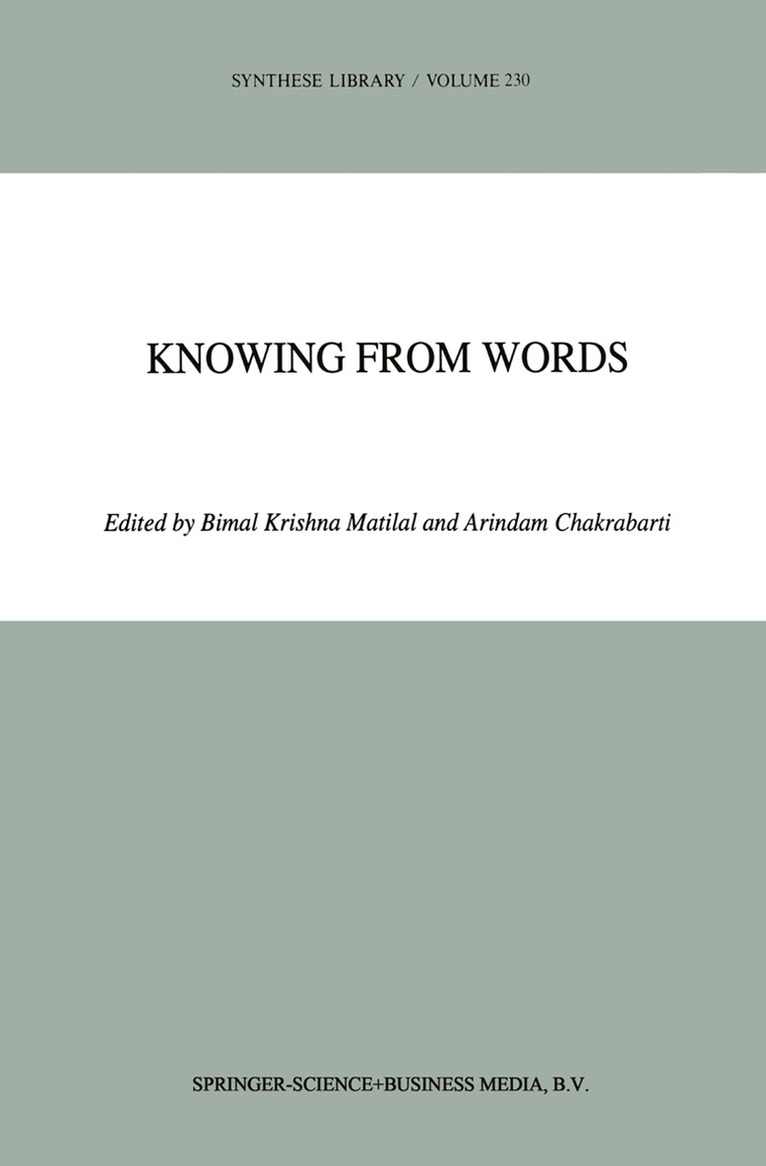
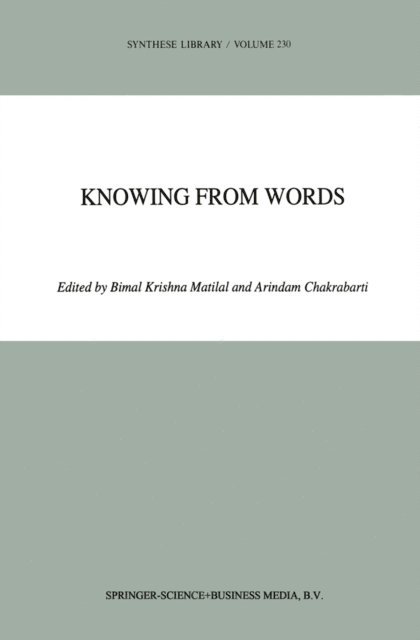
Knowing from Words
Western and Indian Philosophical Analysis of Understanding and Testimony
Inbunden, Engelska, 1993
2 101 kr
Skickas inom 10-15 vardagar
Contemporary epistemologists and philosophers of language have come together in this volume to address an important issue at the confluence of these two branches of philosophy, namely: Can we "know" facts from reliable reports? Besides Hume's subversive discussion of miracles and the literature thereon, testimony has been bypassed by most Western philosophers; whereas in classical Indian (Pramana) theories of evidence and knowledge, philosophical debates have raged for centuries about the status of word-generated knowledge. "Is the response 'I was told by an expert on the subject' as respectable as 'I saw' or 'I inferred' in answer to 'How do you know?'" is a question answered in diverse and subtle ways by Buddhists, Vaisesikas and Naiyayikas. This book makes available those debates, translating from Sanskrit some contemporary Indian Pandits' reactions to Western analytic accounts of meaning and knowledge.This book is intended for advanced undergraduates in philosophy, for researchers - in Australia, Asia, Europe or America - on epistemology, theory of meaning, Indian or comparative philosophy, as well as for specialists interested in this topic of knowledge transmission and epistemic dependence.
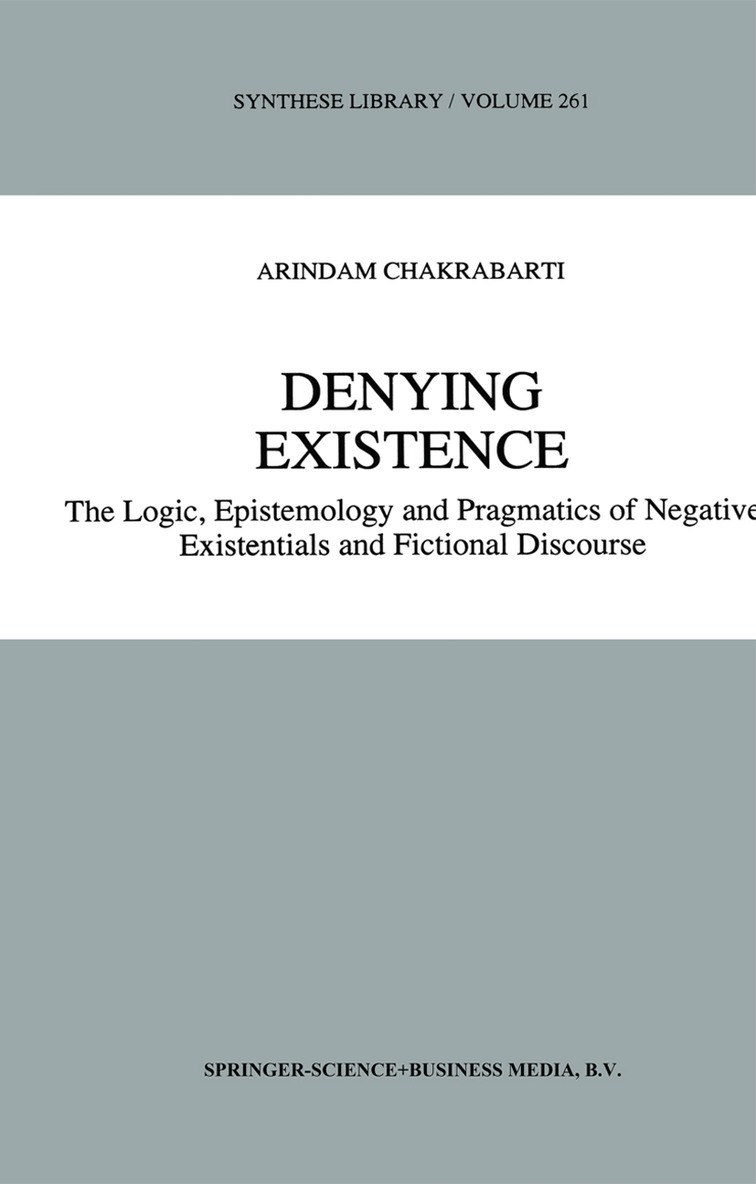
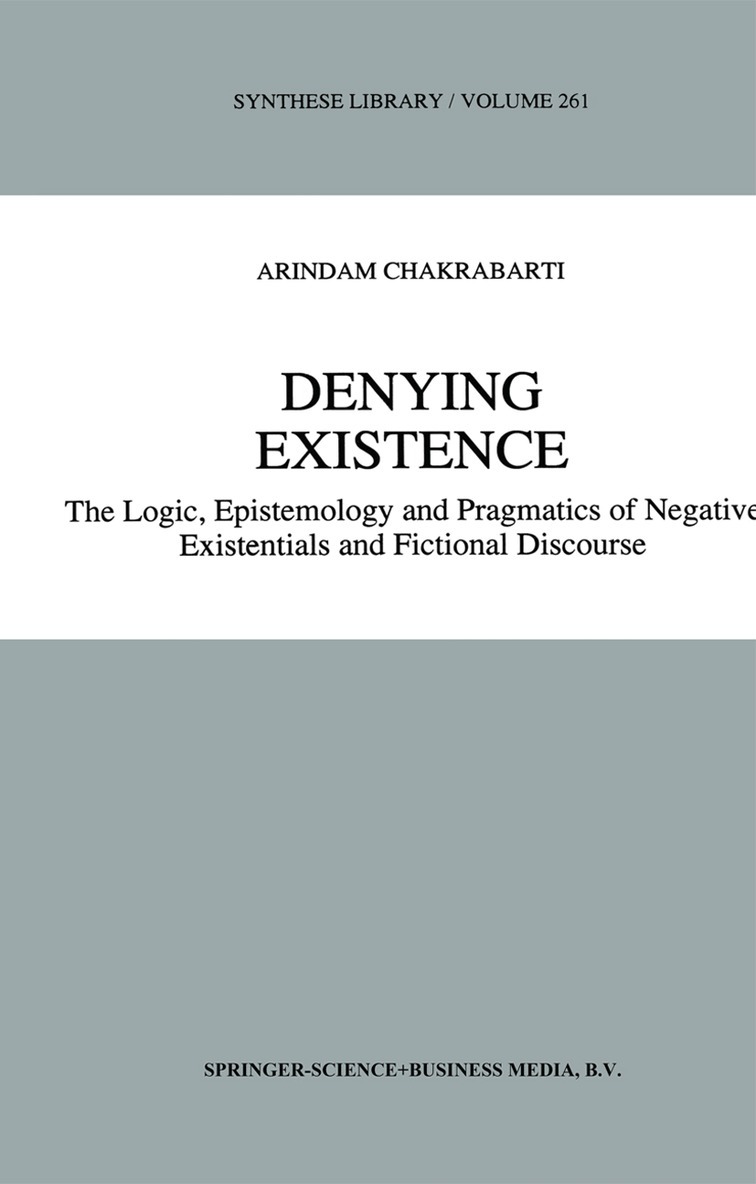
Denying Existence
The Logic, Epistemology and Pragmatics of Negative Existentials and Fictional Discourse
Inbunden, Engelska, 1997
1 625 kr
Skickas inom 10-15 vardagar
Thanks to the Inlaks Foundation in India, I was able to do my doctoral research on Our Talk About Nonexistents at Oxford in the early eighties. The two greatest philosophers of that heaven of analytical philosophy - Peter Strawson and Michael Dummett - supervised my work, reading and criticising all the fledgling philosophy that I wrote during those three years. At Sir Peter's request, Gareth Evans, shortly before his death, lent me an unpublished transcript of Kripke's John Locke Lectures. Work on the Appendix about Indian Philosophy was supervised by the late Professor Bimal Krishna Matilal with whom informal but intense philosophical conversations used to spill over into dinner at his place almost every other day. It was Professor Matilal who sent me, over a summer, to study a tough Navya-Nyaya text under his own Nyaya teacher Pandit Visvabandhu Tarkatirtha at Calcutta. All four of these teachers were as kind to me as my life-long mentor in philosophy Professor Pranab Kumar Sen, whose clarity and depth remain the unreachable regu- lative ideal of my intellect.When I came back to India, my life became blissfully free of the agonising anxiety to publish, until, after a conference at Jadavpur University where I gave an impromptu paper, ironically enough, on Non-doings, I met Derek Parfit. He had a six-hour conversation with me, explicitly planning my life. Five years had already elapsed since I had finished my D. Phil, but Derek read my thesis and liked it.
1 010 kr
Skickas inom 10-15 vardagar
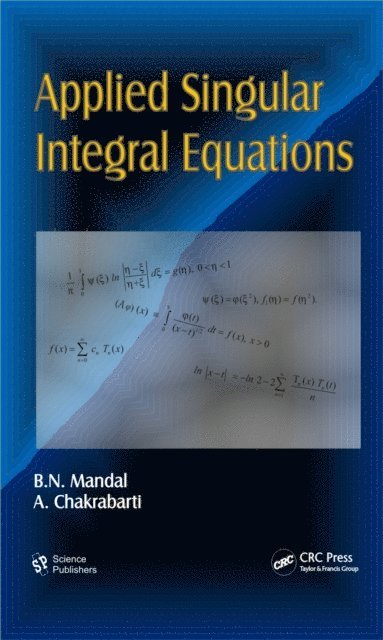
The book is devoted to varieties of linear singular integral equations, with special emphasis on their methods of solution. It introduces the singular integral equations and their applications to researchers as well as graduate students of this fascinating and growing branch of applied mathematics.
2 311 kr
Skickas inom 10-15 vardagar
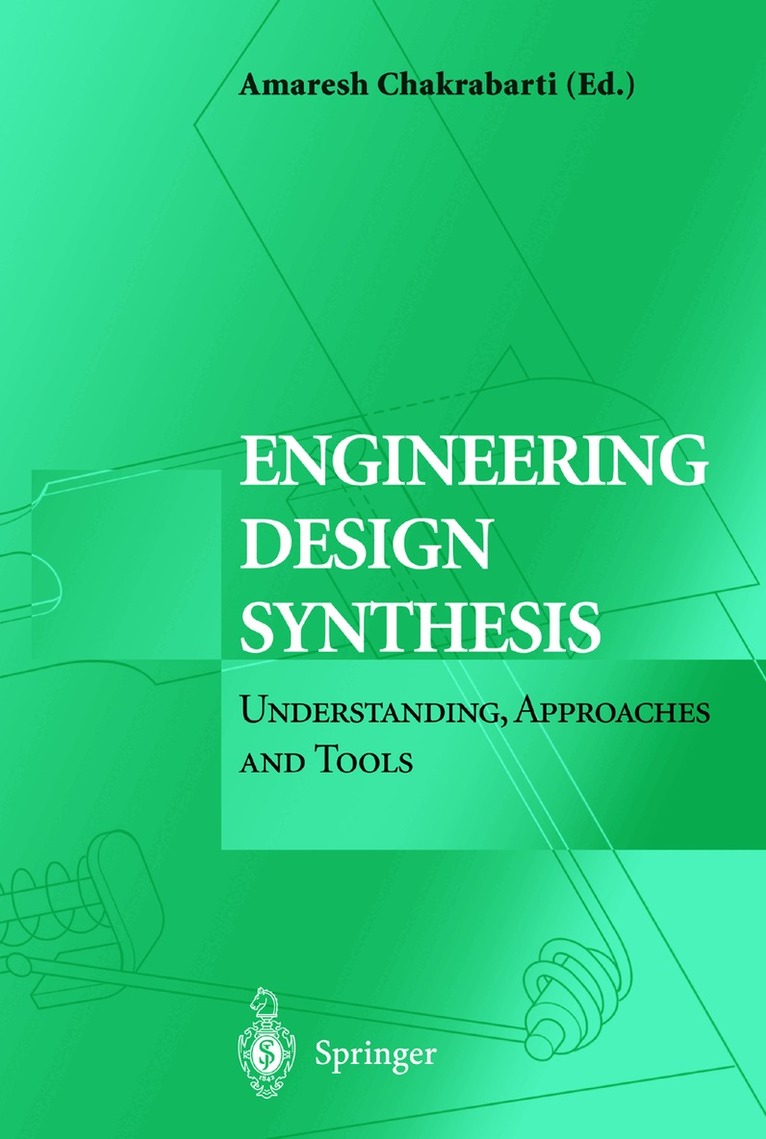
This book brings together some of the most influential pieces of research undertaken around the world in design synthesis. It is the first comprehensive work of this kind and covers all three aspects of research in design synthesis:- understanding what constitutes and influences synthesis;- the major approaches to synthesis;- the diverse range of tools that are created to support this crucial design task.The chapters are comprised of cutting edge research and established methods, written by the originators of this growing field of research. They cover all major generic synthesis approaches i.e., composition, retrieval, change and repair, and tackle problems that come from a wide variety of domains within architecture and engineering as well as areas of application including clocks, sensors and medical devices. The book contains an editorial introduction to the chapters and the broader context of research they represent. With its range of tools and methods covered, it is an ideal introduction to design synthesis for those intending to research in this area as well as being a valuable source of ideas for educators and practitioners of engineering design.
Knowing from Words
Western and Indian Philosophical Analysis of Understanding and Testimony
Häftad, Engelska, 2010
2 101 kr
Skickas inom 10-15 vardagar
Never before, in any anthology, have contemporary epistemologists and philosophers of language come together to address the single most neglected important issue at the confluence of these two branches of philosophy, namely: Can we know facts from reliable reports? Besides Hume's subversive discussion of miracles and the literature thereon, testimony has been bypassed by most Western philosophers; whereas in classical Indian (Pramana) theories of evidence and knowledge philosophical debates have raged for centuries about the status of word-generated knowledge. 'Is the response "I was told by an expert on the subject" as respectable as "I saw" or "I inferred" in answer to "How do you know?"' is a question answered in diverse and subtle ways by Buddhists, Vaisesikas and Naiyayikas. For the first time this book makes available the riches of those debates, translating from Sanskrit some contemporary Indian Pandits' reactions to Western analytic accounts of meaning and knowledge.For advanced undergraduates in philosophy, for researchers - in Australia, Asia, Europe or America - on epistemology, theory of meaning, Indian or comparative philosophy, as well as for specialists interested in this relatively fresh topic of knowledge transmission and epistemic dependence this book will be a feast. After its publication analytic philosophy and Indian philosophy will have no excuse for shunning each other.
Denying Existence
The Logic, Epistemology and Pragmatics of Negative Existentials and Fictional Discourse
Häftad, Engelska, 2010
1 578 kr
Skickas inom 10-15 vardagar
Thanks to the Inlaks Foundation in India, I was able to do my doctoral research on Our Talk About Nonexistents at Oxford in the early eighties. The two greatest philosophers of that heaven of analytical philosophy - Peter Strawson and Michael Dummett - supervised my work, reading and criticising all the fledgling philosophy that I wrote during those three years. At Sir Peter's request, Gareth Evans, shortly before his death, lent me an unpublished transcript of Kripke's John Locke Lectures. Work on the Appendix about Indian Philosophy was supervised by the late Professor Bimal Krishna Matilal with whom informal but intense philosophical conversations used to spill over into dinner at his place almost every other day. It was Professor Matilal who sent me, over a summer, to study a tough Navya-Nyaya text under his own Nyaya teacher Pandit Visvabandhu Tarkatirtha at Calcutta. All four of these teachers were as kind to me as my life-long mentor in philosophy Professor Pranab Kumar Sen, whose clarity and depth remain the unreachable regu- lative ideal of my intellect.When I came back to India, my life became blissfully free of the agonising anxiety to publish, until, after a conference at Jadavpur University where I gave an impromptu paper, ironically enough, on Non-doings, I met Derek Parfit. He had a six-hour conversation with me, explicitly planning my life. Five years had already elapsed since I had finished my D. Phil, but Derek read my thesis and liked it.