A. Gardiner – författare
Visar alla böcker från författaren A. Gardiner. Handla med fri frakt och snabb leverans.
5 produkter
The Mathematical Olympiad Handbook
An Introduction to Problem Solving based on the First 32 British Mathematical Olympiads 1965-1996
Av A. Gardiner
Häftad, 1997
1052 kr
Lägg i varukorg
Mathematical Olympiad competitions started in Hungary at the end of the nineteenth century, and are now held internationally. They bring together able secondary school pupils who attempt to solve problems which develop their mathematical skills. Olympiad problems are unpredictable and have no …
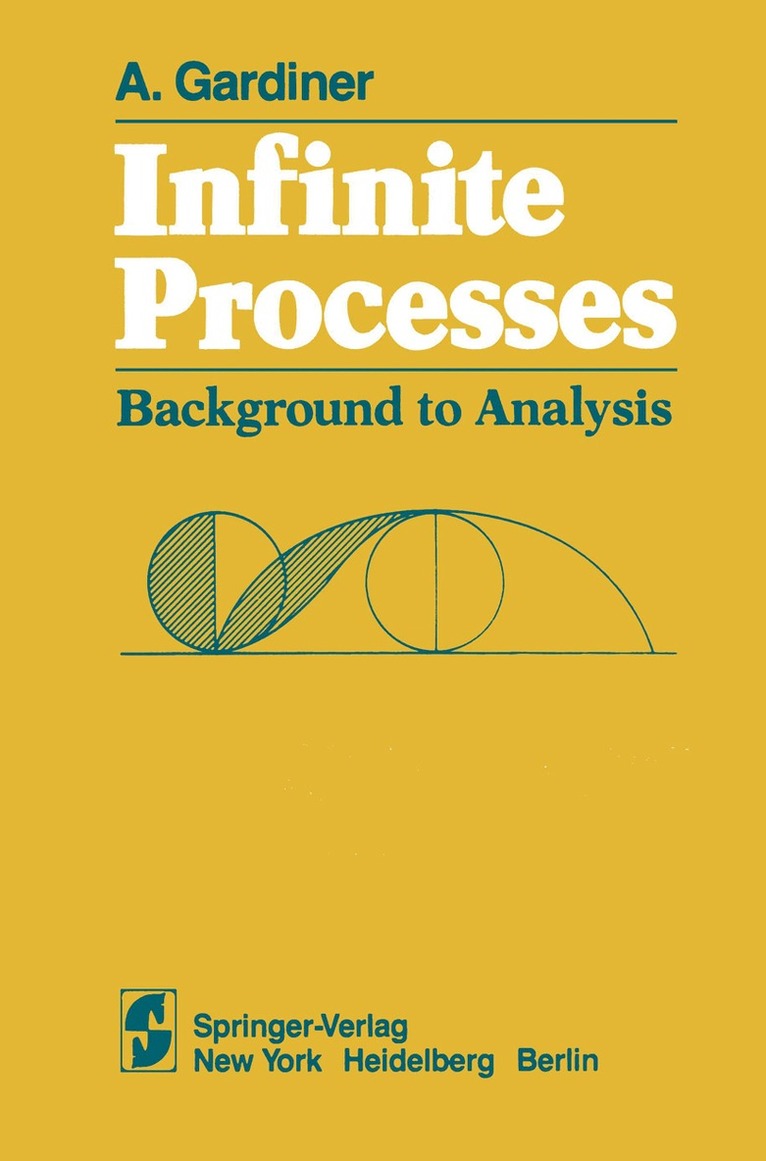
Infinite Processes
Background to Analysis
Av A. Gardiner
E-bok, 2012
712 kr
Lägg i varukorg
What shall we say of this metamorphosis in passing from finite to infinite? Galileo, Two New Sciences As its title suggests, this book was conceived as a prologue to the study of "Why the calculus works"--otherwise known as analysis. It is in fact a critical reexamination of the infinite processes …
Infinite Processes
Background to Analysis
Av A. Gardiner
Häftad, 2011
551 kr
Lägg i varukorg
What shall we say of this metamorphosis in passing from finite to infinite? Galileo, Two New Sciences As its title suggests, this book was conceived as a prologue to the study of "Why the calculus works"--otherwise known as analysis. It is in fact a critical reexamination of the infinite processes …