A Joseph Henry Press book - Böcker
Visar alla böcker från författaren A Joseph Henry Press book. Handla med fri frakt och snabb leverans.
3 produkter
3 produkter
297 kr
Tillfälligt slut
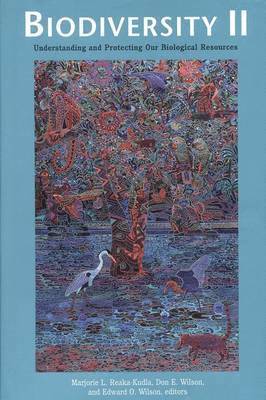
"The book before you...carries the urgent warning that we are rapidly altering and destroying the environments that have fostered the diversity of life forms for more than a billion years."With those words, Edward O. Wilson opened the landmark volume Biodiversity (National Academy Press, 1988). Despite this and other such alarms, species continue to vanish at a rapid rate, taking with them their genetic legacy and potential benefits. Many disappear before they can even be identified.Biodiversity II is a renewed call for urgency. This volume updates readers on how much we already know and how much remains to be identified scientifically. It explores new strategies for quantifying, understanding, and protecting biodiversity, including:New approaches to the integration of electronic data, including a proposal for a U.S. National Biodiversity Information Center.Application of techniques developed in the human genome project to species identification and classification.The Gap Analysis Program of the National Biological Survey, which uses layered satellite, climatic, and biological data to assess distribution and better manage biodiversity.The significant contribution of museum collections to identifying and categorizing species, which is essential for understanding ecological function and for targeting organisms and regions at risk.The book describes our growing understanding of how megacenters of diversity (e.g., rainforest insects, coral reefs) are formed, maintained, and lost; what can be learned from mounting bird extinctions; and how conservation efforts for neotropical primates have fared. It also explores ecosystem restoration, sustainable development, and agricultural impact.Biodiversity II reinforces the idea that the conservation of our biological resources is within reach as long as we pool resources; better coordinate the efforts of existing institutions—museums, universities, and government agencies—already dedicated to this goal; and enhance support for research, collections, and training. This volume will be important to environmentalists, biologists, ecologists, educators, students, and concerned individuals.Table of ContentsFront Matter1 IntroductionPart I The Meaning and Value of Biodiversity: 2 Biodiversity: What Is It?3 Biodiversity: Why Is It Important?Part II Patterns of the Biosphere: How Much Biodiversity Is There?: 4 Biodiversity at Its Utmost: Tropical Forest Beetles5 Measuring Global Biodiversity and Its Decline6 Butterfly Diversity and a Preliminary Comparison with Bird and Mammal Diversity7 The Global Biodiversity of Coral Reefs: A Comparison with Rain Forests8 Common Measures for Studies of Biodiversity: Molecular Phylogeny in the Eukaryotic Microbial WorldPart III Threats to Biodiversity: What Have We Lost and What Might We Lose?: 9 The Rich Diversity of Biodiversity Issues10 Human-Caused Extinction of Birds11 Global Warming and Plant Species Richness: A Case Study of the Paleocene/Eocene Boundary12 Plant Response to Multiple Environmental Stresses: Implications for Climatic Change and BiodiversityPart IV Understanding and Using Biodiversity: 13 Names: The Key to Biodiversity14 Systematics: A Keystone to Understanding Biodiversity15 Biodiversity and Systematics: Their Applications to Agriculture16 Snout Moths: Unraveling the Taxonomic Diversity of a Speciose Group in the Neotropics17 Phylogeny and Historical Reconstruction: Host-Parasite Systems as Keystones in Biogeography and Ecology18 Comparative Behavioral and Biochemical Studies of Bowerbirds and the Evolution of Bower-BuildingPart V Building Toward a Solution: New Directions and Applications: 19 Microbial Biodiversity and Biotechnology20 The Impact of Rapid Gene Discovery Technology on Studies of Evolution and Biodiversity21 Initial Assessment of Character Sets from Five Nuclear Gene Sequences in Animals22 Gap Analysis for Biodiversity Survey and Maintenance23 Conservation of Biodiversity in Neotropical Primates24 Using Marine Invertebrates to Establish Research and Conservation Priorities25 Ecological Restoration and the Conservation of Biodiversity26 Tropical Sustainable Development and Biodiversity27 Wildland Biodiversity Management in the TropicsPart VI Getting the Job Done: Institutional, Human, and Informational Infrastructure: 28 Taxonomic Preparedness: Are We Ready to Meet the Biodiversity Challenge?29 Museums, Research Collections and the Biodiversity Challenge30 Resources for Biodiversity in Living Collections and the Challenges of Assessing Microbial Biodiversity31 Integration of Data for Biodiversity Initiatives32 Information Management for Biodiversity: A Proposed U.S. National Biodiversity Information CenterPart VII Conclusions: 33 Santa Rosalia, the Turning of the Century, and a New Age of ExplorationPhoto CreditsIndex
Cooperating with Nature
Confronting Natural Hazards with Land-Use Planning for Sustainable Communities
Inbunden, Engelska, 1998
738 kr
Tillfälligt slut
This volume focuses on the breakdown in sustainability—the capacity of the planet to provide quality of life now and in the future—that is signaled by disaster. The authors bring to light why land use and sustainability have been ignored in devising public policies to deal with natural hazards. They lay out a vision of sustainability, concrete suggestions for policy reform, and procedures for planning. The book chronicles the long evolution of land-use planning and identifies key components of sustainable planning for hazards. Stressing the importance of balance in land use, the authors offer principles and specific reforms for achieving their visions of sustainability.Table of ContentsFront Matter1 Natural Hazards and Land Use: An IntroductionPart One: The Choices of the Past 2 Planning and Land Use Adjustments in Historical Perspective3 Governing Land Use in Hazardous Areas with a Patchwork SystemPart Two: The Land Use Planning Alternative4 Integrating Hazard Mitigation and Local Land Use Planning5 Hazard Assessment: The Factual Basis for Planning and Mitigation6 Managing Land Use to Build Resilience7 The Third Sector: Evolving Partnerships in Hazard MitigationPart Three: Looking to the Future 8 The Vision of Sustainable Communities9 Policies for Sustainable Land UseAppendix: Annotated Bibliography of Selected ResearchBibliographyIndex
Swords into Market Shares
Technology, Economics, and Security in the New Russia
Inbunden, Engelska, 2000
355 kr
Tillfälligt slut
While researching this book, Glenn Schweitzer met four Moscow physicists who were trying to license Russian technology to western firms for product manufacture. During the worst times, they were reduced to driving taxis to keep things afloat. He asked them, will technological innovation have a discernible impact on the Russian economy in the coming decade? No, was the immediate reply. Are they right? In Swords into Market Shares, Schweitzer examines the roots of such pessimism and the prospects for Russia to prosper from its technology in the post-Soviet world. He explores the different visions of prosperity held by entrepreneurs, technologists, and government officials and goes on to examine the barriers to progress as Russia struggles to build a viable technology industry on its own terms. In accessible language, this book talks about technology's place within Russia's economy and its research and development infrastructure. Schweitzer looks at the impact of the Soviet legacy--central planning, lack of priorities, scant incentives for personal initiative--and the aftermath of the Russian financial meltdown of 1998.He also reviews the experiences of American companies that have invested in Russian technology and examines the results of pressure to reform according to the economic model of the West. Schweitzer goes on to document the problems of economic crime and government corruption, which plague activities designed to generate income in Russia. He discusses the lack of protection for intellectual property and taxation issues that stand in the way of technological innovation. The book looks at the impact of the "brain drain" as Russian experts seek greener pastures--not only the ominous recruitment of Russian biological weapons experts and the acquisition of military technology by "rogue" nations--but also Russia's own program to sell military technology for badly needed funds. Schweitzer's use of case studies and examples puts a human face on these issues. He also discusses Russia's 60 "science cities"--sites of state research centers--with close-ups of three "nuclear cities." Can the technical strengths of the Soviet military complex find a place in civilian Russia? How can this vast country sustain even a minimal standard of living?Swords into Market Shares addresses these and other key questions and explores fundamental policy issues confronting both Russia and the United States as Russia struggles for an economic foothold.