Glenn E. Schweitzer – författare
611 kr
Skickas inom 10-15 vardagar
540 kr
Skickas inom 10-15 vardagar
536 kr
Läs direkt efter köp
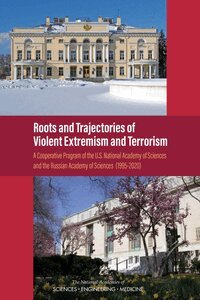
During the past 25 years, the U.S. National Academies of Sciences, Engineering, and Medicine, in collaboration with the Russian Academy of Sciences, have carried out a wide variety of activities to improve understanding of the challenges in containing and reducing ethnic conflicts, violent extremism, and terrorism. Roots and Trajectories of Violent Extremism and Terrorism provides an overview of this cross-ocean program, which has involved American and Russian scientists, engineers, and medical professionals from a large number of government agencies, leading research institutions, think tanks, educational institutions, analytical centers, and consulting and commercial firms in the two countries. This report highlights challenges addressed by the academies over many years that remain of current interest as the U.S., Russian, and other governments continue to cope with old and new forms of aggression that threaten the livelihood of populations at home and abroad.
649 kr
Läs direkt efter köp
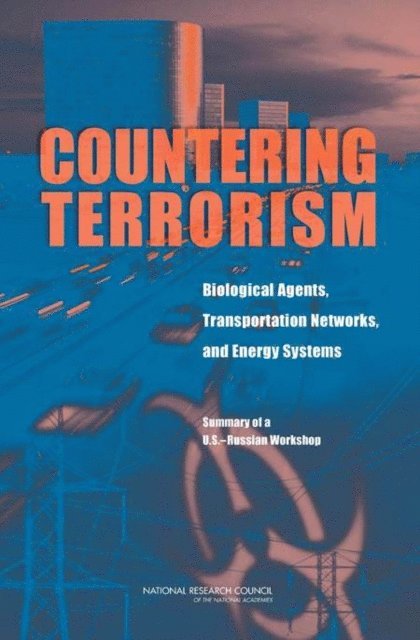
This book presents the proceedings of the fourth U.S.-Russian interacademy workshop on the general theme of countering terrorism, which was held in Moscow in March 2007. The fourth in a series, this volume continues to explore topics related to urban terrorism, but with a new emphasis on potential attacks involving biological agents, transportation networks, and energy systems.
The other books in the series include:
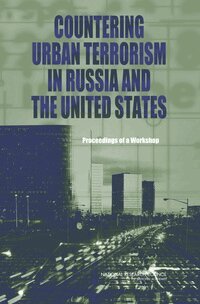
High Impact Terrorism: Proceedings of a Russian-American Workshop (2002) Terrorism: Reducing Vulnerabilities and Improving Responses: U.S.-Russian Workshop Proceedings (2004) Countering Urban Terrorism in Russia and the United States: Proceedings of a Workshop (2006)633 kr
Läs direkt efter köp
This publication features papers presented at the Workshop on Cleaning Up Sites Contaminated with Radioactive Materials, held in Moscow in June 2007. This activity was organized by the National Academies in cooperation with the Russian Academy of Sciences and with funding provided by the Russell Family Foundation. The workshop was designed to promote exchanges of information on specific contaminated sites in Russia and elsewhere and to stimulate greater attention to the severity of the problems and the urgent need to clean up sites of concern to the local and international communities.
451 kr
Skickas inom 3-6 vardagar
276 kr
Läs direkt efter köp
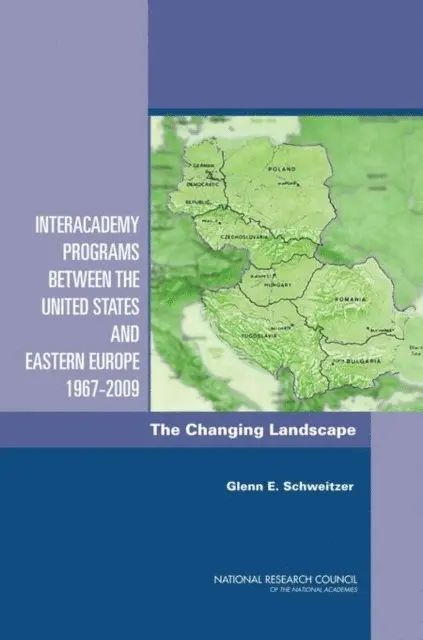
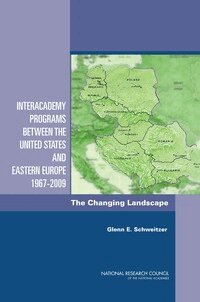
Interacademy Programs Between the United States and Eastern Europe 1967-2009 documents how interacademy programs have played a significant role in establishing and maintaining American scientific contacts with colleagues in Eastern Europe prior to and following the lifting of the Iron Curtain. The book also discusses the changing roles of the academies of the region and the changing nature of interacademy cooperation that has emerged since 1991. The countries of interest are Poland, the Czech Republic, Slovakia, Hungary, Romania, Bulgaria, the former German Democratic Republic, and the countries that previously were united politically within the framework of the former Yugoslavia. The book should be of interest to officials and specialists in both the United States and the countries of Eastern Europe who are actively engaged in promoting scientific cooperation through bilateral and other channels. Also, an emerging audience for this book is the growing group of analysts in the United States interested in "science diplomacy" involving U.S. cooperation with countries that have political agendas that differ in important respects from the objectives of U.S. policies.
401 kr
Läs direkt efter köp
Interacademy Programs Between the United States and Eastern Europe 1967-2009 documents how interacademy programs have played a significant role in establishing and maintaining American scientific contacts with colleagues in Eastern Europe prior to and following the lifting of the Iron Curtain. The book also discusses the changing roles of the academies of the region and the changing nature of interacademy cooperation that has emerged since 1991. The countries of interest are Poland, the Czech Republic, Slovakia, Hungary, Romania, Bulgaria, the former German Democratic Republic, and the countries that previously were united politically within the framework of the former Yugoslavia. The book should be of interest to officials and specialists in both the United States and the countries of Eastern Europe who are actively engaged in promoting scientific cooperation through bilateral and other channels. Also, an emerging audience for this book is the growing group of analysts in the United States interested in "science diplomacy" involving U.S. cooperation with countries that have political agendas that differ in important respects from the objectives of U.S. policies.
368 kr
Läs direkt efter köp
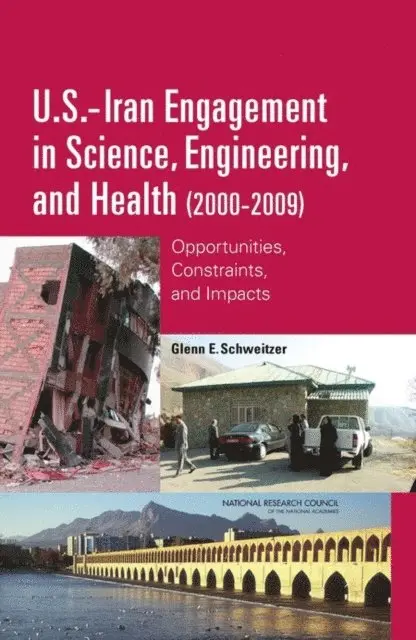
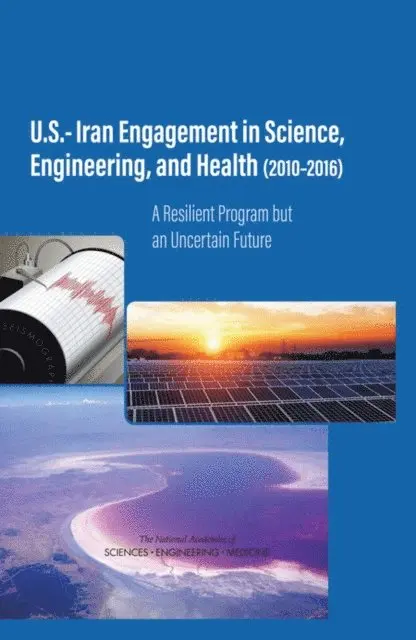
During the first decade of the 21st century, the National Academies, working with a number of partner organizations in Iran, carried out a program of U.S.-Iran engagement in science, engineering, and health (herein referred to as science engagement). This book reviews important aspects of the science engagement program, including: (a) objectives of the program, (b) opportunities and constraints in developing the program, and (c) scientific and political impacts of the activities. Suggestions for future activities that draw on the conclusions and recommendations that have emerged from workshops and other types of interactions are set forth. Of course, the political turmoil within Iran and uncertainties as to the direction of U.S.-Iran government-to-government relations will undoubtedly complicate initiation and implementation of new science engagement activities in the near term. At the same time, many American and Iranian participants and important government officials in the United States and Iran have believed that science engagement can contribute to the evolution of an improved political environment for development of less adversarial relations between the two governments.
535 kr
Läs direkt efter köp
During the first decade of the 21st century, the National Academies, working with a number of partner organizations in Iran, carried out a program of U.S.-Iran engagement in science, engineering, and health (herein referred to as science engagement). This book reviews important aspects of the science engagement program, including: (a) objectives of the program, (b) opportunities and constraints in developing the program, and (c) scientific and political impacts of the activities. Suggestions for future activities that draw on the conclusions and recommendations that have emerged from workshops and other types of interactions are set forth. Of course, the political turmoil within Iran and uncertainties as to the direction of U.S.-Iran government-to-government relations will undoubtedly complicate initiation and implementation of new science engagement activities in the near term. At the same time, many American and Iranian participants and important government officials in the United States and Iran have believed that science engagement can contribute to the evolution of an improved political environment for development of less adversarial relations between the two governments.
892 kr
Läs direkt efter köp
This book presents the proceedings of the fourth U.S.-Russian interacademy workshop on the general theme of countering terrorism, which was held in Moscow in March 2007. The fourth in a series, this volume continues to explore topics related to urban terrorism, but with a new emphasis on potential attacks involving biological agents, transportation networks, and energy systems.
The other books in the series include:
High Impact Terrorism: Proceedings of a Russian-American Workshop (2002) Terrorism: Reducing Vulnerabilities and Improving Responses: U.S.-Russian Workshop Proceedings (2004) Countering Urban Terrorism in Russia and the United States: Proceedings of a Workshop (2006)892 kr
Läs direkt efter köp
This publication features papers presented at the Workshop on Cleaning Up Sites Contaminated with Radioactive Materials, held in Moscow in June 2007. This activity was organized by the National Academies in cooperation with the Russian Academy of Sciences and with funding provided by the Russell Family Foundation. The workshop was designed to promote exchanges of information on specific contaminated sites in Russia and elsewhere and to stimulate greater attention to the severity of the problems and the urgent need to clean up sites of concern to the local and international communities.
714 kr
Läs direkt efter köp
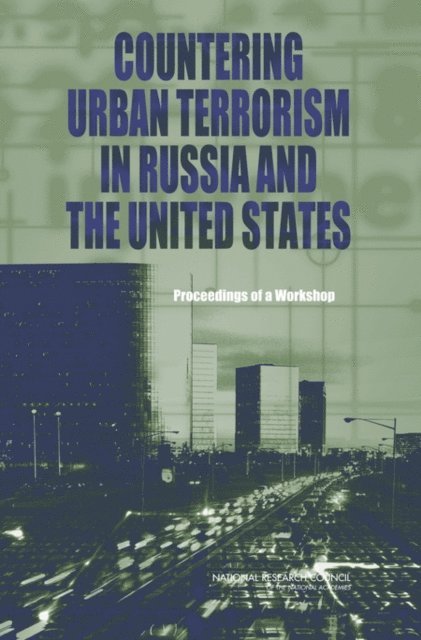
In January-February 2005, the National Academies Committee on Counterterrorism Challenges for Russia and the United States and the Russian Academy of Sciences Standing Committee on Counterterrorism held a workshop on urban terrorism in Washington, D.C. Prior to the workshop, three working groups convened to focus on the topics of energy systems vulnerabilities, transportation systems vulnerabilities, and cyberterrorism issues. The working groups met with local experts and first responders, prepared reports, and presented their findings at the workshop. Other workshop papers focused on various organizations'' integrated response to acts of urban terrorism, recent acts of terrorism, radiological terrorism, biological terrorism, cyberterrorism, and the roots of terrorism.
1 055 kr
Läs direkt efter köp
390 kr
Läs direkt efter köp
The National Research Council hosted an interacademy workshop in Yekaterinburg, Russia together with the Russian Academy of Sciences in October 2004 as a means of exploring various aspects of industrial innovation in the Urals region of Russia. Workshop presenters focused on the establishment of cooperative business partnerships between Russian industrial companies and Russian research organizations, particularly those in the closed nuclear cities of Russia. The concept of "market pull" was therefore an important aspect of the workshop, including partnerships between Russian researchers and international companies, as well as those with international research centers. However, given the complex economic and research climates in Russia, which are intensified in the nuclear cities, cooperation between Russian industry and Russian researchers were of primary during the workshop presentations and subsequent discussions as captured in this workshop summary.
698 kr
Läs direkt efter köp
1 003 kr
Läs direkt efter köp
In 2010, the National Research Council published the report U.S-Iran Engagement in Science, Engineering, and Medicine (2000-2009). The review of the program described in detail the National Academies'' science, technology, and health cooperation program carried out jointly with partners in Iran (otherwise known as science-engagement).
The purpose of this new publication is to document the history and details of the National Academies'' program of science-engagement from 2010 through 2016, while providing a perspective in considering future science-engagement. A variety of cooperative activities, and particularly workshops that dominated science-engagement during that period, arehighlighted.
487 kr
Läs direkt efter köp
771 kr
Läs direkt efter köp
268 kr
Läs direkt efter köp
The National Research Council hosted an interacademy workshop in Yekaterinburg, Russia together with the Russian Academy of Sciences in October 2004 as a means of exploring various aspects of industrial innovation in the Urals region of Russia. Workshop presenters focused on the establishment of cooperative business partnerships between Russian industrial companies and Russian research organizations, particularly those in the closed nuclear cities of Russia. The concept of "market pull" was therefore an important aspect of the workshop, including partnerships between Russian researchers and international companies, as well as those with international research centers. However, given the complex economic and research climates in Russia, which are intensified in the nuclear cities, cooperation between Russian industry and Russian researchers were of primary during the workshop presentations and subsequent discussions as captured in this workshop summary.
666 kr
Läs direkt efter köp
In January-February 2005, the National Academies Committee on Counterterrorism Challenges for Russia and the United States and the Russian Academy of Sciences Standing Committee on Counterterrorism held a workshop on urban terrorism in Washington, D.C. Prior to the workshop, three working groups convened to focus on the topics of energy systems vulnerabilities, transportation systems vulnerabilities, and cyberterrorism issues. The working groups met with local experts and first responders, prepared reports, and presented their findings at the workshop. Other workshop papers focused on various organizations'' integrated response to acts of urban terrorism, recent acts of terrorism, radiological terrorism, biological terrorism, cyberterrorism, and the roots of terrorism.
1 218 kr
Skickas inom 5-8 vardagar
495 kr
Skickas inom 5-8 vardagar
486 kr
Läs direkt efter köp
472 kr
Läs direkt efter köp
552 kr
Läs direkt efter köp
552 kr
Läs direkt efter köp
771 kr
Läs direkt efter köp
687 kr
Läs direkt efter köp
1 598 kr
Skickas inom 10-15 vardagar