Programmeringsböcker
549 kr
Skickas inom 5-8 vardagar
431 kr
Skickas inom 5-8 vardagar
439 kr
Skickas inom 3-6 vardagar
529 kr
Skickas
558 kr
Skickas inom 5-8 vardagar
258 kr
Skickas inom 7-10 vardagar
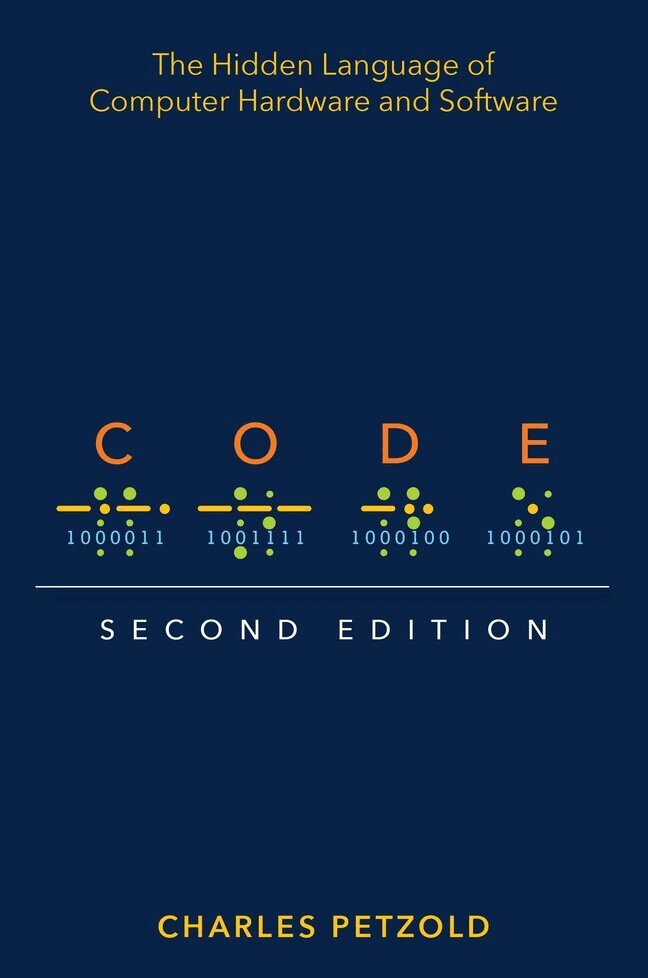
The classic guide to how computers work, updated with new chapters and interactive graphics
"For me, Code was a revelation. It was the first book about programming that spoke to me. It started with a story, and it built up, layer by layer, analogy by analogy, until I understood not just the Code, but the System. Code is a book that is as much about Systems Thinking and abstractions as it is about code and programming. Code teaches us how many unseen layers there are between the computer systems that we as users look at every day and the magical silicon rocks that we infused with lightning and taught to think."
- Scott Hanselman, Partner Program Director, Microsoft, and host of Hanselminutes
Computers are everywhere, most obviously in our laptops and smartphones, but also our cars, televisions, microwave ovens, alarm clocks, robot vacuum cleaners, and other smart appliances. Have you ever wondered what goes on inside these devices to make our lives easier but occasionally more infuriating?
For more than 20 years, readers have delighted in Charles Petzold's illuminating story of the secret inner life of computers, and now he has revised it for this new age of computing. Cleverly illustrated and easy to understand, this is the book that cracks the mystery. You'll discover what flashlights, black cats, seesaws, and the ride of Paul Revere can teach you about computing, and how human ingenuity and our compulsion to communicate have shaped every electronic device we use.
This new expanded edition explores more deeply the bit-by-bit and gate-by-gate construction of the heart of every smart device, the central processing unit that combines the simplest of basic operations to perform the most complex of feats. Petzold's companion website, CodeHiddenLanguage.com, uses animated graphics of key circuits in the book to make computers even easier to comprehend.
In addition to substantially revised and updated content, new chapters include:
Chapter 18: Let's Build a Clock! Chapter 21: The Arithmetic Logic Unit Chapter 22: Registers and Busses Chapter 23: CPU Control Signals Chapter 24: Jumps, Loops, and Calls Chapter 28: The World BrainFrom the simple ticking of clocks to the worldwide hum of the internet, Code reveals the essence of the digital revolution.
413 kr
Skickas inom 7-10 vardagar
Bestselling author Robert C. Martin brings new life and updated code to his beloved Clean Code book
With Clean Code, Second Edition, Robert C. Martin ("Uncle Bob") reinvigorates the classic guide to software craftsmanship with updated insights, broader scope, and enriched content. This new edition--a comprehensive rewrite of the original bestseller--is poised to transform the way developers approach coding, fostering a deeper commitment to the craft of writing clean, flexible, and maintainable code.
The book is divided into four parts: basic coding practices, design principles and heuristics, high-level architecture, and the ethics of craftsmanship. It challenges readers to critically evaluate code quality and reassess their professional values, ultimately guiding them to produce better software. This edition includes expanded coverage of testing disciplines, design and architecture principles, and multiple programming languages.
Design and architecture principles integrated with coding practices Coverage of more languages, including Java, JavaScript, Go, Python, Clojure, C#, and C Case studies for practical exercises in code transformation Techniques for writing good names, functions, objects, and classes Strategies for formatting code for maximum readability Comprehensive error handling and testing practices Productive use of AI tools for coding Soft skills and the ethics of programming SOLID principles of software design Management of dependencies for flexible and reusable code Professional practices and trade-offs in object-oriented designClean Code, Second Edition, underscores the importance of evolving software craftsmanship to meet contemporary challenges. Offering a deeper exploration of testing, design, and architecture, alongside universal coding principles applicable across various programming languages, this edition is set to be an indispensable resource for developers, engineers, and project managers. It not only aims to enhance technical skills but also to cultivate a professional ethos that values clean, flexible, and sustainable code.
Register your book for convenient access to downloads, updates, and/or corrections as they become available. See inside book for details.

263 kr
Skickas
914 kr
Skickas inom 7-10 vardagar
Starting Out with Python® introduces programming concepts and problem-solving skills using Tony Gaddis' accessible approach. Written for novice programmers, Gaddis uses easy-to-understand language to introduce concepts. Control structures are explained, then classes and GUI applications. Every chapter includes clear and easy-to-read code listings, practical real-world examples, focused explanations and an abundance of exercises. As you progress through the text, you'll learn to recognize how to design the logic of high-quality programs and then implement those programs using Python.
The 6th Edition is thoroughly updated with new language features and functionality for versions of Python up through Python 3.9.
365 kr
656 kr
Skickas inom 5-8 vardagar
351 kr
Skickas inom 7-10 vardagar
The Pragmatic Programmer is one of those rare tech books you'll read, re-read, and read again over the years. Whether you're new to the field or an experienced practitioner, you'll come away with fresh insights each and every time.
Dave Thomas and Andy Hunt wrote the first edition of this influential book in 1999 to help their clients create better software and rediscover the joy of coding. These lessons have helped a generation of programmers examine the very essence of software development, independent of any particular language, framework, or methodology, and the Pragmatic philosophy has spawned hundreds of books, screencasts, and audio books, as well as thousands of careers and success stories.
Now, twenty years later, this new edition re-examines what it means to be a modern programmer. Topics range from personal responsibility and career development to architectural techniques for keeping your code flexible and easy to adapt and reuse. Read this book, and you'll learn how to:
Fight software rot Learn continuously Avoid the trap of duplicating knowledge Write flexible, dynamic, and adaptable code Harness the power of basic tools Avoid programming by coincidence Learn real requirements Solve the underlying problems of concurrent code Guard against security vulnerabilities Build teams of Pragmatic Programmers Take responsibility for your work and career Test ruthlessly and effectively, including property-based testing Implement the Pragmatic Starter Kit Delight your usersWritten as a series of self-contained sections and filled with classic and fresh anecdotes, thoughtful examples, and interesting analogies, The Pragmatic Programmer illustrates the best approaches and major pitfalls of many different aspects of software development. Whether you're a new coder, an experienced programmer, or a manager responsible for software projects, use these lessons daily, and you'll quickly see improvements in personal productivity, accuracy, and job satisfaction. You'll learn skills and develop habits and attitudes that form the foundation for long-term success in your career. You'll become a Pragmatic Programmer.
"One of the most significant books in my life."--Obie Fernandez, Author, The Rails Way
"Twenty years ago, the first edition of The Pragmatic Programmer completely changed the trajectory of my career. This new edition could do the same for yours."--Mike Cohn, Author of Succeeding with Agile, Agile Estimating and Planning, and User Stories Applied
". . . filled with practical advice, both technical and professional, that will serve you and your projects well for years to come."--Andrea Goulet, CEO, Corgibytes, Founder, LegacyCode.Rocks
". . . lightning does strike twice, and this book is proof." --VM (Vicky) Brasseur, Director of Open Source Strategy, Juniper Networks
Register your book for convenient access to downloads, updates, and/or corrections as they become available. See inside book for details.
228 kr
Aldrig tidigare i världshistorien har det samlats in lika mycket data som idag. Men vad ska vi ha den till?
I Algoritmmakaren argumenterar nationalekonomen Tommy Andersson för att data kan användas för att fatta bättre och mer välgrundade beslut inom en rad områden. Men för det krävs en genomtänkt strategi och – framför allt – funktionella algoritmer. Utifrån forskning och exempel från verkligheten resonerar Andersson kring hur beslutsalgoritmer kan användas för att ge svar på ett antal av samtidens mest angelägna frågor: Hur kan flyktingar integreras bättre? Hur kan organbristen lösas? Hur kan skolan göras mer likvärdig? Kanske kan väldesignade beslutsalgoritmer vara ett medel i arbetet med att skapa bättre samhällen.
Tommy Andersson är professor i nationalekonomi vid Lunds universitet. Hans forskning har ofta bedrivits i nära dialog med olika beslutsfattare. 2019 utsågs han till adjungerad ledamot av Kommittén för priset i ekonomisk vetenskap till Alfred Nobels minne.
549 kr
Skickas inom 3-6 vardagar
297 kr
Skickas inom 7-10 vardagar
Building upon the success of best-sellers The Clean Coder and Clean Code, legendary software craftsman Robert C. "Uncle Bob" Martin shows how to bring greater professionalism and discipline to application architecture and design.
As with his other books, Martin's Clean Architecture doesn't merely present multiple choices and options, and say "use your best judgment": it tells you what choices to make, and why those choices are critical to your success. Martin offers direct, no-nonsense answers to key architecture and design questions like:
What are the best high level structures for different kinds of applications, including web, database, thick-client, console, and embedded apps? What are the core principles of software architecture? What is the role of the architect, and what is he/she really trying to achieve? What are the core principles of software design? How do designs and architectures go wrong, and what can you do about it? What are the disciplines and practices of professional architects and designers?Clean Architecture is essential reading for every software architect, systems analyst, system designer, and software manager -- and for any programmer who aspires to these roles or is impacted by their work.
356 kr
Skickas inom 3-6 vardagar
160 kr
Skickas
304 kr
Skickas inom 7-10 vardagar
When programmers list their favourite books, Jon Bentley’s collection of programming pearls is commonly included among the classics. Just as natural pearls grow from grains of sand that irritate oysters, programming pearls have grown from real problems that have irritated real programmers. With origins beyond solid engineering, in the realm of insight and creativity, Bentley’s pearls offer unique and clever solutions to those nagging problems. Illustrated by programs designed as much for fun as for instruction, the book is filled with lucid and witty descriptions of practical programming techniques and fundamental design principles. It is not at all surprising that Programming Pearls has been so highly valued by programmers at every level of experience.
What remains the same in this edition is Bentley’s focus on the hard core of programming problems and his delivery of workable solutions to those problems. Whether you are new to Bentley’s classic or are revisiting his work for some fresh insight, the book is sure to make your own list of favourites.
393 kr
Skickas inom 5-8 vardagar
525 kr
Skickas inom 3-6 vardagar
351 kr
Skickas inom 7-10 vardagar
A friendly, fully-illustrated introduction to the most important computer programming algorithms.
The algorithms you'll use most often as a programmer have already been discovered, tested, and proven. This book will prepare you for those pesky algorithms questions in every programming job interview and help you apply them in your day-to-day work. And if you want to understand them without slogging through dense multipage proofs, this is the book for you.
In Grokking Algorithms, Second Edition you will discover:
Search, sort, and graph algorithms Data structures such as arrays, lists, hash tables, trees, and graphs NP complete and greedy algorithms Performance trade-offs between algorithms Exercises and code samples in every chapter Over 400 illustrations with detailed walkthroughsThe first edition of Grokking Algorithms proved to over 100,000 readers that learning algorithms doesn't have to be complicated or boring! This new edition now includes fresh coverage of trees, NP complete problems, and code updates to Python 3. With easy-to-read, friendly explanations, clever examples, and exercises to sharpen your skills as you learn, you’ll actually enjoy learning these important algorithms.
326 kr
Skickas inom 3-6 vardagar
276 kr
Skickas inom 5-8 vardagar
221 kr
Skickas inom 5-8 vardagar
502 kr
Skickas
434 kr
Skickas inom 7-10 vardagar
268 kr
Skickas inom 7-10 vardagar
Domain-Driven Design (DDD) software modeling delivers powerful results in practice, not just in theory, which is why developers worldwide are rapidly moving to adopt it. Now, for the first time, there’s an accessible guide to the basics of DDD: What it is, what problems it solves, how it works, and how to quickly gain value from it.
Concise, readable, and actionable, Domain-Driven Design Distilled never buries you in detail–it focuses on what you need to know to get results. Vaughn Vernon, author of the best-selling Implementing Domain-Driven Design, draws on his twenty years of experience applying DDD principles to real-world situations. He is uniquely well-qualified to demystify its complexities, illuminate its subtleties, and help you solve the problems you might encounter.
Vernon guides you through each core DDD technique for building better software. You’ll learn how to segregate domain models using the powerful Bounded Contexts pattern, to develop a Ubiquitous Language within an explicitly bounded context, and to help domain experts and developers work together to create that language. Vernon shows how to use Subdomains to handle legacy systems and to integrate multiple Bounded Contexts to define both team relationships and technical mechanisms.
Domain-Driven Design Distilled brings DDD to life. Whether you’re a developer, architect, analyst, consultant, or customer, Vernon helps you truly understand it so you can benefit from its remarkable power.
Coverage includes
What DDD can do for you and your organization–and why it’s so important The cornerstones of strategic design with DDD: Bounded Contexts and Ubiquitous Language Strategic design with Subdomains Context Mapping: helping teams work together and integrate software more strategically Tactical design with Aggregates and Domain Events Using project acceleration and management tools to establish and maintain team cadence571 kr
Skickas inom 5-8 vardagar
438 kr
Skickas
500 kr
Skickas inom 5-8 vardagar