Programvaruutveckling
487 kr
Skickas
346 kr
Skickas inom 7-10 vardagar
The Pragmatic Programmer is one of those rare tech books you'll read, re-read, and read again over the years. Whether you're new to the field or an experienced practitioner, you'll come away with fresh insights each and every time.
Dave Thomas and Andy Hunt wrote the first edition of this influential book in 1999 to help their clients create better software and rediscover the joy of coding. These lessons have helped a generation of programmers examine the very essence of software development, independent of any particular language, framework, or methodology, and the Pragmatic philosophy has spawned hundreds of books, screencasts, and audio books, as well as thousands of careers and success stories.
Now, twenty years later, this new edition re-examines what it means to be a modern programmer. Topics range from personal responsibility and career development to architectural techniques for keeping your code flexible and easy to adapt and reuse. Read this book, and you'll learn how to:
Fight software rot Learn continuously Avoid the trap of duplicating knowledge Write flexible, dynamic, and adaptable code Harness the power of basic tools Avoid programming by coincidence Learn real requirements Solve the underlying problems of concurrent code Guard against security vulnerabilities Build teams of Pragmatic Programmers Take responsibility for your work and career Test ruthlessly and effectively, including property-based testing Implement the Pragmatic Starter Kit Delight your usersWritten as a series of self-contained sections and filled with classic and fresh anecdotes, thoughtful examples, and interesting analogies, The Pragmatic Programmer illustrates the best approaches and major pitfalls of many different aspects of software development. Whether you're a new coder, an experienced programmer, or a manager responsible for software projects, use these lessons daily, and you'll quickly see improvements in personal productivity, accuracy, and job satisfaction. You'll learn skills and develop habits and attitudes that form the foundation for long-term success in your career. You'll become a Pragmatic Programmer.
"One of the most significant books in my life."--Obie Fernandez, Author, The Rails Way
"Twenty years ago, the first edition of The Pragmatic Programmer completely changed the trajectory of my career. This new edition could do the same for yours."--Mike Cohn, Author of Succeeding with Agile, Agile Estimating and Planning, and User Stories Applied
". . . filled with practical advice, both technical and professional, that will serve you and your projects well for years to come."--Andrea Goulet, CEO, Corgibytes, Founder, LegacyCode.Rocks
". . . lightning does strike twice, and this book is proof." --VM (Vicky) Brasseur, Director of Open Source Strategy, Juniper Networks
Register your book for convenient access to downloads, updates, and/or corrections as they become available. See inside book for details.

689 kr
Skickas inom 3-6 vardagar
297 kr
Skickas inom 7-10 vardagar
Building upon the success of best-sellers The Clean Coder and Clean Code, legendary software craftsman Robert C. "Uncle Bob" Martin shows how to bring greater professionalism and discipline to application architecture and design.
As with his other books, Martin's Clean Architecture doesn't merely present multiple choices and options, and say "use your best judgment": it tells you what choices to make, and why those choices are critical to your success. Martin offers direct, no-nonsense answers to key architecture and design questions like:
What are the best high level structures for different kinds of applications, including web, database, thick-client, console, and embedded apps? What are the core principles of software architecture? What is the role of the architect, and what is he/she really trying to achieve? What are the core principles of software design? How do designs and architectures go wrong, and what can you do about it? What are the disciplines and practices of professional architects and designers?Clean Architecture is essential reading for every software architect, systems analyst, system designer, and software manager -- and for any programmer who aspires to these roles or is impacted by their work.
Hard Thing About Hard Things
Building a Business When There Are No Easy Answers
263 kr
Skickas
413 kr
Skickas inom 7-10 vardagar
Bestselling author Robert C. Martin brings new life and updated code to his beloved Clean Code book
With Clean Code, Second Edition, Robert C. Martin ("Uncle Bob") reinvigorates the classic guide to software craftsmanship with updated insights, broader scope, and enriched content. This new edition--a comprehensive rewrite of the original bestseller--is poised to transform the way developers approach coding, fostering a deeper commitment to the craft of writing clean, flexible, and maintainable code.
The book is divided into four parts: basic coding practices, design principles and heuristics, high-level architecture, and the ethics of craftsmanship. It challenges readers to critically evaluate code quality and reassess their professional values, ultimately guiding them to produce better software. This edition includes expanded coverage of testing disciplines, design and architecture principles, and multiple programming languages.
Design and architecture principles integrated with coding practices Coverage of more languages, including Java, JavaScript, Go, Python, Clojure, C#, and C Case studies for practical exercises in code transformation Techniques for writing good names, functions, objects, and classes Strategies for formatting code for maximum readability Comprehensive error handling and testing practices Productive use of AI tools for coding Soft skills and the ethics of programming SOLID principles of software design Management of dependencies for flexible and reusable code Professional practices and trade-offs in object-oriented designClean Code, Second Edition, underscores the importance of evolving software craftsmanship to meet contemporary challenges. Offering a deeper exploration of testing, design, and architecture, alongside universal coding principles applicable across various programming languages, this edition is set to be an indispensable resource for developers, engineers, and project managers. It not only aims to enhance technical skills but also to cultivate a professional ethos that values clean, flexible, and sustainable code.
Register your book for convenient access to downloads, updates, and/or corrections as they become available. See inside book for details.
343 kr
Skickas inom 7-10 vardagar
756 kr
Skickas inom 3-6 vardagar
Your Python projects work, yet scaling and maintenance still feel risky. Bug fixes spiral and new features break code you wrote last week. Professional design principles stop churn and keep teams moving with confidence. This book shows proven patterns, clearly explained in plain, modern Python. See messy “before” code refactored into clean, extendable, production-ready modules. Write software that your future self, and your colleagues, will actually love.
Iterative requirement analysis: Translate vague needs into precise, testable class responsibilities. Cohesion and coupling metrics: Keep modules focused while collaborating through stable, predictable interfaces. Decorator pattern usage: Enhance behavior without subclass explosions or tangled conditional logic. SOLID principles walkthrough: Spot smells early and refactor confidently before technical debt snowballs. Pythonic pattern catalog: Apply strategy, observer, factory, and more using idiomatic language constructs. Conversation sidebars: Get quick answers to common design questions right when you need them.Software Design for Python Programmers guides you with real-world, field-tested advice. Each chapter starts with flawed “before” code, then iteratively improves it using proven principles. Diagrams, talking-head sidebars, and refactoring checkpoints make every concept stick.
Finish able to craft maintainable architectures, write extensible classes, and communicate design choices with authority. Your codebase becomes an asset, not a liability.
Ideal for Python developers comfortable with syntax who crave professional-grade software design skills.
595 kr
Skickas inom 7-10 vardagar
Learn the essentials of the Unity game engine, the C# programming language, and the art of object-oriented programming. This book is aimed at beginners with no knowledge or experience in game development or programming. Packed with examples, new concepts are not only explained, but thoroughly demonstrated.
Starting with an introduction to Unity, you will learn the essentials of the engine: navigating the various windows, managing the objects that make up your game, and understanding the concepts that are fundamental to the engine. After that, you will gain a solid foundation in the concepts of object-oriented programming and the syntax of the C# language. Then the fun really begins, as you get hands-on experience building three playable example projects that drill you on the concepts you've learned until they stick. Guided at each step by author Casey Hardman, you will outline and implement bare-bones, simple games designed to exercise your development skills: a top-down obstacle course, a tower defense game, and a 3D playground that demonstrates Unity's physics features. As you progress through the book, you'll put to use more and more of the features of C# and Unity, adding tools to your belt and strengthening you as a game developer.
By the time you've completed the book, you will be empowered to strike out on your own and build the game mechanics of your choice.
What You Will Learn
Understand the fundamentals of object-oriented computer programming and the C# programming languageLeverage the features of Unity to implement game mechanics with reusable, clean, and elegant codeDesign and implement your own mechanics and independently solve problems as they ariseWho Is This Book For
Beginners who have no prior experience with programming or game development, who would like to learn to create games with a solid foundation that prepares them to further develop their skills.Engineering Software Products: An Introduction to Modern Software Engineering, Global Edition
1 223 kr
For one-semester courses in software engineering. Introduces software engineering techniques for developing software products and apps With Engineering Software Products, author Ian Sommerville takes a unique approach to teaching software engineering and focuses on the type of software products and apps that are familiar to students, rather than focusing on project-based techniques. Written in an informal style, this book focuses on software engineering techniques that are relevant for software product engineering. Topics covered include personas and scenarios, cloud-based software, microservices, security and privacy and DevOps. The text is designed for students taking their first course in software engineering with experience in programming using a modern programming language such as Java, Python or Ruby.
552 kr
Skickas inom 10-15 vardagar
477 kr
Skickas inom 10-15 vardagar
197 kr
Skickas inom 5-8 vardagar
Software Engineering for Embedded Systems
Methods, Practical Techniques, and Applications
971 kr
Skickas inom 7-10 vardagar
Software Engineering for Embedded Systems: Methods, Practical Techniques, and Applications, Second Edition provides the techniques and technologies in software engineering to optimally design and implement an embedded system. Written by experts with a solution focus, this encyclopedic reference gives an indispensable aid on how to tackle the day-to-day problems encountered when using software engineering methods to develop embedded systems. New sections cover peripheral programming, Internet of things, security and cryptography, networking and packet processing, and hands on labs. Users will learn about the principles of good architecture for an embedded system, design practices, details on principles, and much more.
Provides a roadmap of key problems/issues and references to their solution in the text Reviews core methods and how to apply them Contains examples that demonstrate timeless implementation details Users case studies to show how key ideas can be implemented, the rationale for choices made, and design guidelines and trade-offsDesigning Data-Intensive Applications
Big Ideas Behind Reliable, Scalable, and Maintainable Systems
473 kr
Tillfälligt slut
772 kr
Skickas inom 5-8 vardagar
Functional Programming with C#
Create More Supportable, Robust, and Testable Code
572 kr
Skickas inom 7-10 vardagar
294 kr
Skickas inom 7-10 vardagar
"Not only for MacOS and Linux users, but also a great resource for Windows PS users." - Bruce Bergman
Learn PowerShell in a Month of Lunches: Covers Windows, Linux, and macOS is a task-focused tutorial for administering Linux and macOS systems using Microsoft PowerShell. Adapted by PowerShell team members Travis Plunk and Tyler Leonhardt from the bestselling Learn Windows PowerShell in a Month of Lunches by community legends Don Jones and Jeffrey Hicks, it features Linux-based examples covering core language features and admin tasks. Designed for busy IT professionals, this innovative guide will take you from the basics to PowerShell proficiency through 25 tutorials you can do in your lunch break.
about the technologyThe PowerShell scripting language and administrative shell was initially created for Windows, providing a high-quality command-line interface and awesome automation features. As part of Microsoft's ongoing strategy to support non-Windows platforms with its Azure cloud service and .NET Core framework, PowerShell now runs on Linux and macOS. Like Bash, PowerShell can execute and script nearly any aspect of Linux, so you can easily manage repetitive daily tasks, servers, Cloud resources, Continuous Integration pipelines, and more. Because PowerShell is a full-featured programming language, however, it provides capability well beyond traditional shell scripting languages, such as the ability to treat OS components as objects.
about the bookLearn PowerShell in a Month of Lunches: Covers Windows, Linux, and macOS is a user-friendly tutorial to managing Linux and macOS systems with PowerShell. It's based on the bestselling Learn Windows PowerShell in a Month of Lunches, which has introduced PowerShell to nearly 100,000 readers. You'll learn how PowerShell shapes up to Bash or Python scripting as you write and run simple scripts that automate boring daily tasks. As you progress through the book, you'll use PowerShell to write Continuous Integration Pipelines and manage cloud-based servers. Just set aside one hour a day for a month, and you'll be automating tasks faster than you ever thought possible!
what's inside- Why you should use PowerShell on Linux and macOS- Background jobs and automation techniques- Simple scripting to automate repetitive daily tasks- Common syntax and commands cheat sheet- Each lesson takes you an hour or less
about the readerFor IT professionals comfortable administering Windows or Linux. No previous experience with PowerShell or Bash required.
about the authorTravis Plunk has been a Software Engineer on various PowerShell teams since 2013, and at Microsoft since 1999. He was involved in open sourcing PowerShell and has worked on the project full time since shortly after the project was announced.
James Petty is a Microsoft MVP, and the CEO and Executive Director for the DevOps Collective and PowerShell.org.
Tyler Leonhardt has been a Software Engineer on the PowerShell team since 2017, and at Microsoft since 2016. He is a core maintainer of the PowerShell extension for Visual Studio Code.
Learn Windows PowerShell in a Month of Lunches was written by PowerShell community legends Don Jones and Jeffrey Hicks, who have years of experience as successful PowerShell trainers.
589 kr
Skickas inom 10-15 vardagar
740 kr
Skickas inom 7-10 vardagar
420 kr
Skickas inom 7-10 vardagar
497 kr
Skickas inom 10-15 vardagar
Your Code as a Crime Scene, Second Edition
Use Forensic Techniques to Arrest Defects, Bottlenecks, and Bad Design in Your Programs
504 kr
Skickas inom 5-8 vardagar
SharePoint Architect's Planning Guide
Create reusable architecture and governance to support collaboration with SharePoint and Microsoft 365
526 kr
Skickas inom 5-8 vardagar
356 kr
Skickas inom 5-8 vardagar
Restful Web API Patterns and Practices Cookbook
Connecting and Orchestrating Microservices and Distributed Data
474 kr
Skickas inom 7-10 vardagar
630 kr
Skickas inom 7-10 vardagar
This book provides programmers with the ability to cost-effectively handle common legacy code problems without having to go through the hugely expensive task of rewriting all existing code. It describes a series of practical strategies that developers can employ to bring their existing software applications under control. The author provides useful guidance about how to use these strategies when refactoring or making functional changes to codebases.
One of the book's key points is that it teaches developers to write tests that can be used to ensure they are not unintentionally changing the application as they optimize it. Examples are provided in Java, C++, and C#, and the book assumes that the reader has some knowledge of UML notation. Strategies using UML and code in C++ and Java are emphasized, while language-independent advice is delivered in sidebars and appendices for language-specific users.
Data-oriented design
software engineering for limited resources and short schedules
349 kr
Skickas inom 5-8 vardagar
Vibe Coding: Building Production-Grade Software with Genai, Chat, Agents, and Beyond
331 kr
Skickas inom 3-6 vardagar
366 kr
Skickas inom 7-10 vardagar
"I am in awe of this book, it is a very good read and has tons of interesting lessons for any engineer." - Tim van Deurzen
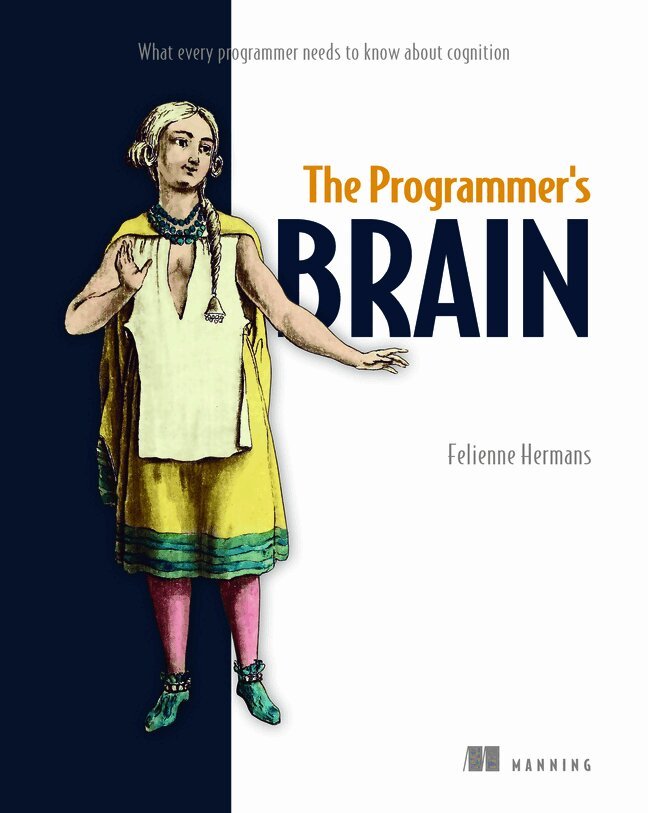
Your brain responds in a predictable way when it encounters new or difficult tasks. This unique book teaches you concrete techniques rooted in cognitive science that will improve the way you learn and think about code.
In The Programmer's Brain: What every programmer needs to know about cognition you will learn:
- Fast and effective ways to master new programming languages- Speed reading skills to quickly comprehend new code- Techniques to unravel the meaning of complex code- Ways to learn new syntax and keep it memorized- Writing code that is easy for others to read- Picking the right names for your variables- Making your codebase more understandable to newcomers- Onboarding new developers to your team
Learn how to optimize your brain's natural cognitive processes to read code more easily, write code faster, and pick up new languages in much less time. This book will help you through the confusion you feel when faced with strange and complex code, and explain a codebase in ways that can make a new team member productive in days!
about the technologyUnderstanding the cognitive functions that govern the way your brain thinks about coding will help you work smarter, not harder. You'll improve your productivity, reduce your need for constant rewrites, and say goodbye to spending late nights struggling with new languages.
about the bookThe Programmer's Brain explores the way your brain works when it's thinking about code. In it, you'll master practical ways to apply these cognitive principles to your daily programming life. You'll improve your code comprehension by turning confusion into a learning tool, and pick up awesome techniques for reading code and quickly memorizing syntax. This practical guide includes tips for creating your own flashcards and study resources that can be applied to any new language you want to master. By the time you're done, you'll not only be better at teaching yourself—you'll be an expert at bringing new colleagues and junior programmers up to speed.
about the readerFor programmers who have experience working in more than one language.
about the authorDr. Felienne Hermans is an associate professor at Leiden University in the Netherlands. She has spent the last decade researching learning and teaching programming. Felienne is an award-winning educator, the creator of the Hedy programming language for novice programmers, and a host of Software Engineering Radio—one of the world's largest programming podcasts.