537 kr
Skickas inom 7-10 vardagar
537 kr
Skickas inom 7-10 vardagar
1 239 kr
Skickas inom 5-8 vardagar
650 kr
493 kr
Skickas
The bestseller in IT architecture. If you want to understand IT architecture, this book is for you. It covers many different areas, from strategy to business, technology, and software architecture. Are you working as an IT architect, student, developer, CTO, project manager, or IT professional? If so, this book will help you understand how IT architecture can help address the complexity in a modern organization. It will give you a deeper understanding of the concepts, methods, tools, models, organizations, and frameworks involved. It also covers the social and human aspects of working as an IT architect.
Enterprise Architecture, The EA function, Strategy, Organization... Business Architecture, Understanding the business, Modeling, Practical advice… Solution Architecture, Integration, Infrastructure, Security…Software Architecture, Quality attributes, Agility and Lean, DevOps, cloud, AI…… and a lot more.
Daniel Akenine is a physicist, technologist, writer, and former neuroscientist. He works as a National Technology Officer for Microsoft, specializing in the impact new technologies has on society. In 2015 he was appointed IASA Fellow.
371 kr
Skickas inom 5-8 vardagar
613 kr
Skickas inom 7-10 vardagar
235 kr
Skickas
236 kr
Läs direkt efter köp
533 kr
Skickas inom 3-6 vardagar
616 kr
Skickas inom 7-10 vardagar
442 kr
Skickas inom 7-10 vardagar
694 kr
Skickas inom 7-10 vardagar
697 kr
Skickas inom 7-10 vardagar
949 kr
Skickas
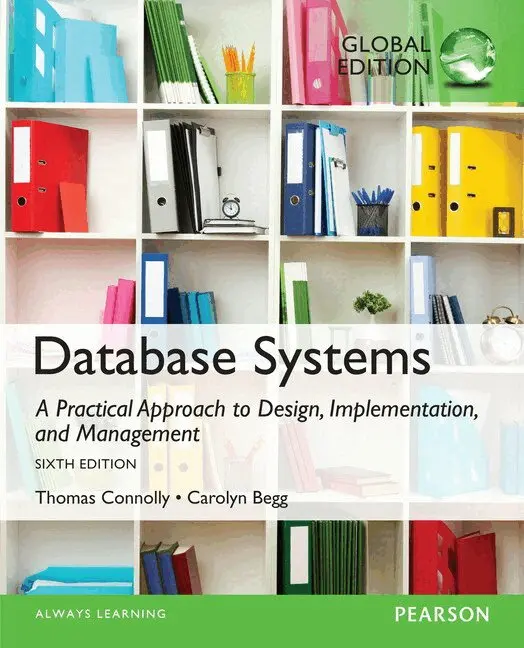
Learn database theory from the bestselling text with a beginner-friendly approach
Database Systems: A Practical Approach to Design, Implementation, and Management, 6th edition, Global Edition,by Thomas Connolly and Carolyn Begg, introduces you to the theory behind databases in a concise yet comprehensive manner.
The methodology behind relational Database Management Systems is presented in a simple way, with step-by-step instructions, making the text accessible for technical and non-technical readers. The text applies a realistic worked example that you follow across the chapters of the book using three explicit phases (conceptual, logical, and physical database design) to help you relate your knowledge to real-world applications. Designed for one or two-term undergraduate courses in database management or database design, this book can also be used as a working reference for IT professionals.
This 6th edition has been updated with the latest information on the subject, as well as additional learning features compared to the previous edition.
New features include:
An extended chapter on database architectures and the Web, covering cloud computing. A new Section on Data Warehousing and Temporal Databases. Updated text to cover the latest version of the SQL standard, which was released late 2011 (SQL:2011). An extended chapter on replication and mobile databases. Updated chapters on Web-DBMS integration and XML. Extended treatment of XML, SPARQL, Xquery 1.0 and Xpath 2.0 (including the new Xquery Update facility), and the new SQL:2011 SQL/XML standard. Coverage updated to Oracle 11g. New review questions and exercises at the end of chapters allow readers to test their understanding.With its clear presentation that supports your learning, this book can provide you with a comprehensive understanding of the theory behind databases.
242 kr
Skickas inom 5-8 vardagar
414 kr
Skickas inom 7-10 vardagar
684 kr
Skickas inom 5-8 vardagar
585 kr
Skickas inom 3-6 vardagar
290 kr
Skickas inom 5-8 vardagar
681 kr
Skickas inom 7-10 vardagar
1 054 kr
Skickas inom 5-8 vardagar
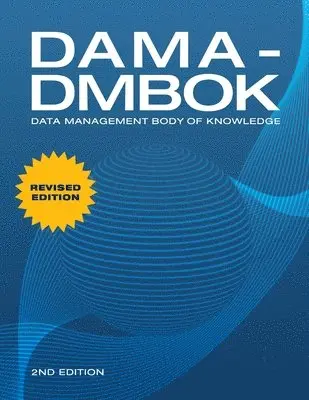
The Data Management Body of Knowledge (DAMA-DMBOK2) presents a comprehensive view of the challenges, complexities, and value of effective data management.
Today’s organizations recognize that managing data is central to their success. They recognize data has value and they want to leverage that value. As our ability and desire to create and exploit data has increased, so too has the need for reliable data management practices.
The second edition of DAMA International’s Guide to the Data Management Body of Knowledge updates and augments the highly successful DMBOK1. An accessible, authoritative reference book written by leading thinkers in the field and extensively reviewed by DAMA members, DMBOK2 brings together materials that comprehensively describe the challenges of data management and how to meet them by:
Defining a set of guiding principles for data management and describing how these principles can be applied within data management functional areas.Providing a functional framework for the implementation of enterprise data management practices; including widely adopted practices, methods and techniques, functions, roles, deliverables and metrics.Establishing a common vocabulary for data management concepts and serving as the basis for best practices for data management professionals.DAMA-DMBOK2 provides data management and IT professionals, executives, knowledge workers, educators, and researchers with a framework to manage their data and mature their information infrastructure, based on these principles:
Data is an asset with unique propertiesThe value of data can be and should be expressed in economic terms Managing data means managing the quality of dataIt takes metadata to manage dataIt takes planning to manage dataData management is cross-functional and requires a range of skills and expertiseData management requires an enterprise perspectiveData management must account for a range of perspectivesData management is data lifecycle managementDifferent types of data have different lifecycle requirementsManaging data includes managing risks associated with dataData management requirements must drive information technology decisionsEffective data management requires leadership commitmentChapters include:
Data ManagementData Handling EthicsData GovernanceData ArchitectureData Modeling and DesignData Storage and OperationsData SecurityData Integration & InteroperabilityDocument and Content ManagementReference and Master DataData Warehousing and Business IntelligenceMetadata ManagementData Quality ManagementBig Data and Data ScienceData Management Maturity AssessmentData Management Organization and Role ExpectationsData Management and Organizational Change ManagementStandardization of data management disciplines will help data management professionals perform more effectively and consistently. It will also enable organizational leaders to recognize the value and contributions of data management activities.
578 kr
Skickas inom 5-8 vardagar
439 kr
Skickas inom 7-10 vardagar
Scripts keep crashing and stakeholders demand data they can trust. Late-night alerts drain your energy and delay business decisions. Manual fixes multiply as pipelines sprawl across clouds and clusters. You need orchestration that scales without sacrificing reliability or sleep. Apache Airflow promises order, yet its power can feel overwhelming. This book makes Airflow mastery achievable, practical, and immediately rewarding.
Dynamic scheduling with Dataset API: Align complex, irregular jobs to real-world data availability. Taskflow API patterns: Write cleaner Python code, reduce boilerplate, and speed team onboarding. Container-native deployments: Run pipelines on Kubernetes for elastic scaling and cost control. Comprehensive testing strategies: Catch issues before production, slash incident time, protect reputation. Production-ready best practices: Logging, security, and monitoring that keep auditors and leaders happy. Custom operator design: Extend Airflow to any system, unlocking limitless integration possibilities.Data Pipelines with Apache Airflow, Second Edition gathers five seasoned consultants into one definitive field guide. Their combined experience turns cutting-edge features into steps you can reproduce today. It is the trusted companion for every data engineer.
The book starts with Airflow architecture, then walks through DAG design, testing, deployment, and operations. Updated chapters reveal Taskflow, Dataset scheduling, and Kubernetes setups, explained through real projects, not toy examples. Clear language, diagrams, and downloadable code remove guesswork.
Finish the last page knowing your pipelines deploy reliably, recover gracefully, and scale effortlessly. Sleep through the night while Airflow delivers fresh, accurate data to every downstream consumer.
Ideal for data engineers, DevOps, machine-learning engineers, and Python-savvy analysts ready to level-up orchestration skills.
661 kr
Skickas
User interface (UI) design rules and guidelines, developed by early HCI gurus and recognized throughout the field, were based on cognitive psychology (study of mental processes such as problem solving, memory, and language), and early practitioners were well informed of its tenets. But today practitioners with backgrounds in cognitive psychology are a minority, as user interface designers and developers enter the field from a wide array of disciplines. HCI practitioners today have enough experience in UI design that they have been exposed to UI design rules, but it is essential that they understand the psychological basis behind the rules in order to effectively apply them. In Designing with the Mind in Mind, best-selling author Jeff Johnson provides designers with just enough background in perceptual and cognitive psychology that UI design guidelines make intuitive sense rather than being just a list of rules to follow.
Provides an essential source for user interface design rules and how, when, and why to apply them Arms designers with the science behind each design rule, allowing them to make informed decisions in projects, and to explain those decisions to others Equips readers with the knowledge to make educated tradeoffs between competing rules, project deadlines, and budget pressures Completely updated and revised, including additional coverage in such areas as persuasion, cognitive economics and decision making, emotions, trust, habit formation, and speech UIs491 kr
Skickas
Publisher's Note: Products purchased from Third Party sellers are not guaranteed by the publisher for quality, authenticity, or access to any online entitlements included with the product.
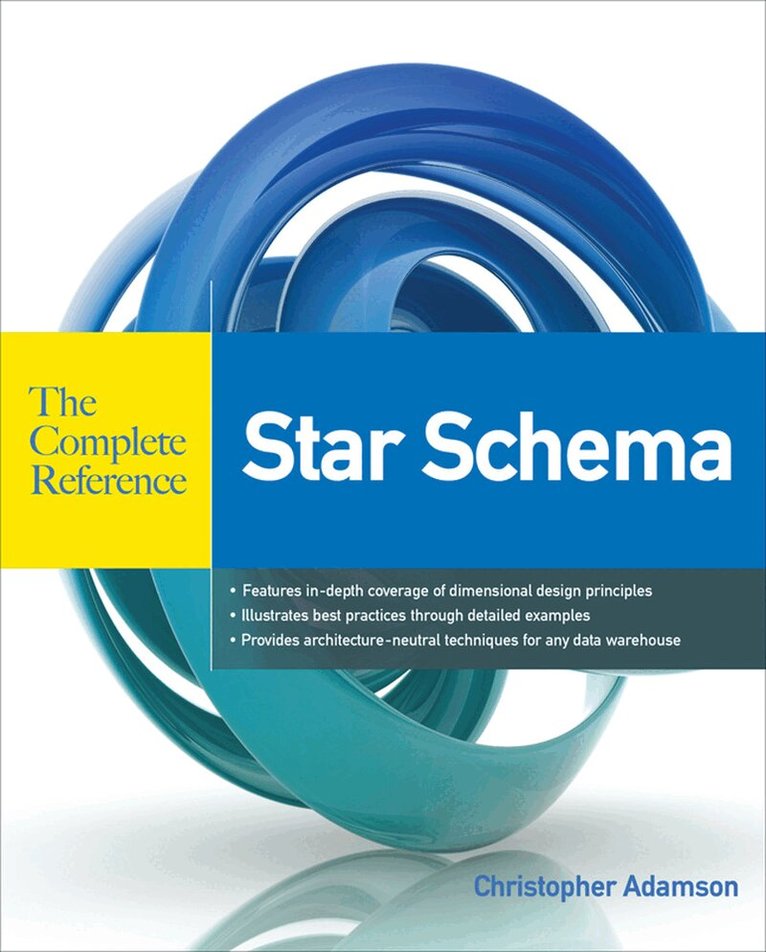
The definitive guide to dimensional design for your data warehouse
Learn the best practices of dimensional design. Star Schema: The Complete Reference offers in-depth coverage of design principles and their underlying rationales. Organized around design concepts and illustrated with detailed examples, this is a step-by-step guidebook for beginners and a comprehensive resource for experts.
This all-inclusive volume begins with dimensional design fundamentals and shows how they fit into diverse data warehouse architectures, including those of W.H. Inmon and Ralph Kimball. The book progresses through a series of advanced techniques that help you address real-world complexity, maximize performance, and adapt to the requirements of BI and ETL software products. You are furnished with design tasks and deliverables that can be incorporated into any project, regardless of architecture or methodology.
Master the fundamentals of star schema design and slow change processingIdentify situations that call for multiple stars or cubesEnsure compatibility across subject areas as your data warehouse growsAccommodate repeating attributes, recursive hierarchies, and poor data qualitySupport conflicting requirements for historic dataHandle variation within a business process and correlation of disparate activitiesBoost performance using derived schemas and aggregatesLearn when it's appropriate to adjust designs for BI and ETL tools507 kr
Skickas inom 7-10 vardagar
930 kr
Skickas inom 7-10 vardagar
484 kr
Skickas inom 7-10 vardagar
151 kr
Skickas inom 7-10 vardagar
495 kr
Skickas inom 7-10 vardagar
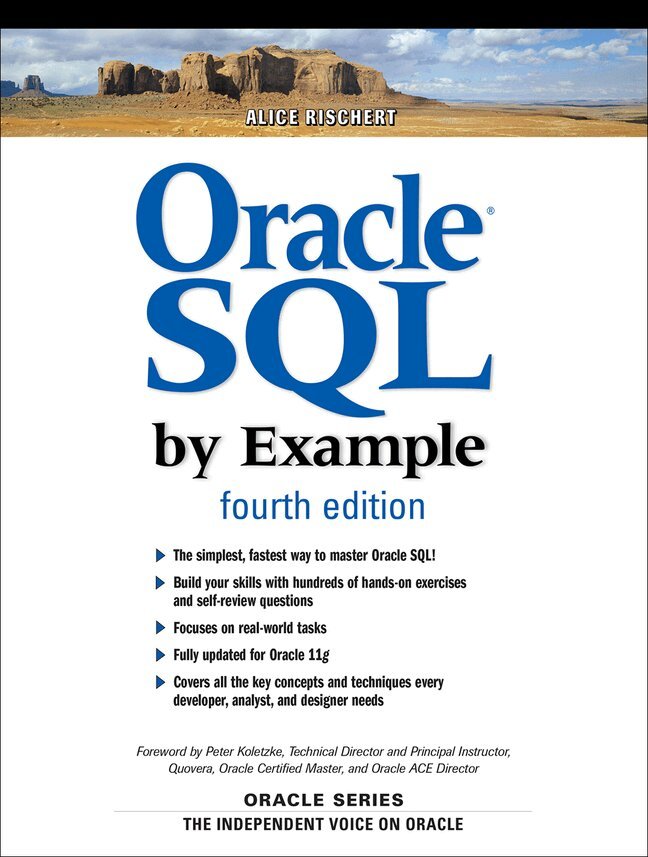
“The book...has enough depth for even a seasoned professional to pick up enough tips to pay back the price of the book
many times over.”
–Dr. Paul Dorsey, President, Dulcian, Inc., Oracle Magazine PL/SQL Developer of the Year 2007, and President
Emeritus, New York Oracle Users Group
“This is a fascinating guide into the world of Oracle SQL with an abundance of well-collected examples. Without a doubt, this
book is helpful to beginners and experts alike who seek alternative ways to resolve advanced scenarios.”–Oleg Voskoboynikov, Ph.D., Database Architect
The World’s #1 Hands-On Oracle SQL Workbook–Fully Updated for Oracle 11g
Crafted for hands-on learning and tested in classrooms worldwide, this book illuminates in-depth every Oracle SQL technique you’ll need. From the simplest query fundamentals to regular expressions and with newly added coverage of Oracle’s powerful new SQL Developer tool, you will focus on the tasks that matter most. Hundreds of step-by-step, guided lab exercises will systematically strengthen your expertise in writing effective, high-performance SQL. Along the way, you’ll acquire a powerful arsenal of useful skills–and an extraordinary library of solutions for your real-world challenges with Oracle SQL.
Coverage includes
100% focused on Oracle SQL for Oracle 11 g, today’s #1 database platform–not “generic” SQL! Master all core SQL techniques including every type of join such as equijoins, self joins, and outer joins Understand Oracle functions in depth, especially character, number, date, timestamp, interval, conversion, aggregate, regular expressions, analytical, and more Practice all types of subqueries, such as correlated and scalar subqueries, and learn about set operators and hierarchical queries Build effective queries and learn fundamental Oracle SQL Developer and SQL*Plus skills Make the most of the Data Dictionary and create tables, views, indexes, and sequences Secure databases using Oracle privileges, roles, and synonyms Explore Oracle 11 g’s advanced data warehousing features Learn many practical tips about performance optimization, security, and architectural solutions Avoid common pitfalls and understand and solve common mistakes For every database developer, administrator, designer, or architect, regardless of experience!