Office for Central Europe and Eurasia – författare
820 kr
Skickas
390 kr
Läs direkt efter köp
This Congressionally-mandated report identifies areas for further cooperation with Russia and other states of the former Soviet Union under the Cooperative Threat Reduction (CTR) program of the Department of Defense in the specific area of prevention of proliferation of biological weapons. The report reviews relevant U.S. government programs, and particularly the CTR program, and identifies approaches for overcoming obstacles to cooperation and for increasing the long-term impact of the program. It recommends strong support for continuation of the CTR program.
376 kr
Läs direkt efter köp
The Institute of Medicine''s Food and Nutrition Board and the National Research Council''s Policy and Global Affairs Division convened a workshop in Washington, D.C., entitled Foodborne Disease and Public Health: An Iranian-American Workshop. The overall goals of this workshop were to facilitate the exchange of ideas about foodborne disease and public health and to promote further collaboration among Americans and Iranians on this topic of mutual interest. Experts invited to participate in this workshop addressed a variety of topics, ranging from the surveillance of outbreaks of foodborne illness to approaches to medical training in the Iranian and U.S. educational systems. The workshop was part of a series of cooperative efforts between the United States and Iran as the two countries have collaborated in the past on similar projects relating to foodborne disease.
438 kr
Läs direkt efter köp
Science and Technology and the Future Development of Societies includes the presentations made at the workshop and summarizes the discussions that followed the presentations. Topics of the workshop included science and society issues, the role of science and engineering in development; obstacles and opportunities in the application of science and technology to development; scientific thinking of decision makers; management and utilization of scientific knowledge; and science, society, and education. This book also provides useful background for the further development of interactions of Western scientists and educators with Iranian specialists.
406 kr
Läs direkt efter köp
649 kr
Läs direkt efter köp
This book presents the proceedings of the fourth U.S.-Russian interacademy workshop on the general theme of countering terrorism, which was held in Moscow in March 2007. The fourth in a series, this volume continues to explore topics related to urban terrorism, but with a new emphasis on potential attacks involving biological agents, transportation networks, and energy systems.
The other books in the series include:
High Impact Terrorism: Proceedings of a Russian-American Workshop (2002) Terrorism: Reducing Vulnerabilities and Improving Responses: U.S.-Russian Workshop Proceedings (2004) Countering Urban Terrorism in Russia and the United States: Proceedings of a Workshop (2006)633 kr
Läs direkt efter köp
This publication features papers presented at the Workshop on Cleaning Up Sites Contaminated with Radioactive Materials, held in Moscow in June 2007. This activity was organized by the National Academies in cooperation with the Russian Academy of Sciences and with funding provided by the Russell Family Foundation. The workshop was designed to promote exchanges of information on specific contaminated sites in Russia and elsewhere and to stimulate greater attention to the severity of the problems and the urgent need to clean up sites of concern to the local and international communities.
528 kr
Läs direkt efter köp
In October 2007, the U.S. National Academies and the Iranian Institute for Advanced Studies in Basic Science organized the first of a series of planned U.S.-Iranian workshops on the topic "Science as a Gateway to Understanding." This new workshop series is a component of the broader effort of the National Academies to support bilateral workshops and exchange visits in a variety of fields with a number of Iranian institutions that began in 2000. This book includes papers that were presented at the workshop and summaries of the discussions that followed some of the presentations. At the conclusion of the workshop there was general agreement that the presentations on many aspects of science and scientific cooperation that have a bearing on mutual understanding were an important first step. Several participants underscored that the next workshop should emphasize how scientific cooperation can lead in concrete terms to improved understanding among both academic and political leaders from the two countries.
552 kr
Läs direkt efter köp
In response to a request from the U.S. Congress, this book examines how the unique experience and extensive capabilities of the Department of Defense (DOD) can be extended to reduce the threat of bioterrorism within developing countries outside the former Soviet Union (FSU). During the past 12 years, DOD has invested $800 million in reducing the risk from bioterrorism with roots in the states of the FSU. The program''s accomplishments are many fold. The risk of bioterrorism in other countries is too great for DOD not to be among the leaders in addressing threats beyond the FSU.
Taking into account possible sensitivities about a U.S. military presence, DOD should engage interested governments in about ten developing countries outside the FSU in biological threat reduction programs during the next five years. Whenever possible, DOD should partner with other organizations that have well established humanitarian reputations in the countries of interest. For example, the U.S. Agency for International Development, the Centers for Disease Control and Prevention, and the World Health Organization should be considered as potential partners.
901 kr
Läs direkt efter köp
Few countries have endured as many attacks of terrorism during the past two decades as has Russia. From bombings on the streets of a number of cities, to the disruption of pipelines in Dagestan, to the taking of hundreds of hostages at a cultural center in Moscow and at a school in Beslan, the Russian government has responded to many political and technical challenges to protect the population. The measures that have been undertaken to reduce vulnerabilities to terrorist attacks and to mitigate the consequences of attacks have been of widespread interest in many other countries as well.
In June 1999, the Presidents of the National Academy of Sciences and the Russian Academy of Sciences initiated an inter-academy program to jointly address common interests in the field of counter-terrorism. Four workshops were held from 2001 to 2007 and additional consultations were undertaken prior to and after the series of workshops. This report includes 35 of the Russian presentations during the workshop series. Collectively they provide a broad overview of activities that have been supported by Russian institutions.
1 298 kr
Läs direkt efter köp
Few countries have endured as many attacks of terrorism during the past two decades as has Russia. From bombings on the streets of a number of cities, to the disruption of pipelines in Dagestan, to the taking of hundreds of hostages at a cultural center in Moscow and at a school in Beslan, the Russian government has responded to many political and technical challenges to protect the population. The measures that have been undertaken to reduce vulnerabilities to terrorist attacks and to mitigate the consequences of attacks have been of widespread interest in many other countries as well.
In June 1999, the Presidents of the National Academy of Sciences and the Russian Academy of Sciences initiated an inter-academy program to jointly address common interests in the field of counter-terrorism. Four workshops were held from 2001 to 2007 and additional consultations were undertaken prior to and after the series of workshops. This report includes 35 of the Russian presentations during the workshop series. Collectively they provide a broad overview of activities that have been supported by Russian institutions.
451 kr
Skickas inom 3-6 vardagar
276 kr
Läs direkt efter köp
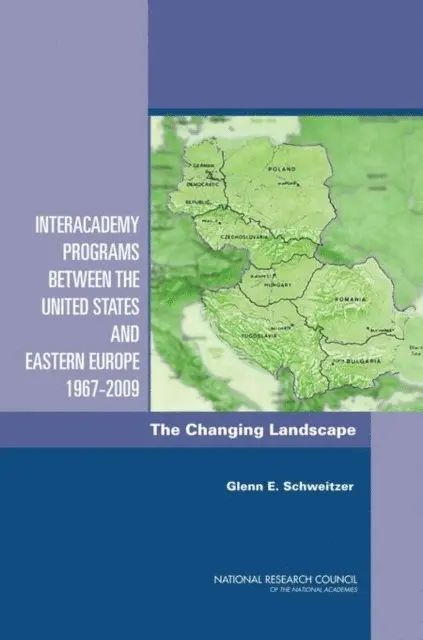
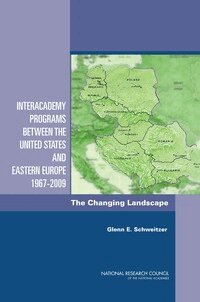
Interacademy Programs Between the United States and Eastern Europe 1967-2009 documents how interacademy programs have played a significant role in establishing and maintaining American scientific contacts with colleagues in Eastern Europe prior to and following the lifting of the Iron Curtain. The book also discusses the changing roles of the academies of the region and the changing nature of interacademy cooperation that has emerged since 1991. The countries of interest are Poland, the Czech Republic, Slovakia, Hungary, Romania, Bulgaria, the former German Democratic Republic, and the countries that previously were united politically within the framework of the former Yugoslavia. The book should be of interest to officials and specialists in both the United States and the countries of Eastern Europe who are actively engaged in promoting scientific cooperation through bilateral and other channels. Also, an emerging audience for this book is the growing group of analysts in the United States interested in "science diplomacy" involving U.S. cooperation with countries that have political agendas that differ in important respects from the objectives of U.S. policies.
401 kr
Läs direkt efter köp
Interacademy Programs Between the United States and Eastern Europe 1967-2009 documents how interacademy programs have played a significant role in establishing and maintaining American scientific contacts with colleagues in Eastern Europe prior to and following the lifting of the Iron Curtain. The book also discusses the changing roles of the academies of the region and the changing nature of interacademy cooperation that has emerged since 1991. The countries of interest are Poland, the Czech Republic, Slovakia, Hungary, Romania, Bulgaria, the former German Democratic Republic, and the countries that previously were united politically within the framework of the former Yugoslavia. The book should be of interest to officials and specialists in both the United States and the countries of Eastern Europe who are actively engaged in promoting scientific cooperation through bilateral and other channels. Also, an emerging audience for this book is the growing group of analysts in the United States interested in "science diplomacy" involving U.S. cooperation with countries that have political agendas that differ in important respects from the objectives of U.S. policies.
368 kr
Läs direkt efter köp
During the first decade of the 21st century, the National Academies, working with a number of partner organizations in Iran, carried out a program of U.S.-Iran engagement in science, engineering, and health (herein referred to as science engagement). This book reviews important aspects of the science engagement program, including: (a) objectives of the program, (b) opportunities and constraints in developing the program, and (c) scientific and political impacts of the activities. Suggestions for future activities that draw on the conclusions and recommendations that have emerged from workshops and other types of interactions are set forth. Of course, the political turmoil within Iran and uncertainties as to the direction of U.S.-Iran government-to-government relations will undoubtedly complicate initiation and implementation of new science engagement activities in the near term. At the same time, many American and Iranian participants and important government officials in the United States and Iran have believed that science engagement can contribute to the evolution of an improved political environment for development of less adversarial relations between the two governments.
535 kr
Läs direkt efter köp
During the first decade of the 21st century, the National Academies, working with a number of partner organizations in Iran, carried out a program of U.S.-Iran engagement in science, engineering, and health (herein referred to as science engagement). This book reviews important aspects of the science engagement program, including: (a) objectives of the program, (b) opportunities and constraints in developing the program, and (c) scientific and political impacts of the activities. Suggestions for future activities that draw on the conclusions and recommendations that have emerged from workshops and other types of interactions are set forth. Of course, the political turmoil within Iran and uncertainties as to the direction of U.S.-Iran government-to-government relations will undoubtedly complicate initiation and implementation of new science engagement activities in the near term. At the same time, many American and Iranian participants and important government officials in the United States and Iran have believed that science engagement can contribute to the evolution of an improved political environment for development of less adversarial relations between the two governments.
779 kr
Läs direkt efter köp
In response to a request from the U.S. Congress, this book examines how the unique experience and extensive capabilities of the Department of Defense (DOD) can be extended to reduce the threat of bioterrorism within developing countries outside the former Soviet Union (FSU). During the past 12 years, DOD has invested $800 million in reducing the risk from bioterrorism with roots in the states of the FSU. The program''s accomplishments are many fold. The risk of bioterrorism in other countries is too great for DOD not to be among the leaders in addressing threats beyond the FSU.
Taking into account possible sensitivities about a U.S. military presence, DOD should engage interested governments in about ten developing countries outside the FSU in biological threat reduction programs during the next five years. Whenever possible, DOD should partner with other organizations that have well established humanitarian reputations in the countries of interest. For example, the U.S. Agency for International Development, the Centers for Disease Control and Prevention, and the World Health Organization should be considered as potential partners.
600 kr
Läs direkt efter köp
618 kr
Läs direkt efter köp
795 kr
Läs direkt efter köp
This book is devoted primarily to papers prepared by American and Russian specialists on cyber terrorism and urban terrorism. It also includes papers on biological and radiological terrorism from the American and Russian perspectives. Of particular interest are the discussions of the hostage situation at Dubrovko in Moscow, the damge inflicted in New York during the attacks on 9/11, and Russian priorities in addressing cyber terrorism.
892 kr
Läs direkt efter köp
649 kr
Läs direkt efter köp
End Points for spent Nuclear Fuel and High-Level Radioactive Waste in Russian and the United States provides an analysis of the management of spent nuclear fuel and high-level radioactive waste in Russia and the United States, describing inventories, comparing approaches, and assessing the end-point options for storage and disposal of materials and wastes. The authoring committee finds that despite differences in philosophy about nuclear fuel cycles, Russia and the United States need similar kinds of facilities and face similar challenges, although in Russia many of the problems are worse and funding is less available. This book contains recommendations for immediate and near-term actions, for example, protecting and stabilizing materials that are security and safety hazards, actions for the longer term, such as developing more interim storage capacity and studying effects of deep injection, and areas for collaboration.
811 kr
Läs direkt efter köp
892 kr
Läs direkt efter köp
This book presents the proceedings of the fourth U.S.-Russian interacademy workshop on the general theme of countering terrorism, which was held in Moscow in March 2007. The fourth in a series, this volume continues to explore topics related to urban terrorism, but with a new emphasis on potential attacks involving biological agents, transportation networks, and energy systems.
The other books in the series include:
High Impact Terrorism: Proceedings of a Russian-American Workshop (2002) Terrorism: Reducing Vulnerabilities and Improving Responses: U.S.-Russian Workshop Proceedings (2004) Countering Urban Terrorism in Russia and the United States: Proceedings of a Workshop (2006)892 kr
Läs direkt efter köp
This publication features papers presented at the Workshop on Cleaning Up Sites Contaminated with Radioactive Materials, held in Moscow in June 2007. This activity was organized by the National Academies in cooperation with the Russian Academy of Sciences and with funding provided by the Russell Family Foundation. The workshop was designed to promote exchanges of information on specific contaminated sites in Russia and elsewhere and to stimulate greater attention to the severity of the problems and the urgent need to clean up sites of concern to the local and international communities.
714 kr
Läs direkt efter köp
In October 2007, the U.S. National Academies and the Iranian Institute for Advanced Studies in Basic Science organized the first of a series of planned U.S.-Iranian workshops on the topic "Science as a Gateway to Understanding." This new workshop series is a component of the broader effort of the National Academies to support bilateral workshops and exchange visits in a variety of fields with a number of Iranian institutions that began in 2000. This book includes papers that were presented at the workshop and summaries of the discussions that followed some of the presentations. At the conclusion of the workshop there was general agreement that the presentations on many aspects of science and scientific cooperation that have a bearing on mutual understanding were an important first step. Several participants underscored that the next workshop should emphasize how scientific cooperation can lead in concrete terms to improved understanding among both academic and political leaders from the two countries.
617 kr
Läs direkt efter köp
Science and Technology and the Future Development of Societies includes the presentations made at the workshop and summarizes the discussions that followed the presentations. Topics of the workshop included science and society issues, the role of science and engineering in development; obstacles and opportunities in the application of science and technology to development; scientific thinking of decision makers; management and utilization of scientific knowledge; and science, society, and education. This book also provides useful background for the further development of interactions of Western scientists and educators with Iranian specialists.
552 kr
Läs direkt efter köp
The Institute of Medicine''s Food and Nutrition Board and the National Research Council''s Policy and Global Affairs Division convened a workshop in Washington, D.C., entitled Foodborne Disease and Public Health: An Iranian-American Workshop. The overall goals of this workshop were to facilitate the exchange of ideas about foodborne disease and public health and to promote further collaboration among Americans and Iranians on this topic of mutual interest. Experts invited to participate in this workshop addressed a variety of topics, ranging from the surveillance of outbreaks of foodborne illness to approaches to medical training in the Iranian and U.S. educational systems. The workshop was part of a series of cooperative efforts between the United States and Iran as the two countries have collaborated in the past on similar projects relating to foodborne disease.
600 kr
Läs direkt efter köp
Kazakhstan has an ambitious program to increase its technological competitiveness in the global market place during the next few years, but achieving success will depend in large measure on the effectiveness of upgraded science and technology (S&T) capabilities. This report identifies important opportunities and limitations in the education system, research and development (R&D) institutions, production companies, and service organizations to help governmental organizations in Kazakhstan with strong interests in S&T chart the future course of the country.
552 kr
Läs direkt efter köp
This Congressionally-mandated report identifies areas for further cooperation with Russia and other states of the former Soviet Union under the Cooperative Threat Reduction (CTR) program of the Department of Defense in the specific area of prevention of proliferation of biological weapons. The report reviews relevant U.S. government programs, and particularly the CTR program, and identifies approaches for overcoming obstacles to cooperation and for increasing the long-term impact of the program. It recommends strong support for continuation of the CTR program.