Food and Nutrition Board – författare
Visar alla böcker från författaren Food and Nutrition Board. Handla med fri frakt och snabb leverans.
335 produkter
Weight Gain During Pregnancy
Reexamining the Guidelines
Av National Research Council, Institute of Medicine m. fl.
Inbunden, 2009
800 kr
Lägg i varukorg
As women of childbearing age have become heavier, the trade-off between maternal and child health created by variation in gestational weight gain has become more difficult to reconcile. Weight Gain During Pregnancy responds to the need for a reexamination of the 1990 Institute of Medicine …
Dietary Reference Intakes
A Risk Assessment Model for Establishing Upper Intake Levels for Nutrients
Av Institute of Medicine, Food and Nutrition Board
Häftad, 1999
1065 kr
Lägg i varukorg
The model for risk assessment of nutrients used to develop tolerable upper intake levels (ULs) is one of the key elements of the developing framework for Dietary Reference Intakes (DRIs). DRIs are dietary reference values for the intake of nutrients and food components by Americans and Canadians. …
Dietary Reference Intakes for Calcium, Phosphorus, Magnesium, Vitamin D, and Fluoride
Av Institute of Medicine, Food and Nutrition Board m. fl.
Häftad, 1999
1467 kr
Lägg i varukorg
Since 1941, Recommended Dietary Allowances (RDAs) has been recognized as the most authoritative source of information on nutrient levels for healthy people. Since publication of the 10th edition in 1989, there has been rising awareness of the impact of nutrition on chronic disease. In light of new …
Dietary Reference Intakes for Thiamin, Riboflavin, Niacin, Vitamin B6, Folate, Vitamin B12, Pantothenic Acid, Biotin, and Choline
Av Institute of Medicine, Food and Nutrition Board m. fl.
Häftad, 2000
1510 kr
Lägg i varukorg
Since 1941, Recommended Dietary Allowances (RDAs) has been recognized as the most authoritative source of information on nutrient levels for healthy people. Since publication of the 10th edition in 1989, there has been rising awareness of the impact of nutrition on chronic disease. In light of new …
Role of Nutrition in Maintaining Health in the Nation's Elderly
Evaluating Coverage of Nutrition Services for the Medicare Population
Av Institute of Medicine, Food and Nutrition Board m. fl.
Häftad, 2000
1644 kr
Lägg i varukorg
Malnutrition and obesity are both common among Americans over age 65. There are also a host of other medical conditions from which older people and other Medicare beneficiaries suffer that could be improved with appropriate nutritional intervention. Despite that, access to a nutrition professional …
Dietary Reference Intakes for Vitamin C, Vitamin E, Selenium, and Carotenoids
Av Institute of Medicine, Food and Nutrition Board m. fl.
Häftad, 2000
1543 kr
Lägg i varukorg
This volume is the newest release in the authoritative series of quantitative estimates of nutrient intakes to be used for planning and assessing diets for healthy people. Dietary Reference Intakes (DRIs) is the newest framework for an expanded approach developed by U.S. and Canadian scientists. …
Dietary Reference Intakes
Applications in Dietary Assessment
Av Institute of Medicine, Food and Nutrition Board m. fl.
Häftad, 2001
573 kr
Lägg i varukorg
Since 1994 the Institute of Medicine's Food and Nutrition Board has been involved in developing an expanded approach to developing dietary reference standards. This approach, the Dietary Reference Intakes (DRIs), provides a set of four nutrient-based reference values designed to replace the …
Framework for Dietary Risk Assessment in the WIC Program
Interim Report
Av Institute of Medicine, Food and Nutrition Board m. fl.
Häftad, 2000
722 kr
Lägg i varukorg
The Food and Nutrition Board of the Institute of Medicine (IOM), part of the National Academies, was asked to evaluate the use of various dietary assessment tools and to make recommendations for the assessment of inadequate or inappropriate dietary patterns. These assessments should accurately …
Food Safety Policy, Science, and Risk Assessment
Strengthening the Connection: Workshop Proceedings
Av Institute of Medicine, Food and Nutrition Board
Häftad, 2001
700 kr
Lägg i varukorg
The Institute of Medicine's (IOM's) Food Forum was established in 1993 to allow science and technology leaders in the food industry, top administrators in several federal government agencies from the United States and Canada, representatives from consumer interest groups, and academicians to openly …
Poultry Inspection
The Basis for a Risk-Assessment Approach
Av National Research Council, Division on Earth and Life Studies m. fl.
Häftad, 1987
2051 kr
Lägg i varukorg
According to surveys, the public believes the chickens it is buying are wholesome. Poultry Inspection: The Basis for a Risk-Assessment Approach looks at current inspection procedures to determine how effective the Food Safety Inspection Service is in finding dangerous levels of contaminants and …
Infant Formula
Evaluating the Safety of New Ingredients
Av Institute of Medicine, Food and Nutrition Board m. fl.
Häftad, 2004
712 kr
Lägg i varukorg
Infant formulas are unique because they are the only source of nutrition for many infants during the first 4 to 6 months of life. They are critical to infant health since they must safely support growth and development during a period when the consequences on inadequate nutrition are most severe. …
Proposed Criteria for Selecting the WIC Food Packages
A Preliminary Report of the Committee to Review the WIC Food Packages
Av Institute of Medicine, Food and Nutrition Board m. fl.
Häftad, 2004
641 kr
Lägg i varukorg
Started in 1974, the Special Supplemental Nutrition Program for Women, Infants, and Children (WIC) was designed to meet the special nutritional needs of low-income pregnant, breastfeeding, or postpartum women; infants; and children up to 5 years of age who have at least one nutritional risk factor. …
Challenges and Opportunities for Precision and Personalized Nutrition
Proceedings of a Workshop
Av Food Forum, Food and Nutrition Board m. fl.
E-bok, 2022
303 kr
Lägg i varukorg
The Food Forum of the National Academies of Sciences, Engineering, and Medicine convened a virtual workshop, Challenges and Opportunities for Precision and Personalized Nutrition, on August 10-12, 2021. The workshop explored potential challenges and opportunities in the application of precision and …
Food Marketing to Children and Youth
Threat or Opportunity?
Av Institute of Medicine, and Families Board on Children, Youth m. fl.
Inbunden, 2006
775 kr
Lägg i varukorg
Creating an environment in which children in the United States grow up healthy should be a high priority for the nation. Yet the prevailing pattern of food and beverage marketing to children in America represents, at best, a missed opportunity, and at worst, a direct threat to the health prospects …
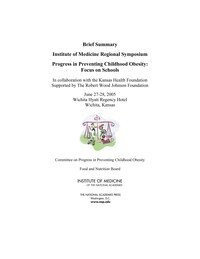
Progress in Preventing Childhood Obesity
Focus on Schools: Brief Summary: Institute of Medicine Regional Symposium
Av National Academies, Institute of Medicine m. fl.
Häftad, 2005
448 kr
Lägg i varukorg
Obesity is now an epidemic among children and adolescents in the United States. Nationwide, roughly nine million children over six years of age are obesea "with elevated risks of both health conditions, such as diabetes and hypertension, and poor quality of life, possibly throughout adulthood. The …
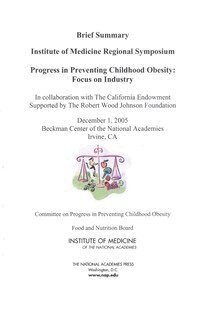
Progress in Preventing Childhood Obesity
Focus on Industry - Brief Summary: Institute of Medicine Regional Symposium
Av National Academies, Institute of Medicine m. fl.
Häftad, 2006
272 kr
Lägg i varukorg
In 2002, Congress charged the Institute of Medicine (IOM) with developing a prevention-focused action plan to reduce the number of obese children and youth in the United States. In 2005, with support from The Robert Wood Johnson Foundation (RWJF), the IOM is building on its previous work by …
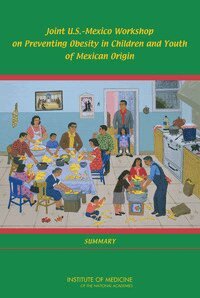
Joint U.S.-Mexico Workshop on Preventing Obesity in Children and Youth of Mexican Origin
Summary
Av Institute of Medicine, Food and Nutrition Board
Häftad, 2007
851 kr
Lägg i varukorg
The Joint U.S.-Mexico Workshop on Preventing Obesity in Children and Youth of Mexican Origin was initiated by a desire to share experiences regarding the problem of obesity in children and youth of Mexican origin on both sides of the border, with a particular focus on potential solutions. U.S and …
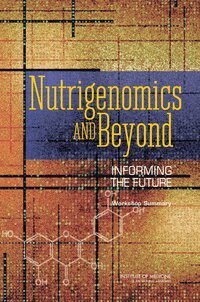
Nutrigenomics and Beyond
Informing the Future: Workshop Summary
Av Institute of Medicine, Food and Nutrition Board m. fl.
Häftad, 2007
481 kr
Lägg i varukorg
The integration of biology, genomics, and health has opened the possibility of applying genomics technology to nutrition. In 2001, scientists associated with the Human Genome Project announced the successful mapping of the reference sequence of the human genome. Since then, a body of information …
Influence of Pregnancy Weight on Maternal and Child Health
Workshop Report
Av Committee on the Impact of Pregnancy Weight on Maternal and Child Health, and Families Board on Children, Youth m. fl.
E-bok, 2007
420 kr
Lägg i varukorg
Influence of Pregnancy Weight on Maternal and Child Health: Workshop Report summarizes a one and a half day workshop convened in May 2006 that reviewed U.S. trends in maternal weight (prior to, during, and after pregnancy) among different populations of women; examined the emerging research …
Nutritional Risk Assessment
Perspectives, Methods, and Data Challenges: Workshop Summary
Av Food Forum, Food and Nutrition Board m. fl.
E-bok, 2007
480 kr
Lägg i varukorg
For more than two decades, the practice of risk assessment has been applied to human public health issues, and policy makers have used the results of risk assessments in their decision-making process. Approaches for risk assessment have been developed for nonnutrients such as drugs, food additives, …
Development of DRIs 1994-2004
Lessons Learned and New Challenges: Workshop Summary
Av Food and Nutrition Board, Institute of Medicine m. fl.
E-bok, 2008
572 kr
Lägg i varukorg
In what ways can the process for developing Dietary Reference Intakes (DRIs) be enhanced? The workshop entitled "The Development of DRIs 1994-2004: Lessons Learned and New Challenges" offered a valuable window into the issues and challenges inherent in the development of nutrient reference values. …
Foodborne Disease and Public Health
Summary of an Iranian-American Workshop
Av Food and Nutrition Board, Office for Central Europe and Eurasia m. fl.
E-bok, 2008
402 kr
Lägg i varukorg
The Institute of Medicine''s Food and Nutrition Board and the National Research Council''s Policy and Global Affairs Division convened a workshop in Washington, D.C., entitled Foodborne Disease and Public Health: An Iranian-American Workshop. The overall goals of this workshop were to facilitate …
Use of Dietary Supplements by Military Personnel
Av Institute of Medicine, Food and Nutrition Board m. fl.
Häftad, 2008
1134 kr
Lägg i varukorg
Dietary supplements are widely available through a rapidly expanding market of products commonly advertised as beneficial for health, performance enhancement, and disease prevention. Given the importance and frequent evaluation of physical performance and health as a criteria to join and remain in …
Use of Dietary Supplements by Military Personnel
Av Committee on Dietary Supplement Use by Military Personnel, Food and Nutrition Board m. fl.
E-bok, 2008
1249 kr
Lägg i varukorg
Dietary supplements are widely available through a rapidly expanding market of products commonly advertised as beneficial for health, performance enhancement, and disease prevention. Given the importance and frequent evaluation of physical performance and health as a criteria to join and remain in …
Nutrition Standards and Meal Requirements for National School Lunch and Breakfast Programs
Phase I. Proposed Approach for Recommending Revisions
Av Committee on Nutrition Standards for National School Lunch and Breakfast Programs, Food and Nutrition Board m. fl.
E-bok, 2008
598 kr
Lägg i varukorg
The National School Breakfast Program feeds 10 million children each day, and the National School Lunch Program feeds more than 30 million students. Yet the national nutrition standards and meal requirements for these meals were created more than a decade ago, making them out of step with recent …
Weight Gain During Pregnancy
Reexamining the Guidelines
Av Committee to Reexamine IOM Pregnancy Weight Guidelines, Food and Nutrition Board m. fl.
E-bok, 2009
794 kr
Lägg i varukorg
As women of childbearing age have become heavier, the trade-off between maternal and child health created by variation in gestational weight gain has become more difficult to reconcile. Weight Gain During Pregnancy responds to the need for a reexamination of the 1990 Institute of Medicine …
Managing Food Safety Practices from Farm to Table
Workshop Summary
Av Institute of Medicine, Food and Nutrition Board m. fl.
Häftad, 2009
637 kr
Lägg i varukorg
Legal regulations and manufacturers' monitoring practices have not been enough to prevent contamination of the national food supply and protect consumers from serious harm. In addressing food safety risks, regulators could perhaps better ensure the quality and safety of food by monitoring food …
Managing Food Safety Practices from Farm to Table
Workshop Summary
Av Food Forum, Food and Nutrition Board m. fl.
E-bok, 2009
407 kr
Lägg i varukorg
Legal regulations and manufacturers'' monitoring practices have not been enough to prevent contamination of the national food supply and protect consumers from serious harm. In addressing food safety risks, regulators could perhaps better ensure the quality and safety of food by monitoring food …
Dietary Reference Intakes for Thiamin, Riboflavin, Niacin, Vitamin B6, Folate, Vitamin B12, Pantothenic Acid, Biotin, and Choline
Av and Choline Standing Committee on the Scientific Evaluation of Dietary Reference Intakes and its Panel on Folate, Other B Vitamins, Subcommittee on Upper Reference Levels of Nutrients m. fl.
E-bok, 2000
831 kr
Lägg i varukorg
Since 1941, Recommended Dietary Allowances (RDAs) has been recognized as the most authoritative source of information on nutrient levels for healthy people. Since publication of the 10th edition in 1989, there has been rising awareness of the impact of nutrition on chronic disease. In light of new …
Dietary Reference Intakes for Water, Potassium, Sodium, Chloride, and Sulfate
Av Panel on Dietary Reference Intakes for Electrolytes and Water, Standing Committee on the Scientific Evaluation of Dietary Reference Intakes m. fl.
E-bok, 2005
981 kr
Lägg i varukorg
Dietary Reference Intakesfor Water, Potassium, Sodium, Chloride, and Sulfate The Dietary Reference Intakes (DRIs) are quantitative estimates of nutrientintakes to be used for planning and assessing diets for healthy people. Thisnew report, the sixth in a series of reports presenting dietary …