National Academies – författare
Visar alla böcker från författaren National Academies. Handla med fri frakt och snabb leverans.
14 produkter
Progress in Preventing Childhood Obesity
Focus on Schools: Brief Summary: Institute of Medicine Regional Symposium
Av National Academies, Institute of Medicine m. fl.
Häftad, 2005
448 kr
Lägg i varukorg
Obesity is now an epidemic among children and adolescents in the United States. Nationwide, roughly nine million children over six years of age are obesea "with elevated risks of both health conditions, such as diabetes and hypertension, and poor quality of life, possibly throughout adulthood. The …
Progress in Preventing Childhood Obesity
Focus on Industry - Brief Summary: Institute of Medicine Regional Symposium
Av National Academies, Institute of Medicine m. fl.
Häftad, 2006
272 kr
Lägg i varukorg
In 2002, Congress charged the Institute of Medicine (IOM) with developing a prevention-focused action plan to reduce the number of obese children and youth in the United States. In 2005, with support from The Robert Wood Johnson Foundation (RWJF), the IOM is building on its previous work by …
Complex Systems
Task Group Summaries
Av National Academies, The National Academies Keck Futures Initiatives
Häftad, 2009
643 kr
Lägg i varukorg
The National Academies Keck Futures Initiative was launched in 2003 to stimulate new modes of scientific inquiry and break down the conceptual and institutional barriers to interdisciplinary research. At the Conference on Complex Systems, participants were divided into twelve interdisciplinary …
Complex Systems
Task Group Summaries
Av The National Academies Keck Futures Initiatives, National Academies
E-bok, 2009
416 kr
Lägg i varukorg
The National Academies Keck Futures Initiative was launched in 2003 to stimulate new modes of scientific inquiry and break down the conceptual and institutional barriers to interdisciplinary research. At the Conference on Complex Systems, participants were divided into twelve interdisciplinary …
Electronic Scientific, Technical, and Medical Journal Publishing and Its Implications
Report of a Symposium
Av and Medical Journal Publishing Committee on Electronic Scientific, Technical, and Public Policy Committee on Science, Engineering m. fl.
E-bok, 2004
624 kr
Lägg i varukorg
The Symposium on Electronic Scientific, Technical, and Medical (STM) Journals and Its Implications addressed five key areas. The first two areas addressed—costs of publication and publication business models and revenue—focused on the STM publishing enterprise as it exists today and, in particular, …
Complex Systems
Task Group Summaries
Av The National Academies Keck Futures Initiatives, National Academies
E-bok, 2009
606 kr
Lägg i varukorg
The National Academies Keck Futures Initiative was launched in 2003 to stimulate new modes of scientific inquiry and break down the conceptual and institutional barriers to interdisciplinary research. At the Conference on Complex Systems, participants were divided into twelve interdisciplinary …
Progress in Preventing Childhood Obesity
Focus on Industry - Brief Summary: Institute of Medicine Regional Symposium
Av In collaboration with The California Endowment, Committee on Progress in Preventing Childhood Obesity m. fl.
E-bok, 2006
295 kr
Lägg i varukorg
In 2002, Congress charged the Institute of Medicine (IOM) with developing a prevention-focused action plan to reduce the number of obese children and youth in the United States. In 2005, with support from The Robert Wood Johnson Foundation (RWJF), the IOM is building on its previous work by …
Progress in Preventing Childhood Obesity
Focus on Communities - Brief Summary: Institute of Medicine Regional Symposium
Av In collaboration with the Healthcare Georgia Foundation, Committee on Progress in Preventing Childhood Obesity m. fl.
E-bok, 2006
303 kr
Lägg i varukorg
The nation faces a growing epidemic of childhood obesity that threatens the immediate health of our children and their prospects of growing up healthy into adulthood. During the past 30 years, obesity in the United States has more than doubled among young children aged 2-5 years and adolescents …
Progress in Preventing Childhood Obesity
Focus on Schools: Brief Summary: Institute of Medicine Regional Symposium
Av In collaboration with the Kansas Health Foundation, Committee on Progress in Preventing Childhood Obesity m. fl.
E-bok, 2005
303 kr
Lägg i varukorg
Obesity is now an epidemic among children and adolescents in the United States. Nationwide, roughly nine million children over six years of age are obese—with elevated risks of both health conditions, such as diabetes and hypertension, and poor quality of life, possibly throughout adulthood. The …
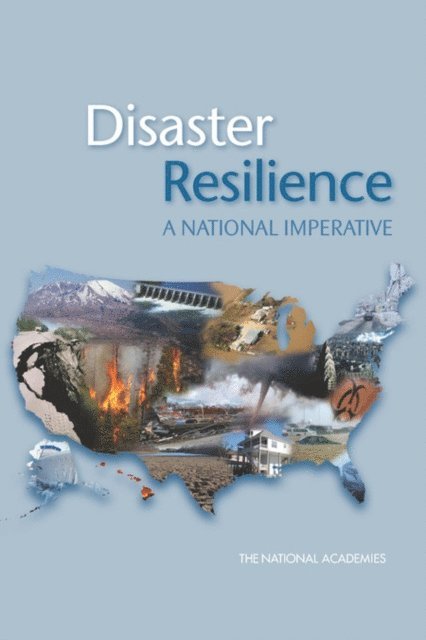
Disaster Resilience
A National Imperative
Av Committee on Increasing National Resilience to Hazards and Disasters, and Public Policy Committee on Science, Engineering m. fl.
E-bok, 2012
693 kr
Lägg i varukorg
No person or place is immune from disasters or disaster-related losses. Infectious disease outbreaks, acts of terrorism, social unrest, or financial disasters in addition to natural hazards can all lead to large-scale consequences for the nation and its communities. Communities and the nation thus …
Progress in Preventing Childhood Obesity
Focus on Schools: Brief Summary: Institute of Medicine Regional Symposium
Av In collaboration with the Kansas Health Foundation, Committee on Progress in Preventing Childhood Obesity m. fl.
E-bok, 2005
200 kr
Lägg i varukorg
Obesity is now an epidemic among children and adolescents in the United States. Nationwide, roughly nine million children over six years of age are obese—with elevated risks of both health conditions, such as diabetes and hypertension, and poor quality of life, possibly throughout adulthood. The …
Progress in Preventing Childhood Obesity
Focus on Communities - Brief Summary: Institute of Medicine Regional Symposium
Av In collaboration with the Healthcare Georgia Foundation, Committee on Progress in Preventing Childhood Obesity m. fl.
E-bok, 2006
206 kr
Lägg i varukorg
The nation faces a growing epidemic of childhood obesity that threatens the immediate health of our children and their prospects of growing up healthy into adulthood. During the past 30 years, obesity in the United States has more than doubled among young children aged 2-5 years and adolescents …
Progress in Preventing Childhood Obesity
Focus on Industry - Brief Summary: Institute of Medicine Regional Symposium
Av In collaboration with The California Endowment, Committee on Progress in Preventing Childhood Obesity m. fl.
E-bok, 2006
206 kr
Lägg i varukorg
In 2002, Congress charged the Institute of Medicine (IOM) with developing a prevention-focused action plan to reduce the number of obese children and youth in the United States. In 2005, with support from The Robert Wood Johnson Foundation (RWJF), the IOM is building on its previous work by …
Progress in Preventing Childhood Obesity
Focus on Communities - Brief Summary: Institute of Medicine Regional Symposium
Av National Academies, Institute of Medicine m. fl.
Häftad, 2006
448 kr
Tillfälligt slut
The nation faces a growing epidemic of childhood obesity that threatens the immediate health of our children and their prospects of growing up healthy into adulthood. During the past 30 years, obesity in the United States has more than doubled among young children aged 2-5 years and adolescents …