and Cooperation Development, Security – författare
1 129 kr
Skickas
536 kr
Läs direkt efter köp
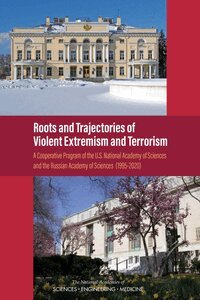
During the past 25 years, the U.S. National Academies of Sciences, Engineering, and Medicine, in collaboration with the Russian Academy of Sciences, have carried out a wide variety of activities to improve understanding of the challenges in containing and reducing ethnic conflicts, violent extremism, and terrorism. Roots and Trajectories of Violent Extremism and Terrorism provides an overview of this cross-ocean program, which has involved American and Russian scientists, engineers, and medical professionals from a large number of government agencies, leading research institutions, think tanks, educational institutions, analytical centers, and consulting and commercial firms in the two countries. This report highlights challenges addressed by the academies over many years that remain of current interest as the U.S., Russian, and other governments continue to cope with old and new forms of aggression that threaten the livelihood of populations at home and abroad.
820 kr
Skickas
982 kr
Läs direkt efter köp
452 kr
Läs direkt efter köp
Developed in collaboration with the Nigerian Academy of Science, this report explores the ways in which science-based private enterprises can be created and encouraged in Nigeria and other developing countries to provide products and services that government is unable to supply in a timely and sustainable manner. Focusing on three critical challenges to health and development—safe water, electrical lighting, and malaria therapy—the report identifies a sample technology to address each of these challenges with potential for commercialization in Nigeria and Africa, and uses that sample technology to identify opportunities and barriers to creating the science-based enterprises in Nigeria.
949 kr
Läs direkt efter köp
390 kr
Läs direkt efter köp
This Congressionally-mandated report identifies areas for further cooperation with Russia and other states of the former Soviet Union under the Cooperative Threat Reduction (CTR) program of the Department of Defense in the specific area of prevention of proliferation of biological weapons. The report reviews relevant U.S. government programs, and particularly the CTR program, and identifies approaches for overcoming obstacles to cooperation and for increasing the long-term impact of the program. It recommends strong support for continuation of the CTR program.
844 kr
Läs direkt efter köp
Over the past 25 years, the United States has made support for the spread of democracy to other nations an increasingly important element of its national security policy. These efforts have created a growing demand to find the most effective means to assist in building and strengthening democratic governance under varied conditions.
Since 1990, the U.S. Agency for International Development (USAID) has supported democracy and governance (DG) programs in approximately 120 countries and territories, spending an estimated total of $8.47 billion (in constant 2000 U.S. dollars) between 1990 and 2005. Despite these substantial expenditures, our understanding of the actual impacts of USAID DG assistance on progress toward democracy remains limited—and is the subject of much current debate in the policy and scholarly communities.
This book, by the National Research Council, provides a roadmap to enable USAID and its partners to assess what works and what does not, both retrospectively and in the future through improved monitoring and evaluation methods and rebuilding USAID''s internal capacity to build, absorb, and act on improved knowledge.
438 kr
Läs direkt efter köp
Science and Technology and the Future Development of Societies includes the presentations made at the workshop and summarizes the discussions that followed the presentations. Topics of the workshop included science and society issues, the role of science and engineering in development; obstacles and opportunities in the application of science and technology to development; scientific thinking of decision makers; management and utilization of scientific knowledge; and science, society, and education. This book also provides useful background for the further development of interactions of Western scientists and educators with Iranian specialists.
406 kr
Läs direkt efter köp
1 003 kr
Skickas
1 087 kr
Läs direkt efter köp
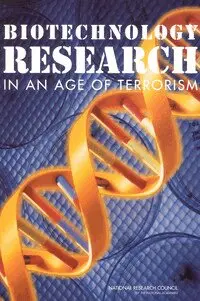
The same technologies that fuel scientific advances also pose potential risks—that the knowledge, tools, and techniques gained through legitimate biotechnology research could be misused to create biological weapons or for bioterrorism. This is often called the dual use dilemma of the life sciences. Yet even research with the greatest potential for misuse may offer significant benefits. Determining how to constrain the danger without harming essential scientific research is critical for national security as well as prosperity and well-being.
This book discusses a 2007 survey of American Association for the Advancement of Science (AAAS) members in the life sciences about their knowledge of dual use issues and attitudes about their responsibilities to help mitigate the risks of misuse of their research.
Overall, the results suggest that there may be considerable support for approaches to oversight that rely on measures that are developed and implemented by the scientific community itself. The responses also suggest that there is a need to clarify the scope of research activities of concern and to provide guidance about what actions scientists can take to reduce the risk that their research will be misused by those with malicious intent.
649 kr
Läs direkt efter köp
This book presents the proceedings of the fourth U.S.-Russian interacademy workshop on the general theme of countering terrorism, which was held in Moscow in March 2007. The fourth in a series, this volume continues to explore topics related to urban terrorism, but with a new emphasis on potential attacks involving biological agents, transportation networks, and energy systems.
The other books in the series include:
High Impact Terrorism: Proceedings of a Russian-American Workshop (2002) Terrorism: Reducing Vulnerabilities and Improving Responses: U.S.-Russian Workshop Proceedings (2004) Countering Urban Terrorism in Russia and the United States: Proceedings of a Workshop (2006)633 kr
Läs direkt efter köp
This publication features papers presented at the Workshop on Cleaning Up Sites Contaminated with Radioactive Materials, held in Moscow in June 2007. This activity was organized by the National Academies in cooperation with the Russian Academy of Sciences and with funding provided by the Russell Family Foundation. The workshop was designed to promote exchanges of information on specific contaminated sites in Russia and elsewhere and to stimulate greater attention to the severity of the problems and the urgent need to clean up sites of concern to the local and international communities.
471 kr
Läs direkt efter köp
The 2nd International Forum on Biosecurity, held in Budapest, Hungary on March 30 - April 2, 2008, represents the efforts of a number of individuals and organizations, over the last five years, to engage the international community of life scientists in addressing how to reduce the risk that the results of their work could be used for hostile purposes by terrorists and states.The participants who gathered in Budapest were already engaged in this challenging task, and, therefore, the focus of the meeting was on what had been accomplished and what challenges remained. There was no attempt to achieve consensus, since there exist real and important differences among those involved concerning the appropriate policies and actions to be undertaken. But there was a serious effort to identify a range of potential next steps, and also an effort to identify opportunities where international scientific organizations could make substantive contributions and offer their advice and expertise to policy discussions. The Forum''s presentations, discussions, and results are summarized in this book.
528 kr
Läs direkt efter köp
In October 2007, the U.S. National Academies and the Iranian Institute for Advanced Studies in Basic Science organized the first of a series of planned U.S.-Iranian workshops on the topic "Science as a Gateway to Understanding." This new workshop series is a component of the broader effort of the National Academies to support bilateral workshops and exchange visits in a variety of fields with a number of Iranian institutions that began in 2000. This book includes papers that were presented at the workshop and summaries of the discussions that followed some of the presentations. At the conclusion of the workshop there was general agreement that the presentations on many aspects of science and scientific cooperation that have a bearing on mutual understanding were an important first step. Several participants underscored that the next workshop should emphasize how scientific cooperation can lead in concrete terms to improved understanding among both academic and political leaders from the two countries.
363 kr
Läs direkt efter köp
The United States Institute of Peace (USIP) is an independent, nonpartisan, national institution established and funded by the U.S. Congress. The goals of the USIP are to help prevent and resolve violent international conflicts; promote post-conflict stability and development; and to increase conflict management capacity, tools, and intellectual capital worldwide. One way the USIP meets those goals is through the Jennings Randolph Program for International Peace, which awards Senior Fellowships to outstanding scholars, policymakers, journalists, and other professionals from around the world to conduct research at the USIP. The Fellowship Program began in 1987, and 253 Fellowships have been awarded through 2007.This book presents a preliminary assessment of the Fellowship Program, and recommends certain steps to improve it, including more rigorous and systematic monitoring and evaluation of the Fellowship in the future. The committee also makes several recommendations intended to help USIP gain further knowledge about the perceptions of the Fellowships in the wider expert community.
552 kr
Läs direkt efter köp
In response to a request from the U.S. Congress, this book examines how the unique experience and extensive capabilities of the Department of Defense (DOD) can be extended to reduce the threat of bioterrorism within developing countries outside the former Soviet Union (FSU). During the past 12 years, DOD has invested $800 million in reducing the risk from bioterrorism with roots in the states of the FSU. The program''s accomplishments are many fold. The risk of bioterrorism in other countries is too great for DOD not to be among the leaders in addressing threats beyond the FSU.
Taking into account possible sensitivities about a U.S. military presence, DOD should engage interested governments in about ten developing countries outside the FSU in biological threat reduction programs during the next five years. Whenever possible, DOD should partner with other organizations that have well established humanitarian reputations in the countries of interest. For example, the U.S. Agency for International Development, the Centers for Disease Control and Prevention, and the World Health Organization should be considered as potential partners.
901 kr
Läs direkt efter köp
Few countries have endured as many attacks of terrorism during the past two decades as has Russia. From bombings on the streets of a number of cities, to the disruption of pipelines in Dagestan, to the taking of hundreds of hostages at a cultural center in Moscow and at a school in Beslan, the Russian government has responded to many political and technical challenges to protect the population. The measures that have been undertaken to reduce vulnerabilities to terrorist attacks and to mitigate the consequences of attacks have been of widespread interest in many other countries as well.
In June 1999, the Presidents of the National Academy of Sciences and the Russian Academy of Sciences initiated an inter-academy program to jointly address common interests in the field of counter-terrorism. Four workshops were held from 2001 to 2007 and additional consultations were undertaken prior to and after the series of workshops. This report includes 35 of the Russian presentations during the workshop series. Collectively they provide a broad overview of activities that have been supported by Russian institutions.
1 298 kr
Läs direkt efter köp
Few countries have endured as many attacks of terrorism during the past two decades as has Russia. From bombings on the streets of a number of cities, to the disruption of pipelines in Dagestan, to the taking of hundreds of hostages at a cultural center in Moscow and at a school in Beslan, the Russian government has responded to many political and technical challenges to protect the population. The measures that have been undertaken to reduce vulnerabilities to terrorist attacks and to mitigate the consequences of attacks have been of widespread interest in many other countries as well.
In June 1999, the Presidents of the National Academy of Sciences and the Russian Academy of Sciences initiated an inter-academy program to jointly address common interests in the field of counter-terrorism. Four workshops were held from 2001 to 2007 and additional consultations were undertaken prior to and after the series of workshops. This report includes 35 of the Russian presentations during the workshop series. Collectively they provide a broad overview of activities that have been supported by Russian institutions.
746 kr
Läs direkt efter köp
The national security controls that regulate access to and export of science and technology are broken. As currently structured, many of these controls undermine our national and homeland security and stifle American engagement in the global economy, and in science and technology. These unintended consequences arise from policies that were crafted for an earlier era. In the name of maintaining superiority, the U.S. now runs the risk of becoming less secure, less competitive and less prosperous. Beyond "Fortress America" provides an account of the costs associated with building walls that hamper our access to global science and technology that dampen our economic potential. The book also makes recommendations to reform the export control process, ensure scientific and technological competitiveness, and improve the non-immigrant visa system that regulates entry into the United States of foreign science and engineering students, scholars, and professionals. Beyond "Fortress America" contains vital information and action items for the President and policy makers that will affect the United States'' ability to compete globally. Interested parties—including military personnel, engineers, scientists, professionals, industrialists, and scholars—will find this book a valuable tool for stemming a serious decline affecting broad areas of the nation''s security and economy.
1 136 kr
Läs direkt efter köp
The same technologies that fuel scientific advances also pose potential risks—that the knowledge, tools, and techniques gained through legitimate biotechnology research could be misused to create biological weapons or for bioterrorism. This is often called the dual use dilemma of the life sciences. Yet even research with the greatest potential for misuse may offer significant benefits. Determining how to constrain the danger without harming essential scientific research is critical for national security as well as prosperity and well-being.
This book discusses a 2007 survey of American Association for the Advancement of Science (AAAS) members in the life sciences about their knowledge of dual use issues and attitudes about their responsibilities to help mitigate the risks of misuse of their research.
Overall, the results suggest that there may be considerable support for approaches to oversight that rely on measures that are developed and implemented by the scientific community itself. The responses also suggest that there is a need to clarify the scope of research activities of concern and to provide guidance about what actions scientists can take to reduce the risk that their research will be misused by those with malicious intent.
451 kr
Skickas inom 3-6 vardagar
276 kr
Läs direkt efter köp
Interacademy Programs Between the United States and Eastern Europe 1967-2009 documents how interacademy programs have played a significant role in establishing and maintaining American scientific contacts with colleagues in Eastern Europe prior to and following the lifting of the Iron Curtain. The book also discusses the changing roles of the academies of the region and the changing nature of interacademy cooperation that has emerged since 1991. The countries of interest are Poland, the Czech Republic, Slovakia, Hungary, Romania, Bulgaria, the former German Democratic Republic, and the countries that previously were united politically within the framework of the former Yugoslavia. The book should be of interest to officials and specialists in both the United States and the countries of Eastern Europe who are actively engaged in promoting scientific cooperation through bilateral and other channels. Also, an emerging audience for this book is the growing group of analysts in the United States interested in "science diplomacy" involving U.S. cooperation with countries that have political agendas that differ in important respects from the objectives of U.S. policies.
401 kr
Läs direkt efter köp
Interacademy Programs Between the United States and Eastern Europe 1967-2009 documents how interacademy programs have played a significant role in establishing and maintaining American scientific contacts with colleagues in Eastern Europe prior to and following the lifting of the Iron Curtain. The book also discusses the changing roles of the academies of the region and the changing nature of interacademy cooperation that has emerged since 1991. The countries of interest are Poland, the Czech Republic, Slovakia, Hungary, Romania, Bulgaria, the former German Democratic Republic, and the countries that previously were united politically within the framework of the former Yugoslavia. The book should be of interest to officials and specialists in both the United States and the countries of Eastern Europe who are actively engaged in promoting scientific cooperation through bilateral and other channels. Also, an emerging audience for this book is the growing group of analysts in the United States interested in "science diplomacy" involving U.S. cooperation with countries that have political agendas that differ in important respects from the objectives of U.S. policies.
368 kr
Läs direkt efter köp
During the first decade of the 21st century, the National Academies, working with a number of partner organizations in Iran, carried out a program of U.S.-Iran engagement in science, engineering, and health (herein referred to as science engagement). This book reviews important aspects of the science engagement program, including: (a) objectives of the program, (b) opportunities and constraints in developing the program, and (c) scientific and political impacts of the activities. Suggestions for future activities that draw on the conclusions and recommendations that have emerged from workshops and other types of interactions are set forth. Of course, the political turmoil within Iran and uncertainties as to the direction of U.S.-Iran government-to-government relations will undoubtedly complicate initiation and implementation of new science engagement activities in the near term. At the same time, many American and Iranian participants and important government officials in the United States and Iran have believed that science engagement can contribute to the evolution of an improved political environment for development of less adversarial relations between the two governments.
535 kr
Läs direkt efter köp
During the first decade of the 21st century, the National Academies, working with a number of partner organizations in Iran, carried out a program of U.S.-Iran engagement in science, engineering, and health (herein referred to as science engagement). This book reviews important aspects of the science engagement program, including: (a) objectives of the program, (b) opportunities and constraints in developing the program, and (c) scientific and political impacts of the activities. Suggestions for future activities that draw on the conclusions and recommendations that have emerged from workshops and other types of interactions are set forth. Of course, the political turmoil within Iran and uncertainties as to the direction of U.S.-Iran government-to-government relations will undoubtedly complicate initiation and implementation of new science engagement activities in the near term. At the same time, many American and Iranian participants and important government officials in the United States and Iran have believed that science engagement can contribute to the evolution of an improved political environment for development of less adversarial relations between the two governments.
779 kr
Läs direkt efter köp
In response to a request from the U.S. Congress, this book examines how the unique experience and extensive capabilities of the Department of Defense (DOD) can be extended to reduce the threat of bioterrorism within developing countries outside the former Soviet Union (FSU). During the past 12 years, DOD has invested $800 million in reducing the risk from bioterrorism with roots in the states of the FSU. The program''s accomplishments are many fold. The risk of bioterrorism in other countries is too great for DOD not to be among the leaders in addressing threats beyond the FSU.
Taking into account possible sensitivities about a U.S. military presence, DOD should engage interested governments in about ten developing countries outside the FSU in biological threat reduction programs during the next five years. Whenever possible, DOD should partner with other organizations that have well established humanitarian reputations in the countries of interest. For example, the U.S. Agency for International Development, the Centers for Disease Control and Prevention, and the World Health Organization should be considered as potential partners.
1 055 kr
Läs direkt efter köp
779 kr
Läs direkt efter köp
This report is the second in a series of three evaluating underexploited African plant resources that could help broaden and secure Africa''s food supply. The volume describes the characteristics of 18 little-known indigenous African vegetables (including tubers and legumes) that have potential as food- and cash-crops but are typically overlooked by scientists and policymakers and in the world at large. The book assesses the potential of each vegetable to help overcome malnutrition, boost food security, foster rural development, and create sustainable landcare in Africa. Each species is described in a separate chapter, based on information gathered from and verified by a pool of experts throughout the world. Volume I describes African grains and Volume III African fruits.