Russian Academy of Sciences – författare
820 kr
Skickas
568 kr
Läs direkt efter köp
The so-called nuclear renaissance has increased worldwide interest in nuclear power. This potential growth also has increased, in some quarters, concern that nonproliferation considerations are not being given sufficient attention. In particular, since introduction of many new power reactors will lead to requiring increased uranium enrichment services to provide the reactor fuel, the proliferation risk of adding enrichment facilities in countries that do not have them now led to proposals to provide the needed fuel without requiring indigenous enrichment facilities. Similar concerns exist for reprocessing facilities.
Internationalization of the Nuclear Fuel Cycle summarizes key issues and analyses of the topic, offers some criteria for evaluating options, and makes findings and recommendations to help the United States, the Russian Federation, and the international community reduce proliferation and other risks, as nuclear power is used more widely.
This book is intended for all those who are concerned about the need for assuring fuel for new reactors and at the same time limiting the spread of nuclear weapons. This audience includes the United States and Russia, other nations that currently supply nuclear material and technology, many other countries contemplating starting or growing nuclear power programs, and the international organizations that support the safe, secure functioning of the international nuclear fuel cycle, most prominently the International Atomic Energy Agency.
649 kr
Läs direkt efter köp
This book presents the proceedings of the fourth U.S.-Russian interacademy workshop on the general theme of countering terrorism, which was held in Moscow in March 2007. The fourth in a series, this volume continues to explore topics related to urban terrorism, but with a new emphasis on potential attacks involving biological agents, transportation networks, and energy systems.
The other books in the series include:
High Impact Terrorism: Proceedings of a Russian-American Workshop (2002) Terrorism: Reducing Vulnerabilities and Improving Responses: U.S.-Russian Workshop Proceedings (2004) Countering Urban Terrorism in Russia and the United States: Proceedings of a Workshop (2006)633 kr
Läs direkt efter köp
This publication features papers presented at the Workshop on Cleaning Up Sites Contaminated with Radioactive Materials, held in Moscow in June 2007. This activity was organized by the National Academies in cooperation with the Russian Academy of Sciences and with funding provided by the Russell Family Foundation. The workshop was designed to promote exchanges of information on specific contaminated sites in Russia and elsewhere and to stimulate greater attention to the severity of the problems and the urgent need to clean up sites of concern to the local and international communities.
820 kr
Läs direkt efter köp
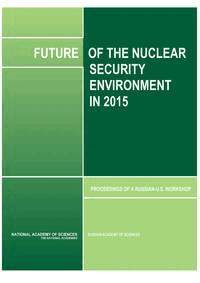
The U.S. National Academies (NAS) and the Russian Academy of Sciences (RAS), building on a foundation of years of interacademy cooperation, conducted a joint project to identify U.S. and Russian views on what the international nuclear security environment will be in 2015, what challenges may arise from that environment, and what options the U.S. and Russia have in partnering to address those challenges.
The project''s discussions were developed and expanded upon during a two-day public workshop held at the International Atomic Energy Agency in November 2007. A key aspect of that partnership may be cooperation in third countries where both the U.S. and Russia can draw on their experiences over the last decade of non-proliferation cooperation. More broadly, the following issues analyzed over the course of this RAS-NAS project included: safety and security culture, materials protection, control and accounting (MPC&A) best practices, sustainability, nuclear forensics, public-private partnerships, and the expansion of nuclear energy.
901 kr
Läs direkt efter köp
Few countries have endured as many attacks of terrorism during the past two decades as has Russia. From bombings on the streets of a number of cities, to the disruption of pipelines in Dagestan, to the taking of hundreds of hostages at a cultural center in Moscow and at a school in Beslan, the Russian government has responded to many political and technical challenges to protect the population. The measures that have been undertaken to reduce vulnerabilities to terrorist attacks and to mitigate the consequences of attacks have been of widespread interest in many other countries as well.
In June 1999, the Presidents of the National Academy of Sciences and the Russian Academy of Sciences initiated an inter-academy program to jointly address common interests in the field of counter-terrorism. Four workshops were held from 2001 to 2007 and additional consultations were undertaken prior to and after the series of workshops. This report includes 35 of the Russian presentations during the workshop series. Collectively they provide a broad overview of activities that have been supported by Russian institutions.
1 298 kr
Läs direkt efter köp
Few countries have endured as many attacks of terrorism during the past two decades as has Russia. From bombings on the streets of a number of cities, to the disruption of pipelines in Dagestan, to the taking of hundreds of hostages at a cultural center in Moscow and at a school in Beslan, the Russian government has responded to many political and technical challenges to protect the population. The measures that have been undertaken to reduce vulnerabilities to terrorist attacks and to mitigate the consequences of attacks have been of widespread interest in many other countries as well.
In June 1999, the Presidents of the National Academy of Sciences and the Russian Academy of Sciences initiated an inter-academy program to jointly address common interests in the field of counter-terrorism. Four workshops were held from 2001 to 2007 and additional consultations were undertaken prior to and after the series of workshops. This report includes 35 of the Russian presentations during the workshop series. Collectively they provide a broad overview of activities that have been supported by Russian institutions.
795 kr
Läs direkt efter köp
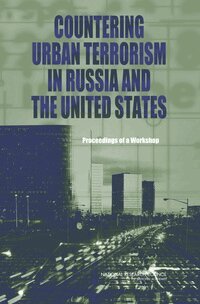
This book is devoted primarily to papers prepared by American and Russian specialists on cyber terrorism and urban terrorism. It also includes papers on biological and radiological terrorism from the American and Russian perspectives. Of particular interest are the discussions of the hostage situation at Dubrovko in Moscow, the damge inflicted in New York during the attacks on 9/11, and Russian priorities in addressing cyber terrorism.
892 kr
Läs direkt efter köp
811 kr
Läs direkt efter köp
892 kr
Läs direkt efter köp
The U.S. National Academies (NAS) and the Russian Academy of Sciences (RAS), building on a foundation of years of interacademy cooperation, conducted a joint project to identify U.S. and Russian views on what the international nuclear security environment will be in 2015, what challenges may arise from that environment, and what options the U.S. and Russia have in partnering to address those challenges.
The project''s discussions were developed and expanded upon during a two-day public workshop held at the International Atomic Energy Agency in November 2007. A key aspect of that partnership may be cooperation in third countries where both the U.S. and Russia can draw on their experiences over the last decade of non-proliferation cooperation. More broadly, the following issues analyzed over the course of this RAS-NAS project included: safety and security culture, materials protection, control and accounting (MPC&A) best practices, sustainability, nuclear forensics, public-private partnerships, and the expansion of nuclear energy.
892 kr
Läs direkt efter köp
This book presents the proceedings of the fourth U.S.-Russian interacademy workshop on the general theme of countering terrorism, which was held in Moscow in March 2007. The fourth in a series, this volume continues to explore topics related to urban terrorism, but with a new emphasis on potential attacks involving biological agents, transportation networks, and energy systems.
The other books in the series include:
High Impact Terrorism: Proceedings of a Russian-American Workshop (2002) Terrorism: Reducing Vulnerabilities and Improving Responses: U.S.-Russian Workshop Proceedings (2004) Countering Urban Terrorism in Russia and the United States: Proceedings of a Workshop (2006)892 kr
Läs direkt efter köp
This publication features papers presented at the Workshop on Cleaning Up Sites Contaminated with Radioactive Materials, held in Moscow in June 2007. This activity was organized by the National Academies in cooperation with the Russian Academy of Sciences and with funding provided by the Russell Family Foundation. The workshop was designed to promote exchanges of information on specific contaminated sites in Russia and elsewhere and to stimulate greater attention to the severity of the problems and the urgent need to clean up sites of concern to the local and international communities.
714 kr
Läs direkt efter köp
In January-February 2005, the National Academies Committee on Counterterrorism Challenges for Russia and the United States and the Russian Academy of Sciences Standing Committee on Counterterrorism held a workshop on urban terrorism in Washington, D.C. Prior to the workshop, three working groups convened to focus on the topics of energy systems vulnerabilities, transportation systems vulnerabilities, and cyberterrorism issues. The working groups met with local experts and first responders, prepared reports, and presented their findings at the workshop. Other workshop papers focused on various organizations'' integrated response to acts of urban terrorism, recent acts of terrorism, radiological terrorism, biological terrorism, cyberterrorism, and the roots of terrorism.
1 055 kr
Läs direkt efter köp
746 kr
Läs direkt efter köp
665 kr
Läs direkt efter köp
617 kr
Läs direkt efter köp
390 kr
Läs direkt efter köp
The National Research Council hosted an interacademy workshop in Yekaterinburg, Russia together with the Russian Academy of Sciences in October 2004 as a means of exploring various aspects of industrial innovation in the Urals region of Russia. Workshop presenters focused on the establishment of cooperative business partnerships between Russian industrial companies and Russian research organizations, particularly those in the closed nuclear cities of Russia. The concept of "market pull" was therefore an important aspect of the workshop, including partnerships between Russian researchers and international companies, as well as those with international research centers. However, given the complex economic and research climates in Russia, which are intensified in the nuclear cities, cooperation between Russian industry and Russian researchers were of primary during the workshop presentations and subsequent discussions as captured in this workshop summary.
811 kr
Läs direkt efter köp
The so-called nuclear renaissance has increased worldwide interest in nuclear power. This potential growth also has increased, in some quarters, concern that nonproliferation considerations are not being given sufficient attention. In particular, since introduction of many new power reactors will lead to requiring increased uranium enrichment services to provide the reactor fuel, the proliferation risk of adding enrichment facilities in countries that do not have them now led to proposals to provide the needed fuel without requiring indigenous enrichment facilities. Similar concerns exist for reprocessing facilities.
Internationalization of the Nuclear Fuel Cycle summarizes key issues and analyses of the topic, offers some criteria for evaluating options, and makes findings and recommendations to help the United States, the Russian Federation, and the international community reduce proliferation and other risks, as nuclear power is used more widely.
This book is intended for all those who are concerned about the need for assuring fuel for new reactors and at the same time limiting the spread of nuclear weapons. This audience includes the United States and Russia, other nations that currently supply nuclear material and technology, many other countries contemplating starting or growing nuclear power programs, and the international organizations that support the safe, secure functioning of the international nuclear fuel cycle, most prominently the International Atomic Energy Agency.
568 kr
Läs direkt efter köp
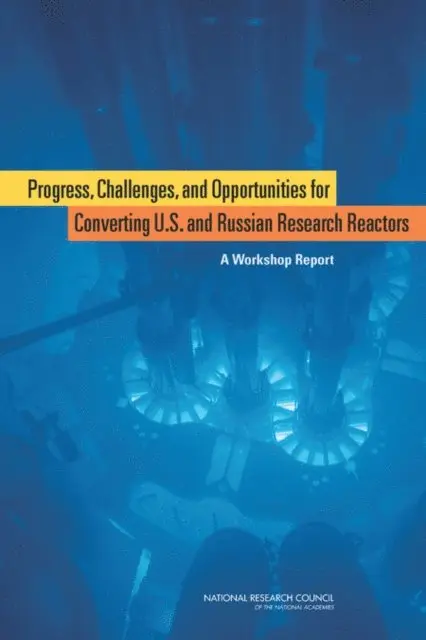
Highly enriched uranium (HEU) is used for two major civilian purposes: as fuel for research reactors and as targets for medical isotope production. This material can be dangerous in the wrong hands. Stolen or diverted HEU can be used-in conjunction with some knowledge of physics-to build nuclear explosive devices. Thus, the continued civilian use of HEU is of concern particularly because this material may not be uniformly well-protected. To address these concerns, the National Research Council (NRC) of the U.S. National Academies and the Russian Academy of Sciences (RAS) held a joint symposium on June 8-10, 2011.Progress, Challenges, and Opportunities for Converting U.S. and Russian Research Reactors summarizes the proceedings of this joint symposium. This report addresses: (1) recent progress on conversion of research reactors, with a focus on U.S.- and R.F.-origin reactors; (2) lessons learned for overcoming conversion challenges, increasing the effectiveness of research reactor use, and enabling new reactor missions; (3) future research reactor conversion plans, challenges, and opportunities; and (4) actions that could be taken by U.S. and Russian organizations to promote conversion. The agenda for the symposium is provided in Appendix A, biographical sketches of the committee members are provided in Appendix B, and the report concludes with the statement of task in Appendix C.
714 kr
Läs direkt efter köp
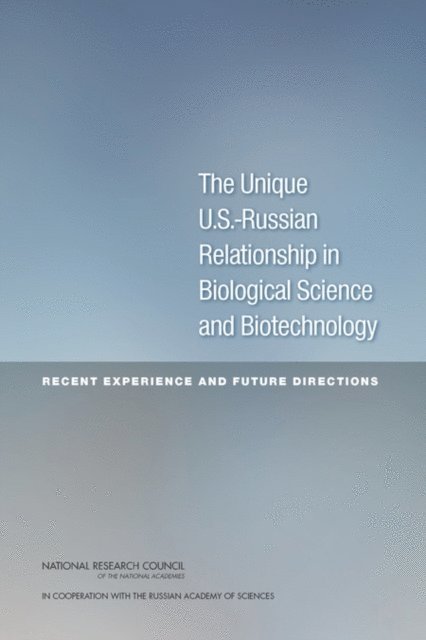
In the fall of 2010, the U.S. National Academies (consisting of the National Academy of Sciences, the National Academy of Engineering, and the Institute of Medicine) and the Russian Academy of Sciences (in cooperation with the Russian Academy of Medical Sciences and the Russian Academy of Agricultural Sciences) initiated a joint study of U.S.-Russian bilateral engagement in the biological sciences and biotechnology (hereinafter collectively referred to as bioengagement). The U.S. Department of State and the Russian Academy of Sciences provided support for the study. The academies established a joint committee of 12 leading scientists from the two countries to assess bioengagement activities since 1996 and to provide recommendations as to collaborative efforts in the near future. The Unique U.S.-Russian Relationship in Biological Science and Biotechnology: Recent Experience and Future Directions summarizes the principal conclusions and recommendations of the study.
795 kr
Läs direkt efter köp
As ballistic missile technology proliferates, and as ballistic missile defenses are deployed by both the Russian Federation and the United States, it is increasingly important for these two countries to seek ways to reap the benefits of systems that can protect their own national security interests against limited missile attacks from third countries without undermining the strategic balance that the two governments maintain to ensure stability. Regional Ballistic Missile Defense in the Context of Strategic Stability examines both the technical implications of planned missile defense deployments for Russian and U.S. strategic deterrents and the benefits and disadvantages of a range of options for cooperation on missile defense.
584 kr
Läs direkt efter köp
633 kr
Läs direkt efter köp
560 kr
Läs direkt efter köp
This book is devoted primarily to papers prepared by American and Russian specialists on cyber terrorism and urban terrorism. It also includes papers on biological and radiological terrorism from the American and Russian perspectives. Of particular interest are the discussions of the hostage situation at Dubrovko in Moscow, the damge inflicted in New York during the attacks on 9/11, and Russian priorities in addressing cyber terrorism.
471 kr
Läs direkt efter köp
771 kr
Läs direkt efter köp
528 kr
Läs direkt efter köp
430 kr
Läs direkt efter köp