Nuclear and Radiation Studies Board – författare
268 kr
Läs direkt efter köp
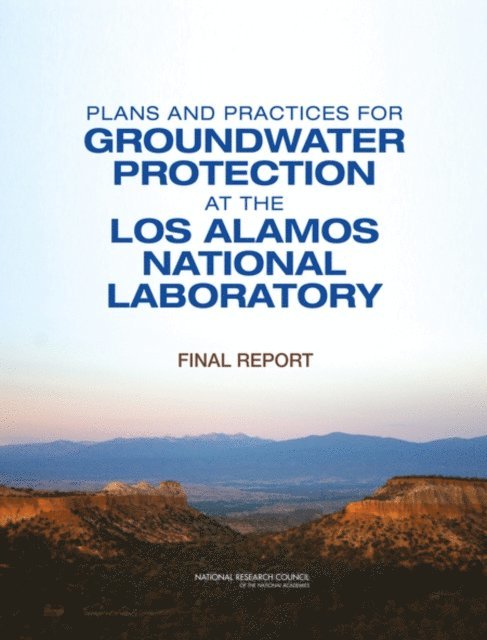
The world''s first nuclear bomb was a developed in 1954 at a site near the town of Los Alamos, New Mexico. Designated as the Los Alamos National Laboratory (LANL) in 1981, the 40-square-mile site is today operated by Log Alamos National Security LLC under contract to the National Nuclear Security Administration (NNSA) of the U.S. Department of Energy (DOE). Like other sites in the nation''s nuclear weapons complex, the LANL site harbors a legacy of radioactive waste and environmental contamination. Radioactive materials and chemical contaminants have been detected in some portions of the groundwater beneath the site.
Under authority of the U.S. Environmental Protection Agency, the State of New Mexico regulates protection of its water resources through the New Mexico Environment Department (NMED). In 1995 NMED found LANL''s groundwater monitoring program to be inadequate. Consequently LANL conducted a detailed workplan to characterize the site''s hydrogeology in order to develop an effective monitoring program. The study described in Plans and Practices for Groundwater Protection at the Los Alamos National Laboratory: Final Report was initially requested by NNSA, which turned to the National Academies for technical advice and recommendations regarding several aspects of LANL''s groundwater protection program. The DOE Office of Environmental Management funded the study. The study came approximately at the juncture between completion of LANL''s hydrogeologic workplan and initial development of a sitewide monitoring plan.
451 kr
Skickas inom 3-6 vardagar
268 kr
Läs direkt efter köp
The Department of Energy''s Office of Environmental Management is developing a technology roadmap to guide planning and possible future congressional appropriations for its technology development programs. It asked the National Research Council of the National Academies to provide technical and strategic advice to support the development and implementation of this roadmap, specifically by undertaking a study that identifies principal science and technology gaps and their priorities for the cleanup program based on previous National Academies reports, updated and extended to reflect current site conditions and EM priorities and input form key external groups, such as the Nuclear Regulatory Commission, Defense Nuclear Facilities Safety Board, Environmental Protection Agency, and state regulatory agencies. In response, this book provides a high-level synthesis of principal science and technology gaps identified in previous NRC reports in part 1. Part 2 summarizes a workshop meant to bring together the key external groups to discuss current site conditions and science and technology needs.
625 kr
Läs direkt efter köp
619 kr
Läs direkt efter köp
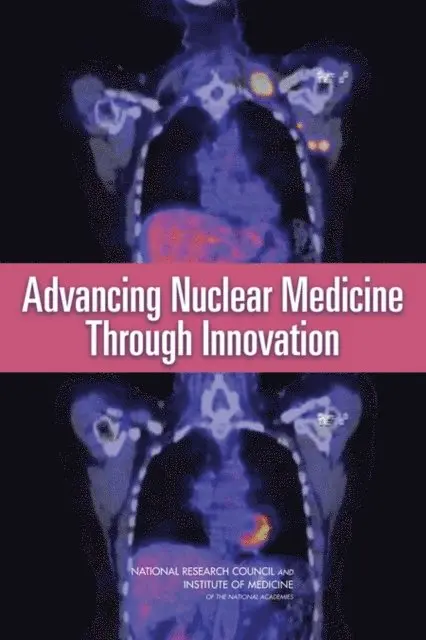
Advancing Nuclear Medicine Through Innovation highlights the exciting emerging opportunities in nuclear medicine, which include assessing the efficacy of new drugs in development, individualizing treatment to the patient, and understanding the biology of human diseases. Health care and pharmaceutical professionals will be most interested in this book''s examination of the challenges the field faces and its recommendations for ways to reduce these impediments.
276 kr
Läs direkt efter köp
568 kr
Läs direkt efter köp
The so-called nuclear renaissance has increased worldwide interest in nuclear power. This potential growth also has increased, in some quarters, concern that nonproliferation considerations are not being given sufficient attention. In particular, since introduction of many new power reactors will lead to requiring increased uranium enrichment services to provide the reactor fuel, the proliferation risk of adding enrichment facilities in countries that do not have them now led to proposals to provide the needed fuel without requiring indigenous enrichment facilities. Similar concerns exist for reprocessing facilities.
Internationalization of the Nuclear Fuel Cycle summarizes key issues and analyses of the topic, offers some criteria for evaluating options, and makes findings and recommendations to help the United States, the Russian Federation, and the international community reduce proliferation and other risks, as nuclear power is used more widely.
This book is intended for all those who are concerned about the need for assuring fuel for new reactors and at the same time limiting the spread of nuclear weapons. This audience includes the United States and Russia, other nations that currently supply nuclear material and technology, many other countries contemplating starting or growing nuclear power programs, and the international organizations that support the safe, secure functioning of the international nuclear fuel cycle, most prominently the International Atomic Energy Agency.
619 kr
Läs direkt efter köp
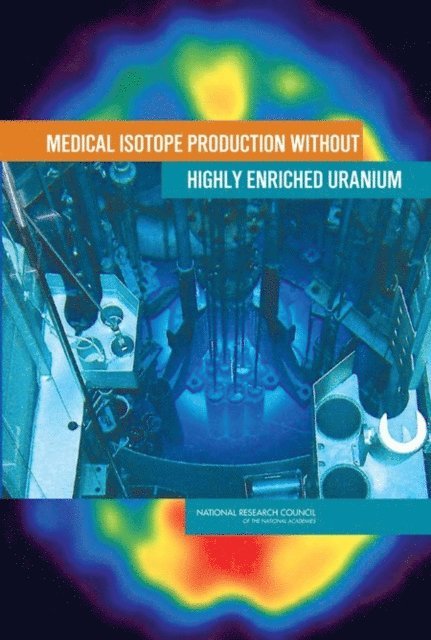
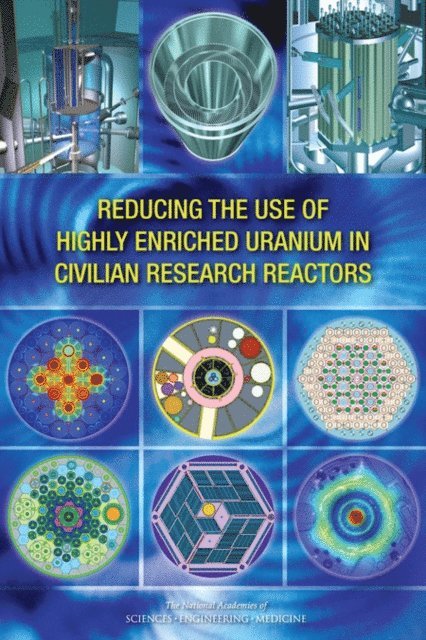
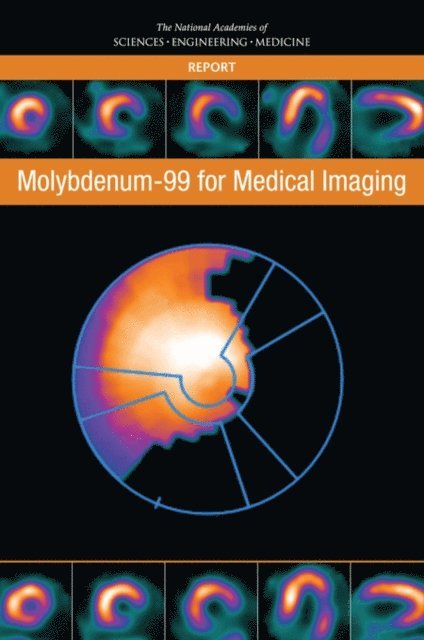
This book is the product of a congressionally mandated study to examine the feasibility of eliminating the use of highly enriched uranium (HEU2) in reactor fuel, reactor targets, and medical isotope production facilities. The book focuses primarily on the use of HEU for the production of the medical isotope molybdenum-99 (Mo-99), whose decay product, technetium-99m3 (Tc-99m), is used in the majority of medical diagnostic imaging procedures in the United States, and secondarily on the use of HEU for research and test reactor fuel. The supply of Mo-99 in the U.S. is likely to be unreliable until newer production sources come online. The reliability of the current supply system is an important medical isotope concern; this book concludes that achieving a cost difference of less than 10 percent in facilities that will need to convert from HEU- to LEU-based Mo-99 production is much less important than is reliability of supply.
923 kr
Skickas
738 kr
Läs direkt efter köp
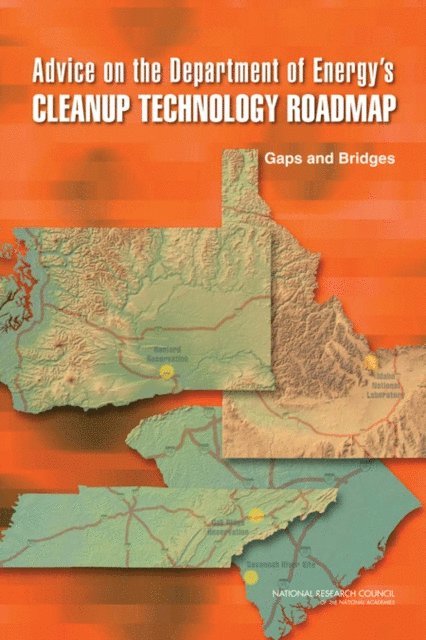
Beginning with the Manhattan Project and continuing through the Cold War, the United States government constructed and operated a massive industrial complex to produce and test nuclear weapons and related technologies. When the Cold War ended, most of this complex was shut down permanently or placed on standby, and the United States government began a costly, long-term effort to clean up the materials, wastes, and environmental contamination resulting from its nuclear materials production. In 1989, Congress created the Office of Environmental Management (EM) within the Department of Energy (DOE) to manage this cleanup effort. Although EM has already made substantial progress, the scope of EM''s future cleanup work is enormous. Advice on the Department of Energy''s Cleanup Technology Roadmap: Gaps and Bridges provides advice to support the development of a cleanup technology roadmap for EM. The book identifies existing technology gaps and their priorities, strategic opportunities to leverage needed research and development programs with other organizations, needed core capabilities, and infrastructure at national laboratories and EM sites that should be maintained, all of which are necessary to accomplish EM''s mission.
919 kr
Läs direkt efter köp
Advancing Nuclear Medicine Through Innovation highlights the exciting emerging opportunities in nuclear medicine, which include assessing the efficacy of new drugs in development, individualizing treatment to the patient, and understanding the biology of human diseases. Health care and pharmaceutical professionals will be most interested in this book''s examination of the challenges the field faces and its recommendations for ways to reduce these impediments.
276 kr
Läs direkt efter köp
To improve screening of containerized cargo for nuclear and radiological material that might be entering the United States, the Department of Homeland Security (DHS) is seeking to deploy new radiation detectors, called advanced spectroscopic portals (ASPs). The ASPs are intended to replace some or all of the current system of radiation portal monitors (called PVT RPMs) used in conjunction with handheld radioisotope identifiers (RIIDs) to detect and identify radioactive material in cargo. The U.S. Congress required the Secretary of Homeland Security to certify that ASPs will provide a ''significant increase in operational effectiveness'' over continued use of the existing screening devices before DHS can proceed with full-scale procurement of ASPs for deployment. Congress also directed DHS to request this National Research Council study to advise the Secretary of Homeland Security about testing, analysis, costs, and benefits of the ASPs prior to the certification decision. This interim report is based on testing done before 2008; on plans for, observations of, and preliminary results from tests done in 2008; and on the agency''s draft cost-benefit analysis as of October 2008. The book provides advice on how DHS'' Domestic Nuclear Detection Office (DNDO) can complete and make more rigorous its ASP evaluation for the Secretary and the nation.
919 kr
Läs direkt efter köp
This book is the product of a congressionally mandated study to examine the feasibility of eliminating the use of highly enriched uranium (HEU2) in reactor fuel, reactor targets, and medical isotope production facilities. The book focuses primarily on the use of HEU for the production of the medical isotope molybdenum-99 (Mo-99), whose decay product, technetium-99m3 (Tc-99m), is used in the majority of medical diagnostic imaging procedures in the United States, and secondarily on the use of HEU for research and test reactor fuel. The supply of Mo-99 in the U.S. is likely to be unreliable until newer production sources come online. The reliability of the current supply system is an important medical isotope concern; this book concludes that achieving a cost difference of less than 10 percent in facilities that will need to convert from HEU- to LEU-based Mo-99 production is much less important than is reliability of supply.
390 kr
Läs direkt efter köp
The Department of Energy''s Office of Environmental Management is developing a technology roadmap to guide planning and possible future congressional appropriations for its technology development programs. It asked the National Research Council of the National Academies to provide technical and strategic advice to support the development and implementation of this roadmap, specifically by undertaking a study that identifies principal science and technology gaps and their priorities for the cleanup program based on previous National Academies reports, updated and extended to reflect current site conditions and EM priorities and input form key external groups, such as the Nuclear Regulatory Commission, Defense Nuclear Facilities Safety Board, Environmental Protection Agency, and state regulatory agencies. In response, this book provides a high-level synthesis of principal science and technology gaps identified in previous NRC reports in part 1. Part 2 summarizes a workshop meant to bring together the key external groups to discuss current site conditions and science and technology needs.
682 kr
Läs direkt efter köp
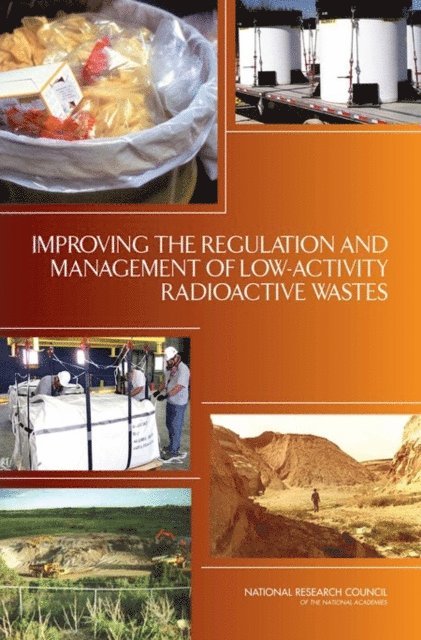
The largest volumes of radioactive wastes in the United States contain only small amounts of radioactive material. These low-activity wastes (LAW) come from hospitals, utilities, research institutions, and defense installations where nuclear material is used. Millions of cubic feet of LAW also arise every year from non-nuclear enterprises such as mining and water treatment. While LAW present much less of a radiation hazard than spent nuclear fuel or high-level radioactive wastes, they can cause health risks if controlled improperly.
Improving the Regulation and Management of Low-Activity Radioactive Wastes asserts that LAW should be regulated and managed according to the degree of risk they pose for treatment, storage, and disposal. Current regulations are based primarily on the type of industry that produced the waste—the waste''s origin—rather than its risk. In this report, a risk-informed approach for regulating and managing all types of LAW in the United States is proposed. Implemented in a gradual or stepwise fashion, this approach combines scientific risk assessment with public values and perceptions. It focuses on the hazardous properties of the waste in question and how they compare with other waste materials. The approach is based on established principles for risk-informed decision making, current risk-informed initiatives by waste regulators in the United States and abroad, solutions available under current regulatory authorities, and remedies through new legislation when necessary.
698 kr
Läs direkt efter köp
1 055 kr
Läs direkt efter köp
Beginning with the Manhattan Project and continuing through the Cold War, the United States government constructed and operated a massive industrial complex to produce and test nuclear weapons and related technologies. When the Cold War ended, most of this complex was shut down permanently or placed on standby, and the United States government began a costly, long-term effort to clean up the materials, wastes, and environmental contamination resulting from its nuclear materials production. In 1989, Congress created the Office of Environmental Management (EM) within the Department of Energy (DOE) to manage this cleanup effort. Although EM has already made substantial progress, the scope of EM''s future cleanup work is enormous. Advice on the Department of Energy''s Cleanup Technology Roadmap: Gaps and Bridges provides advice to support the development of a cleanup technology roadmap for EM. The book identifies existing technology gaps and their priorities, strategic opportunities to leverage needed research and development programs with other organizations, needed core capabilities, and infrastructure at national laboratories and EM sites that should be maintained, all of which are necessary to accomplish EM''s mission.
401 kr
Läs direkt efter köp
390 kr
Läs direkt efter köp
The world''s first nuclear bomb was a developed in 1954 at a site near the town of Los Alamos, New Mexico. Designated as the Los Alamos National Laboratory (LANL) in 1981, the 40-square-mile site is today operated by Log Alamos National Security LLC under contract to the National Nuclear Security Administration (NNSA) of the U.S. Department of Energy (DOE). Like other sites in the nation''s nuclear weapons complex, the LANL site harbors a legacy of radioactive waste and environmental contamination. Radioactive materials and chemical contaminants have been detected in some portions of the groundwater beneath the site.
Under authority of the U.S. Environmental Protection Agency, the State of New Mexico regulates protection of its water resources through the New Mexico Environment Department (NMED). In 1995 NMED found LANL''s groundwater monitoring program to be inadequate. Consequently LANL conducted a detailed workplan to characterize the site''s hydrogeology in order to develop an effective monitoring program. The study described in Plans and Practices for Groundwater Protection at the Los Alamos National Laboratory: Final Report was initially requested by NNSA, which turned to the National Academies for technical advice and recommendations regarding several aspects of LANL''s groundwater protection program. The DOE Office of Environmental Management funded the study. The study came approximately at the juncture between completion of LANL''s hydrogeologic workplan and initial development of a sitewide monitoring plan.
1 055 kr
Läs direkt efter köp
1 086 kr
Läs direkt efter köp
Ever since the United States began producing and testing nuclear weapons during World War II, the effects of ionizing radiation on human health and the environment have been a serious public concern. The Worker and Public Health Activities Program was established more than 20 years ago to study the consequences of exposure to ionizing radiation and other hazardous materials from Department of Energy operations to workers and members of the surrounding communities. In 2005, the National Academies convened an expert committee to conduct a review of the Worker and Public Health Activities Program, which is operated by the Department of Health and Human Services (HHS) at Department of Energy (DOE) nuclear facilities under a Memorandum of Understanding (MOU) with DOE.Review of the Worker and Public Health Activities Program Administered by the Department of Energy and the Department of Health and Human Services concludes that the program has used sound research methods and generally has enhanced public understanding of the risks involved. However, the report recommends that more two-way communication between the agencies and workers and members of the public is needed. The report also explores the ways in which the agencies involved could develop a more coordinated, effective, and thorough evaluation of the public health concerns involved in cleanup and remediation activities at Department of Energy sites.
276 kr
Läs direkt efter köp
Discharges of wastes from activities associated with the federal government''s Los Alamos site in northern New Mexico began during the Manhattan Project in 1943. Now designated the Los Alamos National Laboratory (LANL), the site is operated under contract by the Department of Energy (DOE). Through past and ongoing investigations, radioactive and chemical contaminants have been detected in parts of the complex system of groundwater beneath the site. Since effective protection of groundwater is important for LANL''s continuing operations, DOE''s Office of Environmental Management requested technical advice and recommendations regarding several aspects of LANL''s groundwater protection program. This interim report summarizes the committee''s information-gathering activities and identifies issues within the scope of its task that have risen to the committee''s attention without offering any findings or recommendations. The final report is expected to be released in May 2007 and it is the hope that results of the final study will provide guidance and impetus for dialogue and agreement among DOE, LANL, and other stakeholders on a focused, cost-effective program for protecting the groundwater in and around the site.
390 kr
Läs direkt efter köp
811 kr
Läs direkt efter köp
The so-called nuclear renaissance has increased worldwide interest in nuclear power. This potential growth also has increased, in some quarters, concern that nonproliferation considerations are not being given sufficient attention. In particular, since introduction of many new power reactors will lead to requiring increased uranium enrichment services to provide the reactor fuel, the proliferation risk of adding enrichment facilities in countries that do not have them now led to proposals to provide the needed fuel without requiring indigenous enrichment facilities. Similar concerns exist for reprocessing facilities.
Internationalization of the Nuclear Fuel Cycle summarizes key issues and analyses of the topic, offers some criteria for evaluating options, and makes findings and recommendations to help the United States, the Russian Federation, and the international community reduce proliferation and other risks, as nuclear power is used more widely.
This book is intended for all those who are concerned about the need for assuring fuel for new reactors and at the same time limiting the spread of nuclear weapons. This audience includes the United States and Russia, other nations that currently supply nuclear material and technology, many other countries contemplating starting or growing nuclear power programs, and the international organizations that support the safe, secure functioning of the international nuclear fuel cycle, most prominently the International Atomic Energy Agency.
349 kr
Skickas inom 3-6 vardagar
187 kr
Läs direkt efter köp
This letter is the abbreviated version of an update of the interim report on testing, evaluation, costs, and benefits of advanced spectroscopic portals (ASPs), issued by the National Academies'' Committee on Advanced Spectroscopic Portals in June 2009 (NRC 2009). This letter incorporates findings of the committee since that report was written, and it sharpens and clarifies the messages of the interim report based on subsequent committee investigations of more recent work by the Domestic Nuclear Detection Office (DNDO). The key messages in this letter, which is the final report from the committee, are stated briefly in the synopsis on the next page and described more fully in the sections that follow. The committee provides the context for this letter, and then gives advice on: testing, evaluation, assessing costs and benefits, and deployment of advanced spectroscopic portals. The letter closes with a reiteration of the key points.
The letter is abbreviated in that a small amount of information that may not be released publicly for security or law-enforcement reasons has been redacted from the version delivered to you in October 2010, but the findings and recommendations remain intact.
401 kr
Läs direkt efter köp
To improve screening of containerized cargo for nuclear and radiological material that might be entering the United States, the Department of Homeland Security (DHS) is seeking to deploy new radiation detectors, called advanced spectroscopic portals (ASPs). The ASPs are intended to replace some or all of the current system of radiation portal monitors (called PVT RPMs) used in conjunction with handheld radioisotope identifiers (RIIDs) to detect and identify radioactive material in cargo. The U.S. Congress required the Secretary of Homeland Security to certify that ASPs will provide a ''significant increase in operational effectiveness'' over continued use of the existing screening devices before DHS can proceed with full-scale procurement of ASPs for deployment. Congress also directed DHS to request this National Research Council study to advise the Secretary of Homeland Security about testing, analysis, costs, and benefits of the ASPs prior to the certification decision. This interim report is based on testing done before 2008; on plans for, observations of, and preliminary results from tests done in 2008; and on the agency''s draft cost-benefit analysis as of October 2008. The book provides advice on how DHS'' Domestic Nuclear Detection Office (DNDO) can complete and make more rigorous its ASP evaluation for the Secretary and the nation.
714 kr
Läs direkt efter köp
The Department of Energy''s Office of Environmental Management (DOE-EM) is responsible for cleaning up radioactive waste and environmental contamination resulting from five decades of nuclear weapons production and testing. A major focus of this program involves the retrieval, processing, and immobilization of waste into stable, solid waste forms for disposal. Waste Forms Technology and Performance, a report requested by DOE-EM, examines requirements for waste form technology and performance in the cleanup program. The report provides information to DOE-EM to support improvements in methods for processing waste and selecting and fabricating waste forms. Waste Forms Technology and Performance places particular emphasis on processing technologies for high-level radioactive waste, DOE''s most expensive and arguably most difficult cleanup challenge. The report''s key messages are presented in ten findings and one recommendation.
187 kr
Läs direkt efter köp
A nuclear weapon or a significant quantity of special nuclear material (SNM) would be of great value to a terrorist or other adversary. It might have particular value if acquired from a U.S. facility—in addition to acquiring a highly destructive tool, the adversary would demonstrate an inability of the United States to protect its nuclear assets. The United States expends considerable resources toward maintaining effective security at facilities that house its nuclear assets. However, particularly in a budget-constrained environment, it is essential that these assets are also secured efficiently, meaning at reasonable cost and imposing minimal burdens on the primary missions of the organizations that operate U.S. nuclear facilities.
It is in this context that the U.S. Congress directed the National Nuclear Security Administration (NNSA)—a semi-autonomous agency in the U.S. Department of Energy (DOE) responsible for securing nuclear weapons and significant quantities of SNM—asked the National Academies for advice on augmenting its security approach, particularly on the applicability of quantitative and other risk-based approaches for securing its facilities. In carrying out its charge, the committee has focused on what actions NNSA could take to make its security approach more effective and efficient.
The committee concluded that the solution to balancing cost, security, and operations at facilities in the nuclear weapons complex is not to assess security risks more quantitatively or more precisely. This is primarily because there is no comprehensive analytical basis for defining the attack strategies that a malicious, creative, and deliberate adversary might employ or the probabilities associated with them. However, using structured thinking processes and techniques to characterize security risk could improve NNSA''s understanding of security vulnerabilities and guide more effective resource allocation.
195 kr
Läs direkt efter köp
A nuclear weapon or a significant quantity of special nuclear material (SNM) would be of great value to a terrorist or other adversary. It might have particular value if acquired from a U.S. facility—in addition to acquiring a highly destructive tool, the adversary would demonstrate an inability of the United States to protect its nuclear assets. The United States expends considerable resources toward maintaining effective security at facilities that house its nuclear assets. However, particularly in a budget-constrained environment, it is essential that these assets are also secured efficiently, meaning at reasonable cost and imposing minimal burdens on the primary missions of the organizations that operate U.S. nuclear facilities.
It is in this context that the U.S. Congress directed the National Nuclear Security Administration (NNSA)—a semi-autonomous agency in the U.S. Department of Energy (DOE) responsible for securing nuclear weapons and significant quantities of SNM—asked the National Academies for advice on augmenting its security approach, particularly on the applicability of quantitative and other risk-based approaches for securing its facilities. In carrying out its charge, the committee has focused on what actions NNSA could take to make its security approach more effective and efficient.
The committee concluded that the solution to balancing cost, security, and operations at facilities in the nuclear weapons complex is not to assess security risks more quantitatively or more precisely. This is primarily because there is no comprehensive analytical basis for defining the attack strategies that a malicious, creative, and deliberate adversary might employ or the probabilities associated with them. However, using structured thinking processes and techniques to characterize security risk could improve NNSA''s understanding of security vulnerabilities and guide more effective resource allocation.