Committee on the Management of Certain Radioactive Waste Streams Stored in Tanks at Three Department of Energy Sites – författare
Visar alla böcker från författaren . Handla med fri frakt och snabb leverans.
6 produkter
6 produkter
E-bok
Engelska, 20061 093 kr
Läs direkt efter köp
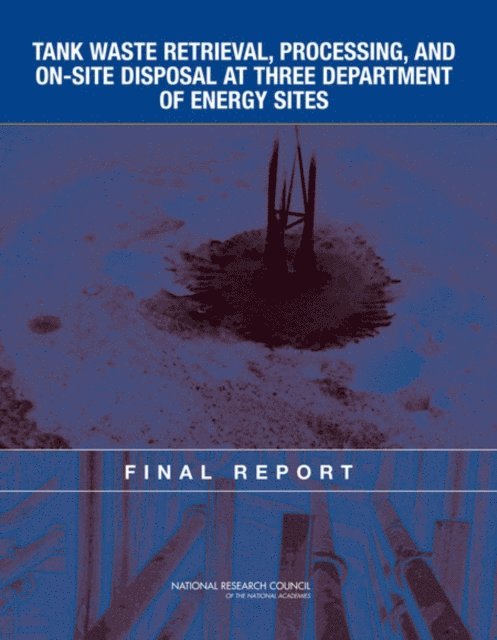
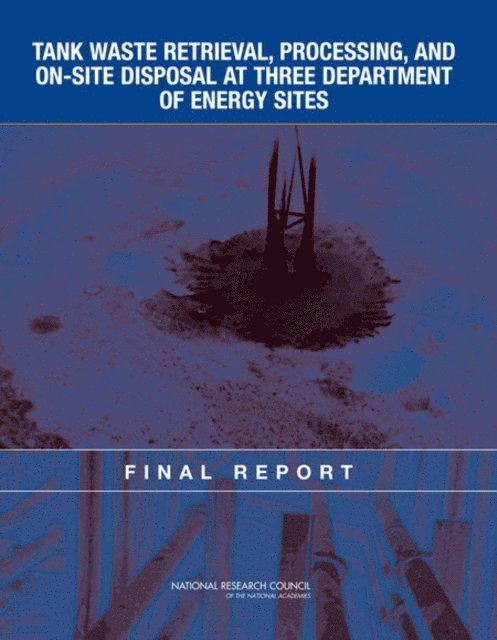
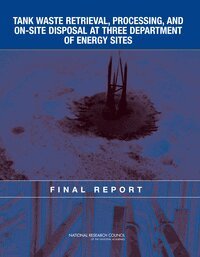
DOE Tank Waste: How clean is clean enough? The U.S. Congress asked the National Academies to evaluate the Department of Energy''s (DOE''s) plans for cleaning up defense-related radioactive wastes stored in underground tanks at three sites: the Hanford Site in Washington State, the Savannah River Site in South Carolina, and the Idaho National Laboratory. DOE plans to remove the waste from the tanks, separate out high-level radioactive waste to be shipped to an off-site geological repository, and dispose of the remaining lower-activity waste onsite. The report concludes that DOE''s overall plan is workable, but some important challenges must be overcome—including the removal of residual waste from some tanks, especially at Hanford and Savannah River. The report recommends that DOE pursue a more risk-informed, consistent, participatory, and transparent for making decisions about how much waste to retrieve from tanks and how much to dispose of onsite. The report offers several other detailed recommendations to improve the technical soundness of DOE''s tank cleanup plans.
E-bok
Engelska, 2005404 kr
Läs direkt efter köp
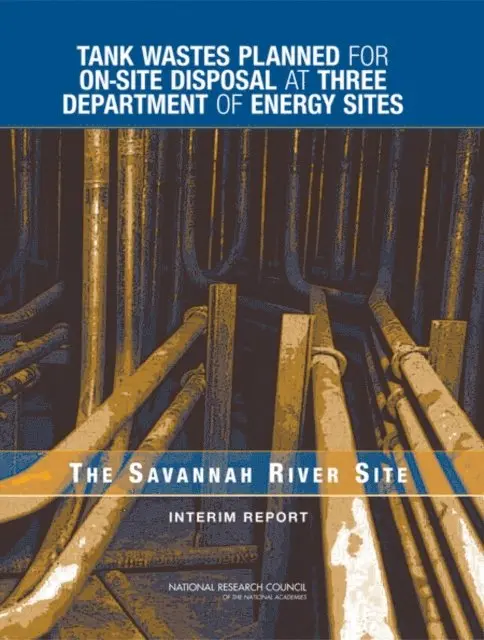
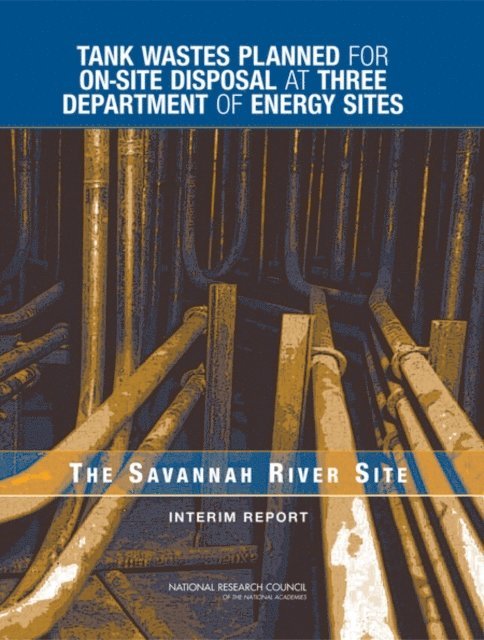
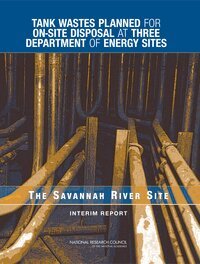
In response to a request from Congress, the U.S. Department of Energy (DOE) asked the National Academies to evaluate its plans for managing radioactive wastes from spent nuclear fuel at sites in Idaho, South Carolina, and Washington. This interim report evaluates storage facilities at the Savannah River Site in South Carolina, with a particular focus on plans to seal the tanks with grouting. The report finds that tanks at the site do not necessarily need to be sealed shut as soon as the bulk of the waste has been removed. Postponing permanent closure buys more time for the development and application of emerging technologies to remove and better immobilize residual waste, without increasing risks to the environment or delaying final closure of the "tank farms." The report also recommends alternatives to address the lack of tank space at the site, as well as the need for focused R&D activities to reduce the amount and improve the immobilization of residual waste in the tanks and to test some of the assumptions used in evaulating long-term risks at the site.
E-bok
PDF, Engelska, 2005278 kr
Läs direkt efter köp
In response to a request from Congress, the U.S. Department of Energy (DOE) asked the National Academies to evaluate its plans for managing radioactive wastes from spent nuclear fuel at sites in Idaho, South Carolina, and Washington. This interim report evaluates storage facilities at the Savannah River Site in South Carolina, with a particular focus on plans to seal the tanks with grouting. The report finds that tanks at the site do not necessarily need to be sealed shut as soon as the bulk of the waste has been removed. Postponing permanent closure buys more time for the development and application of emerging technologies to remove and better immobilize residual waste, without increasing risks to the environment or delaying final closure of the "tank farms." The report also recommends alternatives to address the lack of tank space at the site, as well as the need for focused R&D activities to reduce the amount and improve the immobilization of residual waste in the tanks and to test some of the assumptions used in evaulating long-term risks at the site.
E-bok
PDF, Engelska, 2006799 kr
Läs direkt efter köp
DOE Tank Waste: How clean is clean enough? The U.S. Congress asked the National Academies to evaluate the Department of Energy''s (DOE''s) plans for cleaning up defense-related radioactive wastes stored in underground tanks at three sites: the Hanford Site in Washington State, the Savannah River Site in South Carolina, and the Idaho National Laboratory. DOE plans to remove the waste from the tanks, separate out high-level radioactive waste to be shipped to an off-site geological repository, and dispose of the remaining lower-activity waste onsite. The report concludes that DOE''s overall plan is workable, but some important challenges must be overcome—including the removal of residual waste from some tanks, especially at Hanford and Savannah River. The report recommends that DOE pursue a more risk-informed, consistent, participatory, and transparent for making decisions about how much waste to retrieve from tanks and how much to dispose of onsite. The report offers several other detailed recommendations to improve the technical soundness of DOE''s tank cleanup plans.
Häftad, Engelska, 2005
494 kr
Tillfälligt slut
In response to a request from Congress, the U.S. Department of Energy (DOE) asked the National Academies to evaluate its plans for managing radioactive wastes from spent nuclear fuel at sites in Idaho, South Carolina, and Washington. This interim report evaluates storage facilities at the Savannah River Site in South Carolina, with a particular focus on plans to seal the tanks with grouting. The report finds that tanks at the site do not necessarily need to be sealed shut as soon as the bulk of the waste has been removed. Postponing permanent closure buys more time for the development and application of emerging technologies to remove and better immobilize residual waste, without increasing risks to the environment or delaying final closure of the "tank farms." The report also recommends alternatives to address the lack of tank space at the site, as well as the need for focused R&D activities to reduce the amount and improve the immobilization of residual waste in the tanks and to test some of the assumptions used in evaulating long-term risks at the site.
Häftad, Engelska, 2006
957 kr
Tillfälligt slut
DOE Tank Waste: How clean is clean enough? The U.S. Congress asked the National Academies to evaluate the Department of Energya (TM)s (DOEa (TM)s) plans for cleaning up defense-related radioactive wastes stored in underground tanks at three sites: the Hanford Site in Washington State, the Savannah River Site in South Carolina, and the Idaho National Laboratory. DOE plans to remove the waste from the tanks, separate out high-level radioactive waste to be shipped to an off-site geological repository, and dispose of the remaining lower-activity waste onsite. The report concludes that DOEa (TM)s overall plan is workable, but some important challenges must be overcomea "including the removal of residual waste from some tanks, especially at Hanford and Savannah River. The report recommends that DOE pursue a more risk-informed, consistent, participatory, and transparent for making decisions about how much waste to retrieve from tanks and how much to dispose of onsite. The report offers several other detailed recommendations to improve the technical soundness of DOE's tank cleanup plans.