Board on Radioactive Waste Management – författare
Visar alla böcker från författaren Board on Radioactive Waste Management. Handla med fri frakt och snabb leverans.
70 produkter
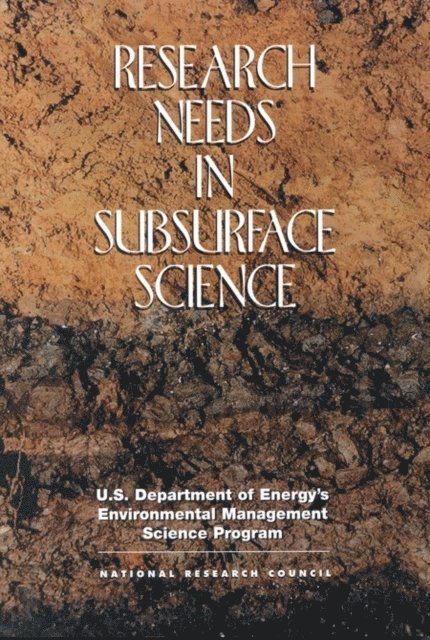
Research Needs in Subsurface Science
Av National Research Council, Water Science and Technology Board m. fl.
Häftad, 2000
1633 kr
Lägg i varukorg
Research Needs in Subsurface Science provides an overview of the subsurface contamination problems across the DOE complex and shows by examples from the six largest DOE sites (Hanford Site, Idaho Engineering and Environmental Laboratory, Nevada Test Site, Oak Ridge Reservation, Rocky Flats …
Improving the Characterization Program for Contact-Handled Transuranic Waste Bound for the Waste Isolation Pilot Plant
Av National Research Council, Division on Earth and Life Studies m. fl.
Häftad, 2004
781 kr
Lägg i varukorg
As operational experience is gained in the disposal of transuranic waste from nuclear weapons facilities at the Waste Isolation Pilot Plant in New Mexico, the Department of Energy (DOE) has opportunities to change how it a /characterizesa waste to confirm that it is appropriate for shipment to and …
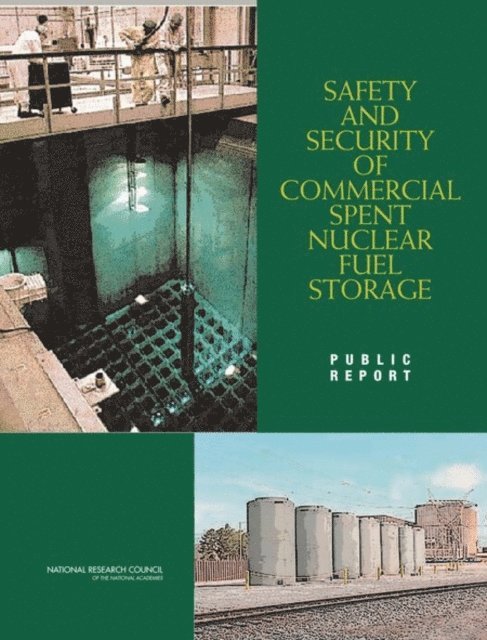
Safety and Security of Commercial Spent Nuclear Fuel Storage
Public Report
Av Committee on the Safety and Security of Commercial Spent Nuclear Fuel Storage, Board on Radioactive Waste Management m. fl.
E-bok, 2006
399 kr
Lägg i varukorg
In response to a request from Congress, the Nuclear Regulatory Commission and theDepartment of Homeland Security sponsored a National Academies study to assessthe safety and security risks of spent nuclear fuel stored in cooling pools and drycasks at commercial nuclear power plants. The information …
Natural Attenuation for Groundwater Remediation
Av Committee on Intrinsic Remediation, Water Science and Technology Board m. fl.
E-bok, 2000
831 kr
Lägg i varukorg
In the past decade, officials responsible for clean-up of contaminated groundwater have increasingly turned to natural attenuation-essentially allowing naturally occurring processes to reduce the toxic potential of contaminants-versus engineered solutions. This saves both money and headaches. To …
Risk and Decisions About Disposition of Transuranic and High-Level Radioactive Waste
Av Committee on Risk-Based Approaches for Disposition of Transuranic and High-Level Radioactive Waste, Board on Radioactive Waste Management m. fl.
E-bok, 2005
693 kr
Lägg i varukorg
The U.S. Department of Energy (DOE) manages dozens of sites across the nation that focus on research, design, and production of nuclear weapons and nuclear reactors for defense applications. Radioactive wastes at these sites pose a national challenge, and DOE is considering how to most effectively …
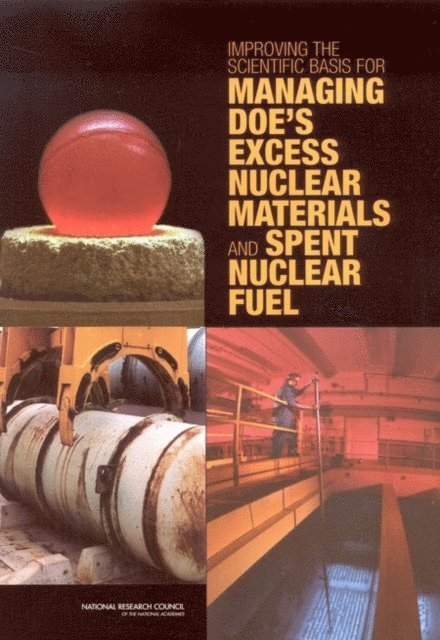
Improving the Scientific Basis for Managing DOE's Excess Nuclear Materials and Spent Nuclear Fuel
Av Committee on Improving the Scientific Basis for Managing Nuclear Materials and Spent Nuclear Fuel through the Environmental Management Science Program, Board on Radioactive Waste Management m. fl.
E-bok, 2003
606 kr
Lägg i varukorg
The production of nuclear materials for the national defense was an intense, nationwide effort that began with the Manhattan Project and continued throughout the Cold War. Now many of these product materials, by-products, and precursors, such as irradiated nuclear fuels and targets, have been …
End Points for Spent Nuclear Fuel and High-Level Radioactive Waste in Russia and the United States
Av Committee on End Points for Spent Nuclear Fuel and High-Level Radioactive Waste in Russia and the United States, Board on Radioactive Waste Management m. fl.
E-bok, 2003
693 kr
Lägg i varukorg
End Points for spent Nuclear Fuel and High-Level Radioactive Waste in Russian and the United States provides an analysis of the management of spent nuclear fuel and high-level radioactive waste in Russia and the United States, describing inventories, comparing approaches, and assessing the …
One Step at a Time
The Staged Development of Geologic Repositories for High-Level Radioactive Waste
Av Committee on Principles and Operational Strategies for Staged Repository Systems, Board on Radioactive Waste Management m. fl.
E-bok, 2003
797 kr
Lägg i varukorg
Compared to other large engineering projects, geologic repositories for high-level waste present distinctive challenges because: 1) they are first-of-a-kind, complex, and long-term projects that must actively manage hazardous materials for many decades: 2) they are expected to hold these hazardous …
Research Opportunities for Managing the Department of Energy's Transuranic and Mixed Wastes
Av Committee on Long-Term Research Needs for Managing Transuranic and Mixed Wastes at Department of Energy Sites, Board on Radioactive Waste Management m. fl.
E-bok, 2002
641 kr
Lägg i varukorg
About 155,000 cubic meters of waste contaminated with both radioactive isotopes and hazardous chemicals are stored at some 30 DOE sites, and another 450,000 cubic meters are buried. While DOE is making a concerted effort to properly dispose of this waste, the amount translates to a multi-decade …
Research Needs for High-Level Waste Stored in Tanks and Bins at U.S. Department of Energy Sites
Environmental Management Science Program
Av Committee on Long-Term Research Needs for Radioactive High-Level Waste at Department of Energy Sites, Board on Radioactive Waste Management m. fl.
E-bok, 2001
676 kr
Lägg i varukorg
The United States Department of Energy (DOE) has approximately 400 million liters (100 million gallons) of liquid high-level waste (HLW) stored in underground tanks and approximately 4,000 cubic meters of solid HLW stored in bins. The current DOE estimate of the cost of converting these liquid and …
Disposition of High-Level Waste and Spent Nuclear Fuel
The Continuing Societal and Technical Challenges
Av Committee on Disposition of High-Level Radioactive Waste Through Geological Isolation, Board on Radioactive Waste Management m. fl.
E-bok, 2001
624 kr
Lägg i varukorg
Focused attention by world leaders is needed to address the substantial challenges posed by disposal of spent nuclear fuel from reactors and high-level radioactive waste from processing such fuel. The biggest challenges in achieving safe and secure storage and permanent waste disposal are societal, …
Alternatives for High-Level Waste Salt Processing at the Savannah River Site
Av Committee on Cesium Processing Alternatives for High-Level Waste at the Savannah River Site, Board on Radioactive Waste Management m. fl.
E-bok, 2000
693 kr
Lägg i varukorg
The Second World War introduced the world to nuclear weapons and their consequences. Behind the scene of these nuclear weapons and an aspect of their consequences is radioactive waste. Radioactive waste has varying degrees of harmfulness and poses a problem when it comes to storage and disposal. …
Long-Term Institutional Management of U.S. Department of Energy Legacy Waste Sites
Av Committee on the Remediation of Buried and Tank Wastes, Board on Radioactive Waste Management m. fl.
E-bok, 2000
693 kr
Lägg i varukorg
It is now becoming clear that relatively few U.S. Department of Energy (DOE) waste sites will be cleaned up to the point where they can be released for unrestricted use. "Long-term stewardship" (activities to protect human health and the environment from hazards that may remain at its sites after …
Research Needs in Subsurface Science
Av U.S. Department of Energy's Environmental Management Science Program, Board on Radioactive Waste Management m. fl.
E-bok, 2000
1017 kr
Lägg i varukorg
Research Needs in Subsurface Science provides an overview of the subsurface contamination problems across the DOE complex and shows by examples from the six largest DOE sites (Hanford Site, Idaho Engineering and Environmental Laboratory, Nevada Test Site, Oak Ridge Reservation, Rocky Flats …
Improving the Characterization and Treatment of Radioactive Wastes for the Department of Energy's Accelerated Site Cleanup Program
Av Committee on Opportunities for Accelerating Characterization and Treatment of Waste at DOE Nuclear Weapons Sites, Board on Radioactive Waste Management m. fl.
E-bok, 2005
416 kr
Lägg i varukorg
The Department of Energy''s Office of Environmental Management (EM) directs the massive cleanup of more than 100 sites that were involved in the production of nuclear weapons materials during the Manhattan Project and the Cold War. This report offers suggestions for more effectively characterizing …
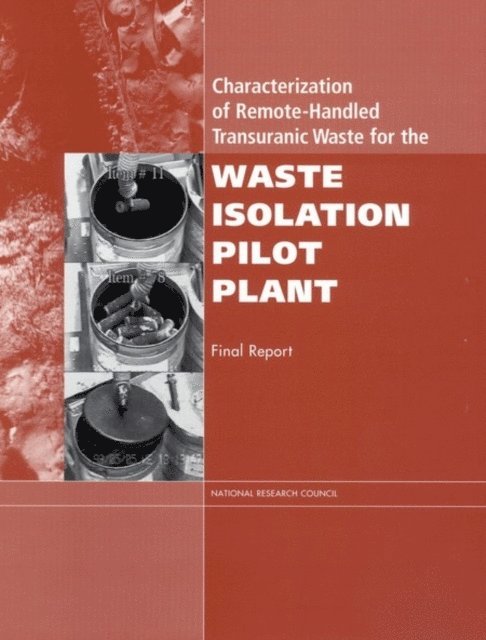
Characterization of Remote-Handled Transuranic Waste for the Waste Isolation Pilot Plant
Final Report
Av Committee on the Characterization of Remote-Handled Transuranic Waste for the Waste Isolation Pilot Plant, Board on Radioactive Waste Management m. fl.
E-bok, 2002
641 kr
Lägg i varukorg
The U.S. Department of Energy (DOE) disposes of plutonium-contaminated debris from its 27 nuclear weapons facilities at the Waste Isolation Pilot Plant (WIPP), an underground repository in Carlsbad, New Mexico. After four years of operational experience, DOE has opportunities to make changes to the …
Strategic Vision for Department of Energy Environmental Quality Research and Development
Av Committee on Building a Long-Term Environmental Quality Research and Development Program in the Department of Energy, Board on Radioactive Waste Management m. fl.
E-bok, 2001
1039 kr
Lägg i varukorg
The National Academies'' National Research Council undertook this study in response to a request from the Under Secretary of Energy to provide strategic advice on how the Department of Energy could improve its Environmental Quality R&D portfolio. The committee recommends that DOE develop strategic …
Improving Operations and Long-Term Safety of the Waste Isolation Pilot Plant
Final Report
Av Committee on the Waste Isolation Pilot Plant, Board on Radioactive Waste Management m. fl.
E-bok, 2001
695 kr
Lägg i varukorg
The Waste Isolation Pilot Plant (WIPP) is a deep underground mined facility for the disposal of transuranic waste resulting from the nation''s defense program. Transuranic waste is defined as waste contaminated with transuranic radionuclides with half-life greater than 20 years and activity greater …
Research Opportunities for Deactivating and Decommissioning Department of Energy Facilities
Av Committee on Long-Term Research Needs for Deactivation and Decommissioning at Department of Energy Sites, Board on Radioactive Waste Management m. fl.
E-bok, 2001
678 kr
Lägg i varukorg
When the Cold War abruptly ended, DOE halted most nuclear materials production. In 1995, Congress chartered DOE''s Environmental Management Science Program (EMSP) to bring the nation''s scientific infrastructure to bear on EM''s most difficult, long-term cleanup challenges. The EMSP provides grants …
Research and Development on a Salt Processing Alternative for High-Level Waste at the Savannah River Site
Av Committee on Radionuclide Separation Processes for High-Level Waste at the Savannah River Site, Board on Radioactive Waste Management m. fl.
E-bok, 2001
416 kr
Lägg i varukorg
The U.S. Department of Energy (DOE) is nearing a decision on how to process 30 million gallons of high-level radioactive waste salt solutions at the Savannah River Site in South Carolina to remove strontium, actinides, and cesium for immobilization in glass and eventual shipment to a geologic …
Improving Operations and Long-Term Safety of the Waste Isolation Pilot Plant
Interim Report
Av Committee on the Waste Isolation Pilot Plant, Board on Radioactive Waste Management m. fl.
E-bok, 2000
658 kr
Lägg i varukorg
The National Research Council convened a committee of experts to advise the U.S. Department of Energy (DOE) on the operation of the Waste Isolation Pilot Plant (WIPP), a geologic repository for disposal of defense transuranic (TRU) waste near Carlsbad, New Mexico. The committee was asked to provide …
Technologies for Environmental Management
The Department of Energy''s Office of Science and Technology
Av Board on Radioactive Waste Management, Environment and Resources Commission on Geosciences m. fl.
E-bok, 1999
416 kr
Lägg i varukorg
The Department of Energy''s Environmental Management Program (DOEEM) is one of the largest environmental clean up efforts in world history. The EM division charged with developing or finding technologies to accomplish this massive task, its Office of Science and Technology (OST), has been reviewed …
Disposition of High-Level Radioactive Waste Through Geological Isolation
Development, Current Status, and Technical and Policy Challenges
Av Board on Radioactive Waste Management, Environment and Resources Commission on Geosciences m. fl.
E-bok, 1999
295 kr
Lägg i varukorg
During the next several years, decisions are expected to be made in several countries on the further development and implementation of the geological disposition option. The Board on Radioactive Waste Management (BRWM) of the U.S. National Academies believes that informed and reasoned discussion of …
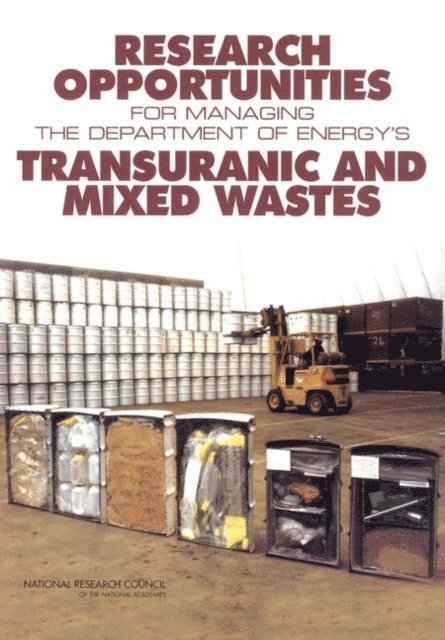
Research Opportunities for Managing the Department of Energy's Transuranic and Mixed Wastes
Av Committee on Long-Term Research Needs for Managing Transuranic and Mixed Wastes at Department of Energy Sites, Board on Radioactive Waste Management m. fl.
E-bok, 2002
429 kr
Lägg i varukorg
About 155,000 cubic meters of waste contaminated with both radioactive isotopes and hazardous chemicals are stored at some 30 DOE sites, and another 450,000 cubic meters are buried. While DOE is making a concerted effort to properly dispose of this waste, the amount translates to a multi-decade …
Long-Term Institutional Management of U.S. Department of Energy Legacy Waste Sites
Av Committee on the Remediation of Buried and Tank Wastes, Board on Radioactive Waste Management m. fl.
E-bok, 2000
624 kr
Lägg i varukorg
It is now becoming clear that relatively few U.S. Department of Energy (DOE) waste sites will be cleaned up to the point where they can be released for unrestricted use. "Long-term stewardship" (activities to protect human health and the environment from hazards that may remain at its sites after …
One Step at a Time
The Staged Development of Geologic Repositories for High-Level Radioactive Waste
Av Committee on Principles and Operational Strategies for Staged Repository Systems, Board on Radioactive Waste Management m. fl.
E-bok, 2003
551 kr
Lägg i varukorg
Compared to other large engineering projects, geologic repositories for high-level waste present distinctive challenges because: 1) they are first-of-a-kind, complex, and long-term projects that must actively manage hazardous materials for many decades: 2) they are expected to hold these hazardous …
End Points for Spent Nuclear Fuel and High-Level Radioactive Waste in Russia and the United States
Av Committee on End Points for Spent Nuclear Fuel and High-Level Radioactive Waste in Russia and the United States, Board on Radioactive Waste Management m. fl.
E-bok, 2003
494 kr
Lägg i varukorg
End Points for spent Nuclear Fuel and High-Level Radioactive Waste in Russian and the United States provides an analysis of the management of spent nuclear fuel and high-level radioactive waste in Russia and the United States, describing inventories, comparing approaches, and assessing the …
Research Needs for High-Level Waste Stored in Tanks and Bins at U.S. Department of Energy Sites
Environmental Management Science Program
Av Committee on Long-Term Research Needs for Radioactive High-Level Waste at Department of Energy Sites, Board on Radioactive Waste Management m. fl.
E-bok, 2001
477 kr
Lägg i varukorg
The United States Department of Energy (DOE) has approximately 400 million liters (100 million gallons) of liquid high-level waste (HLW) stored in underground tanks and approximately 4,000 cubic meters of solid HLW stored in bins. The current DOE estimate of the cost of converting these liquid and …
Improving the Scientific Basis for Managing DOE's Excess Nuclear Materials and Spent Nuclear Fuel
Av Committee on Improving the Scientific Basis for Managing Nuclear Materials and Spent Nuclear Fuel through the Environmental Management Science Program, Board on Radioactive Waste Management m. fl.
E-bok, 2003
425 kr
Lägg i varukorg
The production of nuclear materials for the national defense was an intense, nationwide effort that began with the Manhattan Project and continued throughout the Cold War. Now many of these product materials, by-products, and precursors, such as irradiated nuclear fuels and targets, have been …
Research Needs in Subsurface Science
Av U.S. Department of Energy's Environmental Management Science Program, Board on Radioactive Waste Management m. fl.
E-bok, 2000
736 kr
Lägg i varukorg
Research Needs in Subsurface Science provides an overview of the subsurface contamination problems across the DOE complex and shows by examples from the six largest DOE sites (Hanford Site, Idaho Engineering and Environmental Laboratory, Nevada Test Site, Oak Ridge Reservation, Rocky Flats …