A. Shimony - Böcker
Visar alla böcker från författaren A. Shimony. Handla med fri frakt och snabb leverans.
4 produkter
4 produkter
Del 234 - Boston Studies in the Philosophy and History of Science
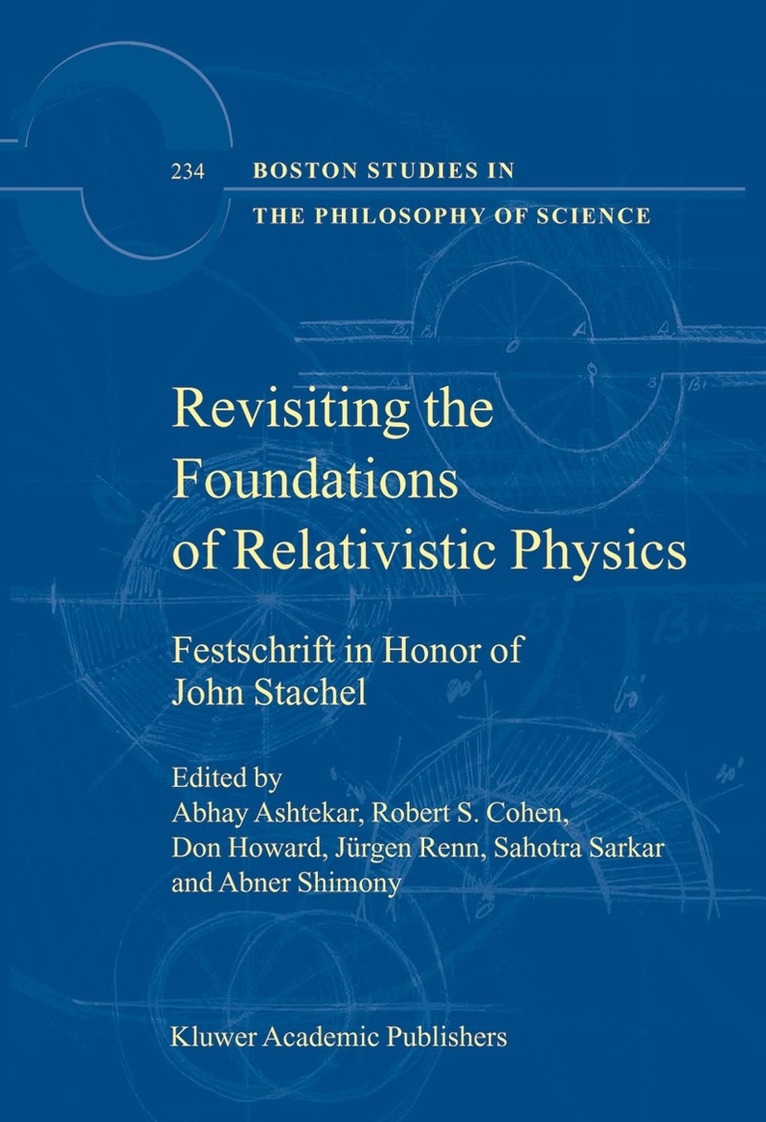
Revisiting the Foundations of Relativistic Physics
Festschrift in Honor of John Stachel
Inbunden, Engelska, 2003
1 590 kr
Skickas inom 10-15 vardagar
This book is for physicists, historians and philosophers of physics as well as students seeking an introduction to ongoing debates in relativistic and quantum physics. This title is unique in that: - it comprises contributions by leading physicists, philosophers and historians of science; - it covers the recent debates on the emergence of relativity and quantum theory; - it includes chapters with an introductory character, comprehensible to students and science teachers; - it can be used in graduate level courses in the history and philosophy of science; - it strengthens the bonds between the communities of scientists, historians, and philosophers.
1 590 kr
Skickas inom 10-15 vardagar
1. AIMS OF THE INTRODUCTION The systematic assessment of claims to knowledge is the central task of epistemology. According to naturalistic epistemologists, this task cannot be well performed unless proper attention is paid to the place of the knowing subject in nature. All philosophers who can appropriately be called 'naturalistic epistemologists' subscribe to two theses: (a) human beings, including their cognitive faculties, are entities in nature, inter acting with other entities studied by the natural sciences; and (b) the results of natural scientific investigations of human beings, particularly of biology and empirical psychology, are relevant and probably crucial to the epistemological enterprise. Naturalistic epistemologists differ in their explications of theses (a) and (b) and also in their conceptions of the proper admixture of other components needed for an adequate treatment of human knowledg- e.g., linguistic analysis, logic, decision theory, and theory of value. Those contributors to this volume who consider themselves to be naturalistic epistemologists (the majority) differ greatly in these respects. It is not my intention in this introduction to give a taxonomy of naturalistic epistemologies. I intend only to provide an overview which will stimulate a critical reading of the articles in the body of this volume, by facilitating a recognition of the authors' assumptions, emphases, and omissions.
Del 234 - Boston Studies in the Philosophy and History of Science
Revisiting the Foundations of Relativistic Physics
Festschrift in Honor of John Stachel
Häftad, Engelska, 2010
1 590 kr
Skickas inom 10-15 vardagar
This book is for physicists, historians and philosophers of physics as well as students seeking an introduction to ongoing debates in relativistic and quantum physics. This title is unique in that: - it comprises contributions by leading physicists, philosophers and historians of science; - it covers the recent debates on the emergence of relativity and quantum theory; - it includes chapters with an introductory character, comprehensible to students and science teachers; - it can be used in graduate level courses in the history and philosophy of science; - it strengthens the bonds between the communities of scientists, historians, and philosophers.
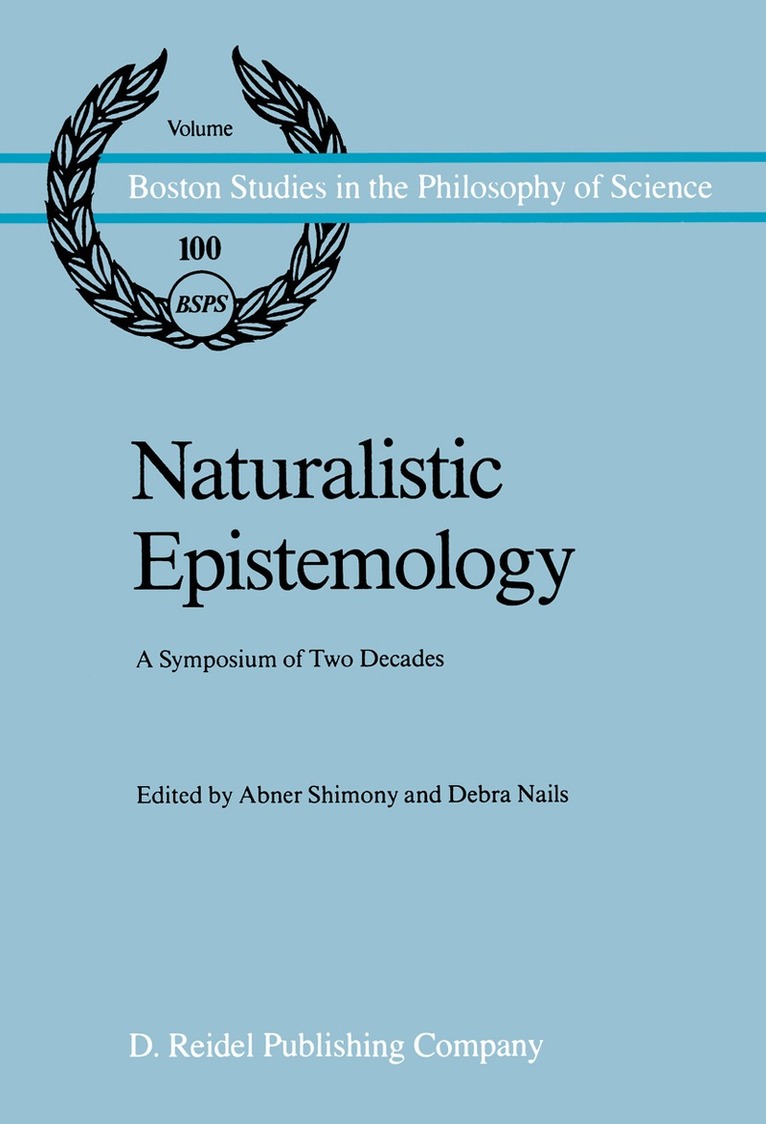
Del 100 - Boston Studies in the Philosophy and History of Science
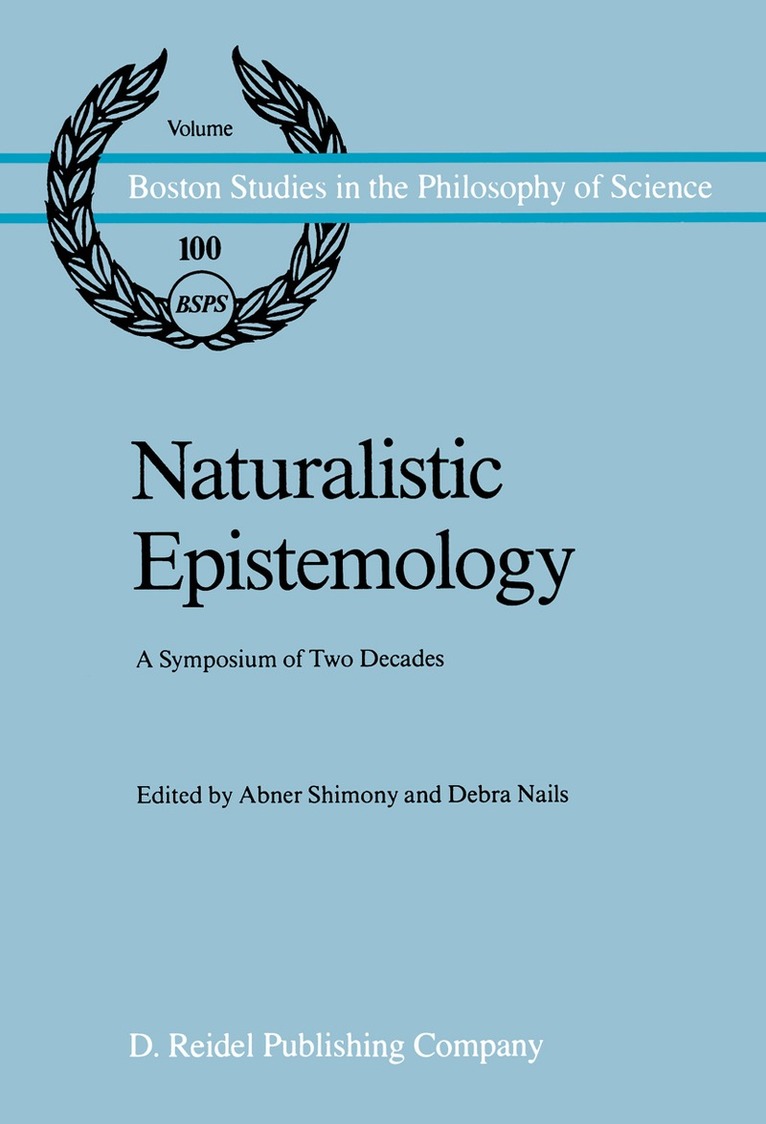
Naturalistic Epistemology
A Symposium of Two Decades
Häftad, Engelska, 2012
1 590 kr
Skickas inom 10-15 vardagar
1. AIMS OF THE INTRODUCTION The systematic assessment of claims to knowledge is the central task of epistemology. According to naturalistic epistemologists, this task cannot be well performed unless proper attention is paid to the place of the knowing subject in nature. All philosophers who can appropriately be called 'naturalistic epistemologists' subscribe to two theses: (a) human beings, including their cognitive faculties, are entities in nature, inter acting with other entities studied by the natural sciences; and (b) the results of natural scientific investigations of human beings, particularly of biology and empirical psychology, are relevant and probably crucial to the epistemological enterprise. Naturalistic epistemologists differ in their explications of theses (a) and (b) and also in their conceptions of the proper admixture of other components needed for an adequate treatment of human knowledg- e.g., linguistic analysis, logic, decision theory, and theory of value. Those contributors to this volume who consider themselves to be naturalistic epistemologists (the majority) differ greatly in these respects. It is not my intention in this introduction to give a taxonomy of naturalistic epistemologies. I intend only to provide an overview which will stimulate a critical reading of the articles in the body of this volume, by facilitating a recognition of the authors' assumptions, emphases, and omissions.