ABCI Kristen Noakes-Fry – författare
406 kr
Läs direkt efter köp
803 kr
Läs direkt efter köp
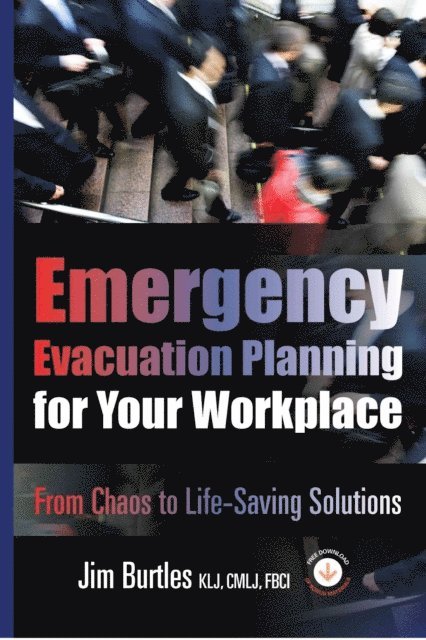
Would your routine office fire drill be able to handle the large-scale chaos of a major disaster? Can you get everyone out safely in the face of a factory fire, explosion, or natural disaster? In Emergency Evacuation Planning for Your Workplace: From Chaos to Life-Saving Solutions, Jim Burtles leads you step-by-step through a planning methodology that saves lives. You can be assured your company will be ready and that everyone will know what to do -- whatever the nature of the emergency.
In one practical, easy-to-read resource, Burtles helps you create a comprehensive plan to evacuate people of all ages and health conditions from workplaces such as small offices, skyscrapers, stores, industrial plants, hospitals, college campuses, and more. His carefully constructed methodology leads you through the development of organization-wide plans - ensuring that your procedures align with best practices, relevant regulations, sound governance, and corporate responsibility.
His five stages of an Emergency Evacuation Planning (EEP) Lifecycle include:
Set up the EEP program – Bring management on board, get executive buy-in and policy approval to proceed.Embed EEP into the corporate culture – Begin your awareness campaign immediately, getting the message out to the community you are serving.Understand the environment – Explore which areas of the organization have emergency plans and which need to be covered in your overall EEP/Agree upon an EEP strategy – Work closely with people who know the premises to identify threats that could trigger an emergency, and visit and evaluate potential exit points.Develop evacuation procedures – Look at the people, their probable locations, their existing challenges. Determine if you will need one plan or a suite of plans.Exercise and maintain the EEP– Run regular exercises to familiarize everyone with plans and choices – as often as needed to accommodate changing personnel and individual needs. Because this a long-term process, go back to the earlier parts of the cycle and review the plan to keep it current.Thought-provoking discussion questions, real-life case studies and examples, comprehensive index, and detailed glossary facilitate both college and professional instruction.
Downloadable resources and tools – practical toolkit full of innovative and field-tested plans, forms, checklists, tips, and tools to support you as you set up effective workplace evacuation procedures.
Instructor''s Manual available for use by approved adopters in college courses and professional development training.
508 kr
Läs direkt efter köp
Finally – a people management guide that goes way beyond the typical "problem employee" books to help you understand and manage the entire emotional culture of your organization. Many of us have witnessed – sometimes in helpless horror – how a simple problem can spin into a corporate crisis as people take sides, outside professionals are brought in, and company reputations suffer, as this description illustrates: "Everything was exposed and raw as if a common energy had stripped away the veneer of civilized behaviors...People took sides, hid, ran, quit, overworked, underworked, ate too much, drank more, complained more, went silent, changed jobs, exited. They reacted as if all their system had been tossed into the air and was never going to land again." This wasn''t the scene of a criminal act, earthquake, or terrorist attack. Rather, it was the disruptive and costly outcome of months of escalating workplace tension in the wake of changed management policies. Like a tornado, two violent co-workers had left 600 others in emotional rubble. That company could have been prepared with corporate policies and procedures to defuse such emotionally charged situations - long before alarming human and financial costs hit its bottom line. Managers could have learned to recognize and stop “emotional spinning” from gathering destructive force. The old paradigm of separating humans from humanity during work hours is not only antiquated thinking, it''s high risk corporate behavior.“Dr. Vali” calls her ground-breaking solution Emotional Continuity Management. She provides tools you can use right now to avoid costs in decreased productivity, injured goodwill, employee turnover, plummeting employee engagement, and severed business relationships.In this practical book, Dr. Vali gives you:Real-life case studies that show you how to calculate bottom line, dollars and cents costs of disruptive employees and managers and emotionally charged incidents.Proven techniques to help you identify variations in behavior that are early warning signs of trouble. She compares them to “tornado warnings” and provides a 5-point scale.An understanding of the psychology driving “emotional terrorists,” who stage themselves as victims and gather an army of acolytes to assist in their campaigns of emotional disruption, and a game-plan for managing such attacks before, during and after an event.Practical tools for managing workplace emotions before, during and after an emergency, based on the author’s extensive on-the-ground experience in counseling first responders and victims during major national and international disasters.Policies and procedures for working with military veterans returning to the workplace - and the need to deal with PTSD.Techniques for containing and mitigating the damage created by workplace bullies - and when to decide if an "amputation" is required or a less-extreme strategy is needed.Sample policies and plans, and detailed instructions for company-wide training programs, up and down the organization.
529 kr
Läs direkt efter köp
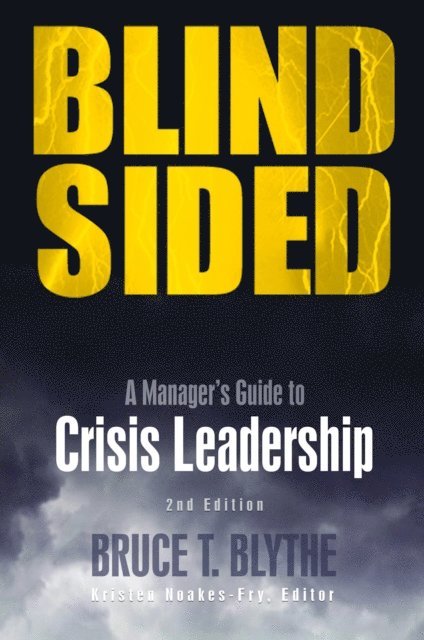
When "blindsided" by a crisis, are you ready to be the real leader who brings strength of character and split-second action to restore a "new normal"? Workplace violence, natural disaster, or worse -- it comes down to who you are and what you do in the face of the test. Learn time-tested skills to make a difference in a crisis! In this new, completely updated and expanded 2nd edition of Bruce Blythe''s Blindsided, he walks you through the foolproof step-by-step system to become the kind of leader he calls a "crisis whisperer." Result: You will never be "blindsided" again!
In the first half of the book, Blythe lands you in the middle of a fast-breaking crisis – an active shooter in the corridor outside your office -- and uses real-world case studies, examples, and checklists to show what a top-notch leader would need to do in each phase of the crisis. Then, in the second half of the book, he demonstrates how to apply this knowledge to develop and implement your own crisis management plan.Blindsided is two books in one: Crisis Response and Crisis Preparedness.
NEW in the 2nd edition:
How to apply the "Reasonable Person Test" and "Wall Street Journal Test" to crisis decision management decisions in advance. New chapter on Reputation Management shows how to make the right decisions, before reputation and bottom line suffer!How to avoid falling into the "Crisis Red Zone," in which your leadership effectiveness can evaporate.How to lead the workforce into a "New Normal," even in the wake of the most upsetting and disorienting crisis.How to develop Crisis Response Teams as part of your Crisis Management Plan - selecting and training the right people for the job.How to anticipate important Crisis Management risks that are trending and will be part of your future - and how to prepare for them in a Crisis Management Plan that works for today and tomorrow.Practical forms, checklists, cases studies, real-life examples, glossary, index, discussion questions, and other take-and-use tools:
Quick use response guide at the end of each chapter - all 15 can form a handy pocket guide.Incident checklists for 9 major types of crisis - accidental death, chemical/toxic exposure, earthquake, and more.Special guide for organizing in advance to address the needs of families of those who are injured or lost in an event - with sample conversations.Instructor''s Manual and 300+ classroom slides available upon book adoption.
Professors: Request a complimentary copy.
QUOTES
“Takes the reader through some of the toughest moments in the life of a leader…moments that create legendary leaders or cut short promising careers.” - Daniel Diermeier, Dean of the Harris School of Public Policy and Emmett Dedmon Professor of Public Administration, University of Chicago
"Having served as CEO of a Fortune 500 company, I can personally attest to the value of the crisis management system Blythe outlines." - Luke R. Corbett, Lead Independent Director of OGE Energy Corporation and Former Chairman and Chief Executive Officer of Kerr-McGee Corporation.
“I loved the first edition…and Bruce''s experience and insight since that time has expanded to make this [second edition]…an advanced textbook which incorporates the many substantial changes in our world over the past decade – from the expansion of terrorism to communicative diseases to the role of the Internet in all crises.” – Jonathan Bernstein, President of Bernstein Crisis Management, Inc.
1 503 kr
Läs direkt efter köp
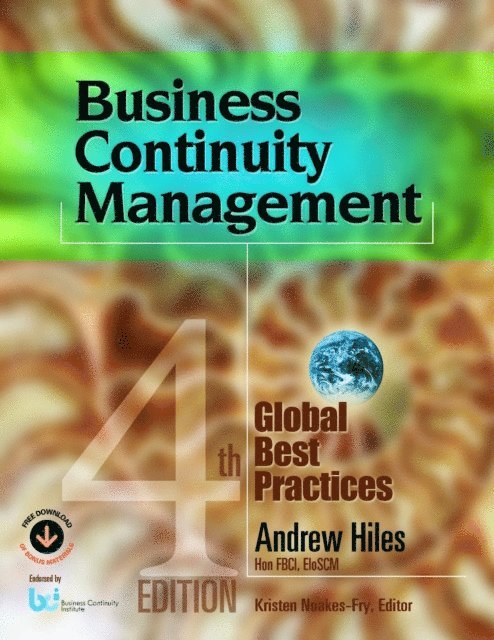
At this critical point in your Business Continuity Management studies and research, you need one definitive, comprehensive professional textbook that will take you to the next step. In his 4th edition of Business Continuity Management: Global Best Practices, Andrew Hiles gives you a wealth of real-world analysis and advice – based on international standards and grounded in best practices -- a textbook for today, a reference for your entire career. With so much to learn in this changing profession, you don''t want to risk missing out on something you’ll need later.
Does one of these describe you?
Preparing for a Business Continuity Management career, needing step-by-step guidelines,Working in BCM, looking to deepen knowledge and stay current -- and create, update, or test a Business Continuity Plan.Managing in BCM, finance, facilities, emergency preparedness or other field, seeking to know as much as much as possible to make the decisions to keep the company going in the face of a business interruption.Hiles has designed the book for readers on three distinct levels: Initiate, Foundation, and Practitioner. Each chapter ends with an Action Plan, pinpointing the primary message of the chapter and a Business Continuity Road Map, outlining the actions for the reader at that level.
NEW in the 4th Edition:
Supply chain risk -- extensive chapter with valuable advice on contracting.Standards -- timely information and analysis of global/country-specific standards, with detailed appendices on ISO 22301/22313 and NFPA 1600.New technologies and their impact – mobile computing, cloud computing, bring your own device, Internet of things, and more.Case studies – vivid examples of crises and disruptions and responses to them.Horizon scanning of new risks – and a hint of the future of BCM.Professional certification and training – explores issues so important to your career.Proven techniques to win consensus on BC strategy and planning.BCP testing – advice and suggestions on conducting a successful exercise or test of your planTo assist with learning -- chapter learning objectives, case studies, real-life examples, self-examination and discussion questions, forms, checklists, charts and graphs, glossary, and index.Downloadable resources and tools – hundreds of pages, including project plans, risk analysis forms, BIA spreadsheets, BC plan formats, and more.
Instructional Materials -- valuable classroom tools, including Instructor’s Manual, Test Bank, and slides -- available for use by approved adopters in college courses and professional development training.
406 kr
Läs direkt efter köp
1 503 kr
Läs direkt efter köp
At this critical point in your Business Continuity Management studies and research, you need one definitive, comprehensive professional textbook that will take you to the next step. In his 4th edition of Business Continuity Management: Global Best Practices, Andrew Hiles gives you a wealth of real-world analysis and advice – based on international standards and grounded in best practices -- a textbook for today, a reference for your entire career. With so much to learn in this changing profession, you don''t want to risk missing out on something you’ll need later.
Does one of these describe you?
Preparing for a Business Continuity Management career, needing step-by-step guidelines,Working in BCM, looking to deepen knowledge and stay current -- and create, update, or test a Business Continuity Plan.Managing in BCM, finance, facilities, emergency preparedness or other field, seeking to know as much as much as possible to make the decisions to keep the company going in the face of a business interruption.Hiles has designed the book for readers on three distinct levels: Initiate, Foundation, and Practitioner. Each chapter ends with an Action Plan, pinpointing the primary message of the chapter and a Business Continuity Road Map, outlining the actions for the reader at that level.
NEW in the 4th Edition:
Supply chain risk -- extensive chapter with valuable advice on contracting.Standards -- timely information and analysis of global/country-specific standards, with detailed appendices on ISO 22301/22313 and NFPA 1600.New technologies and their impact – mobile computing, cloud computing, bring your own device, Internet of things, and more.Case studies – vivid examples of crises and disruptions and responses to them.Horizon scanning of new risks – and a hint of the future of BCM.Professional certification and training – explores issues so important to your career.Proven techniques to win consensus on BC strategy and planning.BCP testing – advice and suggestions on conducting a successful exercise or test of your planTo assist with learning -- chapter learning objectives, case studies, real-life examples, self-examination and discussion questions, forms, checklists, charts and graphs, glossary, and index.Downloadable resources and tools – hundreds of pages, including project plans, risk analysis forms, BIA spreadsheets, BC plan formats, and more.
Instructional Materials -- valuable classroom tools, including Instructor’s Manual, Test Bank, and slides -- available for use by approved adopters in college courses and professional development training.
508 kr
Läs direkt efter köp
Finally – a people management guide that goes way beyond the typical "problem employee" books to help you understand and manage the entire emotional culture of your organization. Many of us have witnessed – sometimes in helpless horror – how a simple problem can spin into a corporate crisis as people take sides, outside professionals are brought in, and company reputations suffer, as this description illustrates: "Everything was exposed and raw as if a common energy had stripped away the veneer of civilized behaviors...People took sides, hid, ran, quit, overworked, underworked, ate too much, drank more, complained more, went silent, changed jobs, exited. They reacted as if all their system had been tossed into the air and was never going to land again." This wasn''t the scene of a criminal act, earthquake, or terrorist attack. Rather, it was the disruptive and costly outcome of months of escalating workplace tension in the wake of changed management policies. Like a tornado, two violent co-workers had left 600 others in emotional rubble. That company could have been prepared with corporate policies and procedures to defuse such emotionally charged situations - long before alarming human and financial costs hit its bottom line. Managers could have learned to recognize and stop “emotional spinning” from gathering destructive force. The old paradigm of separating humans from humanity during work hours is not only antiquated thinking, it''s high risk corporate behavior.“Dr. Vali” calls her ground-breaking solution Emotional Continuity Management. She provides tools you can use right now to avoid costs in decreased productivity, injured goodwill, employee turnover, plummeting employee engagement, and severed business relationships.In this practical book, Dr. Vali gives you:Real-life case studies that show you how to calculate bottom line, dollars and cents costs of disruptive employees and managers and emotionally charged incidents.Proven techniques to help you identify variations in behavior that are early warning signs of trouble. She compares them to “tornado warnings” and provides a 5-point scale.An understanding of the psychology driving “emotional terrorists,” who stage themselves as victims and gather an army of acolytes to assist in their campaigns of emotional disruption, and a game-plan for managing such attacks before, during and after an event.Practical tools for managing workplace emotions before, during and after an emergency, based on the author’s extensive on-the-ground experience in counseling first responders and victims during major national and international disasters.Policies and procedures for working with military veterans returning to the workplace - and the need to deal with PTSD.Techniques for containing and mitigating the damage created by workplace bullies - and when to decide if an "amputation" is required or a less-extreme strategy is needed.Sample policies and plans, and detailed instructions for company-wide training programs, up and down the organization.
803 kr
Läs direkt efter köp
Would your routine office fire drill be able to handle the large-scale chaos of a major disaster? Can you get everyone out safely in the face of a factory fire, explosion, or natural disaster? In Emergency Evacuation Planning for Your Workplace: From Chaos to Life-Saving Solutions, Jim Burtles leads you step-by-step through a planning methodology that saves lives. You can be assured your company will be ready and that everyone will know what to do -- whatever the nature of the emergency.
In one practical, easy-to-read resource, Burtles helps you create a comprehensive plan to evacuate people of all ages and health conditions from workplaces such as small offices, skyscrapers, stores, industrial plants, hospitals, college campuses, and more. His carefully constructed methodology leads you through the development of organization-wide plans - ensuring that your procedures align with best practices, relevant regulations, sound governance, and corporate responsibility.
His five stages of an Emergency Evacuation Planning (EEP) Lifecycle include:
Set up the EEP program – Bring management on board, get executive buy-in and policy approval to proceed.Embed EEP into the corporate culture – Begin your awareness campaign immediately, getting the message out to the community you are serving.Understand the environment – Explore which areas of the organization have emergency plans and which need to be covered in your overall EEP/Agree upon an EEP strategy – Work closely with people who know the premises to identify threats that could trigger an emergency, and visit and evaluate potential exit points.Develop evacuation procedures – Look at the people, their probable locations, their existing challenges. Determine if you will need one plan or a suite of plans.Exercise and maintain the EEP– Run regular exercises to familiarize everyone with plans and choices – as often as needed to accommodate changing personnel and individual needs. Because this a long-term process, go back to the earlier parts of the cycle and review the plan to keep it current.Thought-provoking discussion questions, real-life case studies and examples, comprehensive index, and detailed glossary facilitate both college and professional instruction.
Downloadable resources and tools – practical toolkit full of innovative and field-tested plans, forms, checklists, tips, and tools to support you as you set up effective workplace evacuation procedures.
Instructor''s Manual available for use by approved adopters in college courses and professional development training.
406 kr
Läs direkt efter köp
When "blindsided" by a crisis, are you ready to be the real leader who brings strength of character and split-second action to restore a "new normal"? Workplace violence, natural disaster, or worse -- it comes down to who you are and what you do in the face of the test. Learn time-tested skills to make a difference in a crisis! In this new, completely updated and expanded 2nd edition of Bruce Blythe''s Blindsided, he walks you through the foolproof step-by-step system to become the kind of leader he calls a "crisis whisperer." Result: You will never be "blindsided" again!
In the first half of the book, Blythe lands you in the middle of a fast-breaking crisis – an active shooter in the corridor outside your office -- and uses real-world case studies, examples, and checklists to show what a top-notch leader would need to do in each phase of the crisis. Then, in the second half of the book, he demonstrates how to apply this knowledge to develop and implement your own crisis management plan.Blindsided is two books in one: Crisis Response and Crisis Preparedness.
NEW in the 2nd edition:
How to apply the "Reasonable Person Test" and "Wall Street Journal Test" to crisis decision management decisions in advance. New chapter on Reputation Management shows how to make the right decisions, before reputation and bottom line suffer!How to avoid falling into the "Crisis Red Zone," in which your leadership effectiveness can evaporate.How to lead the workforce into a "New Normal," even in the wake of the most upsetting and disorienting crisis.How to develop Crisis Response Teams as part of your Crisis Management Plan - selecting and training the right people for the job.How to anticipate important Crisis Management risks that are trending and will be part of your future - and how to prepare for them in a Crisis Management Plan that works for today and tomorrow.Practical forms, checklists, cases studies, real-life examples, glossary, index, discussion questions, and other take-and-use tools:
Quick use response guide at the end of each chapter - all 15 can form a handy pocket guide.Incident checklists for 9 major types of crisis - accidental death, chemical/toxic exposure, earthquake, and more.Special guide for organizing in advance to address the needs of families of those who are injured or lost in an event - with sample conversations.Instructor''s Manual and 300+ classroom slides available upon book adoption.
Professors: Request a complimentary copy.
QUOTES
“Takes the reader through some of the toughest moments in the life of a leader…moments that create legendary leaders or cut short promising careers.” - Daniel Diermeier, Dean of the Harris School of Public Policy and Emmett Dedmon Professor of Public Administration, University of Chicago
"Having served as CEO of a Fortune 500 company, I can personally attest to the value of the crisis management system Blythe outlines." - Luke R. Corbett, Lead Independent Director of OGE Energy Corporation and Former Chairman and Chief Executive Officer of Kerr-McGee Corporation.
“I loved the first edition…and Bruce''s experience and insight since that time has expanded to make this [second edition]…an advanced textbook which incorporates the many substantial changes in our world over the past decade – from the expansion of terrorism to communicative diseases to the role of the Internet in all crises.” – Jonathan Bernstein, President of Bernstein Crisis Management, Inc.
1 460 kr
Läs direkt efter köp
Using his decades of experience, Burtles speaks to you directly and personally, walking you through handling any contingency. He tells you how to bring people together to win executive support, create a Business Continuity Plan, organize response teams, and recover from the disruption. His simple, step-by-step actions and real-world examples give you the confidence to get the job done.
To help you along, each chapter of Principles and Practice of Business Continuity: Tools and Techniques starts with learning objectives and ends with a multiple-choice self-examination covering the main points. Thought-provoking exercises at the end of each chapter help you to apply the materials from the chapter to your own experience. In addition, you will find a glossary of the key terms currently in use in the industry and a full index. For further in-depth study, you may download the Business Continuity Toolkit, a wealth of special online material prepared for you by Jim Burtles.
The book is organized around the phases of planning for and achieving resiliency in an organization:
Part I: Preparation and Startup
Part II: Building a Foundation
Part III: Responding and Recovering
Part IV: Planning and Implementing
Part V: Long-term Continuity
Are you a professor or a leader of seminars or workshops? On course adoption of Principles and Practice of Business Continuity: Tools and Techniques, you will have access to an Instructor’s Manual, Test Bank, and a full set of PowerPoint slides.327 kr
Läs direkt efter köp
Creating and Maintaining Resilient Supply Chains
Will your supply chain survive the twists and turns of the global economy? Can it deliver mission-critical supplies and services in the face of disaster or other business interruption? A resilient supply chain can do those things and more. In Creating and Maintaining Resilient Supply Chains, global expert Andrew Hiles applies the principles of risk and business continuity to enable a reliable flow of materials and information that is a “win” for everyone involved.
From over 30 years of experience working with companies like yours, the author of Creating and Maintaining Resilient Supply Chains helps you to:
Understand the criticality of procurement and supply chain management to the health of your organization. Relate the time-tested principles of good business continuity planning to constructing a reliable supply chain. Apply risk management principles to evaluate vendors and create effective contracts. Create the specifications that will result in a good tender or bid. Anticipate contract issues when you are dealing with other legal systems, including International Commercial Law, Anglo Saxon Law, Civil Code, Sharia Code, and European Law.In one short book, Hiles distills the knowledge of a lifetime to prepare you to handle risks, pitfalls, and potential ambiguities. As a result, you will know how to carefully plan and negotiate supply chain relationships that benefit all the organizations involved.
1 370 kr
Läs direkt efter köp
A failure or accident brings your business to a sudden halt. How did it happen? What’s at the root of the problem? What keeps it from happening again? Good detective work is needed -- but how do you go about it? In this new book, industry pioneer Fred Forck’s seven-step cause analysis methodology guides you to the root of the incident, enabling you to act effectively to avoid loss of time, money, productivity, and quality.
From 30+ years of experience as a performance improvement consultant, self-assessment team leader, and trainer, Fred Forck, CPT, understands what you need to get the job done. He leads you through a clear step-by-step process of root cause evaluation, quality improvement, and corrective action. Using these straightforward tools, you can avoid errors, increase reliability, enhance performance, and improve bottom-line results -- while creating a resilient culture that avoids repeat failures. The key phases of this successful cause analysis include:
Scoping the ProblemInvestigating the FactorsReconstructing the StoryEstablishing Contributing FactorsValidating Underlying FactorsPlanning Corrective ActionsReporting LearningsAt each stage, Cause Analysis Manual: Incident Investigation Method and Techniques gives you a wealth of real-world examples, models, thought-provoking discussion questions, and ready-to-use checklists and forms.
The author provides:
references for further readinghundreds of illustrative figures, tables, and diagramsa full glossary of terms and acronymsprofessional indexYou know that identifying causes and preventing business-disrupting events isn’t always easy. By following Fred Forck’s proven steps you will be able to identify contributing factors, align organizational behaviors, take corrective action, and improve business performance!
Are you a professor or leader of seminars or workshops? On confirmed course adoption of Cause Analysis Manual: Incident Investigation Method and Techniques, you will have access to a comprehensive, professional Instructor’s Manual.
1 382 kr
Läs direkt efter köp
A failure or accident brings your business to a sudden halt. How did it happen? What’s at the root of the problem? What keeps it from happening again? Good detective work is needed -- but how do you go about it? In this new book, industry pioneer Fred Forck’s seven-step cause analysis methodology guides you to the root of the incident, enabling you to act effectively to avoid loss of time, money, productivity, and quality.
From 30+ years of experience as a performance improvement consultant, self-assessment team leader, and trainer, Fred Forck, CPT, understands what you need to get the job done. He leads you through a clear step-by-step process of root cause evaluation, quality improvement, and corrective action. Using these straightforward tools, you can avoid errors, increase reliability, enhance performance, and improve bottom-line results -- while creating a resilient culture that avoids repeat failures. The key phases of this successful cause analysis include:
Scoping the ProblemInvestigating the FactorsReconstructing the StoryEstablishing Contributing FactorsValidating Underlying FactorsPlanning Corrective ActionsReporting LearningsAt each stage, Cause Analysis Manual: Incident Investigation Method and Techniques gives you a wealth of real-world examples, models, thought-provoking discussion questions, and ready-to-use checklists and forms.
The author provides:
references for further readinghundreds of illustrative figures, tables, and diagramsa full glossary of terms and acronymsprofessional indexYou know that identifying causes and preventing business-disrupting events isn’t always easy. By following Fred Forck’s proven steps you will be able to identify contributing factors, align organizational behaviors, take corrective action, and improve business performance!
Are you a professor or leader of seminars or workshops? On confirmed course adoption of Cause Analysis Manual: Incident Investigation Method and Techniques, you will have access to a comprehensive, professional Instructor’s Manual.
324 kr
Läs direkt efter köp
As a manager, you can usually handle disruptive employees. But sometimes, their emotional states foster workplace tension, even making them a danger to others. Your own confidence is at risk. In The Manager’s Guide to Bullies in the Workplace: Coping with Emotional Terrorists, noted counselor Dr. Vali Hawkins Mitchell gives you sensible advice for keeping the bully from dominating the workgroup and destroying productivity – and maintaining your own healthy emotional balance at the same time.
Sometimes the difficult person is an overt physical bully, which makes it easy to simply fire the person. Much of the time, however, the problems are more subtle and build up over periods of time. They undermine your ability to manage your team – and they can spread to the rest of the team, destroying teamwork and productivity. In this short book, Dr. Vali helps you to:
Recognize the types of upsetting work situations that bullies exploit to their own advantage, such as change, grief, and violence.Understand why emotional terrorists make it so difficult for you, as a manager, to deal with their behavior. .See the symptomatic tools and techniques of the emotional terrorist, such as harassment, lying to supervisors, tampering with documents, etc. .Conduct training to help other managers and team members recognize and handle the signs of impending emotional conflict – you will love the “Snakes in the Schoolyard” exercise. .Know exactly what to say and not say when you must have a one-on-one interview with someone you consider to be a bully. .Be an effective manager in a world of challenges – protecting and preserving the mental health of your employees and yourself. .Dr. Vali uses realistic examples and humor to help you handle the challenges you face – and to show the degree to which she really understands your situation. With her guidance, you will be more comfortable with knowing when you can handle the situation through simply being the good manager, when you need to call in an outside mental health professional, and when you need to call 911.
324 kr
Läs direkt efter köp
As a manager, you can usually handle disruptive employees. But sometimes, their emotional states foster workplace tension, even making them a danger to others. Your own confidence is at risk. In The Manager’s Guide to Bullies in the Workplace: Coping with Emotional Terrorists, noted counselor Dr. Vali Hawkins Mitchell gives you sensible advice for keeping the bully from dominating the workgroup and destroying productivity – and maintaining your own healthy emotional balance at the same time.
Sometimes the difficult person is an overt physical bully, which makes it easy to simply fire the person. Much of the time, however, the problems are more subtle and build up over periods of time. They undermine your ability to manage your team – and they can spread to the rest of the team, destroying teamwork and productivity. In this short book, Dr. Vali helps you to:
Recognize the types of upsetting work situations that bullies exploit to their own advantage, such as change, grief, and violence.Understand why emotional terrorists make it so difficult for you, as a manager, to deal with their behavior. .See the symptomatic tools and techniques of the emotional terrorist, such as harassment, lying to supervisors, tampering with documents, etc. .Conduct training to help other managers and team members recognize and handle the signs of impending emotional conflict – you will love the “Snakes in the Schoolyard” exercise. .Know exactly what to say and not say when you must have a one-on-one interview with someone you consider to be a bully. .Be an effective manager in a world of challenges – protecting and preserving the mental health of your employees and yourself. .Dr. Vali uses realistic examples and humor to help you handle the challenges you face – and to show the degree to which she really understands your situation. With her guidance, you will be more comfortable with knowing when you can handle the situation through simply being the good manager, when you need to call in an outside mental health professional, and when you need to call 911.
324 kr
Läs direkt efter köp
When it’s not just a drill, you need to get it right the first time. If an emergency alert sounds, are you ready to take charge and get everyone out of the office, theatre, classroom, or store safely? In Introduction to Emergency Evacuation: Getting Everybody Out When it Counts, Jim Burtles explains the practical basics of understanding your site, planning escape routes, and providing for people with special needs. When minutes count, you will be ready to take action!
From 30+ years of working with organizations like yours, Burtles knows the challenges you face. He tells you what you need to know as you plan to evacuate people of all ages and health conditions – whether it’s from small offices, skyscrapers, stores, industrial plants, hospitals, college campuses, or other venues. In this short book, Burtles tells you how to:
Analyze the site, identifying escape routes and assembly areas.Select and train emergency response teams who will be ready to assist when needed.Calculate the amount of time to allow to evacuate people from different locations – using the author’s own proven formula.Anticipate the personal needs of people who have been suddenly evacuated – from coats to transportation to medical assistance.Learn the needs and limitations of people with disabilities, creating personal evacuation plans for them.Create signage that will be effective for anyone who will be in the area – from workers to customers to visitors.Communicate during the emergency.Check and double-check to make sure nobody is left behind.Finally, to save you time in your emergency planning, Burtles ends the book ends with a bonus comprehensive “Emergency Evacuation Checklist” containing the essentials you need to make sure your plan covers everything you need.
336 kr
Läs direkt efter köp
When it’s not just a drill, you need to get it right the first time. If an emergency alert sounds, are you ready to take charge and get everyone out of the office, theatre, classroom, or store safely? In Introduction to Emergency Evacuation: Getting Everybody Out When it Counts, Jim Burtles explains the practical basics of understanding your site, planning escape routes, and providing for people with special needs. When minutes count, you will be ready to take action!
From 30+ years of working with organizations like yours, Burtles knows the challenges you face. He tells you what you need to know as you plan to evacuate people of all ages and health conditions – whether it’s from small offices, skyscrapers, stores, industrial plants, hospitals, college campuses, or other venues. In this short book, Burtles tells you how to:
Analyze the site, identifying escape routes and assembly areas.Select and train emergency response teams who will be ready to assist when needed.Calculate the amount of time to allow to evacuate people from different locations – using the author’s own proven formula.Anticipate the personal needs of people who have been suddenly evacuated – from coats to transportation to medical assistance.Learn the needs and limitations of people with disabilities, creating personal evacuation plans for them.Create signage that will be effective for anyone who will be in the area – from workers to customers to visitors.Communicate during the emergency.Check and double-check to make sure nobody is left behind.Finally, to save you time in your emergency planning, Burtles ends the book ends with a bonus comprehensive “Emergency Evacuation Checklist” containing the essentials you need to make sure your plan covers everything you need.
336 kr
Läs direkt efter köp
Avoid being “blindsided” by an unexpected emergency or crisis in the workplace – violence, natural disaster, or worse! Bruce Blythe’s The Manager’s Guide to Quick Response in a Crisis: Effective Action in an Emergency offers the time-tested skills that prepare you to act effectively – on behalf of yourself and your co-workers – in the face of threat and chaos. Blythe uses real-world case studies, examples, and checklists to help you be the top-notch leader the situation requires.
“Hope for the best and prepare for the worst” sums up Blythe’s philosophy. This short book is the essence of the basic practical counseling that he would give if he were sitting next to you at your desk. To help you figure out what to do next, he offers real-world examples of what has worked – and not worked – in his 30+ years of experience with companies just like yours.
With Blythe’s advice, you can act fast to:
Find out the accurate facts you need to strategize and implement a response.Compile a checklist of immediate action items.Create a crisis command center (CCC.Select the best people for your action team and determine action steps. .Understand how to make good decisions in a crisis or emergency. .Handle the human side of a traumatic incident. .Set priorities in multiple timeframes. .Establish a “new normal” as everyone phases back into productive work after the incident.To help you take the actions that will make a difference, the book includes:
Practical forms, checklists, cases studies, and real-life examples.“Quick Use Response Guide” at the end of each chapter – all four can form a handy pocket guide.324 kr
Läs direkt efter köp
Avoid being “blindsided” by an unexpected emergency or crisis in the workplace – violence, natural disaster, or worse! Bruce Blythe’s The Manager’s Guide to Quick Response in a Crisis: Effective Action in an Emergency offers the time-tested skills that prepare you to act effectively – on behalf of yourself and your co-workers – in the face of threat and chaos. Blythe uses real-world case studies, examples, and checklists to help you be the top-notch leader the situation requires.
“Hope for the best and prepare for the worst” sums up Blythe’s philosophy. This short book is the essence of the basic practical counseling that he would give if he were sitting next to you at your desk. To help you figure out what to do next, he offers real-world examples of what has worked – and not worked – in his 30+ years of experience with companies just like yours.
With Blythe’s advice, you can act fast to:
Find out the accurate facts you need to strategize and implement a response.Compile a checklist of immediate action items.Create a crisis command center (CCC.Select the best people for your action team and determine action steps. .Understand how to make good decisions in a crisis or emergency. .Handle the human side of a traumatic incident. .Set priorities in multiple timeframes. .Establish a “new normal” as everyone phases back into productive work after the incident.To help you take the actions that will make a difference, the book includes:
Practical forms, checklists, cases studies, and real-life examples.“Quick Use Response Guide” at the end of each chapter – all four can form a handy pocket guide.324 kr
Läs direkt efter köp
As a manager, you’re aware of terrorist acts, are considering the risks, but sense that you need more background. How might terrorism occur? How is it part of risk and threat planning? What insurance strategies might protect your company from financial loss? In a few short chapters, The Manager’s Guide to Terrorism, Risk, and Insurance: Essentials for Today’s Business fills in the blanks for you.
What does it take to weigh the likelihood of a terrorism exposure and protect all the assets of your company? The answer to this question involves understanding the nature of terrorists and their behavior, evaluating the risk of potential damage and business interruption, and exploring ways to use insurance – such as programs covered by the US Terrorism Risk Insurance Act – to protect against severe financial harm.
Authors of this book, David J. Smith and Mark D. Silinsky, give you the benefit of their decades of professional experience in risk management, insurance, physical and cyber security, and anti-terrorism.
Topics covered will help you to better understand:
Characteristics that could make your company the target of terrorism.The most costly terrorist acts that have brought about fatalities and insured property loss. .How to anticipate the probability of maximum loss and foreseeable loss from terrorism. .The psychological picture of the typical terrorist – the warning signs and pre-attack indicators. .Tactics used by terrorists, such as bombings, assassination, and kidnapping. .Safety measures to be used by employees in the office and as they travel. .Practical steps for loss reduction from a variety of terrorist-related threats. .Insurance options to protect against financial loss from destructive terrorist acts, kidnap and ransom, and cyber attack and exposure.Case studies and discussion questions are provided to speed your understanding of the material. Importantly, since the book has been extensively researched, the authors provide a wealth of resources that you can consult as you dig deeper into this complex topic.
324 kr
Läs direkt efter köp
As a manager, you’re aware of terrorist acts, are considering the risks, but sense that you need more background. How might terrorism occur? How is it part of risk and threat planning? What insurance strategies might protect your company from financial loss? In a few short chapters, The Manager’s Guide to Terrorism, Risk, and Insurance: Essentials for Today’s Business fills in the blanks for you.
What does it take to weigh the likelihood of a terrorism exposure and protect all the assets of your company? The answer to this question involves understanding the nature of terrorists and their behavior, evaluating the risk of potential damage and business interruption, and exploring ways to use insurance – such as programs covered by the US Terrorism Risk Insurance Act – to protect against severe financial harm.
Authors of this book, David J. Smith and Mark D. Silinsky, give you the benefit of their decades of professional experience in risk management, insurance, physical and cyber security, and anti-terrorism.
Topics covered will help you to better understand:
Characteristics that could make your company the target of terrorism.The most costly terrorist acts that have brought about fatalities and insured property loss. .How to anticipate the probability of maximum loss and foreseeable loss from terrorism. .The psychological picture of the typical terrorist – the warning signs and pre-attack indicators. .Tactics used by terrorists, such as bombings, assassination, and kidnapping. .Safety measures to be used by employees in the office and as they travel. .Practical steps for loss reduction from a variety of terrorist-related threats. .Insurance options to protect against financial loss from destructive terrorist acts, kidnap and ransom, and cyber attack and exposure.Case studies and discussion questions are provided to speed your understanding of the material. Importantly, since the book has been extensively researched, the authors provide a wealth of resources that you can consult as you dig deeper into this complex topic.
336 kr
Läs direkt efter köp
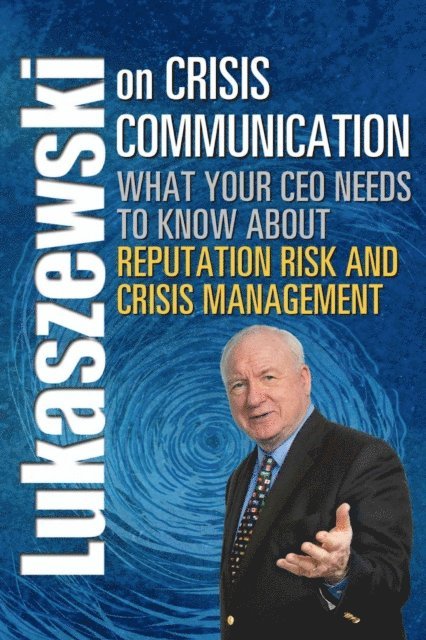
Attracting media attention is surprisingly easy -- you just want it to be the right kind! If an event causes the phone to ring and TV cameras to appear in your lobby, you need confidence that the people who happen to be at your worksite that day are prepared. That’s easy if everyone – executives, PR, managers, and employees – is familiar with Jim Lukaszewski’s sure-fire methods for handling the media.
James (Jim) Lukaszewski, America’s Crisis Guru ™, is one of the most visible corporate go-to people for companies when there is trouble in the room or on the horizon. The Manager’s Guide to Handling the Media in a Crisis: Doing and Saying the Right Thing When it Matters Most, shares with you the skills he has developed in 30+ years of helping companies in crisis management, employee communications, ethics, media relations, public affairs, reputation preservation, leadership restoration, and recovery. Jim speaks annually before a wide variety of local, statewide, national and international organizations and associations heard by thousands of each year – and in this book, he is speaking directly to you.
With this book as a guide, you will be able to:
Create and deliver the message that best represents your organization.Understand what it takes to be an effective spokesperson. .Make sure everyone is aware of company policies and procedures relating to the press. .Be aware of the needs, deadlines, and priorities of reporters. .Prepare to give good answers to all sorts of questions. .Monitor social media, assess its impact. .Identify the ways social media could be used to attack your company. .Preserve company reputation amid a flurry of conflicting publicity. .Reading this book, you will see why, wherever there is or can be trouble and crisis, affected audiences and troubled leaders are waiting to learn the way out of their problems from Jim. The book is practical, easy to read, filled with real-world case studies, checklists, anecdotes, discussion questions, and easy-to-remember tips for success.
336 kr
Läs direkt efter köp
Attracting media attention is surprisingly easy -- you just want it to be the right kind! If an event causes the phone to ring and TV cameras to appear in your lobby, you need confidence that the people who happen to be at your worksite that day are prepared. That’s easy if everyone – executives, PR, managers, and employees – is familiar with Jim Lukaszewski’s sure-fire methods for handling the media.
James (Jim) Lukaszewski, America’s Crisis Guru ™, is one of the most visible corporate go-to people for companies when there is trouble in the room or on the horizon. The Manager’s Guide to Handling the Media in a Crisis: Doing and Saying the Right Thing When it Matters Most, shares with you the skills he has developed in 30+ years of helping companies in crisis management, employee communications, ethics, media relations, public affairs, reputation preservation, leadership restoration, and recovery. Jim speaks annually before a wide variety of local, statewide, national and international organizations and associations heard by thousands of each year – and in this book, he is speaking directly to you.
With this book as a guide, you will be able to:
Create and deliver the message that best represents your organization.Understand what it takes to be an effective spokesperson. .Make sure everyone is aware of company policies and procedures relating to the press. .Be aware of the needs, deadlines, and priorities of reporters. .Prepare to give good answers to all sorts of questions. .Monitor social media, assess its impact. .Identify the ways social media could be used to attack your company. .Preserve company reputation amid a flurry of conflicting publicity. .Reading this book, you will see why, wherever there is or can be trouble and crisis, affected audiences and troubled leaders are waiting to learn the way out of their problems from Jim. The book is practical, easy to read, filled with real-world case studies, checklists, anecdotes, discussion questions, and easy-to-remember tips for success.
324 kr
Läs direkt efter köp
In today’s litigious business world, cyber-related matters could land you in court. As a computer security professional, you are protecting your data, but are you protecting your company? While you know industry standards and regulations, you may not be a legal expert. Fortunately, in a few hours of reading, rather than months of classroom study, Tari Schreider’s The Manager’s Guide to Cybersecurity Law: Essentials for Today’s Business, lets you integrate legal issues into your security program.
Tari Schreider, a board-certified information security practitioner with a criminal justice administration background, has written a much-needed book that bridges the gap between cybersecurity programs and cybersecurity law. He says, “My nearly 40 years in the fields of cybersecurity, risk management, and disaster recovery have taught me some immutable truths. One of these truths is that failure to consider the law when developing a cybersecurity program results in a protective façade or false sense of security.”
In a friendly style, offering real-world business examples from his own experience supported by a wealth of court cases, Schreider covers the range of practical information you will need as you explore – and prepare to apply – cybersecurity law. His practical, easy-to-understand explanations help you to:
Understand your legal duty to act reasonably and responsibly to protect assets and information.Identify which cybersecurity laws have the potential to impact your cybersecurity program.Upgrade cybersecurity policies to comply with state, federal, and regulatory statutes.Communicate effectively about cybersecurity law with corporate legal department and counsel.Understand the implications of emerging legislation for your cybersecurity program.Know how to avoid losing a cybersecurity court case on procedure – and develop strategies to handle a dispute out of court.Develop an international view of cybersecurity and data privacy – and international legal frameworks.Schreider takes you beyond security standards and regulatory controls to ensure that your current or future cybersecurity program complies with all laws and legal jurisdictions. Hundreds of citations and references allow you to dig deeper as you explore specific topics relevant to your organization or your studies. This book needs to be required reading before your next discussion with your corporate legal department.
336 kr
Läs direkt efter köp
In today’s litigious business world, cyber-related matters could land you in court. As a computer security professional, you are protecting your data, but are you protecting your company? While you know industry standards and regulations, you may not be a legal expert. Fortunately, in a few hours of reading, rather than months of classroom study, Tari Schreider’s The Manager’s Guide to Cybersecurity Law: Essentials for Today’s Business, lets you integrate legal issues into your security program.
Tari Schreider, a board-certified information security practitioner with a criminal justice administration background, has written a much-needed book that bridges the gap between cybersecurity programs and cybersecurity law. He says, “My nearly 40 years in the fields of cybersecurity, risk management, and disaster recovery have taught me some immutable truths. One of these truths is that failure to consider the law when developing a cybersecurity program results in a protective façade or false sense of security.”
In a friendly style, offering real-world business examples from his own experience supported by a wealth of court cases, Schreider covers the range of practical information you will need as you explore – and prepare to apply – cybersecurity law. His practical, easy-to-understand explanations help you to:
Understand your legal duty to act reasonably and responsibly to protect assets and information.Identify which cybersecurity laws have the potential to impact your cybersecurity program.Upgrade cybersecurity policies to comply with state, federal, and regulatory statutes.Communicate effectively about cybersecurity law with corporate legal department and counsel.Understand the implications of emerging legislation for your cybersecurity program.Know how to avoid losing a cybersecurity court case on procedure – and develop strategies to handle a dispute out of court.Develop an international view of cybersecurity and data privacy – and international legal frameworks.Schreider takes you beyond security standards and regulatory controls to ensure that your current or future cybersecurity program complies with all laws and legal jurisdictions. Hundreds of citations and references allow you to dig deeper as you explore specific topics relevant to your organization or your studies. This book needs to be required reading before your next discussion with your corporate legal department.
336 kr
Läs direkt efter köp
You designed your Business Continuity Plan to keep your business in business regardless of the forces of man and nature. But how do you know that the plan really works? Few companies can afford the recommended full-scale exercises several times a year. In The Manager’s Guide to Business Continuity Exercises, Jim Burtles, an internationally known expert, details the options for conducting a range of tests and exercises to keep your plan effective and up to date.
Your challenge is to maintain a good and effective plan in the face of changing circumstances and limited budgets. If your situation is like that in most companies, you really cannot depend on the results of last year’s test or exercise of the plan. People tend to forget, lose confidence, lose interest, or even be replaced by other people who were not involved in your original planning. Jim Burtles explains:
“You cannot have any real confidence in your plans and procedures until they have been fully tested…Exercises are the only way we can be sure that the people will be able to interpret the plans and procedures correctly within the requisite timeframe under difficult circumstances.”
As you do your job in this constantly shifting context, Jim Burtles helps you to:• Differentiate between an “exercise” and a “test” – and see the value of each in your BC program.• Understand the different types of plans and identify the people who need to be involved in exercises and tests for each. • Use the “Five-Stage Growth Path” – from desktop to walkthrough to full-scale exercise -- to conduct gradual testing, educate personnel, foster capability, and build confidence.• Create a variety of unusual scenario plot-lines that will keep up everyone’s interest.• Identify the eight main elements in developing and delivering a successful BC exercise.• Select and prepare a “delivery team” and a “response team” for your exercise.• Make sure everyone understands the “rules of engagement.” • Use the lessons learned from exercises and tests to audit, update, and maintain the plan.
You are well aware that a host of problems may crop up in any kind of company-wide project. These problems can range from basic logistics like time and place, to non-support from executives and managers, to absenteeism, to the weather, to participants forgetting their lines. Throughout the book, Burtles uses his decades of experience working with companies like yours to give you useful examples, case studies, and down-to-earth advice to help you handle the unexpected and work toward the results you are looking for.
324 kr
Läs direkt efter köp
You designed your Business Continuity Plan to keep your business in business regardless of the forces of man and nature. But how do you know that the plan really works? Few companies can afford the recommended full-scale exercises several times a year. In The Manager’s Guide to Business Continuity Exercises, Jim Burtles, an internationally known expert, details the options for conducting a range of tests and exercises to keep your plan effective and up to date.
Your challenge is to maintain a good and effective plan in the face of changing circumstances and limited budgets. If your situation is like that in most companies, you really cannot depend on the results of last year’s test or exercise of the plan. People tend to forget, lose confidence, lose interest, or even be replaced by other people who were not involved in your original planning. Jim Burtles explains:
“You cannot have any real confidence in your plans and procedures until they have been fully tested…Exercises are the only way we can be sure that the people will be able to interpret the plans and procedures correctly within the requisite timeframe under difficult circumstances.”
As you do your job in this constantly shifting context, Jim Burtles helps you to:• Differentiate between an “exercise” and a “test” – and see the value of each in your BC program.• Understand the different types of plans and identify the people who need to be involved in exercises and tests for each. • Use the “Five-Stage Growth Path” – from desktop to walkthrough to full-scale exercise -- to conduct gradual testing, educate personnel, foster capability, and build confidence.• Create a variety of unusual scenario plot-lines that will keep up everyone’s interest.• Identify the eight main elements in developing and delivering a successful BC exercise.• Select and prepare a “delivery team” and a “response team” for your exercise.• Make sure everyone understands the “rules of engagement.” • Use the lessons learned from exercises and tests to audit, update, and maintain the plan.
You are well aware that a host of problems may crop up in any kind of company-wide project. These problems can range from basic logistics like time and place, to non-support from executives and managers, to absenteeism, to the weather, to participants forgetting their lines. Throughout the book, Burtles uses his decades of experience working with companies like yours to give you useful examples, case studies, and down-to-earth advice to help you handle the unexpected and work toward the results you are looking for.
199 kr
Läs direkt efter köp
Workplace violence is more complicated than physical assault, ranging from small threats to large, catastrophic incidents. It covers any act or behavior where another person is abused, threatened, intimidated or assaulted in his or her place of employment. In Your Guide to Workplace Violence: When Emotions Turn Destructive, licensed therapist Dr. Vali Hawkins Mitchell will help you decrease risks by showing you what violence is and what it is not, and how to manage it.
199 kr
Läs direkt efter köp
Workplace violence is more complicated than physical assault, ranging from small threats to large, catastrophic incidents. It covers any act or behavior where another person is abused, threatened, intimidated or assaulted in his or her place of employment. In Your Guide to Workplace Violence: When Emotions Turn Destructive, licensed therapist Dr. Vali Hawkins Mitchell will help you decrease risks by showing you what violence is and what it is not, and how to manage it.