Abdellah Hammoudi - Böcker
Visar alla böcker från författaren Abdellah Hammoudi. Handla med fri frakt och snabb leverans.
7 produkter
7 produkter
786 kr
Skickas inom 7-10 vardagar
Each year, in a solemn Sunni Muslim feast, the Ait Mazine of northern Morocco reenact the story of Abraham as a ritual sacrifice, a symbolic observance of submission to the divine. After comes a bacchanalian masquerade which seems to violate every principle the sacrifice affirmed. Costumed men sing and dance and torment villagers, their wild activities centering around a mute figure sewn into the skins of sacrificed animals. This character is attended by several others who keep up a constant patter that mocks the social order, especially marriage, women, older men, and the Qu'ran. Because of the apparent contradiction between sacrifice and masquerade, observers have described the two as entirely separate events. Abdellah Hammoudi's study reunites them as a single ritual process within Islamic tradition. Working with metaphors of stage and play, Hammoudi details the festival from the rituals of makeup and costume through the final spectacle. Each part of the ceremony denies and at the same time conjures up the other. The contradictions inherent in social and religious life are vividly enacted; sacrifice and masquerade appear.
282 kr
Skickas inom 7-10 vardagar
Each year, in a solemn Sunni Muslim feast, the Ait Mazine of northern Morocco reenact the story of Abraham as a ritual sacrifice, a symbolic observance of submission to the divine. After comes a bacchanalian masquerade which seems to violate every principle the sacrifice affirmed. Costumed men sing and dance and torment villagers, their wild activities centering around a mute figure sewn into the skins of sacrificed animals. This character is attended by several others who keep up a constant patter that mocks the social order, especially marriage, women, older men, and the Qu'ran. Because of the apparent contradiction between sacrifice and masquerade, observers have described the two as entirely separate events. Abdellah Hammoudi's study reunites them as a single ritual process within Islamic tradition. Working with metaphors of stage and play, Hammoudi details the festival from the rituals of makeup and costume through the final spectacle. Each part of the ceremony denies and at the same time conjures up the other. The contradictions inherent in social and religious life are vividly enacted; sacrifice and masquerade appear.
732 kr
Tillfälligt slut
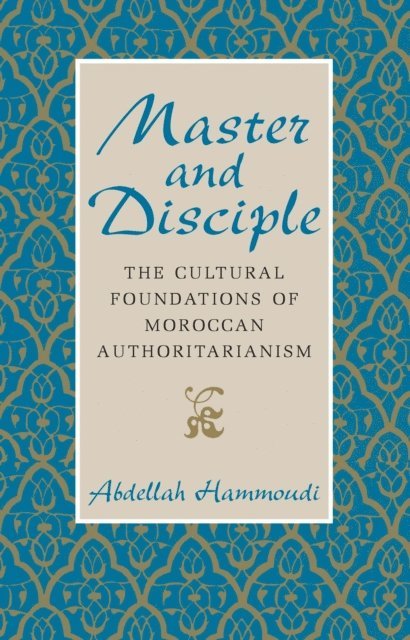
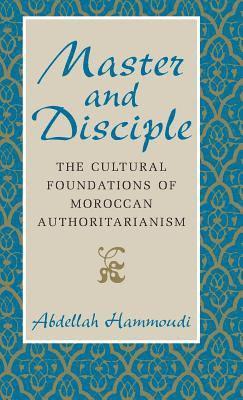
In the postcolonial era, Arab societies have been ruled by a variety of authoritarian regimes. Focusing on his native Morocco and building on the work of Foucault, the author of this text explores the ideological and cultural foundations of this persistent authoritarianism. Hammoudi argues that at the heart of Moroccan culture lies a paradigm of authority which juxtaposes absolute authority against absolute submission. Rooted in Islamic mysticism, this paradigm can be observed in the drama of mystic initiation, with its fundamental dialectic between "master" and "disciple"; in conflict with other cultural forms, and re-elaborated in colonial and and postcolonial circumstances, it informs all major aspects of Moroccan personal, political and gender relations. According to Hammoudi, its influence is so pervasive and so firmly embedded that it ultimately legitimizes the authoritarian structure of power. Hammoudi contends that, as long as the "master-disciple" dialectic remains the dominant paradigm of power relations, male authoritarianism will prevail as the dominant political form.
267 kr
Skickas inom 7-10 vardagar
In the postcolonial era, Arab societies have been ruled by a variety of authoritarian regimes. Focusing on his native Morocco and building on the work of Foucault, the author of this text explores the ideological and cultural foundations of this persistent authoritarianism. Hammoudi argues that at the heart of Moroccan culture lies a paradigm of authority which juxtaposes absolute authority against absolute submission. Rooted in Islamic mysticism, this paradigm can be observed in the drama of mystic initiation, with its fundamental dialectic between "master" and "disciple"; in conflict with other cultural forms, and re-elaborated in colonial and and postcolonial circumstances, it informs all major aspects of Moroccan personal, political and gender relations. According to Hammoudi, its influence is so pervasive and so firmly embedded that it ultimately legitimizes the authoritarian structure of power. Hammoudi contends that, as long as the "master-disciple" dialectic remains the dominant paradigm of power relations, male authoritarianism will prevail as the dominant political form.
421 kr
Skickas inom 7-10 vardagar
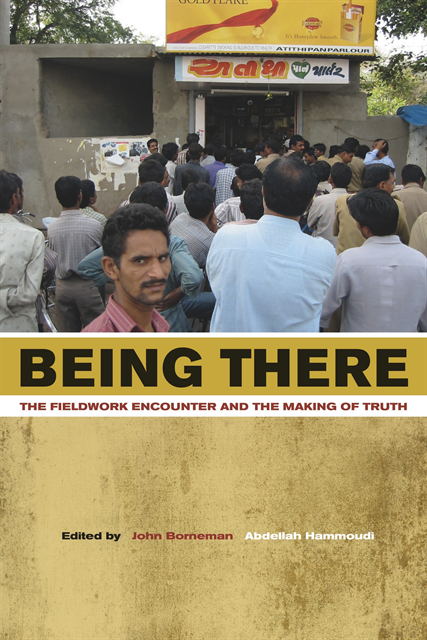
Challenges to ethnographic authority and to the ethics of representation have led many contemporary anthropologists to abandon fieldwork in favor of strategies of theoretical puppeteering, textual analysis, and surrogate ethnography. In "Being There", John Borneman and Abdellah Hammoudi argue that ethnographies based on these strategies elide important insights. To demonstrate the power and knowledge attained through the fieldwork experience, they have gathered essays by anthropologists working in Morocco, Saudi Arabia, Syria, Tanzania, the Canadian Arctic, India, Germany, and Russia that shift attention back to the subtle dynamics of the ethnographic encounter. From an Inuit village to the foothills of Kilimanjaro, each account illustrates how, despite its challenges, fieldwork yields important insights outside the reach of textual analysis.
944 kr
Skickas inom 5-8 vardagar
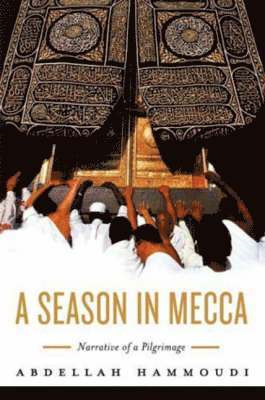
In 1999, the Moroccan scholar Abdellah Hammoudi, trained in Paris and teaching in America, decided to go on the pilgrimage to Mecca. He wanted to observe the hajj as an anthropologist but also to experience it as an ordinary pilgrim, and to write about it for both Muslims and non-Muslims. Here is his intimate, intense, and detailed account of the hajj – a rare and important document by a subtle, learned, and sympathetic writer. Hammoudi describes not just the adventure, the human pressures, and the social tumult – everything from the early preparations to the last climactic scenes in the holy shrines of Medina and Mecca – but also the intricate politics and amazing complexity of the entire pilgrimage experience. He pays special heed to the effects of Saudi bureaucratic control over the hajj, to the ways that faith itself becomes a lucrative source of commerce for the Arabian kingdom, and to the Wahhabi inflections of the basic Muslim message. Here, too, is a poignant discussion of the inner voyage that pilgrimage can mean to those who embark on it: the transformed sense of daily life, of worship, and of political engagement. Hammoudi acknowledges that he was spurred to reconsider his own ideas about faith, gesture, community, and nationality in unanticipated ways. This is a remarkable work of literature about both the outer forms and the inner meanings of Islam today.
278 kr
Skickas inom 11-20 vardagar
In 1999, the Moroccan scholar Abdellah Hammoudi, trained in Paris and teaching in America, decided to go on the pilgrimage to Mecca. He wanted to observe the hajj as an anthropologist but also to experience it as an ordinary pilgrim, and to write about it for both Muslims and non-Muslims. Here is his intimate, intense, and detailed account of the hajj – a rare and important document by a subtle, learned, and sympathetic writer. Hammoudi describes not just the adventure, the human pressures, and the social tumult – everything from the early preparations to the last climactic scenes in the holy shrines of Medina and Mecca – but also the intricate politics and amazing complexity of the entire pilgrimage experience. He pays special heed to the effects of Saudi bureaucratic control over the hajj, to the ways that faith itself becomes a lucrative source of commerce for the Arabian kingdom, and to the Wahhabi inflections of the basic Muslim message. Here, too, is a poignant discussion of the inner voyage that pilgrimage can mean to those who embark on it: the transformed sense of daily life, of worship, and of political engagement. Hammoudi acknowledges that he was spurred to reconsider his own ideas about faith, gesture, community, and nationality in unanticipated ways. This is a remarkable work of literature about both the outer forms and the inner meanings of Islam today.