Achim Schmitt – författare
Visar alla böcker från författaren Achim Schmitt. Handla med fri frakt och snabb leverans.
5 produkter
5 produkter
Häftad, Engelska, 2009
565 kr
Skickas inom 10-15 vardagar
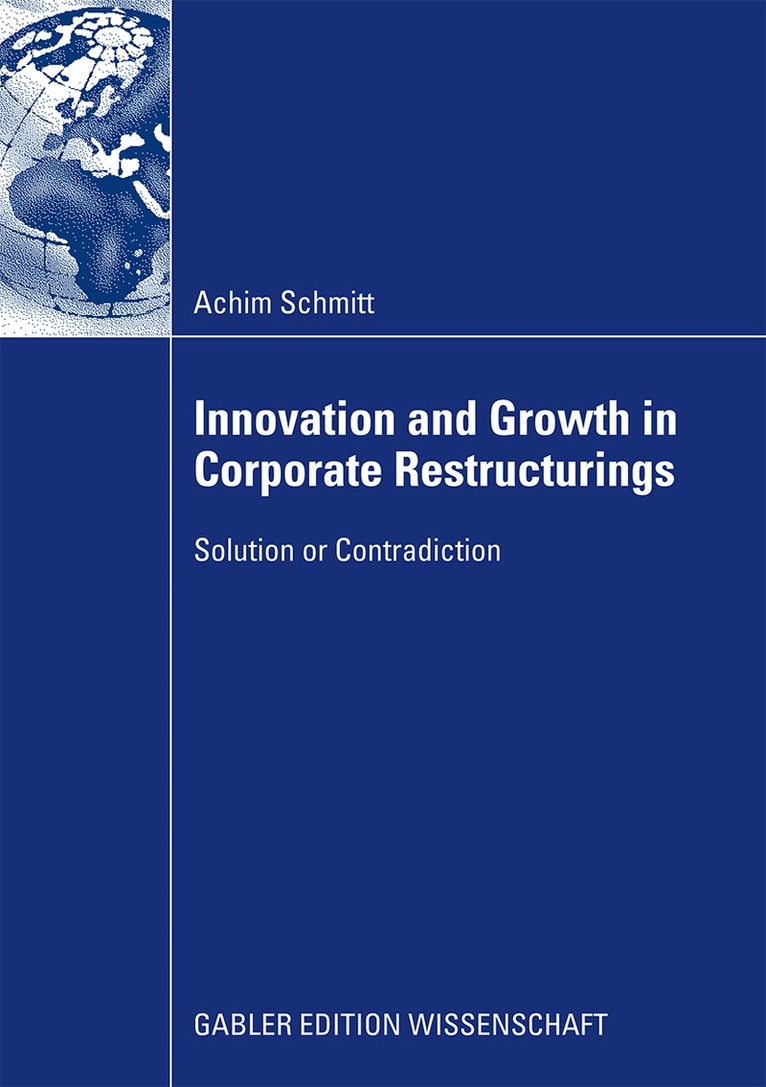
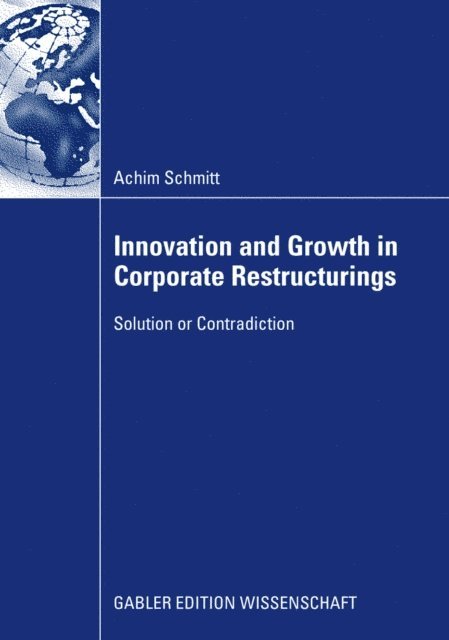
Organizational decline and corporate turnarounds are historically at the height of interest, both theoretically as well as with regard to current practice. Characterized as the opposite of successful adaptation, organizational decline is the failure to anticipate, avoid, neutralize, and adapt to external or internal pressures, thus triggering a process of decreasing organizational resources over a specific period of time that might, but not necessarily needs to, end in corporate failure. Turnaround management is intuitively related to efficiency seeking, co- cutting, streamlining processes, simplifying structures, etc. , etc. The questioning of a simple, one-sided view of cost management and short-term survival is already a challenging task. To associate exploitation and exploration with a successful long-term-oriented turnaround and to empirically search for it in the turnaround world is a truly exceptional endeavor, an interesting topic as such, and a creative and exciting perspective. Achim Schmitt does not only have personal experience with restructuring, but he has for many years done very interesting research into the field of corporate restructuring and behavior in respect of organizational decline. His dissertation project analyzed organizations’ reactions to situations of organizational decline. The results of his work revealed how organizations manage to avoid bankruptcy, while simultaneously achieving sustainable growth for corporate survival. Besides providing insights into how restructurings are carried out in practice, the strength of this book lies in the integration of multiple research streams and the results of a larger empirical study.
Inbunden, Engelska, 2010
565 kr
Skickas inom 10-15 vardagar
Peter Gomez, University of St. Gallen Gilbert Spiderman Those were the days … when Gilbert Probst presented his innumerable lectures on systems thinking to executives wearing a T-shirt showing a spidernet; the serious and respected professor impersonating the famous Spiderman? Far from it! Systems thinking translated in German means “Vernetztes Denken”, in clumsy English “Thinking in Networks” – just like the spiderweb. A more precise term would be “Thinking in Circles”, but Gilbert was always looking for good effects – and this with great success, the executives loved it. Gilbert and myself were a good team in the 80s and 90s of the last century. In the form of team teaching we introduced literally thousands of executives and students to the secrets of systems thinking. Somehow like Simon & Garfunkel - he was Art Garfunkel, the front man, I performed the background vocals as did Paul Simon. It took us a long time to develop our product to perfection.
Häftad, Engelska, 2014
565 kr
Skickas inom 10-15 vardagar
Peter Gomez, University of St. Gallen Gilbert Spiderman Those were the days … when Gilbert Probst presented his innumerable lectures on systems thinking to executives wearing a T-shirt showing a spidernet; the serious and respected professor impersonating the famous Spiderman? Far from it! Systems thinking translated in German means “Vernetztes Denken”, in clumsy English “Thinking in Networks” – just like the spiderweb. A more precise term would be “Thinking in Circles”, but Gilbert was always looking for good effects – and this with great success, the executives loved it. Gilbert and myself were a good team in the 80s and 90s of the last century. In the form of team teaching we introduced literally thousands of executives and students to the secrets of systems thinking. Somehow like Simon & Garfunkel - he was Art Garfunkel, the front man, I performed the background vocals as did Paul Simon. It took us a long time to develop our product to perfection.
E-bok
PDF, Engelska, 2010708 kr
Läs direkt efter köp
Peter Gomez, University of St. Gallen Gilbert Spiderman Those were the days … when Gilbert Probst presented his innumerable lectures on systems thinking to executives wearing a T-shirt showing a spidernet; the serious and respected professor impersonating the famous Spiderman? Far from it! Systems thinking translated in German means “Vernetztes Denken”, in clumsy English “Thinking in Networks” – just like the spiderweb. A more precise term would be “Thinking in Circles”, but Gilbert was always looking for good effects – and this with great success, the executives loved it. Gilbert and myself were a good team in the 80s and 90s of the last century. In the form of team teaching we introduced literally thousands of executives and students to the secrets of systems thinking. Somehow like Simon & Garfunkel - he was Art Garfunkel, the front man, I performed the background vocals as did Paul Simon. It took us a long time to develop our product to perfection.
E-bok
PDF, Engelska, 2009708 kr
Läs direkt efter köp
Organizational decline and corporate turnarounds are historically at the height of interest, both theoretically as well as with regard to current practice. Characterized as the opposite of successful adaptation, organizational decline is the failure to anticipate, avoid, neutralize, and adapt to external or internal pressures, thus triggering a process of decreasing organizational resources over a specific period of time that might, but not necessarily needs to, end in corporate failure. Turnaround management is intuitively related to efficiency seeking, co- cutting, streamlining processes, simplifying structures, etc. , etc. The questioning of a simple, one-sided view of cost management and short-term survival is already a challenging task. To associate exploitation and exploration with a successful long-term-oriented turnaround and to empirically search for it in the turnaround world is a truly exceptional endeavor, an interesting topic as such, and a creative and exciting perspective. Achim Schmitt does not only have personal experience with restructuring, but he has for many years done very interesting research into the field of corporate restructuring and behavior in respect of organizational decline. His dissertation project analyzed organizations’ reactions to situations of organizational decline. The results of his work revealed how organizations manage to avoid bankruptcy, while simultaneously achieving sustainable growth for corporate survival. Besides providing insights into how restructurings are carried out in practice, the strength of this book lies in the integration of multiple research streams and the results of a larger empirical study.