Adam Tomkins - Böcker
Visar alla böcker från författaren Adam Tomkins. Handla med fri frakt och snabb leverans.
11 produkter
11 produkter
679 kr
Skickas inom 5-8 vardagar
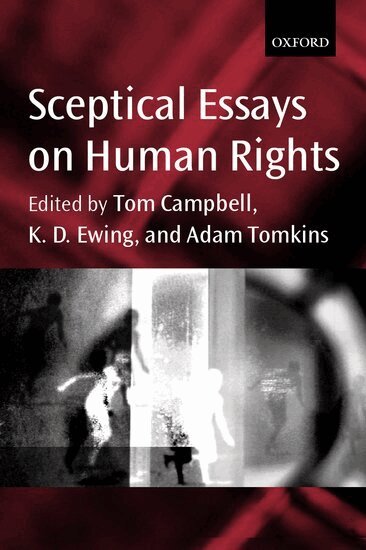
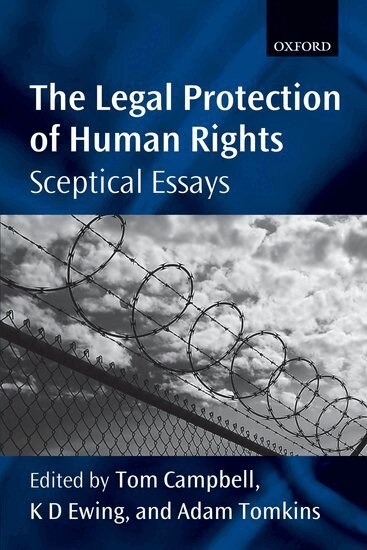
Britain's Human Rights Act 1998 is the latest in a wave of legislative and constitutional instruments that have been passed in a number of countries (including Canada, New Zealand and South Africa) and which put human rights at the top of the public law agenda. For the most part these instruments are widely welcomed by senior judges and by academic and practising lawyers, many of whom will have campaigned for their introduction. There are, however, very considerable doubts about the wisdom of these developments within the democratic tradition of government which remain unanswered. This collection of 20 essays written by an array of internationally prestigious scholars explores these reservations.All the contributors endorse the importance of human rights within any democratic system of government, but question whether the primary responsibility for the articulation of these rights ought to be taken away from the normal political processes of representative government; they also consider the constitutional implications of doing so. Specifically, the extensive shift of political authority to the judiciary which is involved in Britain's Human Rights Act is critically examined and other ways of specifying and promoting human rights in more democratic forums are considered. Particular attention is paid to the priority which should be given to economic and social rights within the new constitutional settlement. Overseas contributions, ranging from Eastern Europe to South Africa, via North America and Australasia, illustrate the pitfalls of importing other constitutional models. Written throughout in an engaging and accessible style, this book is essential reading for all those with an interest in law or politics.
1 937 kr
Skickas inom 5-8 vardagar
Britain's Human Rights Act 1998 is the latest in a wave of legislative and constitutional instruments that have been passed in a number of countries (including Canada, New Zealand and South Africa) and which put human rights at the top of the public law agenda. For the most part these instruments are widely welcomed by senior judges and by academic and practising lawyers, many of whom will have campaigned for their introduction. There are, however, very considerable doubts about the wisdom of these developments within the democratic tradition of government which remain unanswered. This collection of 20 essays written by an array of internationally prestigious scholars explores these reservations. All the contributors endorse the importance of human rights within any democratic system of government, but question whether the primary responsibility for the articulation of these rights ought to be taken away from the normal political processes of representative government; they also consider the constitutional implications of doing so. Specifically, the extensive shift of political authority to the judiciary which is involved in Britain's Human Rights Act is critically examined and other ways of specifying and promoting human rights in more democratic forums are considered. Particular attention is paid to the priority which should be given to economic and social rights within the new constitutional settlement. Overseas contributions, ranging from Eastern Europe to South Africa, via North America and Australasia, illustrate the pitfalls of importing other constitutional models. Written throughout in an engaging and accessible style, this book is essential reading for all those with an interest in law or politics.
781 kr
Skickas
Written in the well-established tradition of the Clarendon Law Series, Public Law offers a stimulating re-interpretation of the central themes and problems of English constitutional law. It offers full consideration of the historical development of public law. This book is an introduction that will be especially appealing to the enquiring student who is looking to reflect critically on the assumptions underpinning the standard presentation of the subject.Written throughout in an engaging and accessible style, Public Law examines the issues of power and accountability that are central to constitutional and administrative law. Among the topics considered are the unwritten nature of the constitution, the changing relationship between the law and the politics of the constitution, the separation of powers, the enduring influence of the crown, the role and functions of Parliament, questions of responsible government, and the law of judicial review and human rights.
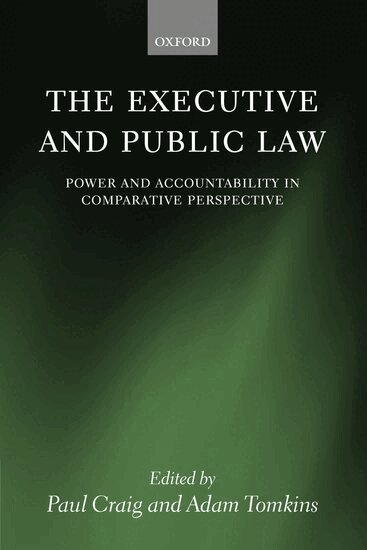
The Executive and Public Law
Power and Accountability in Comparative Perspective
Inbunden, Engelska, 2005
1 392 kr
Skickas inom 5-8 vardagar
For most of the past two hundred years or more - the grand era of national constitution-making - founding fathers and constitutional scholars alike seem to have focused more sharply on questions of legislative power than they have on executive power. Executive power, by contrast, they worried much less about and sought to delimit less thoroughly. The scope of executive power and its accountability are however endemic problems, which arise within federal and non-federal states. Nor are these issues unique to common law constitutional orders. Problems concerning the nature and delimitation of executive power also arise in civil law jurisdictions and in the European Union. Despite the historical constitutional focus on legislative power, it is executive authority which seems in the early 21st-century to be the more threatening. This book addresses two sets of questions that are under-researched in constitutional scholarship. What is the proper scope of executive authority, how is executive power delimited, and how should it be defined? How is executive authority best held to account, politically and legally? These questions are both descriptive and normative and they are addressed accordingly in each of the chapters by leading public lawyers from a variety of jurisdictions. The book examines executive power in the United Kingdom from a British and from a distinctively Scottish perspective. There are chapters on the four common law jurisdictions of Australia, New Zealand, Canada, and the United States; on the four civil law jurisdictions of France, Germany, Italy, and Spain; and on the European Union. This insightful comparative perspective allows themes to be drawn together, and lessons extracted on the nature of executive power and its accountability.
1 737 kr
Skickas inom 5-8 vardagar
Reacting to the mixed record of the UK Human Rights Act 1998 and similar enactments concerned with the protection of human rights, this book explores ways of promoting human rights more effectively through political and democratic mechanisms. The book expresses ideological scepticism concerning the relative neglect of social and economic rights and institutional scepticism concerning the limitations of court-centred means for enhancing human rights goals in general. The contributors criticize the 'juridification' of human rights through transferring the prime responsibility for identifying human rights violations to courts and advocate the greater 'politicisation' of human rights responsibilities through such measures as enhanced parliamentary scrutiny of existing and proposed legislation. This group of twenty-four leading human rights scholars from around the world present a variety of perspectives on the disappointing human rights outcomes of recent institutional developments and consider the prospects of reviving the moral force and political implications of human rights values. Thus, contributors recount the failures of the Human Rights Act with regard to counter-terrorism; chart how the 'dialogue' model reduces parliaments' capacities to hold governments to account for human rights violations; consider which institutions best protect fundamental rights; and reflect on how the idea of human rights could be 'rescued' in Britain today. In addition, the book considers the historical human rights failures of courts during the Cold War and in Northern Ireland, the diverse outcomes of human rights judicial review, and aspects of the human rights regimes in a variety of jurisdictions, including Finland, Sweden, New Zealand, Australia, Scotland, Canada, Europe, and the United States.
1 089 kr
Skickas inom 7-10 vardagar
Reacting to the mixed record of the UK Human Rights Act 1998 and similar enactments concerned with the protection of human rights, this book explores ways of promoting human rights more effectively through political and democratic mechanisms. The book expresses ideological scepticism concerning the relative neglect of social and economic rights and institutional scepticism concerning the limitations of court-centred means for enhancing human rights goals in general. The contributors criticize the 'juridification' of human rights through transferring the prime responsibility for identifying human rights violations to courts and advocate the greater 'politicisation' of human rights responsibilities through such measures as enhanced parliamentary scrutiny of existing and proposed legislation. This group of twenty-four leading human rights scholars from around the world present a variety of perspectives on the disappointing human rights outcomes of recent institutional developments and consider the prospects of reviving the moral force and political implications of human rights values. Thus, contributors recount the failures of the Human Rights Act with regard to counter-terrorism; chart how the 'dialogue' model reduces parliaments' capacities to hold governments to account for human rights violations; consider which institutions best protect fundamental rights; and reflect on how the idea of human rights could be 'rescued' in Britain today. In addition, the book considers the historical human rights failures of courts during the Cold War and in Northern Ireland, the diverse outcomes of human rights judicial review, and aspects of the human rights regimes in a variety of jurisdictions, including Finland, Sweden, New Zealand, Australia, Scotland, Canada, Europe, and the United States.
473 kr
Skickas inom 10-15 vardagar
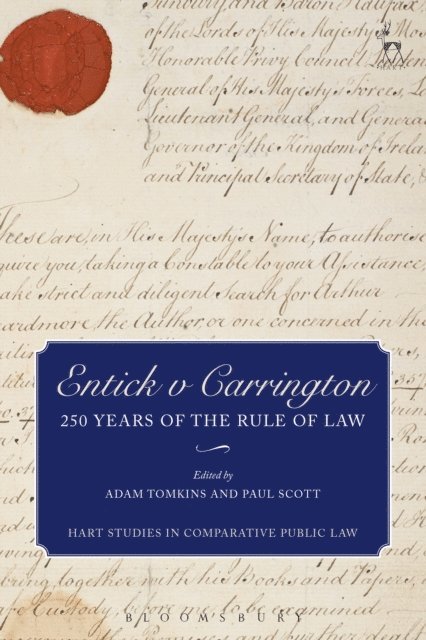
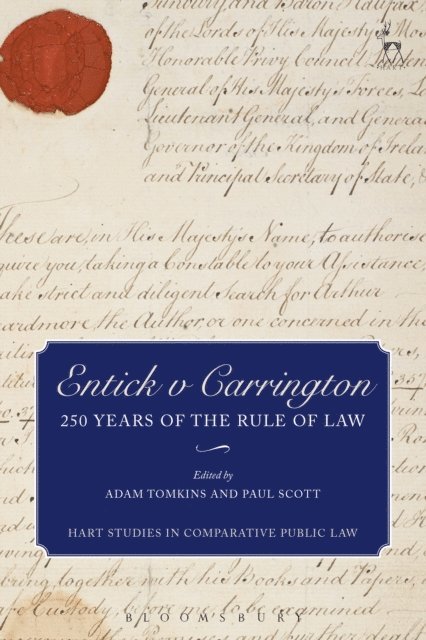
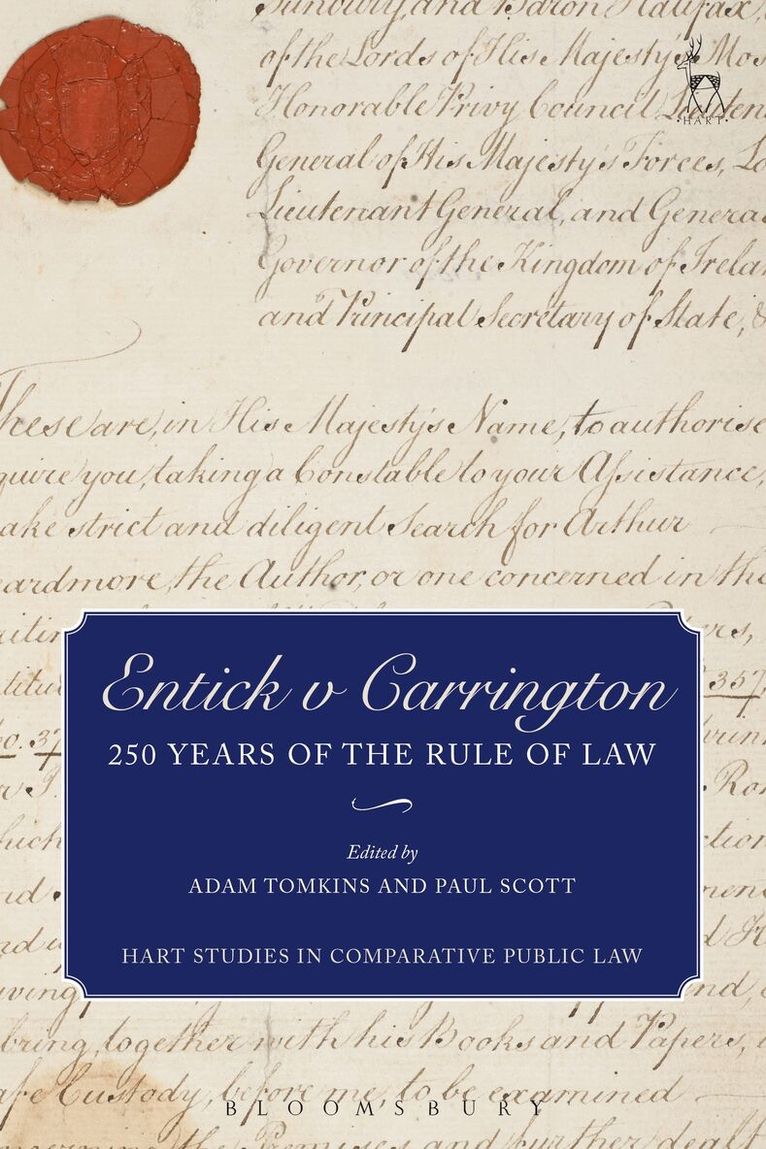
Entick v Carrington is one of the canons of English public law and in 2015 it is 250 years old. In 1762 the Earl of Halifax, one of His Majesty’s Principal Secretaries of State, despatched Nathan Carrington and three other of the King’s messengers to John Entick’s house in Stepney. They broke into his house, seizing his papers and causing significant damage. Why? Because he was said to have written seditious papers published in the Monitor. Entick sued Carrington and the other messengers for trespass. The defendants argued that the Earl of Halifax had given them legal authority to act as they had. Lord Camden ruled firmly in Entick’s favour, holding that the warrant of a Secretary of State could not render lawful actions such as these which were otherwise unlawful. The case is a canonical statement of the common law’s commitment to the constitutional principle of the rule of law. In this collection, leading public lawyers reflect on the history of the case, the enduring importance of the legal principles for which it stands, and the broader implications of Entick v Carrington 250 years on.Winner of the American Society for Legal History Sutherland Prize 2016.
928 kr
Skickas inom 10-15 vardagar
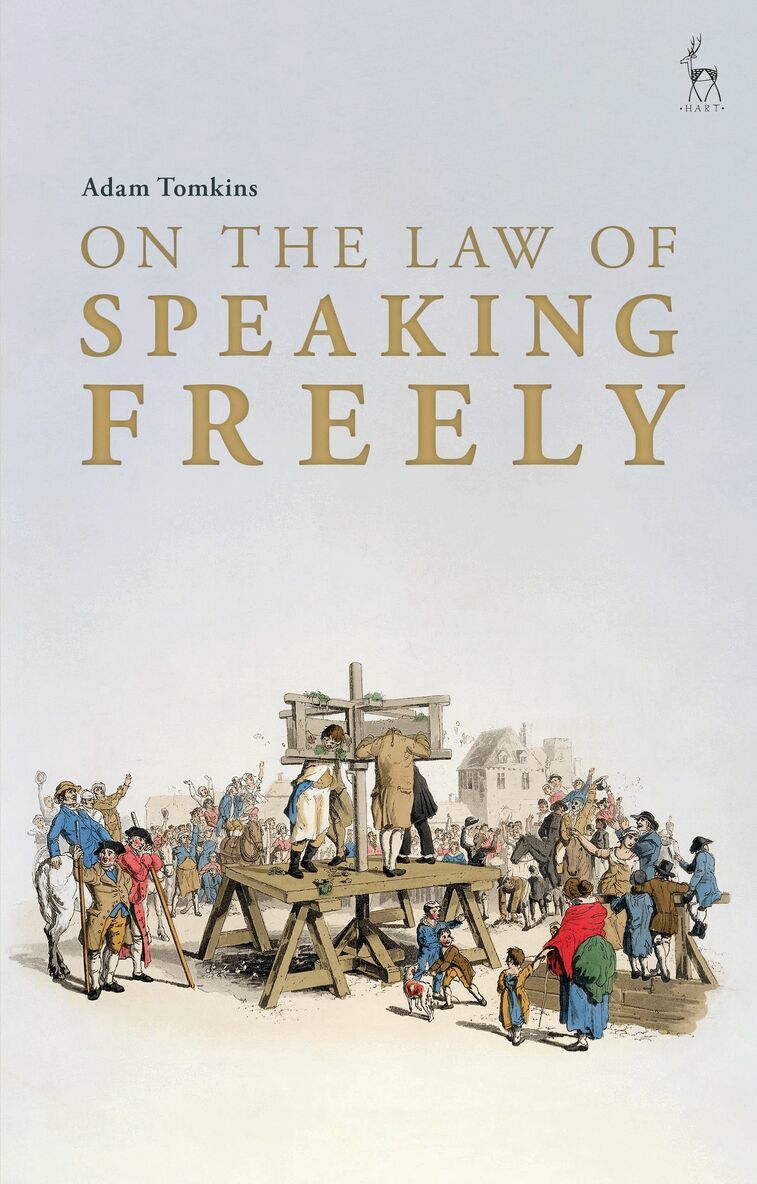
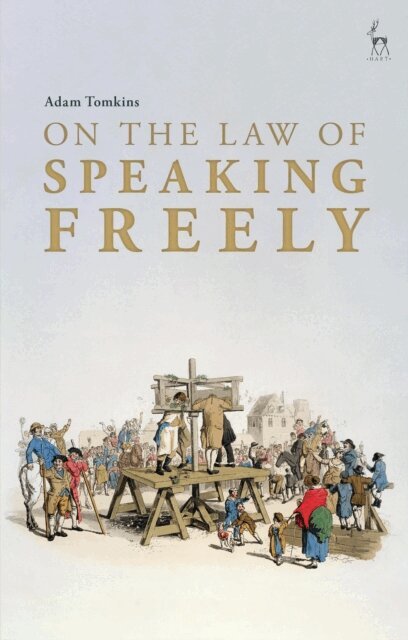
This book tackles the most pressing problems of contemporary free speech law by examining where the idea of free expression came from in the first place, applying the lessons of the past to address the challenges of the present.Free speech cannot be taken for granted – it needs to be fought for. But its champions will be successful only if they understand what they are defending. For free speech is a deceptively simple principle.How should it guide us on the bounds of what is acceptable to say? Should we be free to preach hatred, or to spread fear or fake news? Can media freedom be balanced against the right to privacy? How does free speech work online? Can the internet be made a safe space without compromising freedom of expression?On the Law of Speaking Freely offers not just insights but answers to these and other such vital questions by roaming widely over the law of free speech, from English common law to the European Convention on Human Rights via the US First Amendment.In rescuing free speech from the culture wars in which it has become embroiled, Adam Tomkins restates its values, its complexities and its enduring importance, in prose that is as passionate as it is clear-sighted. Even-handed, informed and authoritative, this is a major, timely work from one of the UK’s leading constitutional scholars.
310 kr
Skickas inom 7-10 vardagar
This book tackles the most pressing problems of contemporary free speech law by examining where the idea of free expression came from in the first place, applying the lessons of the past to address the challenges of the present.Free speech cannot be taken for granted – it needs to be fought for. But its champions will be successful only if they understand what they are defending. For free speech is a deceptively simple principle.How should it guide us on the bounds of what is acceptable to say? Should we be free to preach hatred, or to spread fear or fake news? Can media freedom be balanced against the right to privacy? How does free speech work online? Can the internet be made a safe space without compromising freedom of expression?On the Law of Speaking Freely offers not just insights but answers to these and other such vital questions by roaming widely over the law of free speech, from English common law to the European Convention on Human Rights via the US First Amendment.In rescuing free speech from the culture wars in which it has become embroiled, Adam Tomkins restates its values, its complexities and its enduring importance, in prose that is as passionate as it is clear-sighted. Even-handed, informed and authoritative, this is a major, timely work from one of the UK’s leading constitutional scholars.On the Law of Speaking Freely is also available in audiobook format from audiobook retailers.
301 kr
Skickas inom 10-15 vardagar
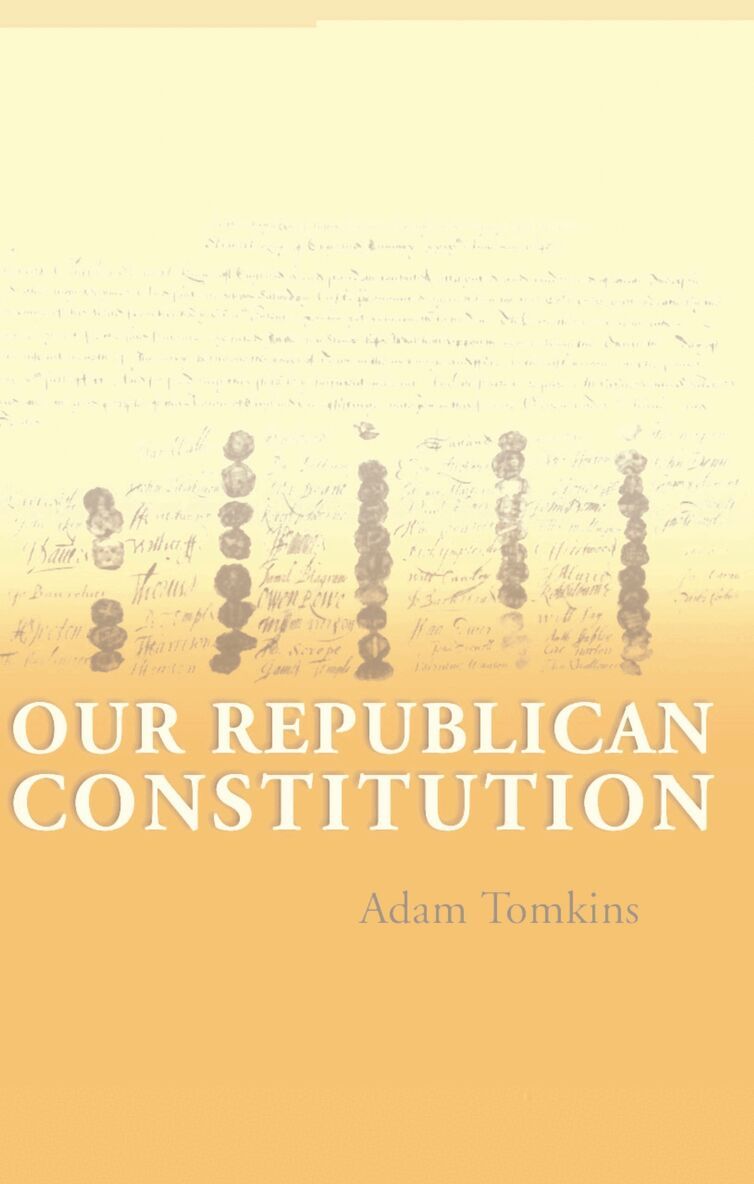
This new book by Adam Tomkins sets out a radical vision of the British constitution. It argues that despite its outwardly monarchic form the constitution is profoundly informed, and indeed shaped, by values and practices of republicanism. The republican reading of the constitution presented in this book places political accountability at the core of the constitutional order. As such, Our Republican Constitution offers a powerful rejoinder to the current trend in legal scholarship that sees the common law and the courts, rather than Parliament, as the central players in holding government to account. The book further contends that while the constitution should be understood as having republican foundations, current constitutional practice is, in a number of respects, insufficiently republican in character. The book closes by outlining a programme of republican constitutional reform that is designed to secure genuinely responsible government. This is an original and provocative reinterpretation of the central themes of the British constitution, drawing on constitutional history (especially of the seventeenth century), political theory and public law.
1 174 kr
Skickas inom 10-15 vardagar
Entick v Carrington is one of the canons of English public law and in 2015 it is 250 years old. In 1762 the Earl of Halifax, one of His Majesty’s Principal Secretaries of State, despatched Nathan Carrington and three other of the King’s messengers to John Entick’s house in Stepney. They broke into his house, seizing his papers and causing significant damage. Why? Because he was said to have written seditious papers published in the Monitor. Entick sued Carrington and the other messengers for trespass. The defendants argued that the Earl of Halifax had given them legal authority to act as they had. Lord Camden ruled firmly in Entick’s favour, holding that the warrant of a Secretary of State could not render lawful actions such as these which were otherwise unlawful. The case is a canonical statement of the common law’s commitment to the constitutional principle of the rule of law. In this collection, leading public lawyers reflect on the history of the case, the enduring importance of the legal principles for which it stands, and the broader implications of Entick v Carrington 250 years on.Winner of the American Society for Legal History Sutherland Prize 2016.