Agata Pietrasik – författare
Visar alla böcker från författaren Agata Pietrasik. Handla med fri frakt och snabb leverans.
3 produkter
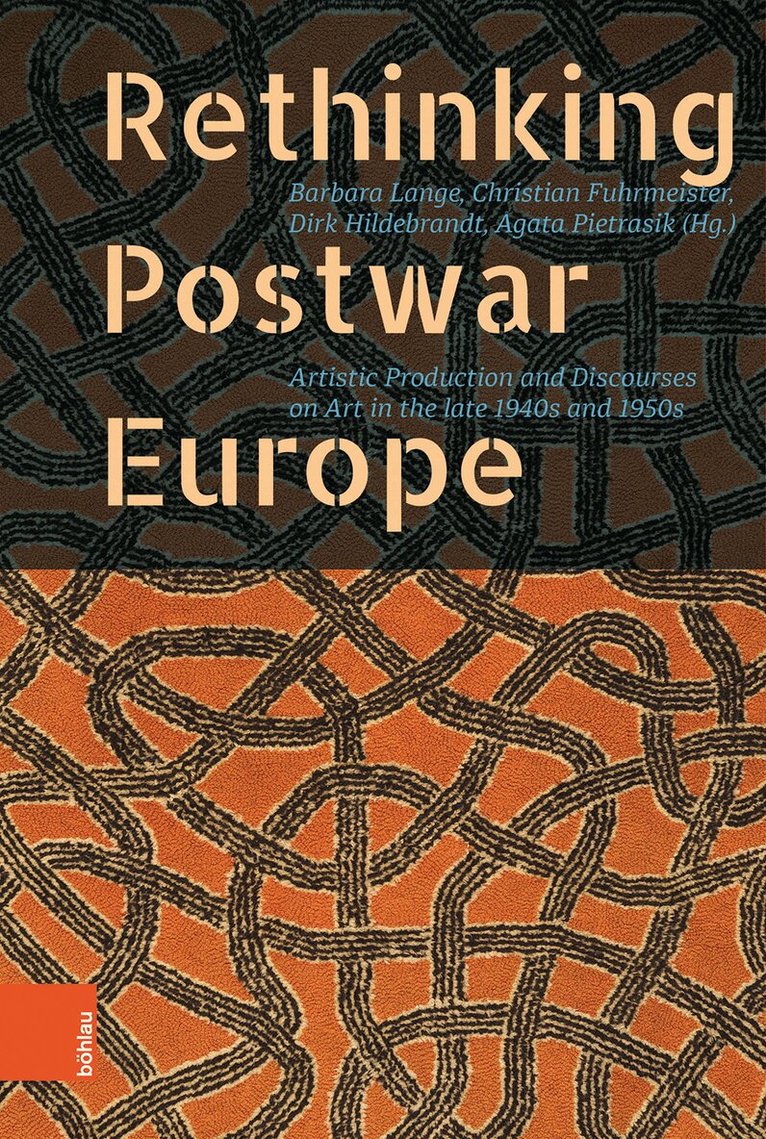
Rethinking Postwar Europe
Artistic Production and Discourses on Art in the late 1940s and 1950s
Av Barbara Lange, Dirk Hildebrandt m. fl.
Inbunden, 2019
731 kr
Lägg i varukorg
The book “Rethinking Postwar Europe” offers an in-depth insight into the largely unexplored topic of artistic practices in the 1940s and 1950s in Europe which until recently had been obscured by ideologies of the Cold War. Thanks to the authors’ diverse methodological backgrounds, the volume …
Rethinking Postwar Europe
Artistic Production and Discourses on Art in the late 1940s and 1950s
Av Agata Pietrasik, Dirk Hildebrandt m. fl.
E-bok, 2019
564 kr
Lägg i varukorg
The book "Rethinking Postwar Europe" offers an in-depth insight into the largely unexplored topic of artistic practices in the 1940s and 1950s in Europe which until recently had been obscured by ideologies of the Cold War. Thanks to the authors'' diverse methodological backgrounds, the volume …
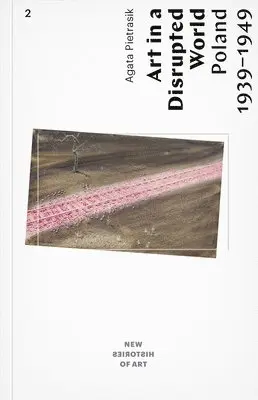
Art in a Disrupted World – Poland 1939–1949
Häftad, 2021
261 kr
Lägg i varukorg
With Art in a Disrupted World, art historian Agata Pietrasik presents a study of artistic practices that emerged in Poland during and after World War II. Pietrasik highlights examples of artworks by a number of Polish-born artists that were created in concentration camps and ghettos, in exile, and …