Agustín J. Menéndez - Böcker
Visar alla böcker från författaren Agustín J. Menéndez. Handla med fri frakt och snabb leverans.
3 produkter
3 produkter
977 kr
Skickas inom 10-15 vardagar
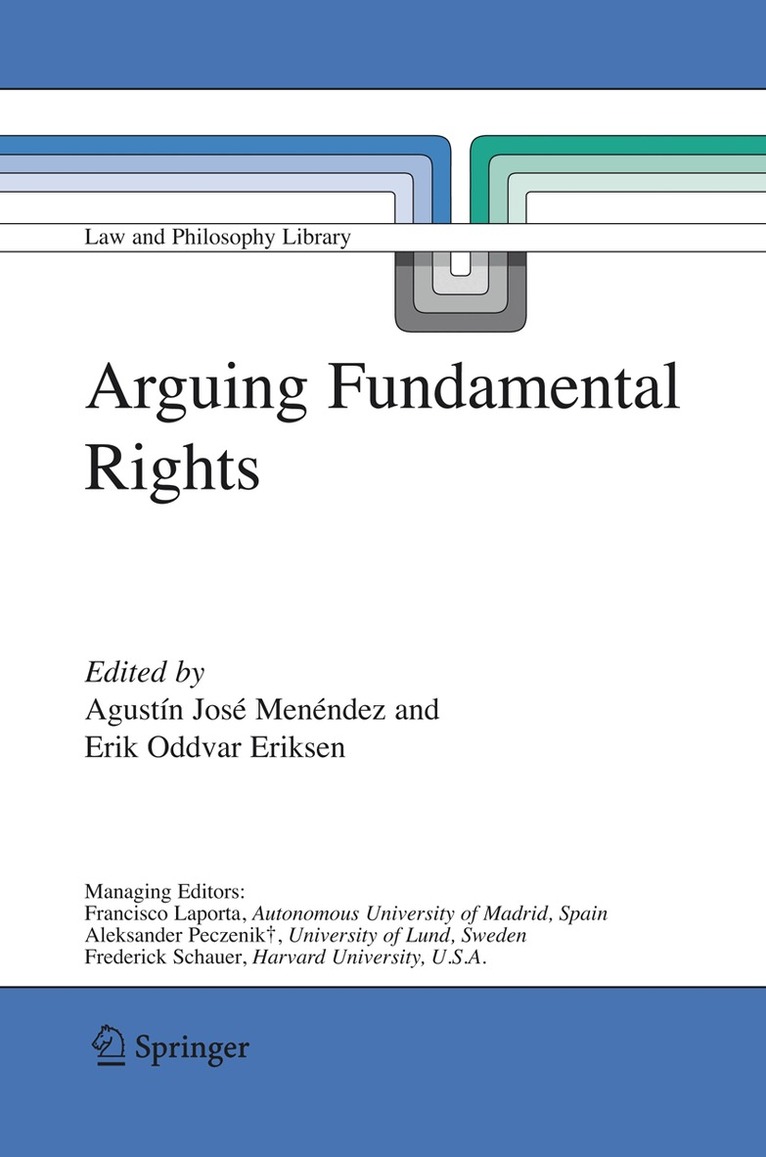
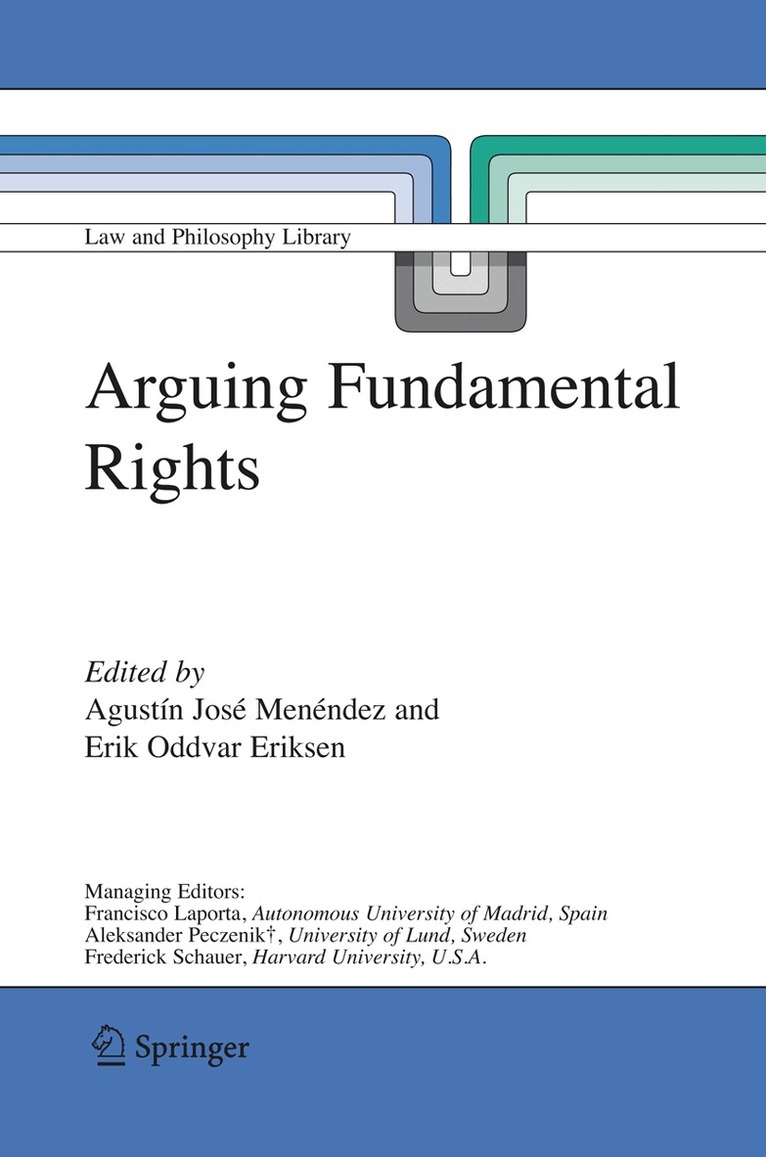
Arguing Fundamental Rights explores the path-breaking Theory of Constitutional Rights of Robert Alexy. The critical analysis of the structural elements of Alexy’s theory is combined with an assessment of its applied relevance, with special attention being paid to the UK Human Rights Act and the fundamental rights protection in the European Union (before and after the Charter of Fundamental Rights of 2000). The book is unique in combining a challenging interpretation of one the foremost European conceptions of fundamental rights with the discussion of the pragmatics of constitutional adjudication. The chapters combine a focus on key political questions such as whether rights adjudication can be subject to rational assessment and whether judges (and not democratically elected parliaments) should be the umpires of fundamental rights protection, with a concern with key jurisprudential issues, such as the determination of the limits of fundamental rights, the binding effect of fundamental rights to private parties, or whether certain fundamental rights should or should not be regarded as ultimate reasons for action, and as such, could be not be limited, not even when it conflict with other rights. Robert Alexy himself opens the book with an insightful contextualisation of his theory of fundamental rights within his general legal theory. The book is a timely defence of practical reason against claims that emergencies justify trumping fundamental rights.
1 842 kr
Skickas inom 7-10 vardagar
The Legitimacy of European Constitutional Orders is a systematic and comparative study of European constitutional orders, taking into consideration the national constitutional traditions of European countries, as well as the defining power of EU law. Drawing on a wealth of case studies, this book explores the trajectories followed by European national constitutional orders in their efforts to attain legitimacy. More in particular, the book investigates Bruce Ackerman’s influential world constitutionalism project and engages with the three legitimacy pathways put forward therein; that is, the revolutionary, the establishment, and the elite pathways. Such ideal trajectories are revisited and found in need of being questioned so as to furnish the conceptual tools essential in the efforts of reconstructing and assessing the European constitutional orders. The book also considers the relevance of constitutional transformation and change in comparative constitutional law, and accounts for the manifold impacts of the European integration process on national constitutional trajectories. Offering an original perspective on the issue of constitutional legitimacy in the European context, this comprehensive book will be of interest to scholars and students of comparative law, constitutional law, European law, political science and constitutional theory as well as researchers and practitioners in these fields.
977 kr
Skickas inom 10-15 vardagar
Arguing Fundamental Rights explores the path-breaking Theory of Constitutional Rights of Robert Alexy. The critical analysis of the structural elements of Alexy’s theory is combined with an assessment of its applied relevance, with special attention being paid to the UK Human Rights Act and the fundamental rights protection in the European Union (before and after the Charter of Fundamental Rights of 2000). The book is unique in combining a challenging interpretation of one the foremost European conceptions of fundamental rights with the discussion of the pragmatics of constitutional adjudication. The chapters combine a focus on key political questions such as whether rights adjudication can be subject to rational assessment and whether judges (and not democratically elected parliaments) should be the umpires of fundamental rights protection, with a concern with key jurisprudential issues, such as the determination of the limits of fundamental rights, the binding effect of fundamental rights to private parties, or whether certain fundamental rights should or should not be regarded as ultimate reasons for action, and as such, could be not be limited, not even when it conflict with other rights. Robert Alexy himself opens the book with an insightful contextualisation of his theory of fundamental rights within his general legal theory. The book is a timely defence of practical reason against claims that emergencies justify trumping fundamental rights.