Alan Cromartie - Böcker
Visar alla böcker från författaren Alan Cromartie. Handla med fri frakt och snabb leverans.
7 produkter
7 produkter
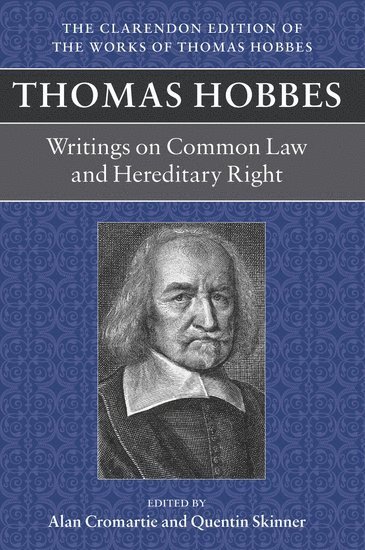
Thomas Hobbes: Writings on Common Law and Hereditary Right
A dialogue between a philosopher and a student, of the common Laws of England. Questions relative to Hereditary right
Inbunden, Engelska, 2005
1 844 kr
Skickas inom 5-8 vardagar
This volume in the Clarendon Edition of the Works of Thomas Hobbes contains A dialogue between a philosopher and a student, of the common laws of England, edited by Alan Cromartie, supplemented by the important fragment on the issue of regal succession, 'Questions relative to Hereditary Right', discovered and edited by Quentin Skinner. The former work is the last of Hobbes's major political writings. As a critique of common law by a great philosopher, it should be essential reading for anybody interested in English political thought or legal theory. Although it was written when Hobbes was at least eighty, it is a lively piece of work that goes beyond a recapitulation of earlier Hobbesian doctrines, not least in applying his central ideas to the details of the English constitution. This edition supplies the extensive annotation on matters of legal and historical detail that is required by non-specialist readers; it also assists students by offering cross-references to other treatises. Cromartie's introduction is an authoritative account of seventeenth-century thinking about the common law and of Hobbes's shifting attitudes towards it. It has often been suspected that the book was motivated by fear of being burned for heresy. Cromartie disentangles the complex evidence (scattered across a number of late works) that documents this fear's development, and shows why the philosopher's acute anxieties eventually led him to write a legal treatise. In clarifying these questions, the edition casts fresh light upon his attitude to law and sovereignty. The second piece takes the form of a question put to Hobbes about the right of succession under hereditary monarchies, together with Hobbes's response. The question is in the handwriting of the fourth Earl of Devonshire, the son of the third Earl, whom Hobbes had tutored in the 1630s. He asks Hobbes whether an heir can be excluded if he is incapable of protecting his prospective subjects. The question of 'exclusion' became the most burning issue in English politics in the course of 1679, when a bill to exclude the future James II was introduced into the House of Commons. Hobbes answers with a robust defence of hereditary right, in the course of which he also makes some important general observations about the concept of a right. The manuscript is also of special interest as it constitutes Hobbes's last word on politics. It was almost certainly written in the summer of 1679, less than six months before Hobbes's death.
713 kr
Skickas inom 7-10 vardagar
This volume in the Clarendon Edition of the Works of Thomas Hobbes contains A dialogue between a philosopher and a student, of the common laws of England, edited by Alan Cromartie, supplemented by the important fragment on the issue of regal succession, 'Questions relative to Hereditary Right', discovered and edited by Quentin Skinner. The former work is the last of Hobbes's major political writings. As a critique of common law by a great philosopher, it should be essential reading for anybody interested in English political thought or legal theory. Although it was written when Hobbes was at least eighty, it is a lively piece of work that goes beyond a recapitulation of earlier Hobbesian doctrines, not least in applying his central ideas to the details of the English constitution. This edition supplies the extensive annotation on matters of legal and historical detail that is required by non-specialist readers; it also assists students by offering cross-references to other treatises. Cromartie's introduction is an authoritative account of seventeenth-century thinking about the common law and of Hobbes's shifting attitudes towards it. It has often been suspected that the book was motivated by fear of being burned for heresy. Cromartie disentangles the complex evidence (scattered across a number of late works) that documents this fear's development, and shows why the philosopher's acute anxieties eventually led him to write a legal treatise. In clarifying these questions, the edition casts fresh light upon his attitude to law and sovereignty. The second piece takes the form of a question put to Hobbes about the right of succession under hereditary monarchies, together with Hobbes's response. The question is in the handwriting of the fourth Earl of Devonshire, the son of the third Earl, whom Hobbes had tutored in the 1630s. He asks Hobbes whether an heir can be excluded if he is incapable of protecting his prospective subjects. The question of 'exclusion' became the most burning issue in English politics in the course of 1679, when a bill to exclude the future James II was introduced into the House of Commons. Hobbes answers with a robust defence of hereditary right, in the course of which he also makes some important general observations about the concept of a right. The manuscript is also of special interest as it constitutes Hobbes's last word on politics. It was almost certainly written in the summer of 1679, less than six months before Hobbes's death.
1 587 kr
Skickas inom 7-10 vardagar
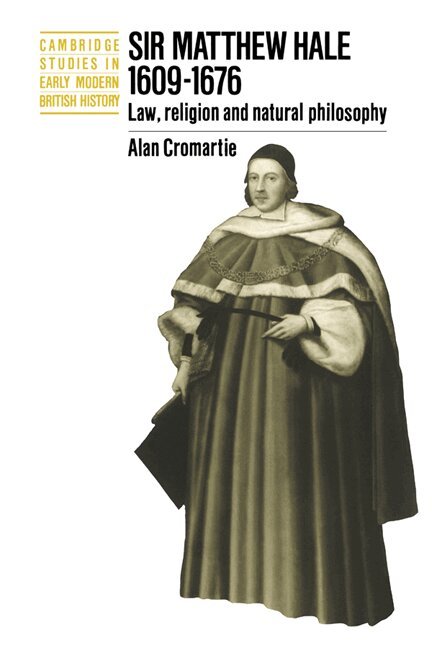
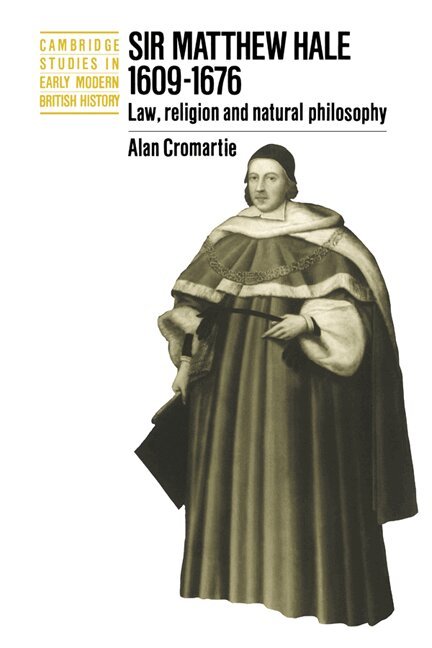
Sir Matthew Hale (1609-76) was the greatest common lawyer of his age, and the most universally admired. Although he held office under Oliver Cromwell, this barely affected his standing in Restoration times. A study of Hale's life and thought necessarily illuminates the central role of the common law in Stuart politics. This book explains Hale's political ideas, and his subtle understanding of the peculiar character of an 'unwritten' law. It also covers his extensive writings on scientific and religious questions, writings which document a shift from puritan to liberal Protestantism. His acute but equivocal response to the science of Descartes and Boyle reveals a fascinating interplay between his 'latitudinarianism' and the new natural philosophy. The result is a unique case study, and a comprehensive portrait of a seventeenth-century mind.
567 kr
Skickas inom 7-10 vardagar
Sir Matthew Hale (1609-76) was the greatest common lawyer of his age, and the most universally admired. Although he held office under Oliver Cromwell, this barely affected his standing in Restoration times. A study of Hale's life and thought necessarily illuminates the central role of the common law in Stuart politics. This book explains Hale's political ideas, and his subtle understanding of the peculiar character of an 'unwritten' law. It also covers his extensive writings on scientific and religious questions, writings which document a shift from puritan to liberal Protestantism. His acute but equivocal response to the science of Descartes and Boyle reveals a fascinating interplay between his 'latitudinarianism' and the new natural philosophy. The result is a unique case study, and a comprehensive portrait of a seventeenth-century mind.
Del 75 - Ideas in Context
The Constitutionalist Revolution
An Essay on the History of England, 1450-1642
Inbunden, Engelska, 2006
1 065 kr
Skickas inom 7-10 vardagar
An innovative account of English constitutional ideas from the mid-fifteenth century to the time of Charles I, showing how the emergence of grand claims for common law, the country's strange unwritten legal system, shaped England's cultural development. Though he does not neglect the role of narrowly religious disagreements, Cromartie brings out the way that 'religious' and 'secular' values came to be closely intertwined: to the majority of Charles's subjects, the rights of the clergy and the king were legal rights; the institutional structure of Church and state was an expression of monarchical power, obedience to the king and to the law was a religious duty. A proper understanding of this cluster of ideas reveals why Charles found England so difficult to control and why both parties in the civil war believed that they were fighting for established institutions.
Del 75 - Ideas in Context
The Constitutionalist Revolution
An Essay on the History of England, 1450-1642
Häftad, Engelska, 2009
591 kr
Skickas inom 7-10 vardagar
An innovative account of English constitutional ideas from the mid-fifteenth century to the time of Charles I, showing how the emergence of grand claims for common law, the country's strange unwritten legal system, shaped England's cultural development. Though he does not neglect the role of narrowly religious disagreements, Cromartie brings out the way that 'religious' and 'secular' values came to be closely intertwined: to the majority of Charles's subjects, the rights of the clergy and the king were legal rights; the institutional structure of Church and state was an expression of monarchical power, obedience to the king and to the law was a religious duty. A proper understanding of this cluster of ideas reveals why Charles found England so difficult to control and why both parties in the civil war believed that they were fighting for established institutions.
2 238 kr
Skickas inom 10-15 vardagar
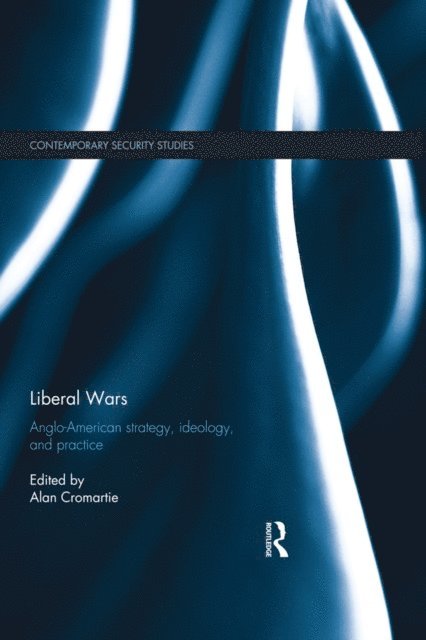
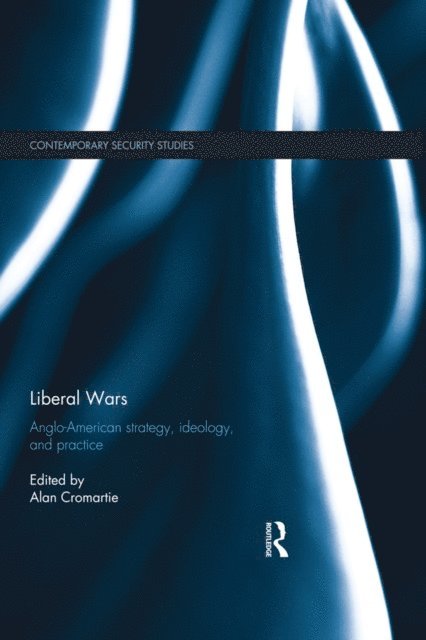
This book addresses the relationship between the 'liberal' values of Anglo-Saxon cultures and the way that they conduct themselves when they are fighting - or preparing to fight - wars. The United States and the United Kingdom are characterised by a consensus that their social and political arrangements are, in a very broad sense, ‘liberal’. Liberalism is not pacifism; nor are liberals necessarily respectful of traditional prohibitions that have set out to moderate excessive violence. But liberals do seek to understand their violent actions as part of a wider project of defending or expanding liberal freedoms. The perceived alternative is to undermine the will to keep on fighting. Sustaining a liberal picture of what is going on is an indispensable part of a liberal strategy. Contributors with disciplinary backgrounds in history, international relations, and strategic studies discuss what ‘liberalism’ means in this particular context and how it might relate to ‘strategy’, both in the recent past and in the future. The chapters consider how liberal states understand the wars they fight, the constraints liberal values place on these states, the role of public opinion and the appropriate strategies for modern liberal states. Topics addressed include civilian bombing, the nature of US military culture, the British ‘Iraq inquiries’, the effects of the erosion of Westphalian sovereignty and the rise of new ideas about ‘globalization’, and the decline in popular involvement. This book will be of much interest to students of strategic studies, political philosophy, foreign policy, security studies and IR in general.