Alan J. DeYoung - Böcker
Visar alla böcker från författaren Alan J. DeYoung. Handla med fri frakt och snabb leverans.
5 produkter
5 produkter
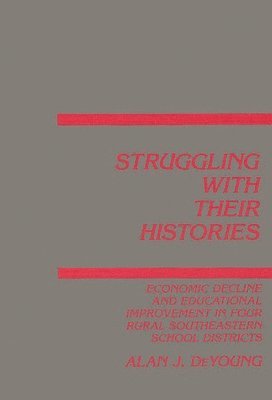
Struggling With Their Histories
Economic Decline and School Improvement In Four Rural Southeastern School Districts
Inbunden, Engelska, 1991
980 kr
Skickas inom 10-15 vardagar
This volume explores the social, economic and political histories of four primarily rural and poor school systems in the American Southeast. Part of the research upon which the book is based came from a three year evaluation of OERI sponsored schoolimprovement efforts undertaken by the Appalachia Educational Laboratory (AEL). AEL was interested in helping these districts improve their schools via a school-community partnership model. Some effort is expended in this book to discuss what did and did not work in each of the four contexts which attempted to use the model. The main focus of this volume is the social, economic and political stories behind contemporary efforts to improve schooling in these rural areas. Using a variety of qualitative, historical and statistical methods, the evolution of each community school system is reviewed as such historical developments continue to impinge on local school improvements. An underlying conviction of the author is that local histories and cultures importantly affect the types of school improvement interests, efforts and successes possible in American schools; a conviction that is well documented in this book.
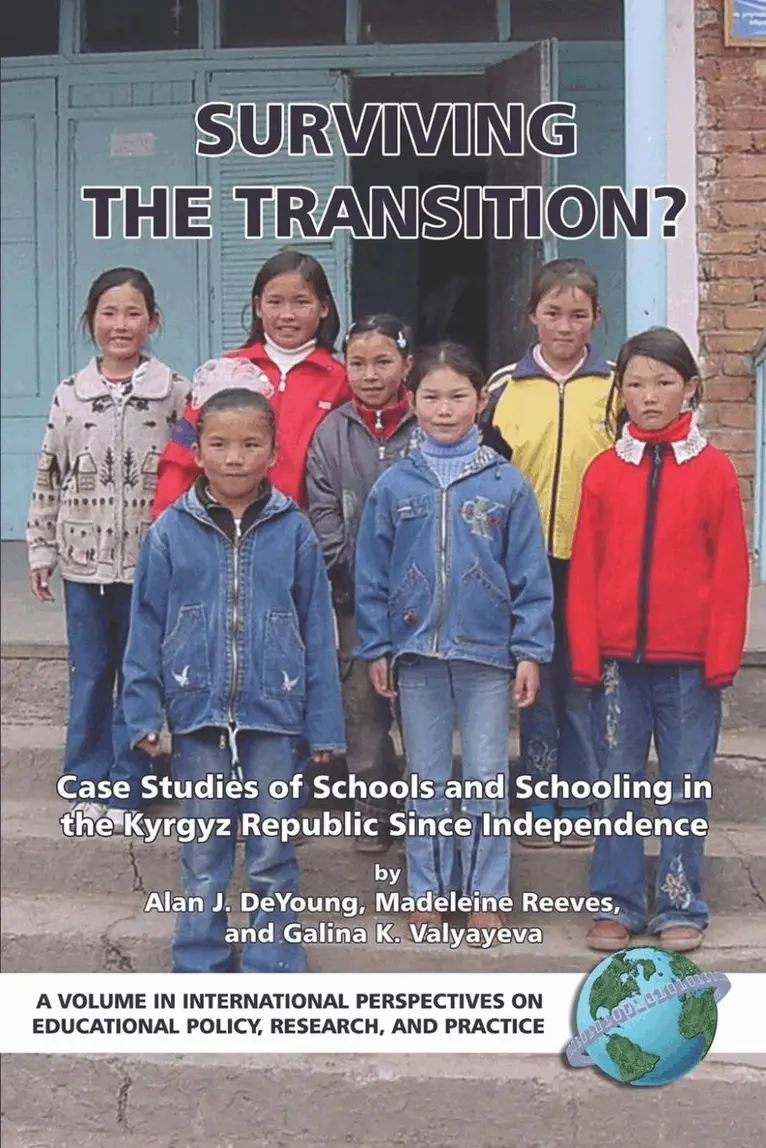
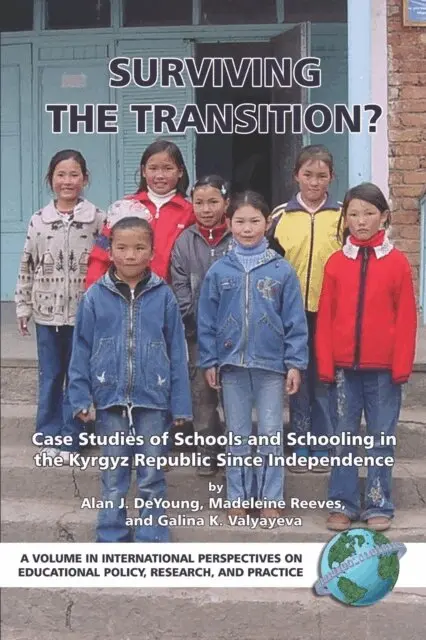
Surviving the Transition? Case Studies of Schools and Schooling in the Kyrgyz Republic Since Independence
Häftad, Engelska, 2006
518 kr
Skickas inom 7-10 vardagar
This is a book about four rural secondary schools of the Republic of Kyrgyzstan, a newly independent Central Asian state of the former USSR. Utilizing case study methods, we describe and discuss how teachers, administrators and students are attempting to survive the proclaimed “transition” to democracy and a market economy within their particular schools and communities. We view this work primarily as a cultural study of schools and school life, not a work about the national education system. There is in fact a growing volume of other writings on issues and problems in education in Central Asia, some of which we have ourselves contributed to (see DeYoung, 2004; Reeves, 2004). The focus in this study, however, involves school, individual, and group lives and dynamics in and around the four village schools we studied during 2004 and 2005. Two of the four schools are in Chui Oblast; one in Naryn Oblast, and one in Batken Oblast. One Chui school lies within an economically and demographically stable community by Kyrgyz standards; the other school faces more serious economic and migratory issues. Our Naryn school is located in an isolated livestock-breeding region of Kyrgyzstan high in the Tien Shan mountains near China. Finally, we describe community and school situations in an agricultural community in the south that is characterized by considerable poverty-driven labor migration. Our work involved schools in the small town of Shopokov, and the villages of Tash Dobo, At-Bashy and Ak-Tatyr. These are all actual places on the map of Kyrgyzstan – if your map is detailed enough. In several cases, nearby smaller schools are also discussed as they relate to our primary institutions.
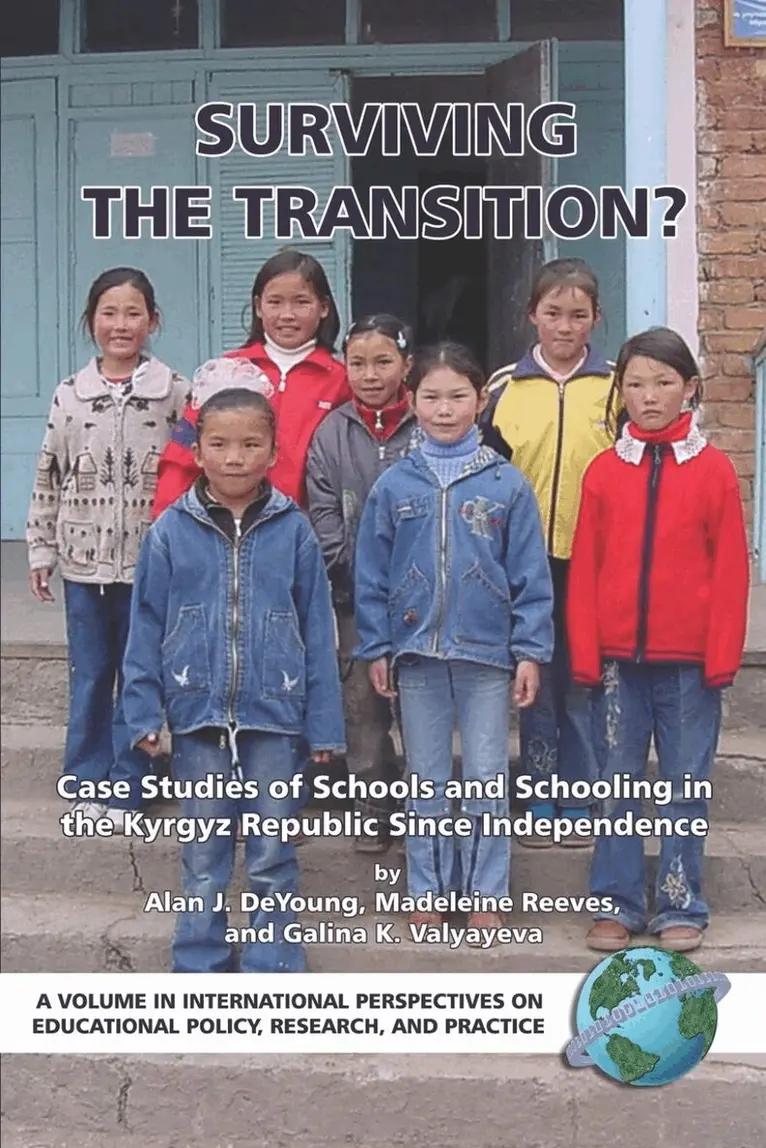
Surviving the Transition? Case Studies of Schools and Schooling in the Kyrgyz Republic Since Independence
Inbunden, Engelska, 2006
953 kr
Skickas inom 7-10 vardagar
This is a book about four rural secondary schools of the Republic of Kyrgyzstan, a newly independent Central Asian state of the former USSR. Utilizing case study methods, we describe and discuss how teachers, administrators and students are attempting to survive the proclaimed “transition” to democracy and a market economy within their particular schools and communities. We view this work primarily as a cultural study of schools and school life, not a work about the national education system. There is in fact a growing volume of other writings on issues and problems in education in Central Asia, some of which we have ourselves contributed to (see DeYoung, 2004; Reeves, 2004). The focus in this study, however, involves school, individual, and group lives and dynamics in and around the four village schools we studied during 2004 and 2005. Two of the four schools are in Chui Oblast; one in Naryn Oblast, and one in Batken Oblast. One Chui school lies within an economically and demographically stable community by Kyrgyz standards; the other school faces more serious economic and migratory issues. Our Naryn school is located in an isolated livestock-breeding region of Kyrgyzstan high in the Tien Shan mountains near China. Finally, we describe community and school situations in an agricultural community in the south that is characterized by considerable poverty-driven labor migration. Our work involved schools in the small town of Shopokov, and the villages of Tash Dobo, At-Bashy and Ak-Tatyr. These are all actual places on the map of Kyrgyzstan – if your map is detailed enough. In several cases, nearby smaller schools are also discussed as they relate to our primary institutions.
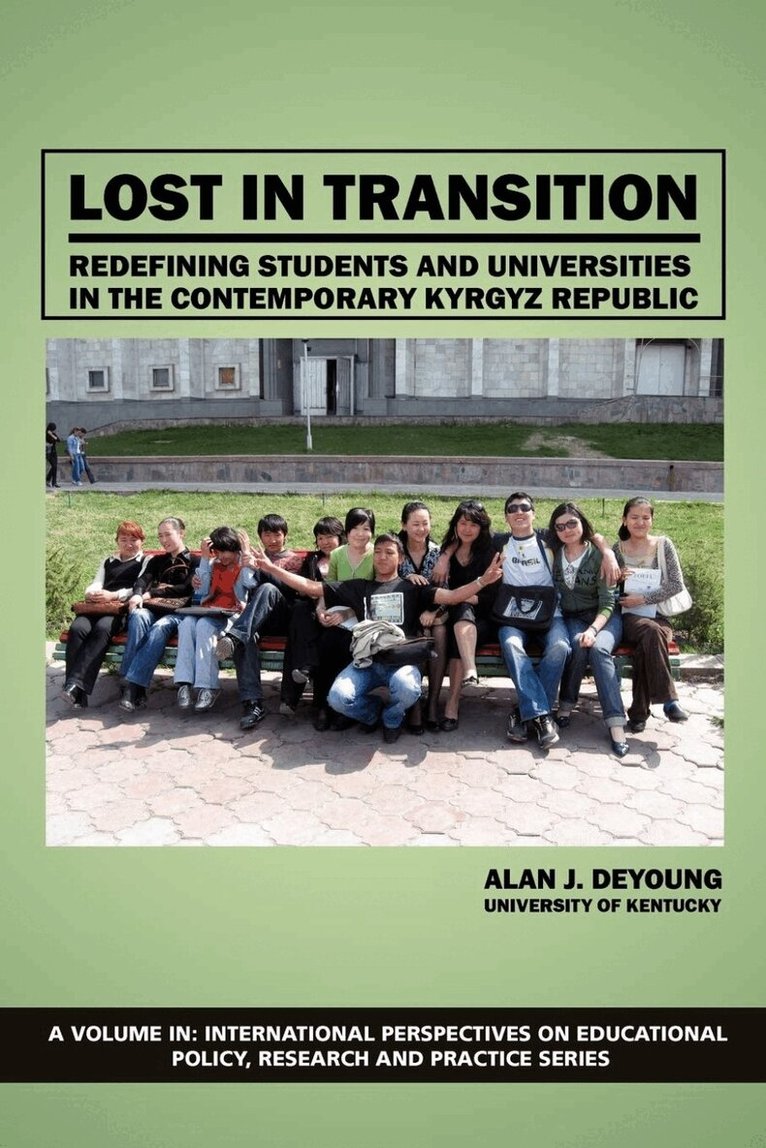
Lost in Transition
Redefining Students and Universities in the Contemporary Kyrgyz Republic
Häftad, Engelska, 2011
518 kr
Skickas inom 7-10 vardagar
Being a “student” has been and remains a highly desirable status for young people and their families in Kyrgyzstan. “Giving their children education” (dat detyam obrazovaniye) – meaning “higher education” - has become an imperative for many parents, even in a time of serious economic and social decline. The numbers of universities and university enrollments have increased dramatically – in fact quadrupled – since Kyrgyz independence from the former USSR in 1991. All this is happening just as the overall system of secondary education has basically collapsed. School quality and outcomes of learning for most Kyrgyz youth have become increasingly marginal – even as those who run universities widely proclaim quality improvements and desires/intentions to join international higher education space. The book thus seeks to explain the manifest versus the latent functions of higher education in Kyrgyzstan. Relying on explanations of lived experience, the research attempts to explain how the seeming contradiction of a declining resource and intellectual base of universities yet appeals to parents and students as the system continues to expand with easily compromised accountability measures. The study approaches these topics by seeking to define what it now means to be a university student in Kyrgyzstan, as well as what many state universities have turned into" in contrast in contrast to how they were remembered by those who attended and taught within them two decades ago. The work also considers a number of private and inter-governmental universities which are allowed to operate in Kyrgyzstan and award both state and international diplomas. I portray the different organizational and ideological pursuits of these universities as they contrast with those of the state universities.Lost in Transition is an empirical look at higher education reform in Kyrgyzstan, employing several methodological strategies. These include a student survey given to over 200 students at five different universities; surveys and interviews with senior instructors and administrators at these same institutions; and a two-year case study of a student and faculty cultures and subcultures at one particular national university particular university faculty in one of the larger state universities. The case study utilized participant observation, ethnographic interviews, document analysis, and social media.
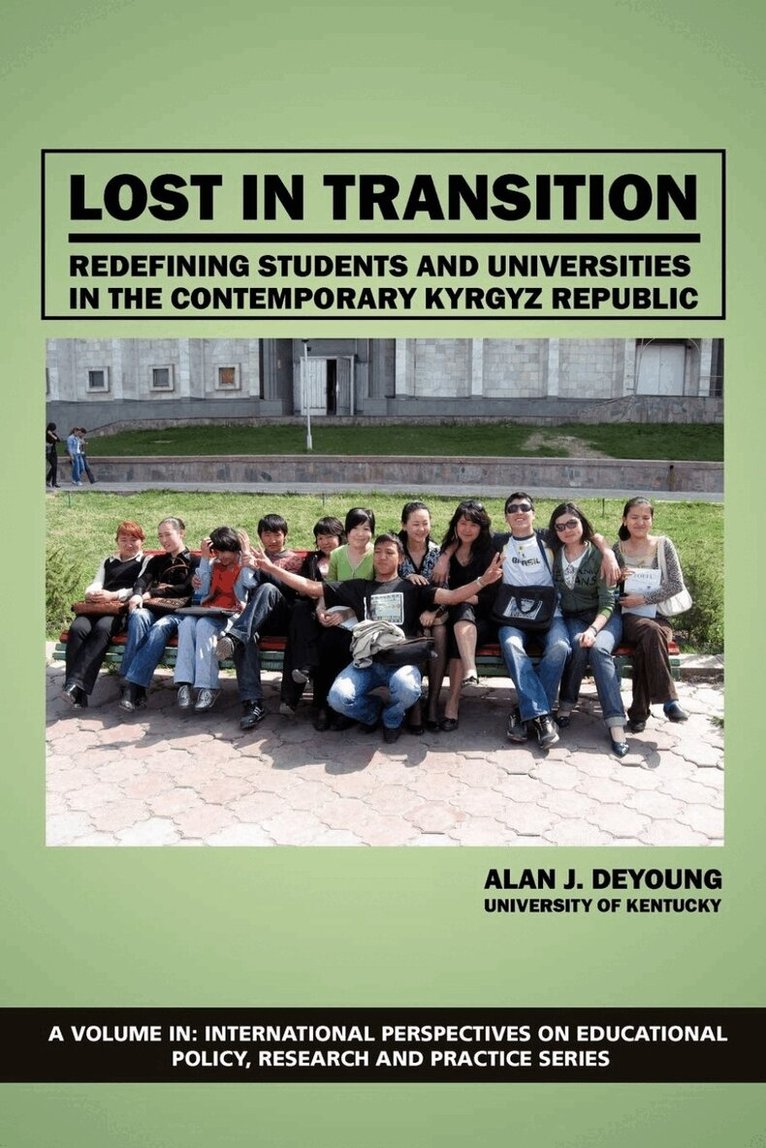
Lost in Transition
Redefining Students and Universities in the Contemporary Kyrgyz Republic
Inbunden, Engelska, 2011
953 kr
Skickas inom 7-10 vardagar
Being a “student” has been and remains a highly desirable status for young people and their families in Kyrgyzstan. “Giving their children education” (dat detyam obrazovaniye) – meaning “higher education” - has become an imperative for many parents, even in a time of serious economic and social decline. The numbers of universities and university enrollments have increased dramatically – in fact quadrupled – since Kyrgyz independence from the former USSR in 1991. All this is happening just as the overall system of secondary education has basically collapsed. School quality and outcomes of learning for most Kyrgyz youth have become increasingly marginal – even as those who run universities widely proclaim quality improvements and desires/intentions to join international higher education space. The book thus seeks to explain the manifest versus the latent functions of higher education in Kyrgyzstan. Relying on explanations of lived experience, the research attempts to explain how the seeming contradiction of a declining resource and intellectual base of universities yet appeals to parents and students as the system continues to expand with easily compromised accountability measures. The study approaches these topics by seeking to define what it now means to be a university student in Kyrgyzstan, as well as what many state universities have turned into" in contrast in contrast to how they were remembered by those who attended and taught within them two decades ago. The work also considers a number of private and inter-governmental universities which are allowed to operate in Kyrgyzstan and award both state and international diplomas. I portray the different organizational and ideological pursuits of these universities as they contrast with those of the state universities.Lost in Transition is an empirical look at higher education reform in Kyrgyzstan, employing several methodological strategies. These include a student survey given to over 200 students at five different universities; surveys and interviews with senior instructors and administrators at these same institutions; and a two-year case study of a student and faculty cultures and subcultures at one particular national university particular university faculty in one of the larger state universities. The case study utilized participant observation, ethnographic interviews, document analysis, and social media.