Alan Mikhail – författare
Visar alla böcker från författaren Alan Mikhail. Handla med fri frakt och snabb leverans.
24 produkter
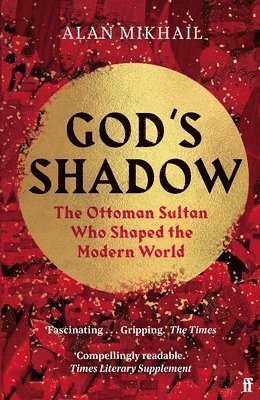
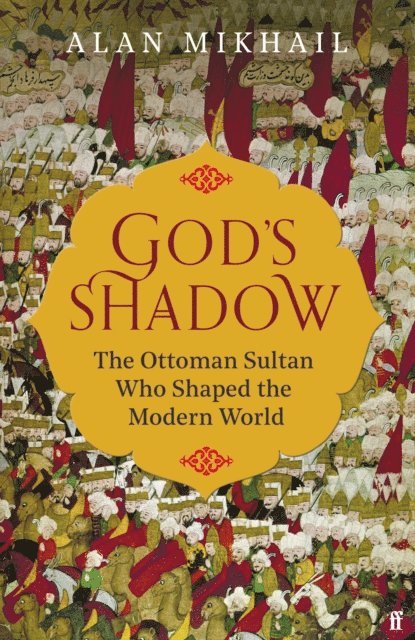
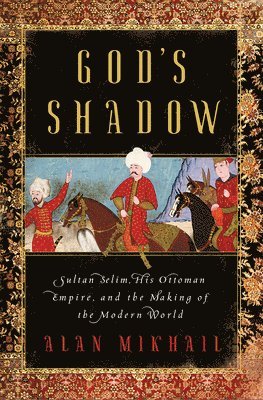
God's Shadow
The Ottoman Sultan Who Shaped the Modern World
Av Alan Mikhail
Häftad, 2021
218 kr
Lägg i varukorg
A Times Literary Supplement and History Today Book of the Year'An astonishing and thrilling story.' Stephen GreenblattThe Ottoman Empire was a hub of flourishing intellectual fervour, geopolitical power, and enlightened pluralistic rule. At the helm of its ascent was the omnipotent Sultan Selim I …
My Egypt Archive
Av Alan Mikhail
Häftad, 2024
196 kr
Lägg i varukorg
A prominent historian provides an engaging on-the-ground account of the everyday authoritarianism that produced the Arab Spring in Egypt “A visceral and perceptive study of life under autocracy.”—Publishers Weekly An unmatched contemporary history of authoritarian politics and an unflinching …
Newcomers
The Story of Anthony and Grietje and the Founding of New York
Av Alan Mikhail
Inbunden, 2026
299 kr
Lägg i varukorg
A man thought to be Muslim from Morocco and a German barmaid are hardly the image we have of America’s founders. In Newcomers, Alan Mikhail upends the traditional story of American beginnings through the tale of Anthony “the Turk” and Grietje Reyniers. Married in Amsterdam, they arrived in 1630s …
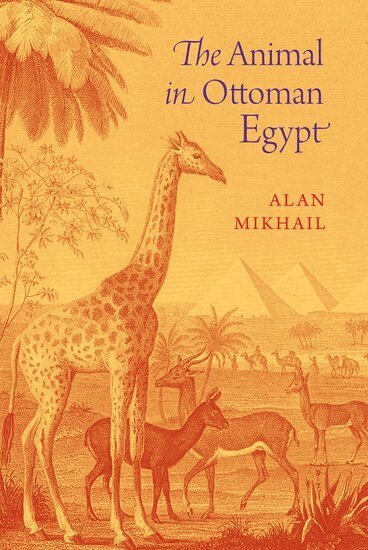
The Animal in Ottoman Egypt
Av Alan Mikhail
Häftad, 2017
770 kr
Lägg i varukorg
Since humans first emerged as a distinct species, they have eaten, fought, prayed, and moved with other animals. In this stunningly original and conceptually rich book, historian Alan Mikhail puts the history of human-animal relations at the center of transformations in the Ottoman Empire from the …
The Animal in Ottoman Egypt
Av Alan Mikhail
Inbunden, 2014
1733 kr
Lägg i varukorg
Since humans first emerged as a distinct species, they have eaten, fought, prayed, and moved with other animals. In this stunningly original and conceptually rich book, historian Alan Mikhail puts the history of human-animal relations at the center of transformations in the Ottoman Empire from the …
Animal in Ottoman Egypt
Av Alan Mikhail
E-bok, 2013
529 kr
Lägg i varukorg
Since humans first emerged as a distinct species, they have eaten, fought, prayed, and moved with other animals. In this stunningly original and conceptually rich book, historian Alan Mikhail puts the history of human-animal relations at the center of transformations in the Ottoman Empire from the …
Animal in Ottoman Egypt
Av Alan Mikhail
E-bok, 2013
529 kr
Lägg i varukorg
Since humans first emerged as a distinct species, they have eaten, fought, prayed, and moved with other animals. In this stunningly original and conceptually rich book, historian Alan Mikhail puts the history of human-animal relations at the center of transformations in the Ottoman Empire from the …
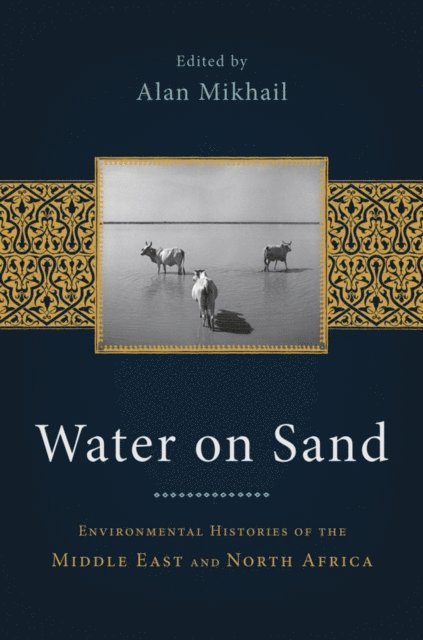
Water on Sand
Environmental Histories of the Middle East and North Africa
Av Alan Mikhail
Häftad, 2013
686 kr
Lägg i varukorg
From Morocco to Iran and the Black Sea to the Red, Water on Sand rewrites the history of the Middle East and North Africa from the Little Ice Age to the Cold War. As the first holistic environmental history of the region over the last half millennium, it shows the intimate connections between …
Water on Sand
Environmental Histories of the Middle East and North Africa
Av MIKHAIL, Alan Mikhail
Inbunden, 2013
2375 kr
Lägg i varukorg
From Morocco to Iran and the Black Sea to the Red, Water on Sand rewrites the history of the Middle East and North Africa from the Little Ice Age to the Cold War. As the first holistic environmental history of the region over the last half millennium, it shows the intimate connections between …
Water on Sand
Environmental Histories of the Middle East and North Africa
Av Alan Mikhail
E-bok, 2012
470 kr
Lägg i varukorg
From Morocco to Iran and the Black Sea to the Red, Water on Sand rewrites the history of the Middle East and North Africa from the Little Ice Age to the Cold War era. As the first holistic environmental history of the region, it shows the intimate connections between peoples and environments and …
Water on Sand
Environmental Histories of the Middle East and North Africa
Av Alan Mikhail
E-bok, 2012
470 kr
Lägg i varukorg
From Morocco to Iran and the Black Sea to the Red, Water on Sand rewrites the history of the Middle East and North Africa from the Little Ice Age to the Cold War era. As the first holistic environmental history of the region, it shows the intimate connections between peoples and environments and …
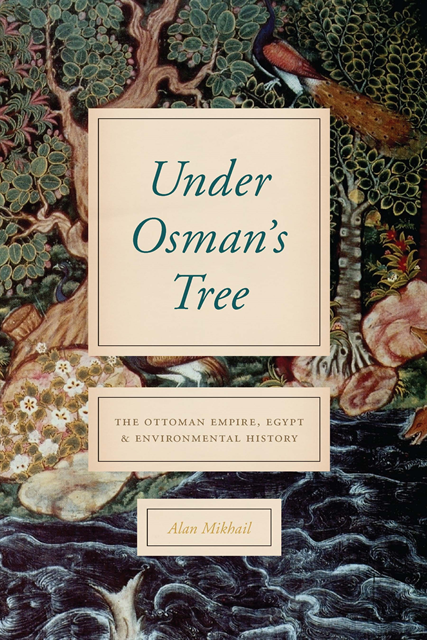
Under Osman's Tree
The Ottoman Empire, Egypt, and Environmental History
Av Alan Mikhail
E-bok, 2017
742 kr
Lägg i varukorg
Osman, the founder of the Ottoman Empire, had a dream in which a tree sprouted from his navel. As the tree grew, its shade covered the earth; as Osman’s empire grew, it, too, covered the earth. This is the most widely accepted foundation myth of the longest-lasting empire in the history of Islam, …
Under Osman's Tree
The Ottoman Empire, Egypt, and Environmental History
Av Alan Mikhail
Häftad, 2019
340 kr
Lägg i varukorg
Osman, the founder of the Ottoman Empire, had a dream in which a tree sprouted from his navel. As the tree grew, its shade covered the earth; as Osman's empire grew, it, too, covered the earth. This is the most widely accepted foundation myth of the longest-lasting empire in the history of Islam, …
My Egypt Archive
Av Alan Mikhail
Inbunden, 2023
354 kr
Lägg i varukorg
A prominent historian provides an engaging on-the-ground account of the everyday authoritarianism that produced the Arab Spring in Egypt “A visceral and perceptive study of life under autocracy.”—Publishers Weekly An unmatched contemporary history of authoritarian politics and an unflinching …
God's Shadow
The Ottoman Sultan Who Shaped the Modern World
Av Alan Mikhail
E-bok, 2020
144 kr
Lägg i varukorg
The Ottoman Empire was a hub of flourishing intellectual fervor, geopolitical power, and enlightened pluralistic rule. At the helm of its ascent was the omnipotent Sultan Selim I (1470-1520), who, with the aid of his extraordinarily gifted mother, Gülbahar, hugely expanded the empire, propelling it …
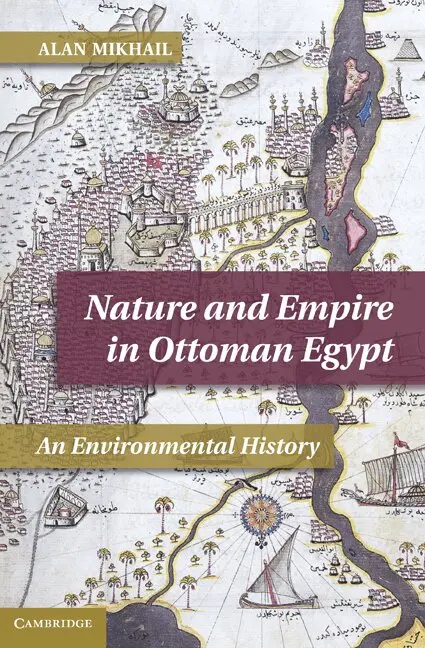
Nature and Empire in Ottoman Egypt
An Environmental History
Av Alan Mikhail
Inbunden, 2011
1307 kr
Lägg i varukorg
In one of the first ever environmental histories of the Ottoman Empire, Alan Mikhail examines relations between the empire and its most lucrative province of Egypt. Based on both the local records of various towns and villages in rural Egypt and the imperial orders of the Ottoman state, this book …
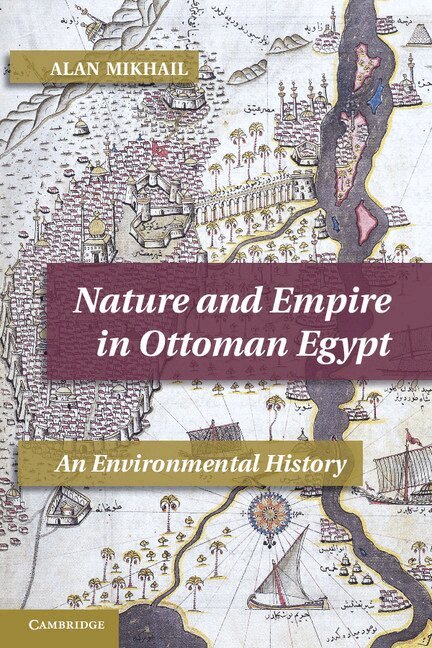
Nature and Empire in Ottoman Egypt
An Environmental History
Av Alan Mikhail
Häftad, 2012
574 kr
Lägg i varukorg
In one of the first ever environmental histories of the Ottoman Empire, Alan Mikhail examines relations between the empire and its most lucrative province of Egypt. Based on both the local records of various towns and villages in rural Egypt and the imperial orders of the Ottoman state, this book …
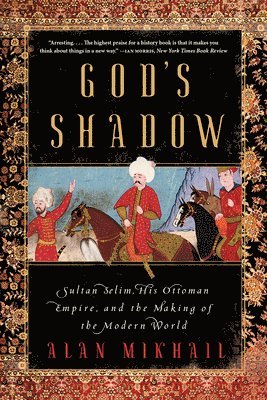
God's Shadow
Sultan Selim, His Ottoman Empire, and the Making of the Modern World
Av Alan Mikhail
Häftad, 2021
206 kr
Lägg i varukorg
The history of the Ottoman Empire—once the most powerful state on earth, ruling over more territory and people than any other world power—has for centuries been distorted, misrepresented, and suppressed in the West. With this “original and wide-ranging” (Wall Street Journal) global history, Alan …
God's Shadow
Sultan Selim, His Ottoman Empire, and the Making of the Modern World
Av Alan Mikhail
Inbunden, 2020
406 kr
Lägg i varukorg
Long neglected in world history, the Ottoman Empire was a hub of intellectual fervor, geopolitical power, and enlightened pluralistic rule. At the height of their authority in the sixteenth century, the Ottomans, with extraordinary military dominance and unparalleled monopolies over trade routes, …
Reich Durch Natur
Eine Umweltgeschichte Des Osmanischen Agyptens
Av Alan Mikhail
Inbunden, 2024
920 kr
Lägg i varukorg
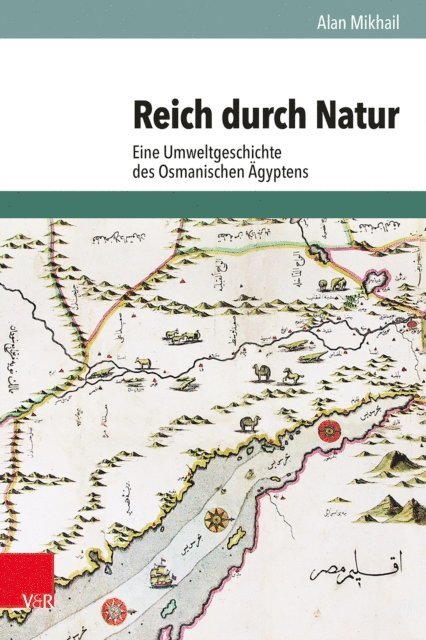
Reich durch Natur
Eine Umweltgeschichte des Osmanischen Ägyptens
Av Alan Mikhail
E-bok, 2024
731 kr
Lägg i varukorg
In einer der ersten Umweltgeschichten des Osmanischen Reichs untersucht Alan Mikhail die Beziehungen zwischen der Zentralregierung und seiner lukrativsten Provinz: Ägypten. Auf der Basis sowohl lokaler Aufzeichnungen im ländlichen Zusammenhang als auch offizieller Anordnungen des Reichs zeichnet er …
Nature and Empire in Ottoman Egypt
An Environmental History
Av Alan Mikhail
Inbunden, 2024
619 kr
Lägg i varukorg
Алан Михейл, автор этой одной из первых работ по экологической истории Османской империи, рассматривает отношения между империей и Египтом — ее самой богатой провинцией. В книге, основанной на материалах архивов населенных пунктов в сельской местности Египта, а также на собрании имперских …
Nature and Empire in Ottoman Egypt
An Environmental History
Av Alan Mikhail
E-bok, 2024
873 kr
Lägg i varukorg
, , . , , , , , . , , , , .