Alan Patten - Böcker
Visar alla böcker från författaren Alan Patten. Handla med fri frakt och snabb leverans.
6 produkter
6 produkter
1 844 kr
Skickas inom 5-8 vardagar
Freedom is the value that Hegel most greatly admired and the central organizing concept of his social philosophy. Alan Patten offers the first full-length treatment in English of Hegel's idea of freedom - his theory of what it is to be free and his account of the social and political contexts in which this freedom is developed, realized, and sustained. Patten's investigation illuminates and resolves a number of central questions concerning Hegel's ethics and political theory. Is Hegel's outlook unacceptably conservative? Can freedom be equated with rational self-determination? Is there any special connection between freedom and citizenship? By offering interpretations of Hegels views on these and other questions, Patten develops an original 'civic humanist' reading of Hegel's social philosophy that restores to its proper, central place Hegel's idea of freedom. The book is written in a clear and jargon-free style and will be of interest to anyone concerned with Hegel's ethical, social, and political thought and the sources of contemporary ideas about freedom, community, and the state.
816 kr
Skickas inom 5-8 vardagar
Alan Patten offers the first full-length treatment in English of Hegel's idea of freedom-his theory of what it is to be free and his account of the social and political contexts in which this freedom is developed, realized, and sustained. Freedom is the value that Hegel most greatly admired and the central organizing concept of his social philosophy.Patten's investigation illuminates and resolves a number of central questions concerning Hegel's ethics and political theory. Is Hegel's outlook unacceptably conservative? Can freedom be equated with rational self-determination? Is there any special connection between freedom and citizenship? By offering interpretations of Hegel's views on these and other questions, Patten develops an original 'civic humanist' reading of Hegel's social philosophy that restores to its proper, central place Hegel's idea of freedom.The book is written in a clear and jargon-free style and will be of interest to anyone concerned with Hegel's ethical, social, and political thought and the sources of contemporary ideas about freedom, community, and the state.
2 411 kr
Skickas inom 5-8 vardagar
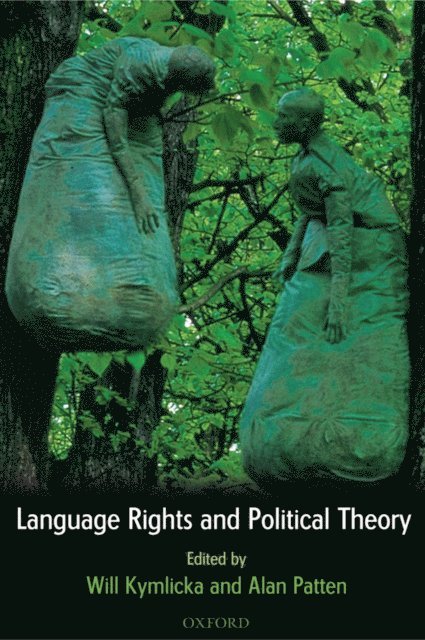
Disputes over language policy are a persistent feature of the political life of many states around the world. Multilingual countries in the West such as Belgium, Spain, Switzerland and Canada have long histories of conflict over language rights. In many countries in Eastern Europe and the Third World, efforts to construct common institutions and a shared identity have been severely complicated by linguistic diversity. Indigenous languages around the world are in danger of disappearing. Even in the United States, where English is widely accepted as the language of public life, the linguistic rights of Spanish-speakers are hotly-contested. Not surprisingly, therefore, political theorists have started to examine questions of language policy, and how they relate to broader issues of democracy, justice and rights. This volume provides the reader with an up-to-date overview of the emerging debates over the role of language rights and linguistic diversity within political theory. It brings together many of the leading political theorists who work in the field, together with some of the most important social scientists, with the aim of exploring how political theorists can conceptualize issues of language rights and contribute to public debates on language policy. Questions of language policy are not only of enormous political importance in many countries, but also help to illuminate some of the most important debates in contemporary political theory, including questions of citizenship, deliberative democracy, nationalism, multiculturalism, identity politics, group rights, the liberal-communitarian debate, and so on. The thirteen essays in this volume highlight both the empirical constraints and normative complexities of language policy, and identify the important challenges and opportunities that linguistic diversity raises for contemporary political theory.
869 kr
Skickas inom 5-8 vardagar
Disputes over language policy are a persistent feature of the political life of many states around the world. Multilingual countries in the West such as Belgium, Spain, Switzerland and Canada have long histories of conflict over language rights. In many countries in Eastern Europe and the Third World, efforts to construct common institutions and a shared identity have been severely complicated by linguistic diversity. Indigenous languages around the world are in danger of disappearing. Even in the US, where English is widely accepted as the language of public life, the linguistic rights of Spanish-speakers are hotly-contested. Not surprisingly, therefore, political theorists have started to examine questions of language policy, and how they relate to broader issues of democracy, justice and rights. This volume provides the reader with an up-to-date overview of the emerging debates over the role of language rights and linguistic diversity within political theory.
471 kr
Skickas inom 7-10 vardagar
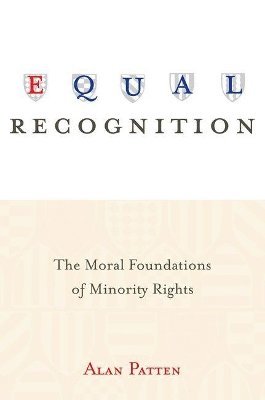
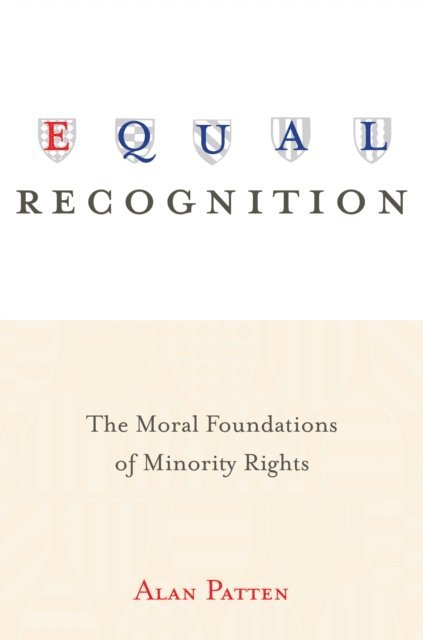
Conflicting claims about culture are a familiar refrain of political life in the contemporary world. On one side, majorities seek to fashion the state in their own image, while on the other, cultural minorities press for greater recognition and accommodation. Theories of liberal democracy are at odds about the merits of these competing claims. Multicultural liberals hold that particular minority rights are a requirement of justice conceived of in a broadly liberal fashion. Critics, in turn, have questioned the motivations, coherence, and normative validity of such defenses of multiculturalism. In Equal Recognition, Alan Patten reasserts the case in favor of liberal multiculturalism by developing a new ethical defense of minority rights. Patten seeks to restate the case for liberal multiculturalism in a form that is responsive to the major concerns of critics. He describes a new, nonessentialist account of culture, and he rehabilitates and reconceptualizes the idea of liberal neutrality and uses this idea to develop a distinctive normative argument for minority rights.The book elaborates and applies its core theoretical framework by exploring several important contexts in which minority rights have been considered, including debates about language rights, secession, and immigrant integration. Demonstrating that traditional, nonmulticultural versions of liberalism are unsatisfactory, Equal Recognition will engage readers interested in connections among liberal democracy, nationalism, and current multicultural issues.
303 kr
Skickas inom 7-10 vardagar
Conflicting claims about culture are a familiar refrain of political life in the contemporary world. On one side, majorities seek to fashion the state in their own image, while on the other, cultural minorities press for greater recognition and accommodation. Theories of liberal democracy are at odds about the merits of these competing claims. Multicultural liberals hold that particular minority rights are a requirement of justice conceived of in a broadly liberal fashion. Critics, in turn, have questioned the motivations, coherence, and normative validity of such defenses of multiculturalism. In Equal Recognition, Alan Patten reasserts the case in favor of liberal multiculturalism by developing a new ethical defense of minority rights. Patten seeks to restate the case for liberal multiculturalism in a form that is responsive to the major concerns of critics. He describes a new, nonessentialist account of culture, and he rehabilitates and reconceptualizes the idea of liberal neutrality and uses this idea to develop a distinctive normative argument for minority rights.The book elaborates and applies its core theoretical framework by exploring several important contexts in which minority rights have been considered, including debates about language rights, secession, and immigrant integration. Demonstrating that traditional, nonmulticultural versions of liberalism are unsatisfactory, Equal Recognition will engage readers interested in connections among liberal democracy, nationalism, and current multicultural issues.