Alan Stott - Böcker
Visar alla böcker från författaren Alan Stott. Handla med fri frakt och snabb leverans.
4 produkter
4 produkter
298 kr
Skickas
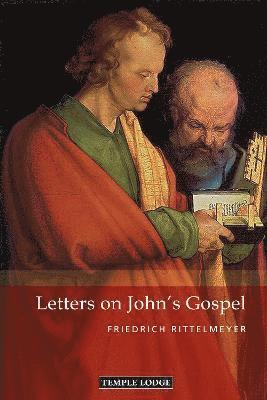
‘These Letters … aim to make John’s Gospel accessible to people today as their own gospel, both as a whole and in the details; to illuminate it with the spiritual knowledge of the age and to make it fruitful for life, not only for meditation but also for practical ordering of destiny.’ – Friedrich Rittelmeyer. ---A revitalized Johannine Christianity stands at the heart of the work of Christian renewal that was led by Rudolf Steiner in the early twentieth century. Friedrich Rittelmeyer, a Lutheran minister and theologian who helped found The Christian Community in 1922, was a leading figure within this new Johannine movement. Rittelmeyer described John’s Gospel as encapsulating ‘…an indescribable glory of revelation of love. This glory has such purity, delicacy and spiritual power that in it one has the material with which a marvellous new world may be built.’ ---Without doubt his most powerful work, Rittelmeyer’s Letters on John’s Gospel first appeared in a series of publications by the Stuttgart seminary of The Christian Community between 1930 and 1932. Whilst these Letters were originally written with students and local congregations in mind, they provide manifold insights for anyone seeking to glimpse the majesty of John’s Gospel. Margaret Mitchell’s translation from 1937 has never before been published in book form. Revised here and expanded by editors Alan Stott and Neil Franklin, this volume features additional contributions by Rudolf Frieling and Emil Bock.
153 kr
Skickas
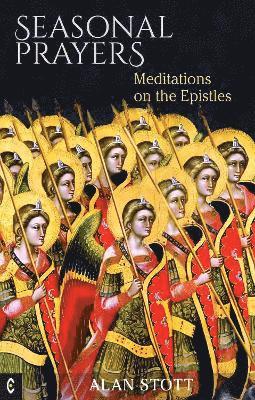
Resplendent with the divine 'creative Voice', the meditative prayers reproduced and studied in this book celebrate the yearly cycle of the seasons and the Christian festivals. The prayers or 'Epistles' are an integral part of the renewed liturgy of The Christian Community, a non-sectarian church founded in 1922. In this invaluable companion, Alan Stott links them with the Psalms - prayers that every Christian priest could once recite. Stott shares the insights of those who continue to hear the Voice or 'musike' - sometimes called 'melos' (tune or musical line). Every tune focuses on the present moment; we recollect the note before and anticipate the one to come. The Australian aboriginals speak of 'song-lines', and we also refer to the 'melody' of a life. Through rhythms, the heart reflects, and we divine the music of Creation. The commentary in Seasonal Prayers reveals a 'singing-speaking, speaking-singing', that connects inner and outer life throughout the yearly cycle.
68 kr
Skickas
298 kr
Skickas
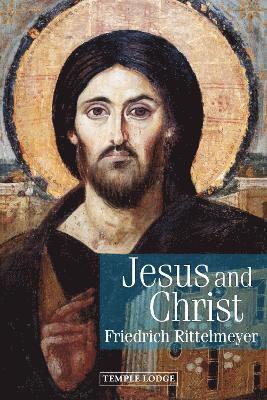
‘To see Christ in Jesus and Jesus in Christ is an incomparable joy. Each single saying and each single word finds its place in the heights on the way from Jesus to Christ, on the way from Christ to Jesus.’ – Friedrich RittelmeyerHow can we meet the real Jesus today? Friedrich Rittelmeyer (1872-1938) – a well-known Protestant preacher of his day who helped found The Christian Community – presents us with the modern seeker’s path. A thoroughly revised translation of his Jesus (1912) traces the story of mankind’s longing. On the way, Nietzsche’s trenchant critique of Christianity is answered as intellectual honesty demands – with a concrete account of spiritual experience.During challenging times, Rittelmeyer took up Rudolf Steiner’s advice to complete his inner journey by working with John’s Gospel. Twenty-four years later, his testament appeared, Christ (1936) – now featured here in English for the first time. The author follows Johannine tradition, with Paul claiming: ‘I shall know even as I am known’ (1 Cor. 13:12) – and which Rudolf Steiner calls the spiritual faculty of ‘moral Imagination’.Rittelmeyer’s intellectual achievement ends in action; his path of exact perception leads to experience of the living Christ. ‘The path of Christ is always the path through death to resurrection.’ Here is spiritual reading as penetrating as any that can be found elsewhere. Jesus and Christ – at last complete in one volume – concludes by contrasting Nietzsche and Novalis along with an insight of Wagner’s regarding the only far-reaching solution for the 21st century.